
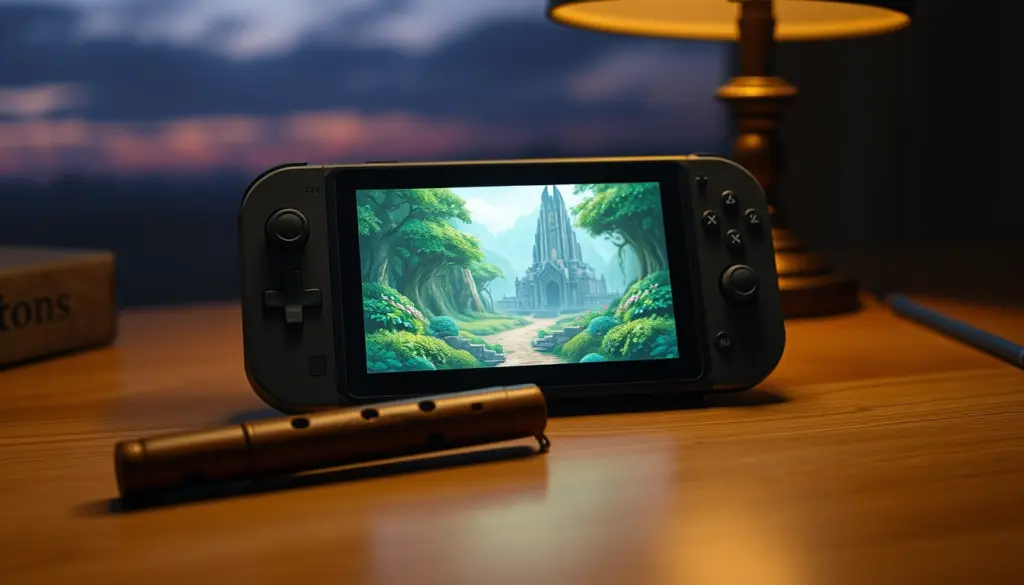
Nintendo confirmed on September 8, 2026 that The Legend of Zelda: Ocarina of Time is getting a full remake for Nintendo Switch 2, with a firm release date of November 5, 2026. The announcement landed during The Legend of Zelda 40th Anniversary Direct, a roughly 30-minute broadcast that aired at 7 a.m. PT / 10 a.m. ET, and preorders opened within hours across Nintendo’s own storefront and major retailers. The digital edition lists at $59.99, the physical edition at $69.99, and a limited run includes a textured foil cover while supplies last. For a franchise turning 40 this year, it is the single biggest piece of news the anniversary campaign has produced, and it caps months of leaks, ESRB paperwork trails, and fan speculation that started back in June.
What makes this moment different from the usual remaster cycle is timing and scope. Nintendo Switch 2 has been on shelves for months, its library is still filling out, and the company needed a system-seller that reaches beyond the launch-window crowd. Ocarina of Time, first released on Nintendo 64 in 1998, is arguably the most influential 3D action-adventure game ever made. Bringing it back as a ground-up remake, rather than a simple resolution bump, is Nintendo betting that nostalgia plus new hardware equals a genuine sales event heading into the holidays.
What Nintendo Confirmed at the Zelda 40th Anniversary Direct
The Legend of Zelda 40th Anniversary Direct aired September 8, 2026, streamed live on Nintendo’s YouTube and Twitch channels. Nintendo had teased the remake back in a June 9, 2026 Direct with a short reveal trailer, but left the release window vague, saying only that the game was coming “later this year.” The September broadcast closed that gap. Nintendo’s official U.S. store listing now shows the game as “Available 11/05/2026,” releasing exclusively on Nintendo Switch 2, according to the product page and confirmed by outlets including Game8 and Source Gaming.
Nintendo’s own framing, distributed through its regional news pages, described the Direct as covering “a variety of The Legend of Zelda-related information about the series’ 40th anniversary, including The Legend of Zelda: Ocarina of Time for Nintendo Switch 2.” Nintendo of France’s messaging around the reveal put it more directly: “The adventure is reborn on November 5th exclusively on Nintendo Switch 2.” That single line does a lot of work for Nintendo’s marketing strategy this quarter – it treats the remake not as a side release but as the flagship moment of the whole anniversary push.
Notably, Nintendo scheduled a second, more conventional Nintendo Direct for the very next day, September 9, 2026, running about 45 minutes. Splitting the two events, rather than folding everything into one show, signals how much weight Nintendo is putting behind Ocarina of Time specifically. According to Source Gaming’s live recap, “the bulk of the show was dedicated to the remake,” which the outlet called “a game built to be a 40th anniversary title.”
Release Date, Platform, and Preorder Prices
The headline facts are straightforward and confirmed across Nintendo’s own channels and independent reporting. The remake launches November 5, 2026, exclusively on Nintendo Switch 2. There is no Switch 1 version and no announced release on any other platform. Preorders opened the same day as the Direct, with Game8 reporting the standard digital edition priced at $59.99. Multiple retail listings put the physical edition at $69.99, a $10 gap that reflects Nintendo’s now-familiar pattern of pricing physical releases above digital ones on Switch 2.
Retailers outside the U.S. are already listing region-adjusted pricing. A Canadian retailer has the physical edition up for preorder at $99.99 CAD, with an estimated ship date matching the global November 5 release. For players hunting for the exact bundle, Nintendo’s limited physical edition includes a textured foil cover, available only while stock lasts, a detail confirmed by Game8’s Direct recap. There is no bundle with a Switch 2 console attached in any of the currently verified retailer listings, so buyers hoping to snag hardware and software together at a discount are, for now, out of luck. Nintendo did reveal a commemorative Nintendo Switch 2 – The Legend of Zelda 40th Anniversary Edition console during the same September 8 announcements, releasing October 29, 2026 at a reported $519.99 in the U.S., but it ships as hardware only and does not include the Ocarina of Time remake, which arrives separately a week later on November 5.
| Detail | Confirmed Information | Source |
|---|---|---|
| Release date | November 5, 2026 | Nintendo official store, Source Gaming |
| Platform | Nintendo Switch 2 exclusive | Nintendo official store |
| Digital price | $59.99 | Game8 |
| Physical price | $69.99 | Multiple retailer listings |
| Canadian physical price | $99.99 CAD | Canadian retailer preorder page |
| Limited edition bonus | Textured foil cover art, while supplies last | Game8 |
| Announcement event | Zelda 40th Anniversary Direct, September 8, 2026 | Nintendo regional news pages |
| Initial teaser | June 9, 2026 Nintendo Direct | Game Informer, Hypebeast |
From N64 Classic to Full Remake: What Actually Changed
Nintendo has been careful with its language here, and the distinction matters. This is being marketed as a remake, not a remaster or a straight port with a new coat of paint. Coverage from TheSpike describes the project as bringing the 1998 original back with “completely updated visuals and redesigned characters, environments, and enemies.” That is a meaningfully bigger commitment than what Nintendo did with, say, its Switch ports of 3D Mario titles, which largely kept original assets and geometry intact.
Hypebeast’s coverage of the June reveal trailer noted that the visual direction pointedly departs from the art style Nintendo built for Breath of the Wild and Tears of the Kingdom. Instead of reusing that now-recognizable cel-shaded, painterly look, the Ocarina of Time remake appears to be chasing something closer to a grounded, detailed reinterpretation of Hyrule as it looked on the N64, just rebuilt at a fidelity level the original hardware could never have touched. Nintendo’s own marketing line, calling the game “reborn,” reinforces that positioning: this is meant to read as a rediscovery of a familiar world rather than a reimagining into something unrecognizable.
At the September 8 Direct, Nintendo went beyond the June teaser and showed gameplay footage of the remake for the first time. Game8 described an extended look at gameplay, with Link moving through Kokiri Forest, Hyrule Field, and Hyrule Castle Town, while IGN noted demonstrated mechanics including jumping, swimming, item switching, and quick aiming. Softonic’s earlier reporting from early August had flagged that, before the Direct, “there’s only been a brief teaser” with no gameplay demonstration, and speculated the real release date might land later in the year than fans hoped. That speculation turned out to be accurate almost to the point of prescience: the November 5 date is indeed a late-year release, arriving just ahead of the holiday shopping window rather than during the traditional fall rush of September and October.
Why Nintendo Chose Ocarina of Time for This Anniversary
The Legend of Zelda franchise turns 40 this year, counting from the original 1986 Famicom Disk System release. Nintendo has multiple ways it could mark that milestone, from a compilation release to new merchandise to a fresh Direct format. It chose to lead with a from-scratch remake of the entry most widely credited with defining 3D action-adventure game design. That is not a subtle choice. Ocarina of Time introduced the Z-targeting lock-on system, context-sensitive action prompts, and a day-night cycle tied to gameplay mechanics, ideas so foundational that most action games released since 1998, Zelda or otherwise, borrow from at least one of them.
Choosing this specific title also lines up with Switch 2’s broader software strategy. Since launch, Nintendo has leaned on a mix of new entries and high-profile back-catalog remasters to keep the platform’s momentum going between major original releases. A Metroid Prime 4 launch, ports of prior generation Zelda titles, and now this remake all serve the same purpose: giving existing Nintendo fans, plus lapsed players nostalgic for the N64 era, a reason to either buy a Switch 2 or add another must-have title to the one they already own.
There is also a franchise-crossover angle worth flagging. Polygon’s coverage of the Direct noted that Sony Pictures’ live-action Legend of Zelda film is scheduled for theaters on April 30, 2027, roughly six months after the Ocarina of Time remake ships. Nintendo appears to be building a sustained Zelda media cycle that runs from this November’s game release through the movie’s spring 2027 debut, keeping the franchise in the public conversation well beyond a single announcement window.
Market Impact: What This Means for Switch 2 Sales
Nintendo has historically used marquee Zelda releases to move hardware. Breath of the Wild launched alongside the original Switch in March 2017 and is widely credited with anchoring that console’s early sales momentum. A November 5, 2026 release date positions Ocarina of Time similarly: it lands roughly three weeks before Black Friday and about seven weeks before Christmas, squarely inside the window retailers and Nintendo itself rely on for the biggest console and software sales of the year.
For a platform holder, a remake carries less financial risk than an all-new mainline entry while still delivering much of the marketing punch. Development resources go toward rebuilding known content rather than designing new systems from zero, and the built-in brand recognition of “Ocarina of Time” does a lot of the demand-generation work that a new IP would need years of marketing to replicate. That is likely part of why Nintendo greenlit this project as a full remake rather than, say, a Virtual Console-style rerelease with upgraded resolution – the higher production cost buys a proportionally bigger sales and press moment.
The pricing structure also tells its own story. At $59.99 digital and $69.99 physical, Nintendo is charging premium, new-release pricing for a remake of a nearly 30-year-old game, the same tier it uses for brand-new mainline titles. That is consistent with how the company has priced other high-profile Switch 2 remasters and suggests Nintendo is confident the “reborn” framing, full-scale remake production values, and 40th anniversary tie-in justify full retail price rather than a discounted remaster rate.
How This Remake Compares to Other Nintendo Switch 2 Remasters
Ocarina of Time is not the only classic getting new life on Switch 2 this year, and comparing the approaches shows how differently Nintendo and its partners are treating “remaster” versus “remake” as categories. The table below lines up the confirmed scope of the Ocarina of Time project against other recent Switch 2 back-catalog releases based on how each has been publicly described by Nintendo or the respective publisher.
| Title | Original Release | Switch 2 Treatment | Platform Status |
|---|---|---|---|
| The Legend of Zelda: Ocarina of Time | 1998 (Nintendo 64) | Full remake – new visuals, redesigned characters and environments | Switch 2 exclusive |
| Metal Gear Solid 4 Remaster | 2008 (PlayStation 3) | Remaster with updated performance targets | Multi-platform, including Switch 2 |
| The Witcher 3: Wild Hunt Remastered | 2015 (multi-platform) | Remaster ported for parity with other current-gen versions | Multi-platform, including Switch 2 |
| Super Metroid (remake reported) | 1994 (SNES) | Reported remake project, details still emerging | Unconfirmed platform scope |
The pattern that emerges is that Nintendo is reserving full ground-up remake treatment for its own flagship IP, while allowing third-party remasters of multi-platform titles like Metal Gear Solid 4 and The Witcher 3 to arrive as more conventional visual and performance upgrades. That is a sensible allocation of resources: a remake is exponentially more expensive than a remaster, and Nintendo has every incentive to spend that money on the property most likely to sell hardware rather than a licensed port that will land on competing consoles anyway.
Historical Context: Ocarina of Time’s Legacy
Ocarina of Time debuted on the Nintendo 64 in November 1998, becoming one of the best-reviewed games of its era and a fixture on best-of-all-time lists for the following two and a half decades. It was the first mainline Zelda title rendered in 3D, and it established gameplay conventions, targeting enemies with a lock-on system, contextual action buttons, and horseback traversal across an open Hyrule Field, that shaped how action-adventure games have been designed ever since.
Nintendo has revisited the game before. A 3D remaster released for Nintendo 3DS in 2011 updated the visuals and added stereoscopic 3D support without touching the underlying game structure. That release proved there was still commercial appetite for the title more than a decade after its original launch. The 2026 Switch 2 remake goes considerably further than that 3DS pass, rebuilding characters, environments, and enemies rather than layering new textures over the original assets, based on the “completely updated” language Nintendo and outlets like TheSpike have used to describe it.
The 40th anniversary framing gives this release extra symbolic weight. The Legend of Zelda series began on the Famicom Disk System in Japan in 1986, and Nintendo has used round-number anniversaries before to reintroduce classic entries to new audiences, including compilation releases and orchestral concert tours tied to the franchise’s 25th and 35th anniversaries. Leading a 40th anniversary celebration with a full remake of the series’ most influential entry, rather than a compilation or a simple rerelease, is a bigger swing than Nintendo has taken on past anniversaries.
What We Still Don’t Know
Several details remain unconfirmed as of publication. While the September 8 Direct did include gameplay footage showing traversal and new movement mechanics, Nintendo has not yet put the remake in front of press for hands-on previews, so the moment-to-moment feel of combat, exploration, and puzzle design in the remade version is still unverified by anyone playing it outside Nintendo. Whether the remake preserves the original’s dungeon layouts and puzzle logic exactly, or reworks them the way some fan-made and third-party remake projects have done in the past, has not been detailed in any official Nintendo material to date.
Pricing for any console bundle, if one exists, has not been announced. There is also no confirmed word on whether amiibo support, motion controls, or other Switch 2-specific hardware features will factor into the final release. Softonic’s reporting flagged earlier ESRB rating activity and November amiibo plans as circumstantial hints pointing toward a fall release, but neither of those data points has been formally tied to specific in-game features by Nintendo.
Predictions: What Comes Next
- Nintendo will likely release a longer gameplay trailer or a dedicated Treehouse-style demonstration in October, closer to launch, following its established pattern of saving fuller gameplay showcases until roughly a month before release.
- Expect preorder demand to outstrip initial physical stock for the limited textured foil cover edition, given how quickly similar limited Switch 2 print runs have sold out earlier in 2026.
- A console bundle pairing a Switch 2 unit with the game is plausible ahead of the holidays, following the precedent Nintendo set by bundling Breath of the Wild with the original Switch at launch.
- Review embargoes will likely lift in the final days of October or on release day itself, November 5, consistent with how Nintendo has handled its highest-profile Switch 2 exclusives so far.
- The remake’s sales performance will likely be framed by Nintendo and analysts as a bellwether for how well 30-year-old back-catalog IP can still move new hardware, a question with implications well beyond this one release.
How Preorders Compare Across Retailers
As of this writing, Nintendo’s own online store is the primary confirmed preorder channel for U.S. buyers at $59.99 digital and $69.99 physical. Canadian shoppers have a confirmed listing at $99.99 CAD for the physical edition through at least one national retailer. Buyers outside North America should expect regional pricing to be announced closer to launch, since Nintendo has not published a unified international price sheet at the time of this article.
One practical note for anyone preordering the physical edition: the textured foil cover art bonus is explicitly tied to availability “while supplies last,” per Game8’s reporting on the Direct. That is standard language Nintendo uses when a bonus is tied to first-print runs rather than the full production cycle, so shoppers who want that specific version have a real incentive to lock in a preorder well ahead of the November 5 release rather than waiting for launch day.
The Broader Switch 2 Release Calendar
Ocarina of Time’s November 5 date does not exist in isolation. Switch 2’s 2026 lineup has already included a mix of new entries and back-catalog remasters, and Nintendo appears to be spacing its biggest announcements roughly a month or two apart to keep sustained attention on the platform through the back half of the year. The September 8 Zelda Direct, followed by a broader Nintendo Direct on September 9, suggests Nintendo is treating this fall as a concentrated marketing push rather than a single isolated announcement.
That pacing matters for competitive context too. Sony and Microsoft both have their own holiday-quarter release plans, and a confirmed November 5 date gives Nintendo roughly three weeks of exclusive retail shelf attention before the traditional Black Friday rush, when competing platforms typically push their own biggest holiday titles and hardware discounts.
Frequently Asked Questions
When does the Ocarina of Time remake release on Switch 2?
November 5, 2026, confirmed on Nintendo’s official U.S. store listing and reiterated during the Zelda 40th Anniversary Direct on September 8, 2026.
Is the Ocarina of Time remake exclusive to Nintendo Switch 2?
Yes. Nintendo’s official product page lists the game as exclusive to Nintendo Switch 2, with no announced version for the original Switch or any other platform.
How much does the Ocarina of Time Switch 2 remake cost?
The digital edition is priced at $59.99. The physical edition is listed at $69.99 across multiple retailers, with a Canadian listing at $99.99 CAD.
Can I preorder Ocarina of Time for Switch 2 right now?
Yes, preorders opened the same day as the September 8, 2026 Direct through Nintendo’s official store and select retailers.
What comes with the limited physical edition?
A textured foil cover art variant, available while supplies last, according to Game8’s coverage of the Direct.
Is this a remaster or a full remake?
Nintendo and outlets covering the reveal describe it as a full remake, featuring completely updated visuals and redesigned characters, environments, and enemies rather than a simple visual upscale of the original N64 assets.
Why is Nintendo releasing this now?
The release ties into the Legend of Zelda franchise’s 40th anniversary, marked with a dedicated Direct broadcast on September 8, 2026 that Source Gaming reported was largely dedicated to this remake.
Has Nintendo shown gameplay footage yet?
Yes. Beyond the June 9, 2026 teaser, the September 8, 2026 Zelda 40th Anniversary Direct showed gameplay footage of the remake, including traversal through areas like Kokiri Forest and Hyrule Field and mechanics such as jumping, swimming, and item switching, per Game8 and IGN. Hands-on press previews had not yet taken place as of this writing.