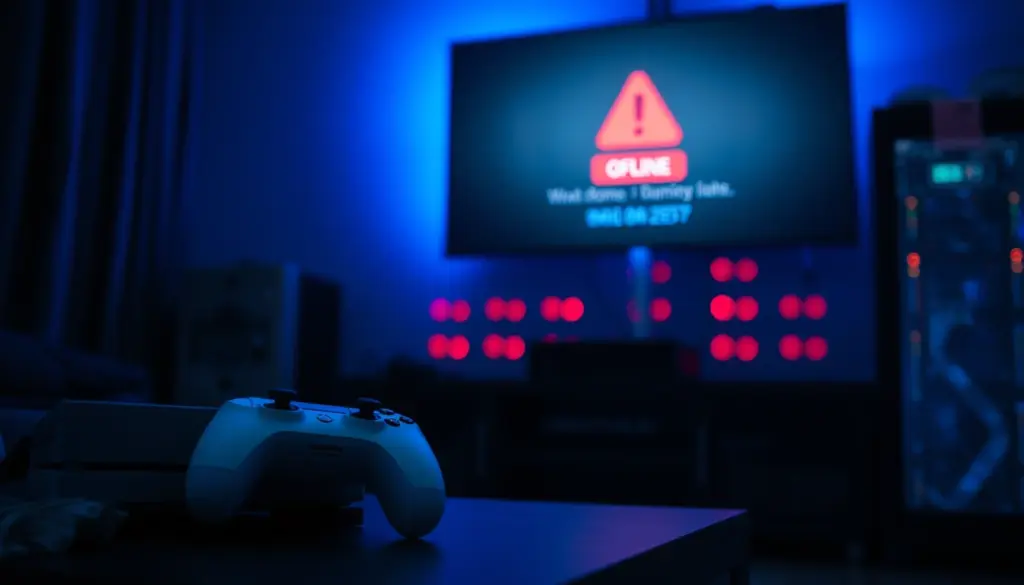
Xbox was down for roughly 15 hours on July 26-27, 2026, in the most disruptive outage Microsoft’s gaming network has suffered all year – and the second Xbox Network disruption in a single week. Sign-ins failed, full game libraries wouldn’t load, and even owners of physical disc games were locked out, because modern Xbox consoles still phone home to confirm ownership before a game will launch. Two days later, Xbox chief technology officer Scott Van Vliet published an unusually direct public apology, calling the situation “unacceptable” and naming the root cause: a single external licensing service that the entire Xbox Network depended on. The timing could hardly be worse – the outage landed in the middle of Microsoft’s “Resetting Xbox” restructuring, three days after PlayStation Network suffered its own high-profile failure, and the same week Halo: Campaign Evolved was supposed to be the story dominating Xbox headlines.
Xbox Down for 15 Hours as Second Outage Hits in a Week
For most of July 26 into July 27, 2026, Xbox was down for a large share of its player base – not a brief blip, but an extended failure that touched sign-in, library access, and game launches across Xbox Series X|S, Xbox One, and PC. Downdetector reports spiked past 3,000 at the peak, with 67% of complaints specifically citing an inability to launch games they already owned. That figure undercounts the real impact, since Downdetector only captures users who go looking for a report page rather than assuming their own console is broken.
For roughly fifteen hours, the answer to “is Xbox down” was an unambiguous yes, no matter which region, console, or storefront a player checked. What made this outage different from a routine server hiccup was scope. It wasn’t one game or one storefront feature – it was the identity and entitlement layer that almost everything else on Xbox’s gaming platform depends on. When that layer failed, it took sign-in, the full games library, cloud saves tied to account verification, and game launches down with it, regardless of whether a title was purchased digitally or sitting on a disc in the tray.
Timeline: How the July 2026 Xbox Outage Unfolded
The July incident didn’t come out of nowhere. A smaller, less-publicized precursor outage hit on July 23, with a few hundred Downdetector reports and roughly 60% of complaints citing connection trouble – barely covered at the time, but visible in hindsight as an early warning sign.
July 23: A Warning Sign Nobody Heeded
That first incident resolved quietly enough that it barely registered outside dedicated status-tracking communities. Three days later, the same underlying dependency failed at a much larger scale.
July 26-27: Sign-Ins Collapse Nationwide
Reports of sign-in and launch failures spiked around 11:00 PM ET on July 26. By early morning on July 27, Downdetector complaints had passed 3,000, and Microsoft’s own status page listed four separate service areas as impacted: Account & Profile, Store & Subscriptions, Games & Gaming, and Apps & Mobile. Core sign-in and launch functionality came back around 2:30 PM PDT (5:30 PM ET) on July 27 – the figure Van Vliet himself cited. Full restoration across all four affected areas wasn’t confirmed on the official Xbox status page until 6:48 PM ET, which is why some outlets reported the outage as lasting closer to 20 hours rather than 15. Both numbers are defensible depending on which recovery milestone is being measured.
| Date & Time | Event |
|---|---|
| Feb 17, 2026 | Earlier Xbox Live sign-in and cloud-save-sync issues, smaller and isolated |
| Jul 23, 2026 | Precursor outage; a few hundred Downdetector reports, ~60% citing connection failures |
| Jul 24, 2026 | PlayStation Network outage (~5h23m), separate network, AWS US-West-2 root cause |
| Jul 26, 2026, ~11:00 PM ET | Sign-in and game-launch failures spike across Xbox Network |
| Jul 27, 2026, early AM | Downdetector reports exceed 3,000; 67% cite “can’t launch games” |
| Jul 27, 2026, 2:30 PM PDT | Core sign-in and launch functionality restored |
| Jul 27, 2026, 6:48 PM ET | Xbox status page confirms full restoration across all 4 service areas |
| Jul 28, 2026 | CTO Scott Van Vliet publishes public apology and post-incident review pledge |
Root Cause: One External Licensing Service, One Point of Failure
According to Van Vliet, the trigger was a licensing and entitlement-check service that sits outside Xbox’s own core infrastructure but is load-bearing for nearly everything Xbox does. When that service started failing, every feature that depends on confirming what a player owns – signing in, listing a full games library, or launching a specific title – began failing with it. That is close to a textbook definition of a single point of failure (SPOF), and Van Vliet used almost exactly that language in his own statement.
It’s a useful reminder of how much modern console gaming depends on always-available backend services, even for functionality that looks purely local. A licensing check is invisible when it works. It becomes the whole story the moment it doesn’t.
Error Code 0x87e107df – Why Even Disc-Based Games Stopped Working
Players hunting for answers during the outage kept running into the same string: error code 0x87e107df. That code isn’t new – it normally shows up on isolated, single-account entitlement problems – but during the July 26-27 incident it appeared at mass scale because the same underlying check was failing for nearly everyone simultaneously. The novelty wasn’t the error itself; it was how many consoles hit it at once.
The most surprising detail for casual players was that owning a game on disc didn’t fully protect them. Modern Xbox consoles still perform an online entitlement check even for physical media, to confirm the disc matches an authorized license on that account. When the licensing service went down, that check failed too, and disc owners found themselves locked out alongside players who owned everything digitally. Only consoles a player had specifically registered as their “Home Xbox” retained limited offline access to a subset of titles – everyone else was stuck waiting.
# A quick way to check current Xbox Network status from the command line
curl -s -o /dev/null -w "%{http_code}\n" https://support.xbox.com/en-US/xbox-live-status

# Pull the status page itself and scan for a service health summary
curl -s https://support.xbox.com/en-US/xbox-live-status | grep -i "core services" -A2
Xbox CTO Scott Van Vliet Calls the Outage “Unacceptable”
Public corporate statements about outages tend toward vague reassurance. Van Vliet’s didn’t. Posting on July 28, he walked through what failed, when it was fixed, and why it mattered, in language unusually blunt for a platform-holder communication.
“This caused some sign-in scenarios to fail, and it caused many scenarios that require an entitlement check to also fail, such as listing out your Full Library and launching games that you own.”
Scott Van Vliet, Xbox Chief Technology Officer – via Engadget
“Once we isolated the failing infrastructure, we shifted traffic onto the healthy parts of the system while the team continued to work towards a root cause.”
Scott Van Vliet, Xbox Chief Technology Officer – via Engadget
“The team has worked hard throughout the day to fix the issue, and we’ve restored service as of 2:30 PM PDT.”
Scott Van Vliet, Xbox Chief Technology Officer – via Engadget
“Nonetheless, this is an unacceptable situation, and we must do better to support you.”
Scott Van Vliet, Xbox Chief Technology Officer – via Engadget
Van Vliet also described next steps in less quotable but more consequential terms, according to corroborating reports on his statement: hardening the dependencies underneath sign-in and game launch, improving detection and containment of this class of failure, and communicating faster and more clearly the next time something breaks. Notably absent from the statement was any specific technical timeline or architectural commitment – a gap worth watching as the promised post-incident review plays out.
The PSN Parallel: Sony’s Own Outage Three Days Earlier
Xbox wasn’t the only major platform fighting its own infrastructure that week. On July 24, 2026 – just three days before Xbox’s collapse – PlayStation Network suffered its own significant outage, with Sony’s official status window running roughly 5 hours and 23 minutes. Independent reporting traced the root cause to a networking fault inside Amazon Web Services’ US-West-2 region, specifically devices routing traffic through the Seattle metro area. AWS itself expanded the scope of its incident report from five services to seven mid-outage before resolving its side of the problem hours ahead of PSN’s own full recovery.
The PSN outage had a concrete competitive casualty: it forced organizers to postpone Day 3 of the EA Sports FC 26 Championship, a flagship event at the 2026 Esports World Cup in Paris carrying a $1 million-plus prize pool. Pro players couldn’t reliably access their online Ultimate Team squads, and the field had to be trimmed from 36 competitors to 24 before play resumed the next day. Two of the industry’s largest platform holders, two unrelated root causes, three days apart – a coincidence in timing, but one that’s fueling direct comparisons of Microsoft’s and Sony’s reliability records this year.
Xbox vs PlayStation Network: Comparing 2026’s Worst Outages
Laid side by side, the two companies’ 2026 reliability records look more alike than either would like. Both have suffered multiple significant incidents this year; both have declined to offer any compensation for any of them, breaking with precedents each company has set for itself in the past.
| Metric | Xbox Network | PlayStation Network |
|---|---|---|
| Confirmed major 2026 incidents | 3 (Feb 17, Jul 23, Jul 26-27) | 7 (Mar-Jul 2026) |
| Latest major outage length | ~15h core restore / ~20h full restore | ~5h23m (Jul 24) |
| Root cause (latest incident) | External licensing/entitlement service (SPOF) | AWS US-West-2 networking fault |
| Compensation offered in 2026 | None announced | None announced |
| Past compensation precedent | No comparable past payout on record | 2011: 30 days free PS Plus + extras; Feb 2025: 5 days free PS Plus |
| Real-world collateral damage | Disc-based games failed entitlement checks too | Delayed $1M+ Esports World Cup championship match |
| Named executive response | CTO Scott Van Vliet, public apology | Status-page statement only |
The one place Xbox comes out ahead in this comparison is transparency: Van Vliet’s willingness to put a name and a detailed technical explanation behind the apology is a higher bar than Sony has cleared for any of its 2026 incidents, which have been addressed through status-page language alone.
A Reliability Pattern Going Back to February 2026
The July collapse wasn’t Xbox’s first stumble of the year. On February 17, 2026, Xbox Live suffered a smaller sign-in and cloud-save-sync issue, with complaints spiking after roughly 10:00 AM ET. It drew far less public attention than the July incident, but in hindsight it establishes 2026 as a genuinely rough reliability year for Xbox specifically, layered on top of an industry-wide pattern of outages at Sony as well.
Three incidents in five months – February’s sign-in bug, July 23’s precursor, and the July 26-27 collapse – is a different story than a single unlucky night. It suggests recurring strain somewhere in the dependency chain that Van Vliet’s promised review will need to address directly, not just patch around the most recent failure point.
Zero Compensation: How 2026 Breaks From Sony’s 2011 Playbook
Neither Microsoft nor Sony has offered players anything for a 2026 outage – no Game Pass credit, no PS Plus days, no store discount. That’s a notable break from precedent, and Sony’s own history makes the point sharply. After the 2011 PlayStation Network breach, a 24-day shutdown affecting roughly 77 million accounts, Sony ultimately provided 30 days of free PlayStation Plus for all members (60 for existing subscribers), two free PS3 games, two free PSP games, a year of identity-theft insurance, and a week of free Hulu Plus in the US. In February 2025, a roughly 24-hour global PSN outage was still enough to prompt Sony to grant all PS Plus members five days of free subscription.
Measured purely in hours, the 2026 incidents on both platforms are nowhere near 2011’s scale, and nobody is arguing they should trigger 2011-level compensation. The more interesting story is the inconsistency: both companies have shown they’re willing to compensate players for downtime when the outage is severe or public enough. In 2026, despite an Xbox CTO-level statement calling the incident “unacceptable” and a Sony pattern spanning seven separate incidents, neither company has crossed that threshold yet.
Market Impact: An Outage in the Middle of “Resetting Xbox”
The outage’s timing compounds an already difficult year for Xbox’s business. Microsoft’s fiscal Q3 2026 results (the quarter ended March 31, 2026) showed total gaming revenue of $5.34 billion, down 7% year-over-year, with Xbox content and services revenue down 5% and Xbox hardware revenue down a steep 33%. Industry shipment forecasts for calendar 2026 point to roughly 2.5 million Xbox units sold worldwide, a 21.9% year-over-year decline. That backdrop is why Microsoft has spent 2026 pivoting hard toward its “Resetting Xbox” strategy, which has already included roughly 3,200 job cuts and the divestment of four studios.
| Metric | Fiscal Q3 2026 | YoY Change |
|---|---|---|
| Total gaming revenue | $5.34 billion | -7% |
| Xbox content and services revenue | – | -5% |
| Xbox hardware revenue | – | -33% |
| 2026 full-year Xbox shipment forecast | ~2.5 million units | -21.9% |
| 2026 restructuring, to date | ~3,200 jobs cut, 4 studios divested | – |
None of these figures were caused by the July outage – they predate it. But they define the environment it landed in. A platform holder already explaining declining hardware sales and a reorganized studio portfolio now also has to explain to the same investors and players why its network went down twice in a week. Reliability incidents rarely move a stock price on their own, but they add to a cumulative narrative that analysts covering Microsoft’s next earnings call are unlikely to ignore.
Bad Timing: Halo Campaign Evolved’s Big Week Overshadowed
The outage’s timing was especially awkward given what else was happening on Xbox that week: Halo: Campaign Evolved’s full global launch on PlayStation 5 landed July 28, the day immediately after Xbox Network’s core services came back online. Campaign Evolved is the highest-profile release of Microsoft’s multiplatform “Xbox Everywhere” push, and it was supposed to be the week’s biggest Xbox-adjacent story. Instead, it shared headlines with an apology for a 15-hour network failure.
There’s a sharper irony underneath the coincidence. Campaign Evolved has faced its own always-online criticism – a mandatory account sign-in requirement even for the single-player campaign, which caused “servers overloaded” login failures for some players during its early-access window. A game criticized for requiring a login just to play offline content launched the same week its own publisher’s network proved it can’t always guarantee that login will work. That pairing is likely to keep the always-online debate alive well past this single incident.
Xbox Game Pass Subscriber Trust Now on the Line
Game Pass is central to Microsoft’s post-hardware strategy, and reliability is part of the pitch – a service subscription is only as valuable as the service actually being up. Game Pass Ultimate pricing has already been through a bruising 2025-2026 stretch, including an October 2025 hike to $29.99 that Microsoft partially reversed to $22.99 in April 2026 after backlash. Layering a 15-to-20-hour network failure on top of a subscriber base that already absorbed a steep price swing raises the same question from a different angle: what exactly are subscribers paying for, if the service can’t guarantee access on a given night?
Microsoft hasn’t disclosed current Game Pass subscriber counts – the last officially confirmed figure was 34 million in February 2024, with 2026 estimates clustering around 30 million after the pricing turbulence. Outages don’t typically show up cleanly in subscriber-churn data, but combined with pricing whiplash, they’re exactly the kind of accumulating friction that shows up in retention numbers a quarter or two later.
What Happens Next: Van Vliet’s Post-Incident Review
Van Vliet has committed Xbox to a full post-incident review, aimed at three specific goals: hardening the dependencies underneath sign-in and game licensing, improving detection and containment of this specific class of failure, and communicating faster and more clearly if something breaks again. What’s missing so far is a timeline. No specific architectural change, engineering milestone, or date has been attached to any of those commitments.
That’s not unusual for a company still in the middle of its own incident response – detailed technical retrospectives typically follow weeks after the apology, not days. But it does mean the immediate aftermath of this outage is measured in promises rather than fixes, and the real test of whether Xbox “does better,” in Van Vliet’s own words, won’t be visible until the next time a comparable failure is either prevented or repeated.
5 Predictions for Xbox Reliability After This Outage
- Redundant entitlement checks become the headline fix. The most direct technical response to a named single point of failure is a failover path, and expect Microsoft’s eventual technical retrospective to center on exactly that.
- Compensation pressure builds, even without a payout yet. With PSN also going uncompensated across seven-plus 2026 incidents, expect louder public comparisons to Sony’s 2011 and February 2025 payouts the next time either platform goes down.
- Always-online scrutiny intensifies industry-wide. A bad outage and a bad always-online launch from the same company in the same week is the kind of pairing that shapes policy and design conversations, not just headlines – including for Halo: Campaign Evolved’s own login requirements.
- Analysts raise reliability on the next earnings call. A 33% hardware revenue decline and an active restructuring already invite tough questions; a headline outage gives analysts a concrete new angle to press on.
- No fast, dramatic architecture overhaul. Van Vliet’s own language – a review, a promise to do better, no committed deadline – points toward incremental hardening measured in months, not a rapid rebuild.
Frequently Asked Questions About the Xbox Outage
How long was Xbox down in July 2026?
Core sign-in and game-launch functionality was restored after roughly 15 hours, around 2:30 PM PDT on July 27. The Xbox status page didn’t confirm full restoration across all four affected service areas until nearly 20 hours after the first reports, which is why duration estimates in different outlets range from 15 to 20 hours.
What caused the Xbox Network outage?
Microsoft says an external licensing service that Xbox depends on for entitlement checks began failing, breaking sign-ins and any feature that needs to confirm a player owns a game – a single point of failure, in CTO Scott Van Vliet’s own description.
What does error code 0x87e107df mean?
It’s a pre-existing Xbox error code normally tied to isolated, account-level entitlement problems. During the outage it appeared at mass scale because the same underlying check was failing for nearly everyone simultaneously, not because it was a new error code introduced by this incident.
Why did offline or disc-based games stop working too?
Modern Xbox consoles perform an online entitlement check even for physical disc games, to confirm the disc matches a licensed account. When the licensing service failed, that check failed too. Only consoles registered as a player’s “Home Xbox” kept limited offline access to some titles.
Did Microsoft offer any compensation for the outage?
No. As of this writing, Microsoft has not announced Game Pass credits, refunds, or any formal compensation program tied to the July 2026 outage.
Is this the same issue as the PlayStation Network outage?
No. PSN’s July 24, 2026 outage was traced to a networking fault inside AWS’s US-West-2 region – a separate root cause from Xbox’s internal licensing-service failure that started two days later. The timing overlap is coincidental, but it has fueled direct comparisons between the two companies’ 2026 reliability records.
Has Xbox had outages before this one?
Yes. A smaller sign-in and cloud-save-sync issue hit Xbox Live in February 2026, and a less-publicized precursor outage occurred on July 23, 2026. The July 26-27 incident was Microsoft’s most severe and highest-profile Xbox outage of the year.
Will Microsoft change how Xbox Network is built after this?
Van Vliet says Xbox will conduct a full post-incident review focused on removing single points of failure, hardening the systems behind sign-in and game licensing, and communicating faster during future incidents. No specific technical timeline has been announced.
Is Xbox down right now?
Core services were fully restored as of July 27, 2026. To check current status, visit the official Xbox status page directly rather than relying on social media reports, which tend to lag or exaggerate real-time conditions.
Related Coverage
- PSN Outage Delays $1M Esports Final, Sony’s 7th [2026]
- Xbox Layoffs: 3,200 Jobs Cut, 4 Studios Divested [2026]
- Xbox Exclusives Return as Hardware Revenue Sinks 33% [2026]
- Xbox Shipments Sink 22%, Head Toward Zero by 2027 [2026]
- Halo: Campaign Evolved Hits PS5 July 28, $49.99 [2026]
- Xbox Game Pass vs PlayStation Plus: $22.99 vs $19.99 [2026]