
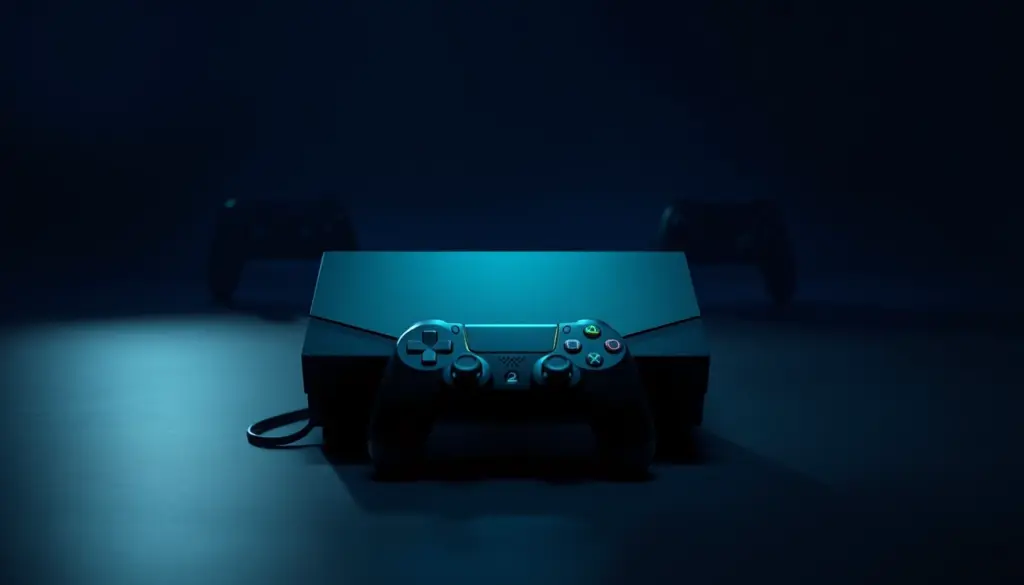
On June 7, 2026, at its annual Games Showcase, Xbox did something it had spent more than two years telling players it would never do again: it promised a game would stay off PlayStation and Switch 2 for good. Gears of War: E-Day and Clockwork Revolution are now Xbox console exclusives – not timed, not temporary. The announcement capped a leadership shake-up that saw Xbox chief Phil Spencer retire and Sarah Bond, the architect of the “Xbox Everywhere” multiplatform strategy, leave the company. Six weeks later, with Xbox hardware revenue down more than 30% for a third consecutive quarter, the question isn’t just whether the pivot back to Xbox exclusives is real. It’s whether it can actually move the needle.
This is a full reversal of course dressed up as a “targeted” one, playing out in public across showcases, leaked memos, and denied rumors. Here’s what actually changed about Xbox’s exclusives strategy, why Microsoft says it changed, and what it means for anyone deciding which console to buy next.

Don't miss new tech stories on Google
Add Shattered once in the Google app and our stories show up in your news suggestions.
What Xbox Actually Announced on June 7
At the Xbox Games Showcase 2026, the company confirmed that Gears of War: E-Day – an origin story following Marcus Fenix and Dominic Santiago through the day the Locust Horde surfaced – ships October 6, 2026, with an open beta for pre-order customers starting August 6. Clockwork Revolution, a steampunk, time-bending RPG from inXile Entertainment, follows in 2027. Both were explicitly labeled Xbox console exclusives, and Xbox Wire editor-in-chief Joe Skrebels made the framing unambiguous: “As part of our focus on the return of Xbox, we also announced that Gears of War: E-Day and Clockwork Revolution will be Xbox console exclusives. These are not timed exclusives.”
The showcase also leaned hard into nostalgia: a translucent Xbox Series X25 Limited Edition, styled after the original 2001 console’s “OG Green,” and a matching Wireless Controller X25 Special Edition, both arriving in November to mark the brand’s 25th anniversary. The symbolism wasn’t subtle – a console dressed like 2001, the year Xbox launched with exactly one strategy: exclusive games people couldn’t get anywhere else.
The Leadership Earthquake That Preceded It
The exclusivity reversal didn’t happen in a vacuum. It followed a leadership shake-up that leaked to IGN and forced Microsoft to announce it early, on Friday, February 20, 2026, three days ahead of schedule. Phil Spencer, head of Microsoft Gaming, is retiring; Xbox President Sarah Bond is departing to a “special advisor” role; and Asha Sharma, formerly president of Microsoft’s Core AI division, took over as Microsoft Gaming CEO. Both Spencer and Bond stayed on as advisors through the summer.
Bond had been the public face of Xbox Everywhere, and reporting from Thurrott describes internal resistance to the strategy, a missed July 2024 target to ship a mobile storefront, and friction over her leadership style. Her legacy isn’t entirely negative – Thurrott credits her in part with the regulatory push that closed Microsoft’s $68 billion Activision Blizzard acquisition. But the multiplatform bet that defined her tenure is now the thing her successor is visibly unwinding.
Sharma laid out her priorities in a subsequent internal memo, published on Xbox Wire on July 6 as “Resetting Xbox.” She named three: “great games,” the “return of Xbox,” and the “future of play.” The same memo confirmed the headcount reductions our sister coverage detailed in Xbox’s 3,200-job restructuring – roughly 1,600 cuts immediate, the rest phased through fiscal year 2027 – alongside Compulsion Games and Double Fine returning to independence and Arkane entering consultation over “strategic options.”
Why “Xbox Everywhere” Existed in the First Place
To understand why this reversal is significant, it helps to remember how recent the multiplatform strategy actually was. Xbox CFO Tim Stuart first signaled “a change of strategy” in November 2023. Phil Spencer made it official on February 15, 2024, announcing that four games – Hi-Fi Rush, Pentiment, Grounded, and Sea of Thieves – would ship on rival consoles. The pitch at the time was that Xbox’s future was about reach, not hardware: content and subscription revenue would grow even if console market share kept shrinking, because players would encounter Xbox software wherever they already played.
Over the following two years, that “just four games” promise expanded well beyond its original scope. It eventually swallowed genuine system-sellers, culminating in Halo: Campaign Evolved launching on PS5 on July 28, 2026 – the first time a mainline Halo title has ever appeared on PlayStation hardware, ending roughly 25 years of the franchise’s exclusivity. For a lot of longtime Xbox owners, that was the moment “just four games” stopped sounding credible.
The Numbers That Forced Microsoft’s Hand
Xbox Everywhere was sold as a content-and-services play, but the hardware side of the business kept deteriorating regardless. Per Microsoft’s own investor disclosures, Xbox hardware revenue fell 29% year-over-year in fiscal Q1 2026, 32% in Q2, and 33% in Q3 FY26 (the quarter ended March 31, 2026) – three straight quarters of 30%-plus declines. That same quarter, Xbox content and services revenue slipped 5%, and overall gaming revenue fell 7%, or $380 million, to $5.34 billion.
| Fiscal quarter | Period covered | Hardware revenue | Content & services | Total gaming revenue |
|---|---|---|---|---|
| FY26 Q1 | Jul–Sep 2025 | -29% | not separately disclosed | not separately disclosed |
| FY26 Q2 | Oct–Dec 2025 | -32% | not separately disclosed | not separately disclosed |
| FY26 Q3 | Jan–Mar 2026 | -33% | -5% | -7% ($5.34B) |
| FY26 Q4 | Apr–Jun 2026 | Reports July 29, 2026 | ||
Sharma’s “Resetting Xbox” memo put the profitability problem in blunter terms than any earnings call typically does. She wrote that the gaming business has been “operating at margins that are 3-10x lower than comparable platform and publishing businesses,” and that in a typical year Xbox has “lost 64 cents for every dollar we invested.” Whatever the strategic merits of reaching players on every screen, that framing reads like a business that needed hardware – and the exclusives that sell it – to matter again.
Gears of War: E-Day and Clockwork Revolution, Explained
Gears of War: E-Day carries outsized expectations for a franchise reboot. Industry reporter Tom Henderson, via Insider Gaming, has reported the game’s development budget at over $400 million – a figure Microsoft hasn’t confirmed but hasn’t disputed either. That number matters because it’s the crux of the skepticism around this strategy: a $400 million-plus bet recouped from a single-platform audience is a very different proposition than the same budget spread across Xbox, PlayStation, and Switch 2.
Clockwork Revolution, from Fallout: New Vegas developer inXile Entertainment, is a lower-profile bet by comparison – a narrative RPG built around a mechanic where “every decision echoes forward, and time itself is a weapon,” per its Xbox Wire description. Its 2027 window gives Microsoft a full year to gauge whether E-Day’s exclusivity actually drives Xbox hardware sales before a second exclusive has to prove the same thing.
What “Console Exclusive” Actually Means Now
The phrase “Xbox console exclusive” caused real confusion after the showcase, and it’s worth being precise about it. Neither Gears of War: E-Day nor Clockwork Revolution is exclusive to Xbox hardware in the way a 2005-era Xbox 360 exclusive was. Both are confirmed for Xbox Series X|S, Windows PC, Xbox Cloud Gaming, Game Pass on day one, and Xbox Play Anywhere. What “console exclusive” specifically rules out is a PS5 or Switch 2 port – full stop, no timed-exclusivity window, no eventual multiplatform release down the line.
In practice, this means the new Xbox exclusives strategy protects the PC-and-Xbox ecosystem Microsoft already controls (including Game Pass subscription revenue) while denying rival hardware makers the games entirely. It’s exclusivity aimed at Sony and Nintendo, not at Windows.
Xbox Shoots Down Rumors of a Second Reversal
The story didn’t end at the showcase. On June 15, 2026, leaker “SneakersSO” claimed the exclusivity announcement was “for show” – an attempt to placate fans without a genuine strategy change behind it. Xbox Chief Strategy Officer Matthew Ball pushed back directly on X, stating “There are no conversations and have been no conversations to reverse course,” adding that players should “expect signature exclusives from us every year.”
The rumor had traction because the financial pressure is real: Microsoft CEO Satya Nadella has reportedly told the gaming division it needs to become a “sustainable business,” and insiders have described Xbox’s gaming unit as running on roughly a 3% margin – a figure in the same range as the “3-10x lower” language in Sharma’s own memo. A month later, on July 18, Ball and Xbox Chief Content Officer Matt Booty reaffirmed the commitment publicly. Ball told Insider Gaming, “I can assure you, Gears of War: E-Day and Clockwork Revolution are not the only titles we’re planning,” arguing that “to grow a platform like ours, you have to have exclusive games and services.” Booty added: “We are the stewards of over 20 game franchises that have made a billion dollars in their lifetime.”
Not a Full U-Turn: What’s Still Going Multiplatform
Xbox has been careful to frame this as selective, not total. Titles already promised to PS5 are shipping as planned, and several major 2026-2027 releases remain multiplatform by design – particularly live-service games with large existing communities, which Booty has said will keep reaching players “wherever they are.”
| Game | Studio | Platform status | Release |
|---|---|---|---|
| Gears of War: E-Day | The Coalition | Xbox console exclusive (+ PC/cloud/Game Pass) | Oct 6, 2026 |
| Clockwork Revolution | inXile Entertainment | Xbox console exclusive (+ PC/cloud/Game Pass) | 2027 |
| DOOM: The Dark Ages – Revelations | id Software | Multiplatform | Jul 7, 2026 |
| Halo: Campaign Evolved | Halo Studios | Multiplatform, incl. PS5 | Jul 28, 2026 |
| Grounded 2 | Obsidian Entertainment | Multiplatform, incl. PS5 | Aug 11, 2026 |
| Minecraft Dungeons II | Mojang Studios | Multiplatform, incl. PS5 | Sep 29, 2026 |
| Forza Horizon 6 | Playground Games | Multiplatform, incl. PS5 | Nov/Dec 2026 |
| Fable | Playground Games | Multiplatform, incl. PS5 | Feb 23, 2027 |
The biggest open question sits with Bethesda. Booty has declined to confirm exclusivity plans for either Fallout 5 or The Elder Scrolls VI, telling interviewers he wouldn’t “overly fixate on single-player” as the defining rule for what stays exclusive, per reporting on his comments – leaving open the possibility that multiplayer-heavy or live-service-adjacent titles could also be walled off from PS5 and Switch 2 going forward.
Xbox vs. PlayStation vs. Nintendo: Three Different Bets
Xbox’s zigzag looks even more distinctive next to how Sony and Nintendo have behaved through the same period. Sony has stayed exclusive-first for its own first-party output, typically waiting one to three years before a PC port – even as it now hosts Halo: Campaign Evolved, a rival’s flagship franchise, on PS5 hardware. Nintendo hasn’t multiplatformed a first-party Switch 2 title at all. Both companies effectively get to watch Microsoft run the experiment for them.
| Platform | Current approach | 2026 shipment forecast* | Notable exception |
|---|---|---|---|
| Xbox Series X|S | Selective exclusives, after a 2-year multiplatform experiment | 2.5 million (-22% YoY) | Halo: Campaign Evolved ships on PS5 |
| PlayStation 5 | Exclusive-first, delayed PC ports | 13.2 million | Now hosting a rival’s flagship FPS (Halo) |
| Nintendo Switch 2 | Fully exclusive | 17.1 million | None to date |
*Forecast by S&P Global Market Intelligence’s Kagan research group, first reported July 2026 – see this site’s full breakdown in Xbox Shipments Sink 22%, Head Toward Zero by 2027. The same analysis pegs a fully-hiked Xbox Series X at roughly $100 above an equivalent PS5, adding a pricing headwind on top of the software one.
Market Impact: Hardware, Game Pass, and What Investors Are Watching
The immediate commercial test for Xbox’s new exclusives strategy isn’t Gears of War: E-Day’s launch-week sales – it’s whether owning an Xbox starts to feel necessary again to a buyer who could otherwise get most Xbox content through Game Pass on PC or Xbox Cloud Gaming. Game Pass Ultimate currently runs $22.99 a month and includes day-one access to first-party releases regardless of hardware, which somewhat blunts the urgency of buying a console even for genuinely exclusive titles. Xbox’s bet is that a small number of must-play, PS5-unavailable games recreates a reason to buy the box anyway.
Microsoft’s fiscal Q4 2026 results, covering April through June, are due July 29, 2026 – the first earnings report to land after both the leadership transition and the exclusivity reversal were fully public. It will be the clearest early signal of whether the strategy is doing anything to the hardware trendline, or whether three quarters of 30%-plus declines becomes four. Longer term, the same pressures are shaping Microsoft’s next hardware generation: Project Helix, the planned successor targeted for around 2028, is reportedly being designed as something between a traditional console and a certified living-room PC – a hedge that keeps the exclusivity question relevant well past this console generation.
The New Decision Framework, In Plain Terms
Xbox executives have described the new approach as case-by-case rather than a blanket policy. Based on their public statements, the underlying logic looks roughly like this simplified breakdown of how a given game’s platform fate seems to get decided:
function decidePlatformStrategy(game) {
  if (game.priorPlatformCommitment === "PS5" || game.priorPlatformCommitment === "Switch2") {
    return "honor existing multiplatform commitment"; // Halo, Fable, Forza Horizon 6
  }
  if (game.isLiveService && game.existingCommunitySize === "large") {
    return "multiplatform"; // Minecraft, large live-service titles
  }
  if (game.isFirstParty && game.isFlagshipRelease) {
    return "Xbox console exclusive"; // Gears of War: E-Day, Clockwork Revolution
  }
  return "case-by-case"; // everything else, per Matt Booty
}
This is an editorial simplification of public comments from Ball and Booty, not an actual internal document – but it captures the shape of the policy: existing promises get kept, mega-scale live-service games stay everywhere, and a handful of flagship single-player or co-op releases become the hardware’s selling point.
Buying Safely During the Exclusivity Hype Cycle
Big, contentious platform-exclusivity news is reliable bait for scams – fake “guaranteed beta key” giveaways, phishing pages spoofing Xbox pre-order flows, and social posts promising early Gears of War: E-Day access in exchange for account credentials. A few habits go a long way here. Pre-order and redeem codes only through Xbox.com, the Xbox app, the Microsoft Store, or a retailer you’d already trust with a credit card – not a link from a comment section or a DM. Check that any purchase page is actually on a microsoft.com or xbox.com domain before entering payment details, and treat “exclusive early access” offers requiring you to log in through a third-party site as an immediate red flag; Microsoft does not distribute pre-release beta access that way. If a deal looks meaningfully better than official pricing, verify it against Xbox’s own storefront before assuming it’s legitimate.
What Happens Next: 5 Predictions
- More exclusives get named before Gears of War: E-Day launches. Ball has explicitly promised more titles are coming; expect at least one additional announcement around Gamescom or a fall showcase to keep the “every year” pledge credible.
- The July 29 earnings report becomes a referendum. A fourth straight 30%-plus hardware decline would intensify the “reverse course” rumors Ball has already had to deny once.
- Fallout 5 and The Elder Scrolls VI become the next flashpoint. Booty’s refusal to rule multiplayer titles out of exclusivity consideration suggests Bethesda’s biggest games are the real test of how far this policy extends.
- Project Helix leans further into a hybrid identity. A console that’s also a certified Windows PC makes the exclusivity argument structurally harder – expect Microsoft to lean on 1-2 flagship exclusives specifically to justify Helix as more than a boutique gaming PC.
- Sony and Nintendo stay the course and let the contrast do the marketing. Neither has signaled any change to its own exclusivity approach; both benefit simply by pointing at Xbox’s reversal as proof their strategy was right all along.
Frequently Asked Questions
Is Xbox abandoning multiplatform games entirely?
No. Xbox executives have described this as a selective, case-by-case approach. Large live-service games and titles with existing platform commitments – including Halo, Forza Horizon 6, and Fable – are staying multiplatform. Only a small number of flagship releases, starting with Gears of War: E-Day and Clockwork Revolution, are becoming Xbox console exclusives.
What does “Xbox console exclusive” mean if the game is still on PC and Game Pass?
It specifically means the game will not release on PlayStation 5 or Nintendo Switch 2. It’s still fully available on Xbox Series X|S, Windows PC, Xbox Cloud Gaming, and Game Pass on day one – the exclusivity is aimed at rival consoles, not at Microsoft’s own PC and cloud ecosystem.
When does Gears of War: E-Day come out, and is it really staying off PS5?
Gears of War: E-Day releases October 6, 2026, with an open beta for pre-order customers beginning August 6, 2026. Xbox has confirmed it as a permanent, non-timed console exclusive, meaning no PS5 or Switch 2 release is currently planned.
Why did Microsoft reverse the Xbox Everywhere strategy?
Xbox hardware revenue fell more than 30% year-over-year for three consecutive fiscal quarters, and internal messaging from new CEO Asha Sharma described the gaming division’s margins as “3-10x lower” than comparable platform businesses. Leadership concluded that reaching players everywhere wasn’t translating into a healthy hardware business, and that exclusive games were needed to give people “a reason to buy an Xbox.”
Who is Asha Sharma, and why did she replace Phil Spencer?
Asha Sharma previously led Microsoft’s Core AI division and became CEO of Microsoft Gaming on February 20, 2026, after Phil Spencer’s retirement and Xbox President Sarah Bond’s departure to an advisory role. Sharma has framed her mandate around three priorities: “great games,” the “return of Xbox,” and the “future of play.”
Will already-multiplatform Xbox franchises like Halo and Forza come back to Xbox-only?
No indication of that so far. Xbox has said it will honor existing platform commitments, and titles like Halo: Campaign Evolved and Forza Horizon 6 are proceeding on PS5 as previously announced. The new exclusivity policy applies to future flagship releases, not games already committed elsewhere.
What does this mean if I own a PS5 or Switch 2?
You’ll still get most upcoming Xbox first-party games, including Halo: Campaign Evolved, DOOM: The Dark Ages – Revelations, Grounded 2, Minecraft Dungeons II, Forza Horizon 6, and Fable. You will not get Gears of War: E-Day or Clockwork Revolution on those platforms under the current policy.
Will Fallout 5 and The Elder Scrolls VI be Xbox exclusives?
Undecided publicly. Xbox Chief Content Officer Matt Booty has declined to confirm either game’s platform status and has said exclusivity won’t be limited only to single-player titles, leaving Bethesda’s two biggest upcoming releases as an open question.
For the full sweep of platform coverage, see shattered.io’s gaming section.