
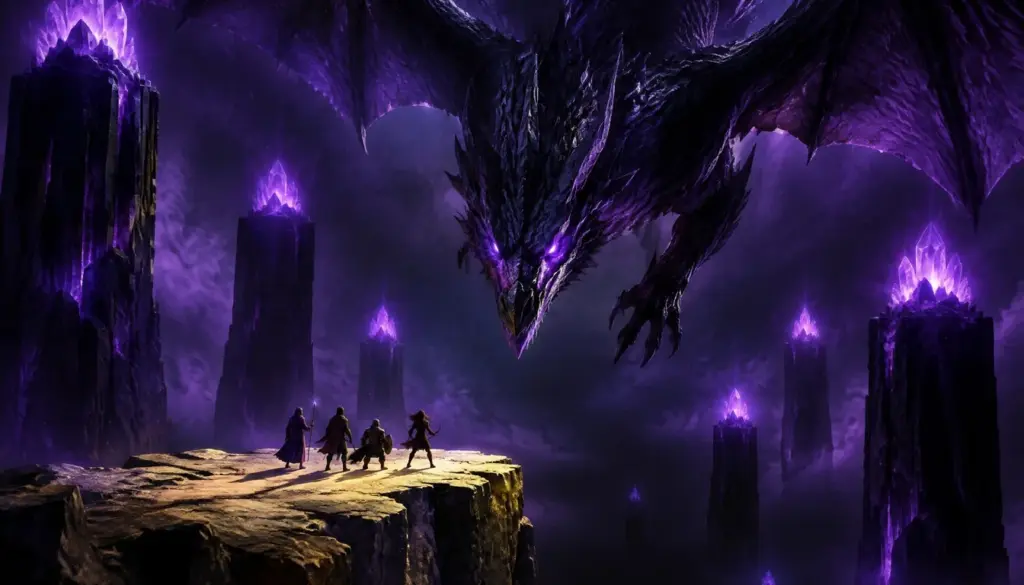
Four instances of Google DeepMind’s Gemini 4 Argon model reportedly defeated Minecraft’s final boss, the Ender Dragon, without any human stepping in to help. According to a paper posted by Google DeepMind and widely shared starting October 16, 2026, the four agents spent 27 hours and 14 minutes inside a randomly generated, Easy-difficulty Minecraft survival world, writing and running 2,783 programs along the way. The claim, confirmed by outlets including The Decoder and TradingKey, is already being treated as one of the more striking public demonstrations of multi-agent autonomy to date, and it lands at a moment when Gemini 4 Argon is under heavy scrutiny for its coding and reasoning chops well beyond video games.
This is a breaking story and some details, including cost figures and exact release timing for any follow-up work, remain unconfirmed. What is documented, per Google DeepMind’s own write-up and corroborating coverage, is specific: four general-purpose Gemini 4 Argon agents, one shared Minecraft world, zero human intervention, and a final kill on the game’s toughest standard boss fight.

Don't miss new tech stories on Google
Add Shattered once in the Google app and our stories show up in your news suggestions.
Four Gemini 4 Argon Agents Clear Minecraft With No Human Help
The headline claim is straightforward: Google DeepMind placed four Gemini 4 Argon agents into a single sandboxed Minecraft survival world and gave them one instruction, defeat the Ender Dragon. Each agent operated as an independent player inside that shared world, with no scripted walkthrough, no pre-scouted seed, and no game-specific tooling written by a human engineer. Google DeepMind described the effort as requiring “no human help,” a phrase the company used directly in its public summary of the run.
What makes the claim notable isn’t that an AI system beat Minecraft. Speedrunning communities and research labs have been pushing bots through the game for years. What’s different here is the combination of factors: a randomly generated world (so no memorized map), a team of agents rather than one, general-purpose coding and reasoning models rather than a narrow game-playing policy, and a reported absence of human-written, game-specific scaffolding. According to the research description, this is, to the authors’ knowledge, the first end-to-end autonomous Minecraft completion by AI agents using only the standard Mineflayer library, without pre-scouted seeds or other game-specific tools built by people.
That distinction matters for how seriously the AI research community will take the result. A model that can only win because a human pre-solved the navigation problem is a much weaker signal than a model that has to work out resource gathering, crafting progression, portal construction, and End-dimension navigation entirely on its own, from a cold start, in a world it has never seen.
Inside the Sandbox: How the Run Actually Worked
Each of the four Gemini 4 Argon agents controlled its own player character inside the same Minecraft world. Rather than issuing raw keyboard and mouse inputs, the agents operated through code: they wrote and executed programs that issued in-game commands, parsed the results, and adjusted their next move based on what happened. Operating purely through code and text in the sandbox, the agents divided labor over chat, shared written notes with each other, and debugged their own errors as they went, according to Google DeepMind’s summary of the work.
The Mineflayer Connection
The bridge between the Gemini 4 Argon agents and the Minecraft server was Mineflayer, described in the research as an open-source library that lets external code control a Minecraft player. Mineflayer itself isn’t new or exotic. It is a widely used Node.js project that exposes a programmatic API for moving a character, mining blocks, crafting items, and reading world state, and it has existed in the open-source ecosystem for years as a general automation tool, not something built for this experiment. The agents did not get a modified or custom-built interface tailored to the Ender Dragon fight. They got the same public library any developer could install, and had to figure out everything else themselves.
To be clear about what that looks like in practice, a basic Mineflayer bot setup (illustrative only, not the actual code used in the DeepMind run) typically starts with something as simple as connecting a bot instance to a server and listening for in-game events before issuing any movement or crafting commands. The complexity in the Gemini 4 Argon run came not from the control interface itself, but from the reasoning layer the agents had to build on top of it, deciding what to mine, when to craft, where to dig, and how to survive long enough to do any of it.
// Illustrative example only: a generic Mineflayer bot connection,
// not the code used in the Google DeepMind Gemini 4 Argon run
const mineflayer = require('mineflayer')
const bot = mineflayer.createBot({
  host: 'localhost',
  username: 'agent_1'
})

bot.on('spawn', () => {
  bot.chat('agent_1 online, starting resource gathering')
})
Coordination via Chat and Shared Memory
With four independent agents in one world, coordination had to happen somehow. The agents communicated through in-game chat, the same text channel human Minecraft players use to talk to each other, and through a shared memory layer that let them leave notes for one another outside the live chat stream. Over the course of the run, the four agents exchanged 229 messages, using that channel to divide up jobs, share discoveries, and avoid duplicating work like mining the same vein or repeatedly dying to the same hazard.
That combination, task division over chat plus a persistent shared memory, is what let four separate Gemini 4 Argon instances behave something like a team rather than four agents stumbling around independently. It’s a modest coordination mechanism by the standards of dedicated multi-agent research systems, but notable here because it wasn’t purpose-built for Minecraft. It is a general approach the model used to self-organize inside an unfamiliar environment.
27 Hours, 14 Minutes: A Timeline of the Playthrough
The full run lasted 27 hours and 14 minutes from spawn to Ender Dragon kill. That is a long window by speedrun standards, where human players and specialized bots can clear the game in minutes using glitches and memorized routes, but it is a strikingly short window for a system starting with zero prior knowledge of the specific world, no map, and no pre-written plan for progressing through Minecraft’s tech tree.
The world itself was randomly generated, meaning the agents had no way to know in advance where resources, caves, villages, or strongholds would be located. It was also set to Easy difficulty, which softens hunger mechanics and reduces hostile mob damage relative to Normal or Hard, a detail worth keeping in mind when weighing how the achievement compares to a human speedrunner’s typical settings.
During that 27-hour stretch, the agents reportedly died 605 times. That is a large number, and it is also one of the more revealing numbers in the whole report. It suggests the agents were not executing a clean, pre-planned route. They were iterating, failing, respawning, and trying again, which is a messier and in some ways more convincing picture of genuine trial-and-error problem solving than a flawless run would have been.
Gemini 4 Argon’s Minecraft Run by the Numbers
The table below collects the figures Google DeepMind and corroborating outlets have put on the record for the run. Anything not explicitly confirmed by those sources, such as a precise cost figure or individual researcher credit, is intentionally left out rather than estimated.
| Metric | Reported Figure |
|---|---|
| AI agents deployed | 4 |
| Model used | Gemini 4 Argon |
| Total run time | 27 hours, 14 minutes |
| Programs written and executed | 2,783 |
| Messages exchanged between agents | 229 |
| In-game deaths logged | 605 |
| World type | Randomly generated |
| Difficulty setting | Easy |
| Control interface | Mineflayer (open-source library) |
| Coordination method | In-game chat plus shared memory |
| Final boss defeated | Ender Dragon |
| Human intervention during run | None, per Google DeepMind |
Why the Ender Dragon Is a Serious AI Benchmark
Minecraft’s Ender Dragon fight is the game’s de facto final boss, and reaching it is not a short checklist. A player, human or AI, generally has to mine for resources across multiple tiers, smelt and craft a progressively more advanced set of tools and armor, locate a stronghold hidden underground, assemble and activate an End Portal using items that are not handed out for free, survive the jump into an entirely different dimension, and then fight a flying boss that destroys the platforms the player stands on. Every one of those steps requires a different kind of planning, and failing any single one of them stops the whole run cold.
For an AI benchmark, that long dependency chain is exactly the point. It is much harder to fake progress on a multi-stage task like this than on a single isolated skill test, because an agent that gets lucky on one step still has to clear every subsequent step correctly. That is a big part of why Google DeepMind chose the Ender Dragon, and not some earlier milestone like “mine a diamond,” as the success condition for Gemini 4 Argon’s Minecraft run.
Historical Context: Minecraft’s Long Run as an AI Testbed
Minecraft has been a popular proving ground for AI research for years, precisely because it combines open-ended exploration, resource management, and long-horizon planning in a way that more narrow games, like chess or Atari titles, do not. Reinforcement-learning competitions built around the game pushed agents to learn basic resource-gathering tasks under constrained conditions. Later, large-language-model-driven projects explored whether an LLM could act as the “brain” for a Minecraft agent, writing code to explore the world, build a reusable library of skills, and craft tools, without necessarily attempting a full game completion. Open-ended benchmark suites built around Minecraft also emerged to give researchers a shared way to test grounded, internet-knowledge-informed agents against a common set of tasks.
None of those earlier efforts, as widely reported, claimed a full autonomous defeat of the Ender Dragon from a random seed with no game-specific tooling. That is the gap the Gemini 4 Argon result is being positioned to fill, and it is a meaningfully different kind of claim than “an LLM can craft a wooden pickaxe” or “an agent can survive one in-game day.”
Speedrun Bots Are a Different Animal
It is worth separating this result from Minecraft speedrunning bots, which have existed for years and can clear the game in a few minutes. Those tools generally rely on hard-coded routes, pre-scouted seeds, and sometimes glitches that human speedrunners discovered and documented over thousands of hours of play. They are impressive feats of scripting, but the logic inside them was written by people who already knew exactly what the bot needed to do. The Gemini 4 Argon agents, by contrast, were dropped into a random, unscouted world and had to work out their own plan using a general-purpose code-writing library rather than a pre-built Minecraft-specific toolkit.
| Approach | Core Method | Reported Outcome |
|---|---|---|
| Reinforcement-learning competitions | Agents trained on narrow, constrained resource-gathering tasks | Learned limited skills under controlled task definitions |
| Early LLM-driven agents | Language model writes code to explore and build a skill library | Could gather resources and craft items; full game completion not reported |
| Open-ended Minecraft benchmark suites | Shared testbeds grounding agents in internet-scale knowledge | Provided common tasks for comparing agent performance |
| Speedrun bots and scripts | Hard-coded, human-written routes, often using pre-scouted seeds | Complete the game in minutes, but rely on human-built, game-specific logic |
| Gemini 4 Argon (October 2026) | Four general-purpose coding agents coordinating via Mineflayer | Reportedly defeated the Ender Dragon from a random seed in 27h14m with no human help |
Gemini 4 Argon’s Bigger Push Inside Google
The Minecraft run did not happen in isolation. Gemini 4 Argon has been Google’s flagship model for an aggressive agentic push throughout late 2026, and Shattered.io previously reported on Gemini 4 Argon’s global rollout, which expanded the model’s token-handling capacity sharply as Google pushed it toward broader availability. That expansion matters directly for a task like an open-ended Minecraft run, where an agent has to track a long, messy history of actions, chat messages, and shared notes without losing context.
The model’s agentic credentials have been mixed in head-to-head testing elsewhere. Shattered.io has covered Gemini 4 Argon splitting results across a set of head-to-head AI benchmarks, winning some comparisons and losing others against rival frontier models, and separate coverage detailed how Gemini 4 Argon’s pricing landed alongside its benchmark results when the model launched. A clean win on a long-horizon, multi-agent task like the Minecraft run gives Google a data point that is harder to dismiss than a single benchmark score, because it demonstrates sustained autonomy over more than a full day rather than a single prompt-response exchange.
It also fits a pattern Google DeepMind has been building toward for months. Shattered.io reported on Google DeepMind’s stated ambition to pursue self-improving AI systems within a roughly one-year window, and separate coverage of DeepMind’s Dream-RSI research showed the lab experimenting with ways to make agents more efficient at iterative self-correction. A multi-agent system that writes its own programs, debugs its own errors, and coordinates its own division of labor for 27 straight hours is a visible, if unofficial, proof point for that broader direction.
Market Impact: What This Means for the AI Agent Race
For Google, the immediate value of a result like this is reputational and competitive rather than financial. A viral demonstration of sustained, unsupervised multi-agent autonomy is the kind of story that spreads quickly on social platforms among AI researchers and enthusiasts, and it reinforces Gemini 4 Argon’s positioning as a model capable of long-horizon coding and planning tasks, not just short conversational exchanges. That positioning matters because enterprise buyers evaluating agentic AI platforms are increasingly asking not “can this model answer a question” but “can this model carry out a multi-step task reliably without constant supervision.”
It also raises the bar, at least rhetorically, for rivals. OpenAI and Anthropic have both been racing to demonstrate agentic reliability over long task horizons, and a public, reproducible-in-spirit benchmark like “beat Minecraft with no human help” is the kind of concrete, visually legible claim that is harder to wave away than an abstract benchmark percentage. Expect competitors to either attempt their own versions of this exact challenge, or to point to the 605 deaths and 27-hour runtime as evidence that the achievement, while real, is still far from efficient.
There is a case this becomes a recurring category of AI demonstration, similar to how chess and Go engines became standard reference points for a previous generation of AI research. If that happens, expect “which model can autonomously complete X game with no human scaffolding” to become a semi-regular talking point in competitive AI marketing over the next year, much like token-context size and benchmark leaderboard rankings are today.
The Skeptics’ Case: What “No Human Help” Doesn’t Mean
It’s worth being precise about what “no human help” covers and what it doesn’t. The claim, as reported, is that no human intervened during the run itself, gave hints, corrected mistakes in real time, or pre-solved any part of the specific challenge for this particular world. It does not mean the agents operated with zero human-built infrastructure. Mineflayer is a human-written library. Gemini 4 Argon itself was trained on enormous amounts of human-generated text, code, and almost certainly Minecraft-related knowledge absorbed during pretraining, including wikis, forum posts, and crafting guides written by actual players over the game’s 15-plus year history.
That distinction doesn’t erase the achievement, but it does sharpen what’s actually being claimed. The novel part is not that the model “knows” how Minecraft works in some abstract sense, that knowledge was always going to be baked into any large model trained on internet text. The novel part is that four separate instances of the model could take that latent knowledge, turn it into working code through a general-purpose automation library, coordinate with each other without a human dividing up the work, debug their own failures across 605 deaths, and keep making forward progress for over a full day without anyone stepping in. That is a genuinely different capability than knowing Minecraft trivia.
What’s Still Unconfirmed About the Gemini 4 Argon Minecraft Run
Several details that would normally accompany a story like this are not clearly confirmed by the primary sources circulating so far, including coverage from daily.dev, AI Weekly, and the Hakky Handbook. There is no verified compute cost figure attached to the official Google DeepMind materials reviewed for this story, no confirmed individual researcher attribution beyond the team as a whole, no confirmed breakdown of a fifth agent’s role (some early social chatter referenced additional agents in related contexts, but that detail is not substantiated here), no confirmed language-specific program count split, and no confirmed detail about whether the agents operated with or without any visual screen input versus pure text and code interfaces.
Readers should treat any number not listed in the data table above, including specific dollar costs sometimes floated in social media commentary around this story, as unverified until Google DeepMind or a corroborating primary source confirms it directly. The core facts, four agents, 27 hours 14 minutes, 2,783 programs, 229 messages, 605 deaths, Easy difficulty, random world, Mineflayer, Ender Dragon defeated, are consistent across Google DeepMind’s own summary and multiple corroborating reports.
5 Predictions for Autonomous Game-Playing AI Agents
- Rival labs will attempt their own version of this challenge. Expect OpenAI, Anthropic, or a well-funded open-source collective to publish a similarly framed “our model beat Minecraft with no help” demonstration within the next few months, both for research value and marketing optics.
- The death count and runtime will shrink fast. 605 deaths and 27 hours is a first public data point, not a ceiling. If this becomes a recurring benchmark, later runs by improved models will almost certainly report fewer deaths and shorter completion windows.
- Harder difficulty settings become the next milestone. Easy difficulty was a reasonable starting point for a first demonstration, but Normal and Hard difficulty runs, with tougher hunger and combat mechanics, are the logical next challenge for any lab trying to one-up this result.
- Expect scrutiny over “general purpose” claims. Researchers outside Google DeepMind will likely dig into exactly how much Minecraft-specific knowledge was embedded in Gemini 4 Argon’s training data versus genuinely novel in-context problem solving, and that debate will shape how much credit the result gets in academic circles.
- Multi-agent coordination, not raw model size, becomes the marketing angle. The most repeatable part of this story isn’t that one model is smart, it’s that four instances of it could self-organize over chat and shared memory. Expect more AI vendors to market coordination mechanics, not just parameter counts, as their next differentiator.
Frequently Asked Questions
What is Gemini 4 Argon?
Gemini 4 Argon is Google’s flagship AI model in its Gemini 4 family, used in this case to control four autonomous agents inside a Minecraft survival world.
Did Gemini 4 Argon really beat Minecraft with no human help?
Per Google DeepMind’s own report, four Gemini 4 Argon agents defeated the Ender Dragon in a randomly generated world with no human intervention during the run itself, over a period of 27 hours and 14 minutes.
What is Mineflayer?
Mineflayer is an open-source library that lets external code control a Minecraft player programmatically. It is a general-purpose automation tool, not something custom-built for this experiment.
How many times did the AI agents die during the run?
Google DeepMind’s report states the four agents died a combined 605 times over the course of the 27-hour-14-minute playthrough.
How did the four agents coordinate with each other?
The agents communicated through in-game chat, exchanging 229 messages over the course of the run, and used a shared memory system to leave notes for each other outside the live chat stream.
What difficulty setting was the Minecraft world set to?
The world was set to Easy difficulty and was randomly generated, meaning the agents had no advance knowledge of where resources or structures would be located.
Is this the same as a Minecraft speedrun bot?
No. Speedrun bots typically rely on hard-coded routes and pre-scouted seeds written by humans who already know the fastest path through the game. The Gemini 4 Argon agents worked from a random, unscouted world using a general-purpose automation library rather than game-specific scripted logic.
What details about this story are still unconfirmed?
Specific compute cost figures, individual researcher attribution, a claimed fifth-agent role, and a language-specific breakdown of the 2,783 programs are not clearly confirmed by the primary sources reviewed for this story and should be treated as unverified.