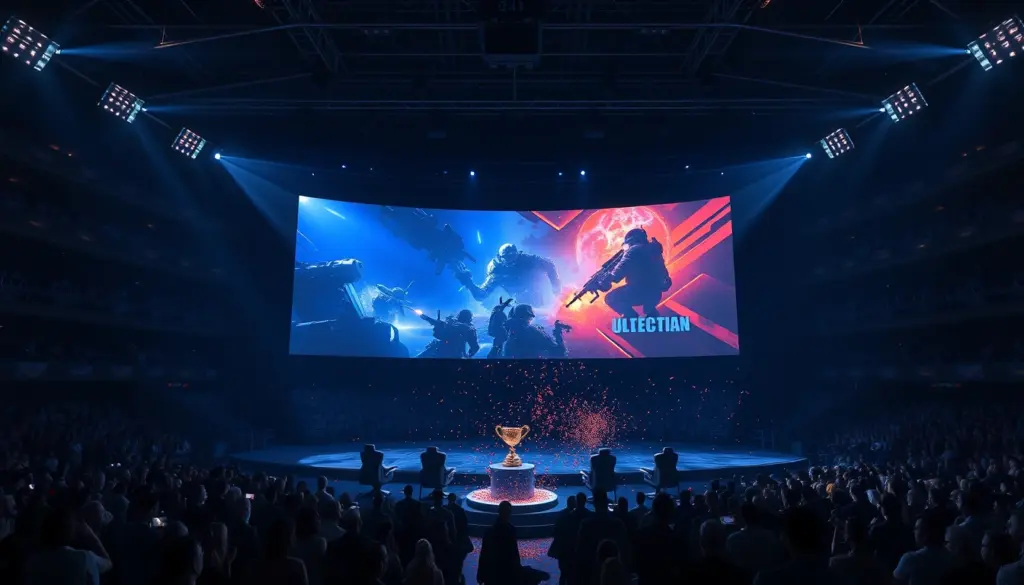
Team Spirit beat MOUZ 3-1 in the grand final of BLAST Open Porto 2026 on September 7, closing out the Portugal event with a $250,000 top prize and a second straight trophy for the Russian-founded, Belgrade-based organization. Danil “donk” Kryshkovets picked up his second consecutive MVP award, this time from HLTV and tournament partner 1xBET, after posting a 1.40 rating on HLTV’s Rating 3.0 scale across the event. On paper, it reads like a routine result in a packed CS2 calendar. Underneath it, the numbers tell a stranger story: the same month Spirit’s win topped esports headlines, Counter-Strike 2’s raw player base logged its sixth straight monthly decline, sinking to a two-year low of roughly 1.33 million peak concurrent users in August.
That split, a competitive scene pulling in record prize money and sponsorship while the underlying playerbase shrinks, is the real story behind this week’s Porto result. This piece breaks down what happened in Portugal, what it means for the CS2 economy heading into 2027, and how the numbers stack up against Valorant, the game Counter-Strike still has to fend off for esports market share.
What happened at BLAST Open Porto 2026
BLAST Open Porto 2026 ran from August 26 to September 6 in Porto, Portugal, drawing 16 teams to compete for a $1.1 million prize pool, according to BLAST’s own tournament page. Spirit entered the playoffs as the top seed and closed it out by beating MOUZ 3-1 in the grand final, a result HLTV reported as a measure of revenge: MOUZ had beaten Spirit in the BLAST Bounty Summer 2026 final just weeks earlier. The $250,000 top prize pushed Spirit’s 2026 season into a run of back-to-back trophies, following their win at the CS2 event of the Esports World Cup earlier in the year.
Individually, the story belonged to donk. HLTV’s report on the MVP vote notes he went back-to-back, picking up the award after already winning it at the Esports World Cup CS2 finals months earlier. A 1.40 rating across a 16-team, single-elimination playoff bracket is a large enough sample to matter, and it puts donk, still only in his early twenties, at the center of transfer-market speculation that has followed him since Spirit’s breakout 2023 season.
Spirit’s roster (zont1x, sh1ro, tN1R, magixx and donk) has been remarkably stable through a period when most top CS2 rosters have churned at least one starter every six months. That stability, not just individual skill, is part of why Valve’s Regional Standings system had Spirit ranked the best team in the world as of early August, a ranking the Porto win reinforces rather than creates.
MOUZ’s near miss and the sponsorship angle
MOUZ leaves Porto with the runner-up prize and a roster, siuhy as captain alongside torzsi, Brollan, xertioN and jimmphat, that has spent 2026 trading wins with Spirit rather than trailing behind them. The Bounty Summer win in the prior tournament cycle wasn’t a fluke; Porto was a rematch MOUZ came close to repeating.
MOUZ’s commercial setup is also a useful window into where CS2 sponsorship money is actually coming from. The org competes under a “FONTEAM” media and esports brand tied to betting partner FONBET rather than running the bookmaker’s name directly on jerseys, a structure that lets a gambling sponsor buy visibility while sidestepping some regional advertising restrictions on betting brands. It is not an isolated case. Esports Charts’ tracking of CS2 title sponsorships in 2026 found that gambling and betting companies now hold a majority of CS2 tournament title sponsorships, a shift that has accelerated over the past two seasons as traditional tech and hardware sponsors have pulled back spend across esports broadly.
The player-count problem nobody’s talking about
Here’s where the Porto result gets more interesting than a routine grand final recap. While Spirit and MOUZ were battling for $1.1 million in Portugal, Counter-Strike 2’s core playerbase was in the middle of a six-month decline. Tracking site Timesaver.gg reported that CS2 closed August 2026 at a peak of roughly 1.33 million concurrent players, the lowest monthly peak the game has recorded in two years and the sixth consecutive month of falling engagement.
That decline is happening at the same time the competitive and spectator side of CS2 is setting records. IEM Cologne Major 2026, held June 2-21 with 32 teams competing for a $1,250,000 prize pool, broke two million live viewers during a quarterfinal match, the highest concurrent viewership any Counter-Strike event has ever recorded, according to Esports Charts’ event tracking. CS2 was also the most-watched esport on Twitch in 2025, logging 770 million hours watched, up 33% year over year.
Put those two data points side by side and you get a scene where fewer people are queuing for matchmaking but more people are tuning in to watch professionals play. That’s not unprecedented (traditional sports have long separated “people who play the sport” from “people who watch it”), but it’s a newer dynamic for Counter-Strike specifically, and it changes how publishers, tournament organizers and sponsors should think about where CS2’s actual commercial value sits in 2026.
CS2’s 2026 tournament economy by the numbers
| Metric | 2026 figure | Source / context |
|---|---|---|
| BLAST Open Porto 2026 prize pool | $1,100,000 | 16 teams, Aug 26-Sept 6, Porto |
| Spirit’s Porto winnings | $250,000 | 1st place, beat MOUZ 3-1 in final |
| IEM Cologne Major 2026 prize pool | $1,250,000 | 32 teams, June 2-21, 2026 |
| IEM Cologne peak live viewers | 2,000,000+ | Highest concurrent viewership in CS2 history |
| CS2 Twitch hours watched (2025) | 770,000,000 | Up 33% year over year |
| CS2 peak concurrent players (Aug 2026) | ~1,330,000 | Two-year low, sixth straight monthly drop |
| donk’s Porto tournament rating | 1.40 | HLTV Rating 3.0 scale, MVP award |
CS2 vs Valorant: two different bets on the same audience
Riot’s Valorant remains the clearest point of comparison for where CS2’s esports economy sits competitively. The two games split the tactical-shooter esports audience roughly along generational and regional lines: CS2 leans on a deep European and CIS talent pipeline built up over two decades of Counter-Strike, while Valorant’s centralized VCT franchise model has pulled in a younger, more North American and Asian audience since its 2021 launch.
On raw viewership, CS2 currently holds the edge, with peak concurrent viewership figures in the 2.7 million range against Valorant’s roughly 1.7 million, per Esports Charts’ game-tracking data. On prize money structure, the two circuits look almost inverted. CS2’s Major Championships pay out $1,250,000 per event, smaller than a single VCT Champions prize pool of $2,250,000, but Counter-Strike’s open, third-party-organizer model (BLAST, ESL, PGL and others all running independent events) means CS2’s total annual tournament spend across all events has outpaced Valorant’s centralized VCT circuit in recent seasons, since Valorant’s franchised structure concentrates spending into fewer, larger events rather than a busy independent circuit.
| Metric | CS2 | Valorant |
|---|---|---|
| Peak concurrent viewership | ~2,748,000 | ~1,688,000 |
| Largest single event prize pool | $1,250,000 (IEM Cologne Major) | $2,250,000 (VCT Champions) |
| Tournament model | Open, multiple independent organizers | Closed franchise (VCT) |
| Twitch hours watched (2025) | 770,000,000 | Not disclosed in available data |
| Core competitive audience | Europe / CIS-heavy | North America / Asia-heavy |
The franchising question matters for CS2’s near-term outlook. Valve has resisted the closed-franchise model Riot uses for Valorant, keeping Counter-Strike’s competitive scene open to any organizer willing to fund a prize pool and any team willing to grind qualifiers. That openness is why a single September saw not just BLAST Open Porto but a packed secondary circuit around it. It also means CS2’s tournament calendar is more fragmented and harder for casual viewers to follow than Valorant’s tightly scheduled VCT stages, a tradeoff Valve has been willing to accept in exchange for keeping the ecosystem decentralized.
Betting money is now the dominant sponsor category
The FONTEAM branding on MOUZ’s jerseys isn’t a one-off arrangement, it’s representative of where CS2 sponsorship dollars are actually flowing in 2026. Global esports betting is one of the fastest-growing categories tied to competitive gaming: one market estimate puts the segment at roughly $14.17 billion in 2026, up from $12.59 billion in 2025, a compound annual growth rate near 12.5%, according to industry tracking from Track360. Other market models put the 2026 figure higher, up to $18.53 billion, with the spread largely coming down to whether a given estimate measures amounts wagered, operator revenue, or total consumer spend across betting and adjacent products like skin trading.
Whichever figure is closest to reality, the direction is consistent: betting operators are outspending traditional hardware and software sponsors for CS2 tournament and team branding. That has real implications for how the scene is regulated. As betting brands take over title sponsorships across more events, regulators in markets with strict gambling-advertising rules will likely push tournament organizers and teams toward the kind of indirect branding MOUZ already uses with FONTEAM, rather than direct bookmaker logos.
What Sony’s playbook says about Spirit’s dominance
Team Spirit’s back-to-back titles, and the roster stability behind them, run counter to a broader CS2 trend of aggressive mid-season roster changes. Most top-20 organizations have swapped at least one starter since the start of 2026, chasing marginal individual-skill gains through the transfer window rather than betting on chemistry built over multiple seasons. Spirit’s approach, keeping zont1x, sh1ro, tN1R, magixx and donk intact through consecutive title runs, is closer to the model that dominated Counter-Strike’s earlier eras, when teams like the mid-2010s Fnatic and SK Gaming rosters built sustained runs on continuity rather than constant reshuffling.
That continuity also raises the individual value of donk specifically. Back-to-back MVP awards across two separate marquee events (the Esports World Cup CS2 finals and now BLAST Open Porto) put him in rarefied company for a player still building his career resume. Organizations that have historically been willing to pay premium transfer fees for proven, in-form riflers will be watching his next contract cycle closely, even with Spirit showing no public signs of wanting to break up a winning roster.
Historical context: Counter-Strike’s long road to CS2
It’s worth remembering how young the “CS2” era actually is relative to the franchise it replaced. Valve shipped Counter-Strike 2 in September 2023 as a wholesale technical replacement for Counter-Strike: Global Offensive, which had itself run as the competitive standard for over a decade. That transition briefly disrupted the tournament calendar and forced organizers, sponsors and broadcast partners to rebuild infrastructure around a new engine and new viewer-facing features, but the underlying esports business, driven by third-party organizers rather than Valve itself, carried over largely intact.
Three years on, CS2 has clearly absorbed that transition well enough to set its own viewership and prize-money records, as this year’s IEM Cologne and BLAST Open results show. What’s less clear is whether the underlying game, not the esport built on top of it, is still growing its casual base the way it did during CS:GO’s mid-2010s boom, or whether the spectator economy has now genuinely decoupled from the player base that originally built it.
Market impact: who benefits from a decoupled esport
A shrinking active playerbase paired with record spectator numbers changes the calculus for several groups tied to CS2 commercially. Tournament organizers like BLAST, ESL and PGL benefit in the short term: sponsorship and broadcast deals are typically priced against viewership and engagement metrics, which are currently at or near record highs, not against Steam concurrent-player charts. Betting operators benefit too, since wagering volume tracks live viewership and match activity rather than the size of the matchmaking pool.
The group with more to lose is Valve itself. A declining player count eventually shows up in cosmetic and case-key revenue, the mechanism that has quietly funded Counter-Strike’s prize pools and marketing for years through Valve-run Major events and the broader skin economy. If the casual and semi-casual player base keeps shrinking while the pro scene keeps growing, the gap between people funding the ecosystem through microtransactions and people the ecosystem is built to entertain widens, a structural tension worth watching heading into 2027.
Betting, prediction markets and the wider gambling debate around esports
The rise of betting-driven sponsorship in CS2 sits inside a larger conversation the gaming industry has been having all year about prediction markets, skin gambling and how closely competitive gaming should let wagering products sit next to its product. That conversation isn’t unique to Counter-Strike, and prediction-market platforms have been restructuring parts of the sponsorship and betting stack across multiple esports titles, not just CS2. The FONTEAM arrangement on MOUZ’s jerseys, and the broader shift Esports Charts documented toward gambling-brand title sponsorships, is a CS2-specific data point inside that bigger industry trend.
What to expect through the rest of 2026 and into 2027
Based on the trajectory visible in this year’s numbers, a few things look likely over the next several months:
- Spirit enters the fall circuit as the favorite at nearly every event they attend, and Valve’s Regional Standings ranking will likely keep them at or near number one heading into the next Major qualification window, barring a roster change.
- Betting and gambling sponsors will keep expanding their share of CS2 title sponsorships, pushing more organizations toward indirect branding arrangements similar to MOUZ’s FONTEAM setup as regulators in Europe and elsewhere tighten direct gambling advertising rules.
- CS2’s concurrent player count is unlikely to reverse its six-month slide without a major content update, since the decline appears tied to broader shooter-genre fatigue rather than a CS2-specific problem.
- Viewership and prize money records will likely keep climbing even if player counts stay flat or fall further, reinforcing the decoupling between CS2 as a played game and CS2 as a spectator product.
- donk’s individual market value, on paper, keeps rising with every MVP award, and rival organizations will continue testing Spirit’s resolve to keep its core five intact through at least the next full season.
Why this matters beyond one tournament
A single BLAST Open result wouldn’t normally warrant this much analysis. What makes Porto 2026 worth a closer look is the timing: Spirit’s win landed in the same news cycle as confirmation that CS2’s core playerbase hit a two-year low, and the two stories, read together, describe an esport whose commercial engine is running hotter than the game that built it. That’s a pattern worth tracking for anyone with money tied to Counter-Strike’s future, whether that’s a sponsor, a betting operator, a rival publisher, or Valve itself.
Frequently asked questions
Who won BLAST Open Porto 2026?
Team Spirit won, beating MOUZ 3-1 in the grand final on September 7, 2026, in Porto, Portugal. It was Spirit’s second consecutive CS2 title of the year.
Who was named MVP of BLAST Open Porto?
Danil “donk” Kryshkovets was named MVP by HLTV and tournament partner 1xBET, finishing the event with a 1.40 rating on HLTV’s Rating 3.0 scale. It was his second consecutive MVP award after also winning it at the Esports World Cup CS2 finals earlier in 2026.
How big was the BLAST Open Porto 2026 prize pool?
The total prize pool was $1,100,000 across 16 teams, with Team Spirit taking home $250,000 for first place.
Is CS2’s player count actually declining in 2026?
Yes. CS2 closed August 2026 with a peak of roughly 1.33 million concurrent players, its sixth consecutive monthly decline and its lowest monthly peak in two years, according to tracking site Timesaver.gg.
How does CS2 compare to Valorant in viewership and prize money?
CS2 currently leads in peak concurrent viewership, around 2.7 million versus Valorant’s roughly 1.7 million, per Esports Charts. Prize money structures differ: Valorant’s centralized VCT Champions event pays a larger single prize pool ($2,250,000) than a single CS2 Major ($1,250,000), but CS2’s open, multi-organizer circuit produces more total tournament spending across the full calendar year.
Why are gambling companies sponsoring CS2 teams and events?
Betting and gambling companies now hold a majority of CS2 tournament title sponsorships in 2026, according to Esports Charts. The global esports betting market is estimated at roughly $14 billion to $18.5 billion in 2026 depending on methodology, and operators are outspending traditional tech and hardware sponsors for visibility in the scene.
When is the next CS2 Major?
Valve has continued its rotating Major schedule following IEM Cologne Major 2026, which ran June 2-21 with a $1,250,000 prize pool. Full details of the next Major’s dates and location were still being finalized by tournament organizers at the time of publication.
What team is Danil “donk” Kryshkovets on?
Donk plays for Team Spirit alongside zont1x, sh1ro, tN1R and magixx. Spirit is a Russian-founded esports organization that has been based in Belgrade, Serbia, since 2022.