OpenAI began rolling out GPT-6 inside ChatGPT on October 7, 2026, and paired it with a feature the company calls Intelligent UI. Plus, Pro, Business, and Enterprise subscribers got access first in the Chat tab, according to OpenAI’s own product announcement, with Free and Go tier users scheduled to follow a day later on October 8. The pitch is simple to state and a lot harder to pull off: ChatGPT answers no longer have to be paragraphs of text. They can be diagrams, charts, buttons, and small working tools, assembled on the spot.
Coverage from Android Authority, MacRumors, The Decoder, and iClarified landed within hours of each other on October 7, all describing the same core change: ChatGPT now composes replies from text, visuals, and interactive elements, picking the format automatically based on what’s being asked. It’s the biggest interface shift OpenAI has made to its flagship product in years, and it arrives while every major lab is hunting for ways to stand out beyond another benchmark chart, from Google’s Gemini 4 Argon pricing moves to Meta’s push into head-to-head testing against ChatGPT-6.
What Intelligent UI Actually Puts Inside a Reply
OpenAI describes Intelligent UI as a GPT-6 capability that builds an answer out of text, visuals, and interactive pieces chosen per question, rather than defaulting to prose. The examples reported by outlets that reviewed the rollout on October 7 give a clearer picture than the marketing language does.
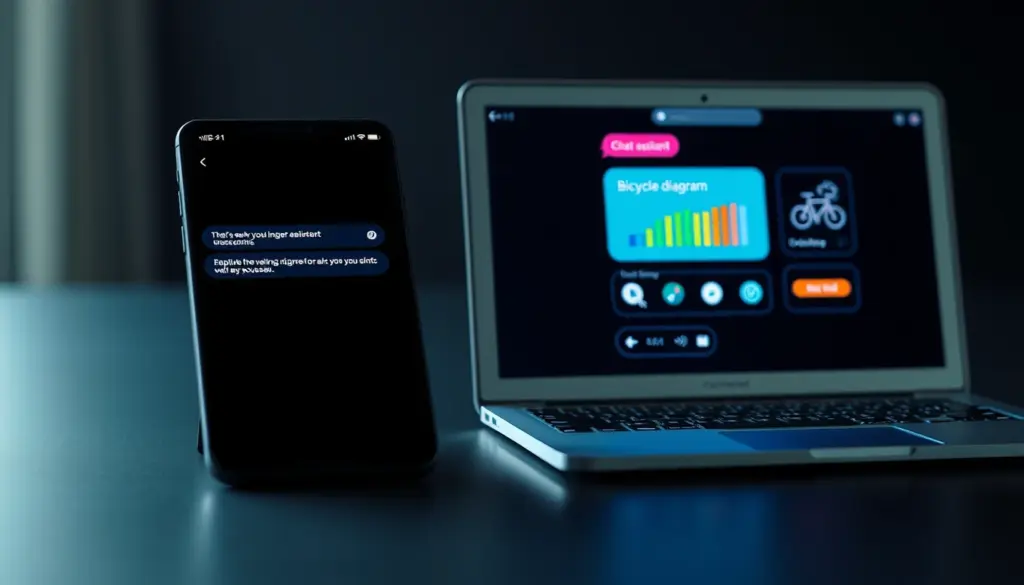
MacRumors described a diagram of a seven-speed bicycle with tappable zones for the frame, wheels, drivetrain, brakes, and cockpit, letting a user explore each part instead of reading a block of text about all of them at once. The same reporting described charts and graphs rendered as visual, sometimes editable elements, plus buttons and forms embedded directly in a reply so a user can act on an answer without copying it into another app. ChatGPT can also generate small, task-specific tools inline: a savings calculator, a dinner bill splitter, a cooking checklist, or a simple game, according to the October 7 coverage. One example cited repeatedly across outlets was a meal-planning reply that included food imagery, a guest-count control, automatically adjusted ingredient quantities, a button to copy the shopping list, and an interactive checklist for prep steps.
That’s a meaningfully different product than a chatbot that writes good paragraphs. It’s closer to a chatbot that writes small, disposable applications in response to a prompt, then throws them away once the conversation moves on.
The Rollout Schedule: Paid Tiers First, Everyone Within 24 Hours
OpenAI staged the release by subscription tier rather than flipping it on for all users at once. Plus, Pro, and Enterprise accounts got Chat tab access starting October 7, per the company’s release notes. ChatGPT Business workspaces also began seeing GPT-6 on October 7, though OpenAI’s Business release notes specifically caveat that availability depends on workspace access and which client a person is using, so not every Business seat lit up at the same moment. Free and Go tier users were told to expect the feature starting October 8, a one-day gap rather than the weeks- or months-long staggers OpenAI has used for some past launches, a timeline also confirmed independently by AI/TLDR’s release tracker.
Notably, the Business release notes also surfaced a naming detail worth flagging: they describe GPT-6 in that tier as “powered by GPT-6 Sol,” with response modes ranging from Instant to Extra High on supported clients. That’s a different pairing than the cheaper GPT-5.6 Sol variant shattered.io covered previously, and OpenAI hasn’t published a clear version map tying these Sol-branded releases together, so the exact relationship between them is still unclear from public material.
GPT-6 Intelligent UI Rollout Timeline
| Tier | Access start | Platform | Source |
|---|---|---|---|
| Plus | Oct. 7, 2026 | Web and mobile, Chat tab | OpenAI product announcement |
| Pro | Oct. 7, 2026 | Web and mobile, Chat tab | OpenAI product announcement |
| Enterprise | Oct. 7, 2026 | Chat tab | OpenAI product announcement |
| Business | Oct. 7, 2026 (workspace-dependent) | Chat tab, supported clients | ChatGPT Business release notes |
| Go | Oct. 8, 2026 | Web and mobile, Chat tab | OpenAI product announcement |
| Free | Oct. 8, 2026 | Web and mobile, Chat tab | OpenAI product announcement |
Under the Hood: a Compiler That Builds the Interface as the Model Writes
The mechanics behind Intelligent UI are more interesting than the feature list. MacRumors reported that the system draws from a library of native, streamable components and runs them through a compiler that processes the interface as the model generates its response, rather than waiting for a finished block of text and then formatting it afterward. In practice that means a reply can start rendering, say, a chart’s axes and labels before the underlying numbers have fully streamed in, with the interactive pieces filling in as generation continues.
That’s a real departure from how chat interfaces have worked since the original ChatGPT launch, where a model outputs Markdown and the client renders whatever static structure comes out the other end. Here the structure itself (a button, a slider, a tappable region of a diagram) is something the model is choosing and the client is compiling live. Here’s a simplified look at what that staged rollout maps to when read as structured data, based on OpenAI’s own release notes:
{
  "feature": "Intelligent UI",
  "model": "GPT-6",
  "surface": "ChatGPT Chat tab (web + mobile)",
  "rollout": [
    { "tiers": ["Plus", "Pro", "Enterprise"], "start": "2026-10-07" },
    { "tiers": ["Business"], "start": "2026-10-07", "note": "workspace/client dependent" },
    { "tiers": ["Go", "Free"], "start": "2026-10-08" }
  ]
}
From a Shelved Model to GPT-6: How OpenAI Got Here
GPT-6’s launch doesn’t come out of nowhere. Earlier this fall, OpenAI reportedly pulled its planned GPT-6.1 Astra release after internal testing found it fell short of the company’s safety and alignment standards, shipping a cheaper Sol-branded model in its place rather than the flagship it had originally planned. That decision drew scrutiny at the time over what exactly failed internal review and why OpenAI chose a quiet substitution over a public explanation.
GPT-6 with Intelligent UI reads like OpenAI’s answer to that stumble: a flagship release built around a genuinely new capability rather than an incremental score bump, paired with a tier-by-tier rollout that lets the company watch for problems on paid accounts before Free users ever see it. Whether that caution extends to the new interactive-answer behavior specifically isn’t addressed in the material OpenAI has published so far.
Interactive Replies vs. Raw Benchmarks: How Rivals Stack Up
None of GPT-6’s immediate rivals have reported an equivalent in-reply interface feature, at least based on what’s publicly documented as of this week. Google’s Gemini 4 Argon recently locked in $2/$10 per-million-token pricing and gated early access to roughly 650 partners, a rollout strategy built around controlled distribution rather than a visible interface overhaul. Anthropic’s Claude Opus 5.5 and Haiku 5.5 have focused on context length and API price cuts, including a benchmark win over GPT-5.6 Sol at roughly a third of the cost, which is a pricing and reasoning story, not an interface one. xAI’s Grok 4.7 has been positioned on raw capability too, with Elon Musk himself acknowledging it trails Claude by around 111 Elo points in head-to-head rankings. Z.AI’s GLM-5.3 made headlines for a safety-bypass rate that researchers flagged rather than for anything resembling Intelligent UI.
Meta’s Muse is the closest thing to a direct comparison point, since it was already being benchmarked head-to-head against “ChatGPT-6” in a five-prompt test before GPT-6’s wider rollout even landed this week, suggesting Meta anticipated this release and wanted a comparison on record early. None of that earlier testing accounted for Intelligent UI specifically, since the feature wasn’t public yet when those comparisons ran.
AI Assistant Interface Comparison
| Assistant | Latest flagship (as reported) | In-reply interactive UI reported? | Recent competitive move |
|---|---|---|---|
| ChatGPT (OpenAI) | GPT-6 with Intelligent UI | Yes — charts, buttons, diagrams, mini-apps | Staged rollout, Oct. 7–8, 2026 |
| Gemini (Google) | Gemini 4 Argon | Not reported | $2/$10 pricing, ~650-partner gated access |
| Claude (Anthropic) | Opus 5.5 / Haiku 5.5 | Not reported | 1M-token context, Haiku API price cut |
| Grok (xAI) | Grok 4.7 | Not reported | Trails Claude by ~111 Elo, per Musk |
| GLM (Z.AI) | GLM-5.3 | Not reported | Flagged for a high safety-bypass rate |
| Muse (Meta) | Meta Muse | Not reported | Ran its own benchmark vs. “ChatGPT-6” |
Why Interface, Not Just IQ, Is Becoming the Battleground
There’s a reason OpenAI chose to lead with an interface change instead of a pure capability claim. The major labs have converged on broadly similar benchmark territory over the past year, which makes it harder for any single model to win a news cycle on reasoning scores alone. An interface that turns a wall of text into a usable calculator or an editable chart is something a non-technical user notices immediately, in a way a two-point gain on a math benchmark never will.
That’s a bet on stickiness through utility rather than through raw intelligence claims, and it puts pressure on every competitor to answer in kind. One AlphaSignal headline framed the GPT-6 rollout as reaching “1.2 billion users,” though it’s unclear from that single source whether that figure describes weekly active users, total registered accounts, or simply people with theoretical access across tiers, so it should be read as a headline claim rather than a confirmed OpenAI metric. No stock-market reaction, analyst note, or rival-company statement tied specifically to the GPT-6 announcement had surfaced in the reporting reviewed for this piece, which is worth noting given how quickly markets usually respond to major model launches.
The Security Questions an Interactive Chatbot Raises
An AI that generates buttons, forms, and login-adjacent UI elements on demand widens a surface that’s already under attack. Shattered.io reported this week on a human-operated phishing platform impersonating ad products for ChatGPT, Gemini, Claude, and other AI tools, using browser-in-the-browser techniques to capture passwords and MFA codes. GPT-6’s interactive diagrams and embedded forms are a legitimate OpenAI feature, not a phishing technique, but the visual grammar is now closer than ever to what a convincing fake login screen looks like, which raises the bar for how carefully users need to check where a button or form is actually hosted.
None of the coverage reviewed for this article documents specific red-team findings, sandboxing controls, or provenance labeling that OpenAI applied to generated interactive elements. Those are open questions rather than resolved ones, and they’re the kind of detail that typically surfaces only after a security researcher or a user complaint forces a company’s hand.
What Developers and API Users Still Don’t Know
The GPT-6 announcement is squarely a ChatGPT consumer-product story, and a lot of adjacent questions remain unanswered in the material OpenAI and outlets have published so far. There’s no confirmation of whether Intelligent UI is available through OpenAI’s API, whether generating a mini-app consumes a different quota than a text reply, whether the feature changes subscription pricing, or whether a generated tool can be exported or persisted across sessions rather than disappearing once a chat ends. Developers building on top of GPT-6 will need to wait for a separate technical announcement, since the current release notes are written for end users inside the ChatGPT product, not for people building with the model directly.
The Pattern: Ship, Rebrand, Sometimes Pull Back
Looking only at what’s confirmed about OpenAI’s recent release cadence, a pattern emerges. A flagship model (GPT-6.1 Astra) got pulled after failing internal review. A cheaper Sol-branded replacement shipped in its place. Now a new flagship, GPT-6, arrives paired with a consumer-facing feature big enough to dominate the news cycle on its own, while a Business-tier variant is separately labeled GPT-6 Sol. That’s three model names in roughly a month, which makes it hard for anyone outside OpenAI to track exactly what’s running where, and it’s a reasonable bet that version-naming confusion becomes its own minor story in the weeks ahead.
Five Predictions for What Comes Next
- Expect at least one rival lab to announce its own in-reply interactive feature within the next two quarters, framed as a direct answer to Intelligent UI.
- If OpenAI opens Intelligent UI-style components to developers, it will likely arrive as a separate, metered API feature rather than something bundled into base GPT-6 pricing.
- Security researchers will likely publish the first proof-of-concept abuse case involving a GPT-6-generated form or button within weeks of the Free-tier rollout completing, given how closely the format overlaps with phishing UI patterns.
- Business-tier adoption will lag the Plus/Pro rollout, since OpenAI has already flagged that availability depends on workspace and client support rather than a single switch-flip.
- OpenAI will likely publish usage limits and safety details for mini-app generation reactively, after early complaints or an incident, following the same pattern seen with the quiet GPT-6.1 Astra shelving.
Frequently Asked Questions
What is GPT-6’s Intelligent UI?
It’s a ChatGPT feature that lets GPT-6 compose answers from text, visuals, and interactive elements, such as charts, buttons, forms, diagrams, and small generated tools, choosing the format automatically based on the question.
When did GPT-6 roll out to ChatGPT?
OpenAI began rolling it out on October 7, 2026, to Plus, Pro, Business, and Enterprise tiers, with Free and Go tier access following on October 8, 2026.
Do free ChatGPT users get Intelligent UI?
Yes, per OpenAI’s release notes, Free and Go tier users were scheduled to start receiving it on October 8, 2026, a day after paid tiers.
Is GPT-6 available through OpenAI’s API?
That hasn’t been confirmed publicly. The current announcement and release notes describe a ChatGPT product feature, not an API release, and no pricing or endpoint details have surfaced yet.
How is GPT-6 different from the shelved GPT-6.1 Astra?
GPT-6.1 Astra was reportedly withdrawn before release after internal testing found it fell short of OpenAI’s safety and alignment standards. GPT-6 is a separate, later flagship release that shipped alongside the Intelligent UI feature instead.
Does Intelligent UI change ChatGPT’s subscription price?
No pricing change has been confirmed in OpenAI’s announcement or release notes reviewed for this article.
How does GPT-6 compare to Gemini, Claude, or Grok on benchmarks?
No benchmark comparison between GPT-6 and Gemini 4 Argon, Claude Opus 5.5, Grok 4.7, or GLM-5.3 has been published yet. The documented difference so far is architectural: GPT-6 ships with an in-reply interactive interface that none of those rivals have reported matching.
Are there safety concerns with an AI generating interactive buttons and forms?
OpenAI hasn’t published specific red-team findings or safeguards for Intelligent UI. Given that fake AI-product ad portals are already using browser-in-the-browser techniques to mimic login screens, security researchers are likely to scrutinize how easily GPT-6’s generated UI elements could be spoofed or misused.
Related
- OpenAI Shelves GPT-6.1 Astra, Ships Sol at 1/5 Price
- Gemini 4 Argon Hits $2/$10 Pricing, Splits Benchmarks
- Claude Opus 5.5 Beats GPT-5.6 Sol at Third the Cost
- Meta Muse Tops ChatGPT-6 3-2 in 5-Prompt Test
- Fake AI Ad Portals Hit 6 Chatbots, Steal MFA Codes