
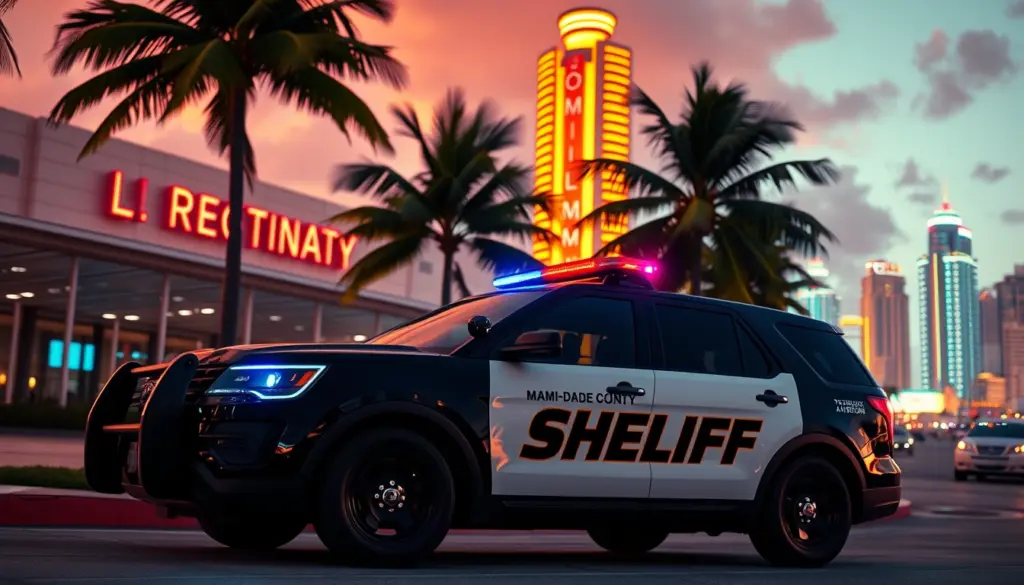
Miami-Dade County wanted to become Vice City for a few months. Its sheriff just said no, and the fallout is now the biggest story in gaming news. On September 3, 2026, Axios Miami and the Miami-Dade County government confirmed that Sheriff Rosie Cordero-Stutz publicly rejected a proposed marketing partnership between the county and Rockstar Games tied to the release of Grand Theft Auto 6. County Commissioner Juan Carlos Bermudez joined her. Within 24 hours, the story had spread from local Miami outlets to PC Gamer, Beebom, and gaming aggregators worldwide.
The dispute centers on a pitch deck county officials sent Rockstar in late July, proposing that Miami-Dade temporarily rebrand parts of itself as the game’s fictional Vice City in exchange for marketing revenue. It’s a rare case of a video game publisher’s promotional ambitions colliding directly with the law enforcement agency of the county it wanted to use as a backdrop. Here’s what actually happened, what each side has said on the record, and why this standoff says as much about GTA 6’s marketing scale as it does about Florida politics.
What Miami-Dade Proposed to Rockstar Games
According to Hoodline, county officials submitted a proposal to Rockstar Games in late July pitching a temporary countywide transformation into the game’s fictional Vice City, aimed at generating marketing revenue for local government while putting Miami-Dade in front of a global audience ahead of GTA 6’s release. The Miami Herald later reported that county officials say it was Rockstar that approached Miami-Dade about the game maker paying for marketing promotions, not the other way around, though the pitch deck itself came from the county side.
The scale of the idea is what makes it newsworthy. This isn’t a billboard or a co-branded ad spot. It’s a proposal to reshape public infrastructure, airports, transit branding, and potentially downtown signage, around a game whose entire premise revolves around car theft, robbery, and violence. Mayor Daniella Levine Cava’s office has confirmed talks took place, while stressing that none of it has cleared any formal review process. That distinction, between “we talked about it” and “we approved it,” is the fault line the rest of this story runs along.
Sheriff Rosie Cordero-Stutz Says the County “Is Not Vice City”
Sheriff Rosie Cordero-Stutz, an elected Republican who leads the Miami-Dade Sheriff’s Office, issued a statement on September 3 rejecting the proposal outright. In it, she said:
“Grand Theft Auto is a video game franchise built around criminal activity. Its fictional world includes murder, robbery, drug trafficking, carjacking, violence against law enforcement, and other conduct that the men and women of the Miami-Dade Sheriff’s Office work every single day to prevent.”
Rosie Cordero-Stutz, Miami-Dade County Sheriff — via Axios Miami
She went further, tying the objection directly to her department’s daily work. As she put it:
“At a time when law enforcement is working every day to reduce violent crime, prevent robberies and car thefts, combat drug trafficking, and build stronger relationships between our deputies and the communities we serve, I believe we need to seriously consider the message we send when our own government promotes a fictional identity centered around many of those same crimes.”
Rosie Cordero-Stutz, Miami-Dade County Sheriff — via Axios Miami
Her closing line has become the most-quoted part of the statement, cited across outlets covering the fallout:
“Miami-Dade County is not Vice City.”
Rosie Cordero-Stutz, Miami-Dade County Sheriff — via Axios Miami
PC Gamer built its headline directly around her core objection, running the story under the title “Grand Theft Auto is a videogame franchise built around criminal activity”: Miami-Dade County Sheriff comes out hard against a proposed GTA 6 collab with Rockstar, a line pulled straight from her statement to the Miami Herald, as PC Gamer reported.
Inside the Vice City Airport Rebrand Plan
The proposal that triggered the backlash reportedly went well beyond signage. According to Axios and Beebom, the pitch included redesigning passenger areas at Miami International Airport to create what one summary called an arrival experience that immediately establishes Miami as the real-world inspiration for Vice City. Beebom reported that county leaders had discussed rebranding the airport itself as “Vice City Airport” as part of the promotional push.
Redesigning Miami International Airport’s Arrival Experience
An airport rebrand is a heavier lift than a transit ad wrap. Signage, wayfinding, and terminal branding at a major international hub involve multiple regulatory sign-offs, and Miami International Airport serves tens of millions of passengers a year as one of the busiest airports in the country. Renaming or re-theming any part of that experience, even temporarily, would require buy-in well beyond the mayor’s office, which is likely part of why officials have been careful to describe the talks as preliminary rather than settled.
A County Still Weighing the Financial Upside
The Miami Herald frames the underlying tension bluntly: is the fictional murder and mayhem of Vice City worth real-life marketing dollars for a cash-strapped Miami-Dade County? No specific dollar figure for the proposed deal has been made public in county records or reporting so far, and officials have not disclosed what Rockstar offered to pay. What is public is that the mayor’s office has, according to Axios, touted the potential revenue such a campaign could bring, which is precisely what county officials publicly opposing the plan are asking to see spelled out before any further steps.
Commissioner Juan Carlos Bermudez Joins the Opposition
Sheriff Cordero-Stutz wasn’t alone. Miami-Dade County Commissioner Juan Carlos Bermudez co-signed the county’s official opposition, and the two issued a joint statement on the matter. As they put it in a statement covered by GameRant:
“We should be promoting the Miami-Dade we have worked so hard to build, not a fictional version of our community defined by crime and violence.”
Rosie Cordero-Stutz and Juan Carlos Bermudez, Miami-Dade County Sheriff and County Commissioner — via GameRant
According to the county’s own press release, Bermudez framed his objection around public resources rather than the game itself, arguing that the real question isn’t whether GTA 6 will draw global attention (it clearly will) but whether public facilities, branding, and staff time should be spent promoting a fictional Miami built around crime and lawlessness. He also called for full transparency on any conversations between the county and Rockstar, asking the administration to clearly lay out the public benefit, the costs, and the county resources tied to any collaboration proposal before it goes further.
Not Everyone at County Hall Agrees
The opposition isn’t unanimous, and that nuance has gotten less attention than the sheriff’s headline-grabbing statement. The Miamian reported that, separately, a Miami-Dade County commissioner representing District 2 is sponsoring an ordinance that would allow signage promoting the GTA 6 release in downtown Miami, a move that runs in the opposite direction from Cordero-Stutz and Bermudez’s position. That split suggests the county commission itself is divided on whether a GTA 6 tie-in is reputational risk or economic opportunity, not united against it the way some headlines have implied.
There’s also a third front. German outlet Playfront reported that leaders of the county’s judicial system, separate from the sheriff’s office and county commission, asked Mayor Levine Cava to keep court buildings out of any Vice City promotion entirely, a request that points to friction between the marketing plan and multiple branches of Miami-Dade’s government, not just law enforcement.
The Mayor’s Office Response: “Nothing Formally Agreed”
Carlos Suarez, a spokesperson for Mayor Daniella Levine Cava, has been the county’s primary voice on the record confirming the talks exist at all. Per Axios and IGN’s earlier reporting on the discussions, Suarez confirmed that the county has had conversations with Rockstar Games but said no concrete plans are in place. His central message has stayed consistent through the controversy: any idea would still have to clear the county’s standard review and approval process before it could move forward, meaning the sheriff’s rejection, while pointed, is not the same as a formal veto of a deal that was never finalized in the first place.
That framing matters for how this story develops. The mayor’s office hasn’t publicly disputed the sheriff’s characterization of the game, and it hasn’t defended the airport rebrand concept either. It has simply declined to say the talks are over. For a county government facing budget pressure and courting any revenue source it can find, walking away from a global marketing partner without first exhausting the review process would be an unusual move.
Timeline: How the GTA 6-Miami-Dade Fight Unfolded
The public version of this story moved fast, going from a quiet local pitch to a global gaming headline in roughly six weeks.
| Date | Event |
|---|---|
| Late July 2026 | Miami-Dade County submits a pitch deck to Rockstar Games proposing a temporary countywide “Vice City” marketing collaboration |
| Aug. 27-28, 2026 | IGN and Hoodline report the county is in talks with Rockstar; spokesperson Carlos Suarez says nothing has been formally agreed to or approved |
| Sept. 3, 2026 | Axios Miami publishes the sheriff’s objection; Miami-Dade County issues an official press release with Sheriff Cordero-Stutz and Commissioner Bermudez opposing the plan; the Miami Herald runs the sheriff’s full statement |
| Sept. 4, 2026 | Beebom and German outlet Playfront pick up the story internationally; judicial leaders reportedly ask for court buildings to be excluded; The Miamian reports a separate commissioner sponsoring a pro-signage downtown ordinance |
| Sept. 4-6, 2026 | The story is aggregated by PC Gamer, GamesRadar, and Rock Paper Shotgun via NewsNow, turning a local Miami dispute into a top global gaming headline |
Where Officials Stand on the Deal
Cutting through the headlines, here is where each named official or office actually stands as of this week, based on statements attributed to them in county records and named news reports.
| Official | Role | Position | Source |
|---|---|---|---|
| Rosie Cordero-Stutz | Miami-Dade County Sheriff | Publicly opposed; says the county “is not Vice City” | Axios Miami, Miami Herald |
| Juan Carlos Bermudez | Miami-Dade County Commissioner | Publicly opposed; demands transparency on costs and benefits | Miami-Dade County press release |
| Daniella Levine Cava (via spokesperson Carlos Suarez) | Miami-Dade County Mayor | Confirms talks occurred; says nothing formally agreed or approved | Axios Miami |
| Unnamed Chief Judge and Court Clerk officials | Miami-Dade judicial leadership | Asked for court buildings to be excluded from the campaign | Playfront |
| District 2 County Commissioner | Miami-Dade County Commissioner | Sponsoring an ordinance to permit downtown GTA 6 signage | The Miamian |
Rockstar’s Marketing Playbook Ahead of GTA 6’s Launch
Rockstar Games has spent years building anticipation for Grand Theft Auto 6, and Vice City, the fictional stand-in for Miami, has always been the franchise’s most recognizable setting outside of Los Santos. Pairing the game’s marketing with the real city it’s modeled on is, from a pure attention standpoint, an obvious move. It’s also consistent with a publisher that has historically preferred large, culture-shifting moments over conventional ad buys, treating trailer drops and marketing beats as events rather than announcements.
What’s unusual here isn’t the ambition, it’s the target. Asking a city government, rather than a private venue or brand partner, to lend its public infrastructure to a game about crime puts Rockstar’s marketing team in direct contact with the same institutions the game satirizes. That’s a structurally different kind of partnership than a stadium naming-rights deal or a retail tie-in, and it explains why the backlash came from a sheriff’s office rather than, say, a licensing dispute.
Market Impact: What a Miami-Dade Tie-In Was Worth to Both Sides
No public dollar figure for the proposed Miami-Dade deal has surfaced in reporting so far, so any specific valuation would be speculation. What is clear from the county’s own framing is that officials view this as a genuine revenue opportunity worth fighting over, not a symbolic freebie. The mayor’s office has touted the potential revenue such a campaign could generate, according to Axios, at a time when county budgets across Florida are under pressure from rising costs and slower property tax growth.
For Rockstar and parent company Take-Two Interactive, the marketing calculus is different. GTA 6 is already one of the most anticipated entertainment releases of the decade, and the company doesn’t need a Miami tie-in to generate coverage, this controversy alone has done that for free. What a real-world Vice City partnership would have bought is authenticity and immersion: the ability to point at an actual airport, actual transit lines, and actual streets and say this is the place the game is about. That’s a harder thing to manufacture than press coverage, which is likely why the pitch went as far as airport branding rather than stopping at a billboard campaign.
Historical Context: Governments, Police, and Video Game Marketing Tie-Ins
Friction between the Grand Theft Auto franchise and law enforcement is not new. The series has drawn criticism from police organizations and elected officials since the late 1990s, largely over its depiction of violence against officers and its glorification of car theft, the same behaviors named directly in Sheriff Cordero-Stutz’s statement this week. What makes the current dispute different is the venue: this isn’t a lawmaker calling for a ban or a retailer pulling the game from shelves, it’s a proposed marketing partnership that a police agency is being asked to implicitly endorse by allowing its home turf to be rebranded around the game’s fictional crime world.
City and tourism-board marketing tie-ins with entertainment properties aren’t new either, but they typically involve properties with less friction against the institutions doing the promoting. A city partnering with a film studio for location shoots, or a tourism board leaning into a TV show’s popularity, doesn’t put the police department in the position of promoting fictional crimes against itself. That distinction is the core of why this story escalated from a local business page item into international gaming news within days.
Competitive Comparison: How Other Publishers Handle Real-World Marketing
Most major publishers avoid this kind of exposure by keeping real-world tie-ins at arm’s length from local government. Sports and racing franchises lean on stadium and circuit partnerships that are commercial by design, not civic. Open-world crime games have historically stuck to studio-built pop-up experiences, like a temporary branded venue or an activation at a trade show, rather than asking a government to physically rebrand its own infrastructure. Even prior GTA marketing campaigns have relied on billboards, transit ads bought through standard commercial channels, and social media, not negotiated infrastructure redesigns with a sheriff’s office in the approval chain.
That makes the Miami-Dade pitch an outlier even by Rockstar’s own standards. It’s a bet that the payoff, an unmistakable, headline-generating real-world Vice City, was worth the risk of exactly the backlash it’s now getting. Whether that bet pays off likely depends on whether the current controversy fades before GTA 6 actually ships, or whether it becomes a recurring story every time Rockstar’s marketing team makes another public move.
What Comes Next: 5 Predictions for the Rockstar-Miami Standoff
Based on how the county and Rockstar have each responded so far, here’s how this is likely to play out over the next few months.
- The airport rebrand idea dies quietly. Renaming or re-theming Miami International Airport requires sign-off well beyond the mayor’s office, and the sheriff’s public objection makes that specific piece of the pitch politically costly to pursue further.
- A scaled-down version survives. Given that a District 2 commissioner is already pushing an ordinance for downtown signage, expect the county to eventually approve narrower, lower-visibility elements of the campaign, transit ads or signage, while dropping anything tied directly to law enforcement or judicial facilities.
- Rockstar stays quiet publicly. The company has not issued its own statement on the Miami-Dade opposition according to current reporting, and its standard approach to controversy has generally been to let marketing moments speak for themselves rather than respond directly to local political pushback.
- Other cities take notice. With GTA 6’s release approaching, expect other municipalities to weigh similar pitches from Rockstar or its marketing partners, and to move more cautiously on police and public-safety sign-off after watching how the Miami-Dade story played out.
- The controversy becomes part of GTA 6’s launch narrative. Every major GTA release has generated some form of institutional pushback. This one arrived unusually early, months before launch, which means it’s more likely to be a footnote by release day than a lasting drag on the game’s reception.
Frequently Asked Questions
What exactly did Miami-Dade County propose to Rockstar Games?
According to Hoodline and Axios, county officials submitted a pitch deck in late July proposing a temporary transformation of parts of Miami-Dade into the fictional Vice City from the GTA series, including a redesigned arrival experience at Miami International Airport, in exchange for marketing revenue tied to GTA 6’s release.
Why is Sheriff Rosie Cordero-Stutz against the deal?
She says the Grand Theft Auto franchise is built around criminal activity, including murder, robbery, drug trafficking, carjacking, and violence against law enforcement, and that the county should not use public resources to promote that fictional identity while her deputies work daily to prevent those same crimes, per her statement reported by Axios Miami.
Has Miami-Dade County formally approved or rejected the deal?
No. Mayoral spokesperson Carlos Suarez has said nothing has been formally agreed to or approved, and that any proposal would still need to go through the county’s standard review and approval process.
Is every Miami-Dade official against the GTA 6 marketing deal?
No. While Sheriff Cordero-Stutz and Commissioner Bermudez have publicly opposed it, The Miamian reported that a separate Miami-Dade commissioner representing District 2 is sponsoring an ordinance to allow GTA 6 signage in downtown Miami, showing the county commission is split rather than unanimous.
Did the airport rebrand to “Vice City Airport” actually happen?
No. It was one element of the proposal reported by Beebom and other outlets, not an approved or implemented change. Miami International Airport has not been renamed, and no timeline for such a change has been made public.
How much money was Rockstar reportedly offering Miami-Dade?
No specific dollar figure has been disclosed in county records or in reporting on the talks so far. Officials have referenced potential revenue in general terms without publishing a number.
When is Grand Theft Auto 6 expected to launch?
Rockstar Games has not tied this Miami-Dade marketing dispute to a specific confirmed launch date in the sources reviewed for this story, so any release timing beyond what Rockstar has officially announced elsewhere should be treated as separate from this local marketing controversy.
Where can I read the sheriff’s full statement?
The full statement was first reported by Axios Miami, with additional detail from the official Miami-Dade County press release and coverage from PC Gamer.