
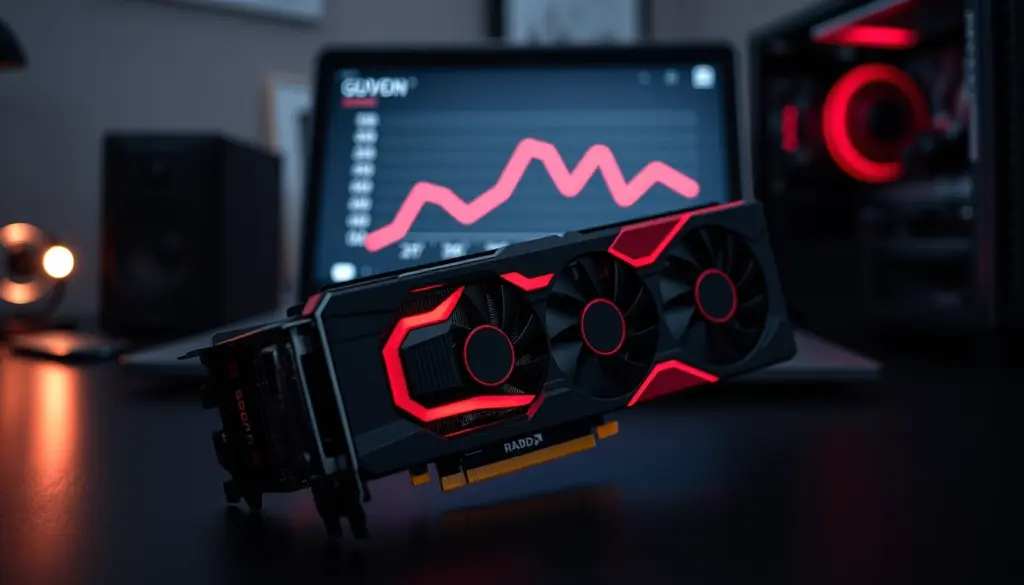
A Gigabyte-built Radeon RX 9070 GRE slipped to $569.99 on Amazon this week, a 22% cut off its $729.99 list price, according to PC Guide. The discount, reported by writer Jack Goodall in an article published October 7, 2026 and updated October 8, lands the 12GB card within shouting distance of the $549 price AMD set when the GRE launched worldwide on June 1, 2026.
That gap matters more than it looks. Four months after launch, a graphics card selling for roughly 4% above its original price counts as a win in a GPU market that has spent most of 2026 moving the other direction. Shattered.io reported in September that Nvidia GPU prices had climbed 41% across Europe, with AMD cards up 28% over the same stretch, so a legitimate discount on a current-generation AMD board is news in its own right.
The Deal: $569.99 for a 12GB GDDR6 Card, Down From $729.99
The card at the center of the deal is the GIGABYTE Gaming Radeon RX 9070 GRE, model number GV-R907GREGAMING OC-12GD. PC Guide lists the specs plainly: 12GB of GDDR6 memory, a PCI Express 5.0 interface, and a standard ATX form factor that fits most mid-tower cases without the overhang some triple-fan AMD boards carry. Amazon has the card marked down to $569.99 against a listed price of $729.99, a 22% discount that PC Guide flagged as part of the retailer’s Prime Day promotional window.
PC Guide’s price check was dated October 6, 2026, and the outlet was careful to note that prices and savings are subject to change, a standard caveat for any live retail listing. Nothing in the reporting confirms how long the $569.99 price will hold, nor does it independently verify current stock levels on Amazon. Readers chasing the deal should treat the figure as a snapshot, not a guarantee.
Doing the Math: 22% Off List, Not 22% Off Launch
It is worth separating two different baselines here, because they tell different stories. Measured against the $729.99 list price, the deal saves buyers $160, exactly the 22% PC Guide cites. Measured against the $549 original worldwide launch price from June 1, 2026, the card is still selling for about $21 more, or roughly 4% above where AMD priced it at debut.
Both numbers are true, and both matter. The 22% figure is the one shoppers will see on the product page, and it is accurate against the price Amazon had been charging. The 4% premium over launch is the more useful number for anyone trying to judge whether this is actually a good deal in absolute terms, rather than a discount off an inflated reference price. Retailers have leaned on exactly this trick throughout 2026’s GPU shortage, padding list prices before holiday sales so the percentage-off math looks dramatic even when the final price barely beats MSRP. Outlets like Tom’s Hardware and WccfTech have flagged the same pattern repeatedly across this year’s GPU deal cycles.
| Price checkpoint | Amount | Date | Source |
|---|---|---|---|
| Original worldwide launch price | $549 | June 1, 2026 | PC Guide |
| Amazon list price (pre-discount) | $729.99 | Checked Oct. 6, 2026 | PC Guide |
| Prime Day deal price | $569.99 | Checked Oct. 6, 2026 | PC Guide |
| Advertised discount | 22% off | As of article date | PC Guide |
| Gap vs. original launch price | +$20.99 (≈4%) | Calculated | Shattered.io analysis |
Who Actually Makes This Card
The GRE badge sits on AMD’s reference design, but the card people are actually buying on Amazon is Gigabyte’s own build. The GV-R907GREGAMING OC-12GD designation puts it in Gigabyte’s Gaming OC line, the company’s mainstream factory-overclocked tier that typically sits a notch above blower-style reference cards and a notch below the flashier Aorus Master boards. Gigabyte has used the same naming convention across prior Radeon generations, so the GV-R907 prefix signals this is built around AMD’s RX 9070-class silicon rather than a rebadged older part.
PCIe 5.0 support is a detail worth flagging for buyers pairing the card with older motherboards. The interface is backward-compatible with PCIe 4.0 and 3.0 slots at reduced bandwidth, so it will run on last-generation boards without issue, but buyers building a new PCIe 5.0 system will get the full benefit of the faster bus, which matters more for storage throughput than for gaming frame rates on a card in this price tier. AMD’s own product pages for the Radeon RX 9000 series describe the broader RDNA4 architecture this card is built on.
Where the GRE Badge Came From
AMD’s GRE naming has a complicated history, and it is part of why this deal is drawing attention. The badge, short for “Golden Rabbit Edition,” first appeared on the RX 7900 GRE during the RDNA3 generation as a China-market-exclusive SKU, a cut-down version of the RX 7900 XT sold at a lower price point without a broader international release. That exclusivity made the 7900 GRE something of a gray-market curiosity for enthusiasts outside China who wanted the die without the price of the full XT card.
The RX 9070 GRE’s global launch on June 1, 2026 breaks from that pattern. Rather than staying a regional SKU, AMD brought the GRE badge to worldwide retail for the RDNA4 generation, giving Western buyers direct access to a tier of card that previously required importing. That shift is part of why a mainstream retailer like Amazon is running Prime Day promotions on it at all, something that would have been unusual for a China-only part in past generations. Legacy outlets like AnandTech covered the original GRE’s China-only debut in detail back when RDNA3 launched, which is part of why the global RDNA4 release stood out to hardware press this year.
Where the GRE Sits in AMD’s Lineup
AMD’s current Radeon stack places the GRE between the base RX 9070 and the RX 9070 XT, both of which shattered.io has covered as pricing shifted through the year. The RX 9070 XT has been holding around $800 against Nvidia’s RTX 5070 Ti at roughly $1,100, a gap that gave AMD a genuine value argument at the upper-midrange tier. The GRE’s job is to extend that same value pitch further down the stack, giving buyers a 12GB card priced well under both XT-tier cards while still carrying the RX 9070 name.
That positioning only works if the price holds. A $569.99 GRE sitting a few hundred dollars under an $800 XT is a clean tier split that makes sense to shoppers. A GRE that drifts back toward $700-plus list pricing muddies that story and makes the XT look like the better buy per dollar, since shattered.io’s own benchmark comparison found the XT trailing the RTX 5070 Ti by only about 6% in frame rate while costing roughly $150 less. The GRE needs clear air below that XT price to justify its own slot in the lineup, and sites like PC Gamer’s graphics card coverage have made the same point about tightly spaced product tiers cannibalizing each other when pricing drifts.
12GB of VRAM: Enough for 2026, or a Compromise?
Twelve gigabytes of GDDR6 was a comfortable mainstream spec a few years ago, and it remains workable for 1440p gaming today, but it is no longer the generous buffer it once was. Modern texture packs, upscaling buffers, and the growing habit of running local AI workloads alongside games have pushed VRAM demands up across the board. Cards at this price point increasingly ship with 16GB as the expectation rather than the exception, which is part of why AMD and Nvidia both now treat memory capacity as a marketing line item rather than a footnote.
For buyers who game at 1080p or 1440p without heavy ray tracing or 4K textures, 12GB on the GRE is unlikely to be a bottleneck through the next couple of years. For anyone planning to keep the card for a longer upgrade cycle, or who dabbles in local AI model inference on the side, the ceiling is real and worth weighing against the roughly $160 saved versus pricier 16GB alternatives in the segment. Shattered.io’s own GPU buying guidance, including its look at what sim racers are actually buying at the $800 tier, has tracked the same VRAM-versus-price tradeoff across other segments this year.
The Market AMD and Nvidia Are Actually Fighting Over
Deals like this one play out against a broader hardware market that is still overwhelmingly Nvidia’s to lose on the graphics side. Shattered.io’s review of desktop GPU shipment data earlier this year put total quarterly shipments at 12.5 million units, with Nvidia controlling roughly 90% of that volume, leaving AMD and Intel to split what remains. Shipment tallies at that scale typically trace back to firms like Jon Peddie Research, which has tracked discrete GPU market share for decades. In a market that lopsided, AMD’s practical path to share gains runs through exactly this kind of midrange pricing pressure rather than flagship halo products.
That dynamic also shows up in retail hardware surveys. The most recent Steam Hardware Survey data tracked by shattered.io showed the RTX 5070 leading the installed base, reinforcing how much of the actual gaming audience sits in Nvidia’s midrange rather than at the high end. A well-priced 12GB AMD card at $569.99 is a direct play for exactly those shoppers, the ones comparing a $569.99 GRE against a similarly priced RTX 5070 rather than against anything in Nvidia’s flagship tier.
| Metric | Figure | Context |
|---|---|---|
| Quarterly discrete GPU shipments | 12.5 million units | Shattered.io analysis of shipment data |
| Nvidia discrete GPU share | ~90% | Shattered.io analysis of shipment data |
| Nvidia GPU price increase (Europe, 2026) | 41% | Shattered.io reporting |
| AMD GPU price increase (Europe, 2026) | 28% | Shattered.io reporting |
| RX 9070 XT typical street price | ≈$800 | Shattered.io reporting |
| RTX 5070 Ti typical street price | ≈$1,100 | Shattered.io reporting |
Why a 22%-Off Headline Is Harder to Pull Off in 2026
Context explains why PC Guide treated this deal as newsworthy rather than routine. Through most of 2026, GPU buyers have been dealing with scarcity rather than discounts, driven by AI data center demand pulling memory chips and fab capacity away from consumer graphics cards. Against that backdrop, a 22% markdown on a current-generation board, even a midrange one, is a departure from the pattern of flat or rising prices that has defined the year.
It also raises the obvious question of durability. Prime Day-style promotions are, by design, time-limited, and PC Guide’s own caveat that prices and savings are subject to change is the clearest signal in the reporting that nobody, including the retailer, is promising this price sticks. Shoppers who have watched GPU deals vanish within days of going live this year have reason to treat the window as short.
What This Means for Shoppers Right Now
For anyone actively shopping in the 12GB midrange tier, the practical takeaway is straightforward: $569.99 for the Gigabyte GV-R907GREGAMING OC-12GD is close to the best pricing this specific card has seen since its June launch, and it is priced well under both the RX 9070 XT and the RTX 5070 Ti. It is not, on current reporting, a price below where AMD originally set it. Buyers comparing it against 16GB alternatives in a similar price bracket should weigh the VRAM gap against the savings rather than assume more memory is automatically worth the premium for their specific use case.
Buyers on older platforms should also confirm their power supply has the connector and headroom the Gaming OC cooler and factory overclock expect, since factory-tuned cards in this tier typically draw somewhat more than AMD’s reference clocks, though PC Guide’s reporting did not include specific power draw figures for this model. When in doubt, cross-check the card’s listed specifications directly on PC Guide’s own site, where the original pricing report was published.
The Bigger Picture: AMD’s Momentum Beyond This One Card
This single deal sits inside a broader AMD push through the second half of 2026. The company has been gaining ground on the CPU side too, a trend shattered.io has tracked separately as AMD’s processor share climbed to new highs while Intel’s slipped to its lowest point in decades. A discounted, globally available GRE card does not move those numbers directly, but it fits the same strategic pattern: AMD using price as the lever where it cannot yet win on raw mindshare or market share against Nvidia in graphics specifically.
The risk for AMD is that a single retailer promotion does not change perception the way a sustained price cut would. If $569.99 proves to be a one-week Prime Day artifact rather than a new normal, the GRE’s value proposition reverts to the less compelling $729.99 list price, and the headline discount becomes a footnote rather than a trend.
What Comes Next: Four Predictions
- Expect other retailers to match or approach the $569.99 price point during the remainder of Amazon’s Prime Day window, since GPU partners typically coordinate promotional pricing across major platforms rather than letting one retailer undercut the field for long.
- List pricing on the GV-R907GREGAMING OC-12GD likely drifts back toward $650-$700 once the promotional window closes, based on the pattern of post-Prime Day price reversion seen across GPU listings earlier in 2026.
- AMD will likely lean harder on GRE-tier pricing through the holiday quarter as a counter to Nvidia’s dominant midrange share, since price is the one lever AMD can pull quickly without a new silicon launch.
- Watch for 16GB variants or a refreshed GRE SKU to appear in 2027 if 12GB cards at this price continue to face pressure from VRAM-hungry games and local AI workloads, mirroring how AMD and Nvidia have both crept memory capacities upward at each price tier over the past two generations.
- Expect continued volatility in GPU list prices generally through Q4 2026, given the AI-driven memory and fab capacity constraints already pushing prices up across Europe and other regions this year.
How This Fits the Rest of 2026’s GPU Story
Zoom out, and the RX 9070 GRE’s Prime Day discount is one data point in a year defined by scarcity more than abundance. Shoppers who bought GPUs earlier in 2026 largely paid rising prices, not falling ones. A genuine 22% markdown on a current card, even with the caveat that it still sits slightly above original MSRP, stands out precisely because it is the exception rather than the rule in this market right now.
Whether that exception becomes a pattern depends on factors well outside any single retailer’s control, including memory chip supply, AI data center demand for the same fabrication capacity GPUs need, and how aggressively Nvidia responds in the same price bracket. For now, the GRE deal is a genuine, verifiable discount on a real product, reported by a named outlet with named specifics. That alone separates it from the kind of inflated “deal” pricing that has become common across retail GPU listings this year.
FAQ: RX 9070 GRE Prime Day Deal
What is the RX 9070 GRE?
It is a 12GB GDDR6 graphics card in AMD’s RDNA4-based RX 9070 lineup, positioned between the base RX 9070 and the RX 9070 XT. AMD launched it worldwide on June 1, 2026, breaking from the China-exclusive pattern of the earlier RX 7900 GRE.
How much does the RX 9070 GRE cost right now?
According to PC Guide, the GIGABYTE Gaming Radeon RX 9070 GRE (model GV-R907GREGAMING OC-12GD) was listed on Amazon at $569.99, down 22% from a $729.99 list price, as of a price check on October 6, 2026.
Is $569.99 a good price for this card?
It is close to, but still slightly above, the card’s original $549 worldwide launch price from June 1, 2026. Measured against the inflated $729.99 list price, it is a genuine 22% discount; measured against launch pricing, it is roughly 4% higher.
What is the difference between the RX 9070 GRE and the RX 9070 XT?
The GRE sits below the XT in AMD’s stack and carries a lower price. The RX 9070 XT has traded at around $800 in recent shattered.io reporting, compared to the GRE’s sub-$600 Prime Day pricing, making the GRE the more budget-focused option of the two.
Is 12GB of VRAM enough in 2026?
For 1080p and most 1440p gaming without heavy ray tracing, 12GB remains workable. Buyers planning a longer upgrade cycle, or who run local AI workloads alongside games, should weigh the lower memory capacity against competing 16GB cards in a similar price range.
Will the RX 9070 GRE price drop get lower before Prime Day ends?
PC Guide’s reporting explicitly notes that prices and savings on the listing are subject to change, and the outlet did not confirm how long the $569.99 price would remain active past its October 6 check. Treat any live price as a snapshot rather than a guarantee.
What interface and form factor does this card use?
The GIGABYTE Gaming Radeon RX 9070 GRE uses a PCI Express 5.0 interface in a standard ATX graphics card form factor, according to PC Guide’s published specifications.
Where did the “GRE” name come from?
GRE stands for “Golden Rabbit Edition.” AMD first used the badge on the RX 7900 GRE during the RDNA3 generation as a China-market-exclusive card. The RX 9070 GRE marks the badge’s first global, worldwide retail release.