

10 Things Crypto Is Actually Useful For
Cryptocurrency is often discussed as an investment first and a technology second. Bitcoin price cycles, speculative altcoins, exchange failures, and overnight fortunes tend to attract far more attention than the less dramatic question of what crypto is actually useful for. For readers who still want to watch those price cycles, a market-data tracker like CoinCodex covers thousands of coins in one place.
Yet cryptocurrencies are more than assets that can rise or fall in price. They combine programmable digital ownership with blockchain networks that can transfer value, execute transactions, and maintain records without requiring every participant to rely on the same centralized intermediary. Some of those capabilities have developed into practical applications, while others remain experimental or useful only under specific circumstances.
So, stripping away the speculation, what is crypto actually good for? Here are 10 areas where cryptocurrency and blockchain networks have established, or are developing, practical utility.
1. Sending Money Across Borders
Cross-border payments are one of the clearest cryptocurrency use cases. Traditional international transfers can involve correspondent banks, payment processors, currency conversions, and settlement systems operating across different jurisdictions. That can add both time and cost to a transaction.
Cryptocurrency networks offer another route. Digital assets can be transferred directly between blockchain addresses, allowing value to move internationally without following the same chain of banking intermediaries. Bitcoin can perform this function, while networks and assets such as XRP were specifically designed with fast value transfers in mind.
The advantage is particularly relevant when the existing payment infrastructure is slow or expensive. Crypto does not automatically make every international payment cheaper, since users may still face network, exchange, and conversion fees, but it creates an alternative settlement mechanism that operates continuously rather than according to banking hours.
2. Stablecoins for Digital Dollar Payments
One of crypto’s most practical developments has little to do with volatile cryptocurrency prices. Stablecoins are blockchain-based tokens designed to maintain a relatively stable value, usually by tracking a currency such as the U.S. dollar.
That makes them better suited to payments and transfers than assets whose prices can change substantially in a matter of hours. A user can send dollar-denominated value across a blockchain without first sending Bitcoin or another volatile asset and exposing the recipient to significant price risk.
Stablecoins have also become important infrastructure inside crypto markets. They are widely used for trading, lending, collateral, and settlement between blockchain applications. Their growth illustrates an important distinction in the crypto industry: the useful part of a blockchain transaction does not necessarily require users to speculate on the currency being transferred.
3. Peer-to-Peer Payments Without a Bank
Cryptocurrencies allow two parties to transfer digital value directly. Instead of instructing a bank or payment company to update its internal ledger, the sender signs a transaction using a private key and submits it to a blockchain network for verification.
This is one of the fundamental ideas behind Bitcoin. The network provides a shared transaction record, while cryptographic keys establish who has authority to spend particular funds. Consensus mechanisms then allow independent computers to agree on the state of that record.
In practice, many users still rely on exchanges, wallet companies, and other service providers, so crypto has not eliminated intermediaries altogether. What it does provide is the option to hold and transfer an asset without requiring a commercial bank account to sit at the center of every transaction.
Crypto can also connect with conventional payment infrastructure, with crypto cards allowing users to spend supported cryptocurrencies and stablecoins through card networks.
4. Accessing Financial Services Through DeFi
Blockchains capable of running smart contracts have expanded cryptocurrency beyond simple payments. Decentralized finance, usually shortened to DeFi, uses software running on blockchain networks to provide services such as trading, lending, borrowing, and liquidity provision.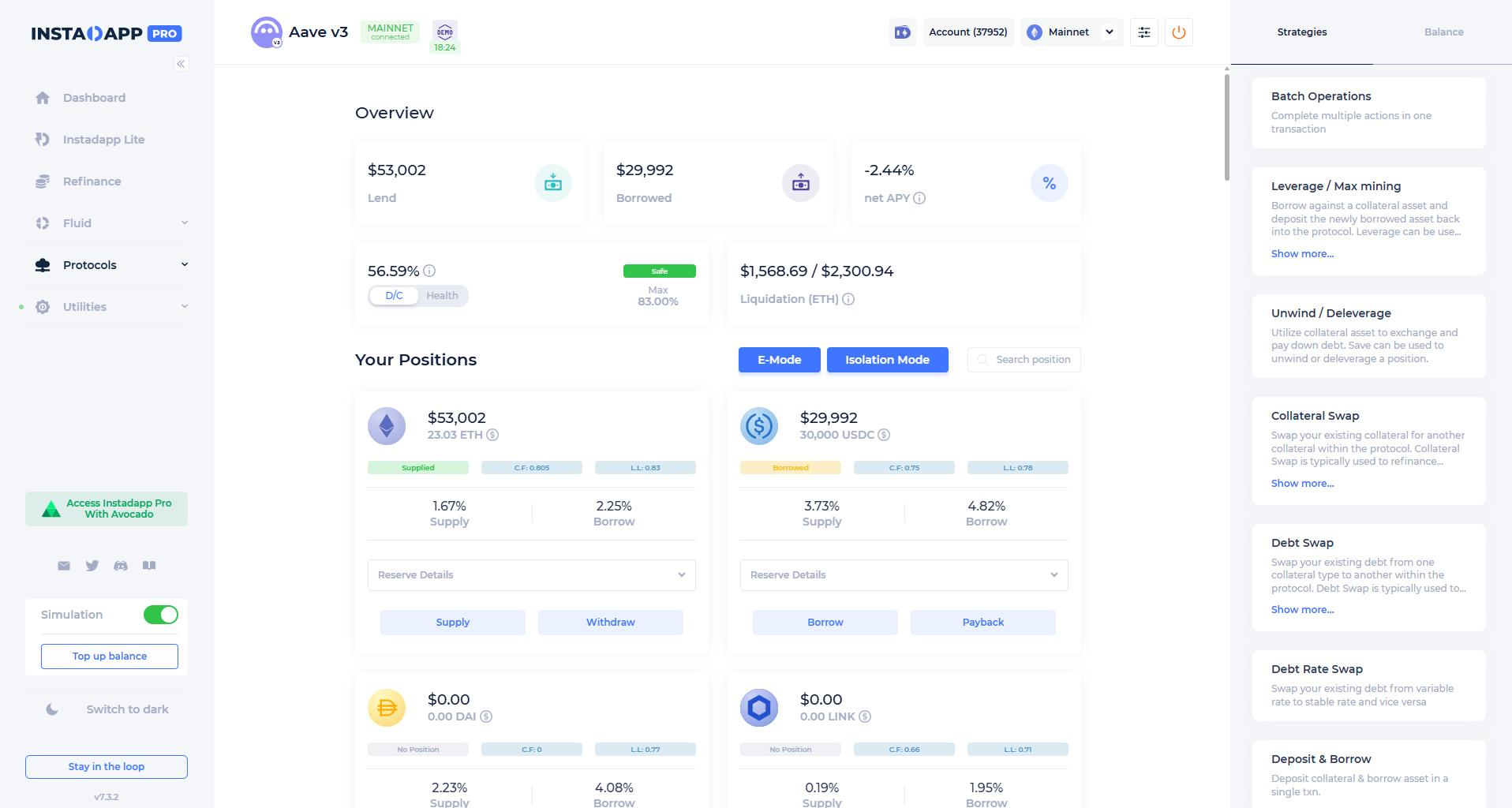
Ethereum played a major role in establishing this model. Instead of a conventional financial institution processing every transaction, users interact with smart contracts that execute predefined rules. Native cryptocurrencies such as ETH also have a functional role because they are used to pay the network fees required to execute transactions.
DeFi can make financial applications accessible to anyone with a compatible wallet and sufficient funds, but accessibility should not be confused with safety. Smart-contract vulnerabilities, unstable collateral, market volatility, and poorly designed protocols can result in losses. The technology provides a new method for delivering financial services, not a guarantee that those services are sound.
5. Programmable Money and Automated Transactions
Traditional money is transferable, but cryptocurrency can also be programmable. Smart-contract networks allow developers to create transactions that execute automatically once predefined conditions are satisfied.
This capability can support applications ranging from decentralized exchanges to escrow arrangements and automated financial agreements. Instead of asking a central administrator to determine whether a transaction should proceed, software can enforce the conditions written into the contract.
The tradeoff is that software introduces software risk. A poorly written smart contract can contain bugs or vulnerabilities, and blockchain transactions are often difficult or impossible to reverse after execution. Programmability therefore increases what digital assets can do while also creating technical risks that conventional payment users may never encounter.
6. Digital Ownership and Tokenization
Blockchains can record ownership of more than native cryptocurrencies. Tokens can represent claims on other digital or physical assets, opening the door to tokenized securities, funds, real estate interests, commodities, and other financial instruments.
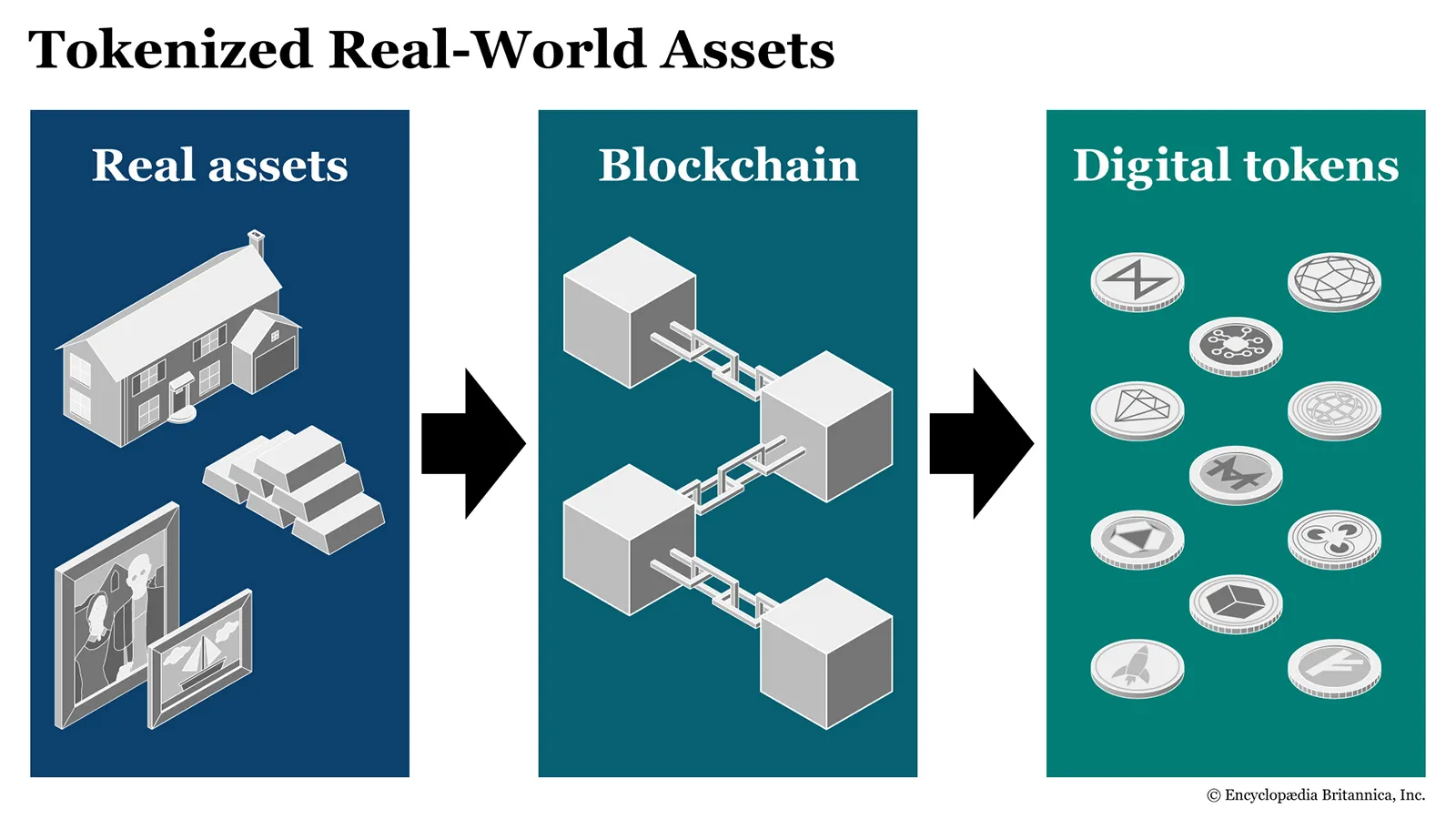
This is one reason financial institutions have shown growing interest in blockchain infrastructure even when they are less interested in speculative cryptocurrencies. Tokenization can potentially bring issuance, ownership records, transfers, and settlement onto shared digital infrastructure.
The concept is already extending into traditional finance. Blockchain networks increasingly host tokenized financial products, while major payment and financial companies have explored ways to use distributed ledgers for settlement. The long-term opportunity is not simply putting existing assets "on crypto," but reducing some of the administrative friction involved in transferring and managing them.
7. Securing Blockchain Networks
Some cryptocurrencies perform an operational job inside their own networks. They are not merely units that users trade.
Ethereum provides a useful example. After moving to proof-of-stake in 2022, the network began relying on participants who stake ETH to help validate transactions and secure the blockchain. In return for committing assets and participating in network validation, eligible participants can receive rewards.
This creates an economic security model in which the blockchain’s native asset helps protect the system itself. Other proof-of-stake networks follow variations of the same approach. The cryptocurrency therefore acts simultaneously as an asset, a source of network fees, and part of the mechanism used to maintain the integrity of the ledger.
8. Governance of Decentralized Protocols
Some crypto tokens give holders a say in how a blockchain application or decentralized protocol develops. These are commonly known as governance tokens.
A protocol may allow token holders to vote on issues such as fee structures, treasury spending, incentives, or technical changes. Uniswap’s UNI is one example of a token designed partly around governance rights.
The model attempts to distribute decision-making among a protocol’s stakeholders rather than placing all control with a conventional corporate management team. Results vary considerably, however. Token ownership can become concentrated among founders, investment funds, or large holders, meaning decentralized governance can sometimes be substantially less decentralized in practice than its design suggests.
9. Online Gambling and Gaming
Cryptocurrency has developed a practical role in online gambling and gaming, where digital assets can be used for deposits, withdrawals, wagers, and in-game transactions. Bitcoin, Ethereum, stablecoins, and other cryptocurrencies allow users to move funds directly from compatible wallets without relying on traditional card networks or bank transfers.
Crypto gambling is one of the clearest examples. Some of the best crypto casinos support multiple digital currencies and offer faster deposits and withdrawals, while blockchain technology can also enable provably fair games that allow players to verify certain outcomes independently.
The same concept extends to blockchain gaming, where cryptocurrencies can be used for payments and tokens can represent transferable in-game assets. However, gambling regulations vary significantly by jurisdiction, while users still face risks including irreversible transactions, platform failures, and cryptocurrency price volatility.
10. Creating a Public, Verifiable Transaction Record
A blockchain’s usefulness is not limited to moving cryptocurrency. Its underlying ledger provides a shared record that multiple independent participants can verify.
Transactions are grouped into blocks and validated according to the network’s consensus rules. Once recorded on many public blockchains, altering historical transactions becomes extremely difficult because doing so would require overcoming the mechanisms protecting the ledger.
This characteristic has encouraged experimentation with blockchain technology in areas including settlement, supply chains, crowdfunding, and other systems where multiple parties need access to a common record. Not every database needs a blockchain, and centralized systems are often faster and simpler. Blockchain becomes more interesting when participants need to coordinate without giving a single party complete control over the underlying ledger.
Crypto’s Utility Does Not Eliminate Its Risks
Finding practical uses for cryptocurrency does not make every cryptocurrency a good investment. The technology and the asset attached to it should be evaluated separately.
Crypto markets remain highly volatile, and investors face risks that extend beyond falling prices. Exchanges and custodians can fail or be hacked, smart contracts can contain exploitable code, projects can be poorly managed, and transactions sent to the wrong address are generally irreversible. Regulations also vary by jurisdiction and continue to change.
Public blockchains should not automatically be treated as anonymous either. Most major cryptocurrencies are better described as pseudonymous because transactions are permanently recorded on public ledgers and can sometimes be connected to real-world identities.
These limitations help explain why the strongest crypto use cases tend to be those where blockchain offers a specific advantage over an existing system, rather than applications that use a token simply because they can.
So, What Is Crypto Actually Useful For?
Crypto’s strongest argument is not that it can replace every bank, currency, payment network, or database. In many situations, existing financial infrastructure works perfectly well and may be easier to use.
Its utility becomes clearer in narrower cases: transferring value directly, moving money internationally, using digital dollars on blockchain networks, accessing programmable financial applications, tokenizing assets, and coordinating a shared ledger without placing complete control in one institution.
That is also a more useful way to evaluate individual cryptocurrencies. Instead of asking only whether a token’s price could rise, investors can ask what the asset actually does, who needs that function, whether people are using it, and whether a blockchain genuinely improves the process. Crypto remains speculative as an investment category, but after more than a decade of development, its practical applications extend well beyond speculation.
Related articles
- Moonwell Hack Drains $8.7M via Price Oracle on Base [2026]
- Crypto Wallet Alerts: Track Any Address in 12 Steps [2026]
- MEV Bot Steals 74% of a Hacker’s $500K Heist [2026]
- Reentrancy Testing: Slither + Foundry Catch Bugs in 12 Steps [2026]