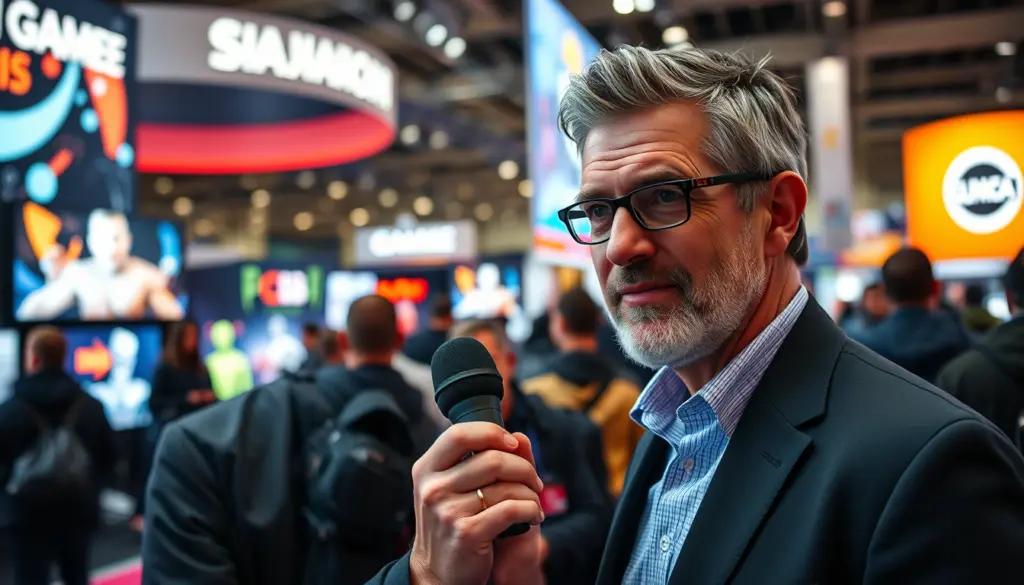
Saber Interactive isn’t changing how it talks to the public, even after a run of headlines the studio would probably rather not have generated. That’s the message chief creative officer Tim Willits delivered in an interview at Gamescom 2026, when asked directly whether recent controversies would push the studio to alter its communications approach. His answer was blunt: “No.” Willits, a longtime id Software veteran who now leads creative direction at Saber, framed that one-word response inside a bigger argument about how player backlash actually plays out over time, and he pointed straight back to 2019’s World War Z exclusivity fight as proof that outrage fades while games endure. The comments, reported by PC Gamer, land at a moment when the wider industry is being picked apart for layoffs, platform exclusivity deals, and public-relations stumbles, making Saber’s refusal to flinch a useful case study in how one studio is choosing to weather the storm.
The remarks are short, but they carry weight because of who said them and where. Gamescom is the single biggest stage in the European games calendar, and Willits used it to draw a straight line between a controversy from seven years ago and whatever “recent controversies” reporters were asking him about this year. That framing matters for anyone trying to read Saber’s next moves, whether they’re a player deciding what to buy, a competitor weighing a similar exclusivity deal, or an investor tracking the health of studios that sit inside the broader Embracer-linked ecosystem of developers.
What Tim Willits Actually Told PC Gamer at Gamescom
According to PC Gamer’s Gamescom interview, a reporter asked Willits point-blank whether Saber Interactive would change its communications strategy given the studio’s recent run of controversies. Willits said “no,” and then explained why in a way that leaned on his own tenure in the industry rather than a rehearsed corporate line. “I’ve been in the industry for so long, and there’s always some dust up,” he said, treating public backlash as a recurring weather pattern rather than an existential threat to the studio’s plans.
He then reached for a specific example to make his point concrete. “People got mad at Saber because we put World War Z on Epic, and people were like, ‘oh, Saber’s destroying the industry,'” Willits said, referencing the studio’s 2019 decision to launch the zombie shooter as an Epic Games Store exclusive rather than putting it on Steam alongside every other major release. That decision triggered one of the more heated Steam-versus-Epic flare-ups of that console generation, with review-bombing campaigns and organized backlash aimed at punishing the studio for taking Epic’s money.
Willits’ rebuttal to that anger, seven years on, is simple: the game won anyway. “Now 30 million people have played World War Z,” he said, using that player count as evidence that a launch-week controversy didn’t stop the title from finding a mass audience over its full life cycle. Whether that number reflects lifetime installs, free promotional periods, or paid sales isn’t spelled out in the interview, but the figure is the one Willits chose to lead with when defending the studio’s track record under pressure.
“There’s Always Some Dust Up”: Reading Between the Lines
The phrase “there’s always some dust up” is doing a lot of work in Willits’ answer. It’s a veteran’s shorthand for a pattern that plays out on gaming forums, Reddit threads, and Steam review pages every few months: a studio makes a business decision, a vocal segment of the community reacts with anger, and then the news cycle moves on to the next target. Willits isn’t denying that Saber has faced criticism. He’s arguing that criticism is a constant feature of running a games studio in public, not a signal that the studio’s approach needs an overhaul.
That’s a notable stance to take in public, on the record, at one of the industry’s largest trade shows. Plenty of studio executives choose vaguer language when asked about controversy, leaning on phrases like “we hear our community” without committing to a specific position. Willits instead named the controversy directly, tied it to a specific game and platform decision, and then used a concrete outcome (30 million players) to argue the studio’s instincts were right all along. It’s a comms strategy built on confidence in past outcomes rather than an apology for past decisions.
The headline’s reference to Saber’s “recent controversies” isn’t spelled out in detail in the interview excerpt itself, and readers should treat that part as a general pointer to earlier coverage of the studio rather than a confirmed new incident. What is confirmed is Willits’ response to the question as asked, on the record, at Gamescom.
Saber’s Statement, Quote by Quote
Because the exact wording matters here, the table below breaks down each part of Willits’ answer alongside the point it was making. Reading the statement broken into pieces makes the underlying strategy easier to follow: acknowledge the criticism exists, normalize it as routine, cite a past win, and restate the studio’s philosophy going forward.
| Statement | What It Signals | Context |
|---|---|---|
| “No.” | Direct refusal to change comms strategy | Answer to a direct Gamescom question about post-controversy strategy |
| “I’ve been in the industry for so long, and there’s always some dust up.” | Frames backlash as routine, not exceptional | General industry-experience framing from Willits |
| “People got mad at Saber because we put World War Z on Epic… ‘oh, Saber’s destroying the industry.'” | Cites a specific past controversy as precedent | Refers to the 2019 Epic Games Store exclusivity backlash |
| “Now 30 million people have played World War Z.” | Uses a player count as proof the decision paid off | Willits’ stated outcome metric for the title |
| “We are going to stick to making the best games we can.” | Restates the studio’s core priority | Closing philosophy of the interview answer |
| “Try to show them, give people an opportunity to play them, and have players make their own decisions because players are smart… You make a good game, they’ll find it and play it.” | Trusts players over pre-release outrage | Final argument for why comms strategy won’t change |
The World War Z Precedent: Why an Epic Exclusive Still Comes Up in 2026
Why the 2019 Backlash Happened
World War Z’s jump to the Epic Games Store happened during the peak of the platform’s exclusivity push, a period when Epic was signing deals with publishers to pull games away from Steam in exchange for guaranteed payments and marketing support. That strategy split the PC gaming community for years, with a portion of players boycotting Epic exclusives on principle and flooding review sections and social media with criticism aimed at the developers who took the deal, not just Epic itself.
From Backlash to 30 Million Players
Saber Interactive absorbed a large share of that anger in 2019, and Willits’ choice to bring the episode back up seven years later says something about how studios now measure the cost of exclusivity controversies. The short-term backlash was loud. The long-term outcome, according to Willits, was a game that reached tens of millions of players anyway. That’s the argument he’s making to justify staying the course on future communications, even when a new round of criticism starts circulating.
It’s worth remembering that the Epic-versus-Steam exclusivity wars of that era reshaped how PC publishers think about storefront deals generally, and World War Z remains one of the most cited examples of that fight because the backlash was so visible at launch. Willits leaning on it as a defense mechanism in 2026 suggests Saber still treats it as a formative case study internally, not a mistake to be quietly buried.
Who Is Saber Interactive, and Why Its Comms Strategy Gets Scrutinized
Saber Interactive has built its reputation on a mix of licensed games, remasters, and original shooters, with World War Z standing as one of its most commercially discussed titles. The studio has spent years working across console and PC releases while also taking on outsourcing and remake work for other publishers, a business model that keeps it constantly in front of players even when it isn’t the headline developer on a release. That visibility is exactly why its communications choices draw outsized attention compared to smaller studios that rarely speak to press at all.
Running a studio with that kind of output means Saber is almost never far from some kind of public conversation, whether it’s about a new release, a platform deal, or broader industry news involving the wider network of studios it has worked alongside over the years. Willits’ comments at Gamescom read as an attempt to get ahead of that dynamic by setting expectations early: don’t expect a change in tone, because the studio doesn’t believe a change in tone is what actually protects a game’s reception.
How Other Studios Are Handling Controversy in 2026
Willits’ “stay the course” answer stands out partly because so many other studios have handled 2026’s rough patches very differently. This year has been unusually heavy on layoffs, restructuring, and public disputes across game development, and the contrast in tone between Saber’s approach and other studios’ public postures is instructive. Some companies have leaned into transparency about cuts, others have gone quiet, and a few have ended up in open conflict with their own staff.
Shattered.io has tracked several of these situations through the year, and they offer a useful comparison point. The games industry’s broader 2026 layoff wave has already topped 14,000 confirmed job cuts, according to shattered.io’s running tally, a backdrop that makes any studio executive’s public comments carry more weight than they might in a calmer year. Against that backdrop, a comms strategy built on “nothing changes, we keep shipping” reads very differently than it would in 2019.
| Studio / Publisher | 2026 Situation | Public Response Style | Reported Scale |
|---|---|---|---|
| Saber Interactive | Recent controversies raised at Gamescom | No change to comms strategy, cites past wins | 30 million World War Z players cited |
| ZeniMax | Studio job cuts | Internal union pushback against management | 379 jobs cut, per shattered.io |
| id Software | Studio job cuts alongside a DLC launch | Cuts announced, content shipped days later | 136 jobs cut, per shattered.io |
| Double Fine | Studio downsizing | Direct acknowledgment of cuts | 23 jobs cut, about a quarter of staff, per shattered.io |
| Bit Reactor | Furloughs after a Steam hit | Quiet furlough process post-launch success | Furloughs confirmed weeks after release, per shattered.io |
The pattern in that table is worth sitting with. Studios facing layoffs tend to talk about controversy in terms of headcount and restructuring, while Saber’s controversy this year appears to be about reputation and communications tone rather than a confirmed round of cuts. That’s a meaningfully different kind of crisis, and it’s one reason Willits can afford to answer “no” with confidence: he isn’t being asked to defend a layoff, he’s being asked to defend a personality and a pattern of decisions.
Market Impact: What “Staying the Course” Means for Saber’s Pipeline
For a studio that works across licensed IP, remasters, and original titles, comms stability has direct commercial value. Publishers and IP holders who license their franchises to Saber are watching how the studio handles public pressure just as closely as players are, because a studio seen as reactive or unstable in public statements can complicate future licensing negotiations. Willits’ answer effectively tells partners that Saber won’t be spooked into changing its release or platform strategy by social media backlash, which is a selling point when courting new licensing deals or platform partnerships.
It also sends a signal to storefronts. Any platform considering an exclusivity arrangement with Saber in the future, whether that’s a console maker, Saber’s own distribution channels, or another PC storefront, now has a public data point showing the studio is willing to defend those deals after the fact rather than walk them back under pressure. That’s valuable to a platform holder trying to lock in exclusives, since a partner who caves to backlash is a partner whose next exclusivity deal is harder to close.
The flip side is that this same confidence can read as tone-deaf if a future controversy turns out to be more serious than a platform-exclusivity dispute. The “there’s always some dust up” framing works well for backlash rooted in player preference, like storefront choice. It works less well if the underlying controversy involves workplace conditions, legal issues, or consumer harm, categories where “we won’t change” can sound dismissive rather than confident. Willits’ comments were specifically about comms strategy in the context of the World War Z example, and it remains to be seen whether Saber would apply the same logic across every category of criticism it might face.
Historical Context: A Decade of Exclusivity Wars and Player Backlash
The Epic Games Store’s exclusivity push, which is what pulled World War Z away from Steam in 2019, remains one of the defining fights of the last generation of PC gaming. Epic offered publishers guaranteed revenue and marketing money in exchange for timed or permanent exclusivity, a model Valve’s Steam never needed to match because of its dominant market position. Players who preferred Steam’s library management, Workshop support, and existing friend networks treated exclusivity deals as a tax on their convenience, and studios that took Epic’s money absorbed the resulting anger regardless of how good the underlying game was.
That fight has cooled significantly since 2019 as Epic’s exclusivity strategy has shifted and more publishers launch simultaneously on both storefronts. But the scars from that period clearly still shape how executives like Willits talk about controversy today, which is exactly why he reached for that example instead of a more recent one when defending Saber’s comms approach. It’s the studio’s clearest, most quotable proof point that a loud backlash and a commercially successful game aren’t mutually exclusive outcomes.
The Business Logic Behind Trusting Players Over Pre-Release Outrage
Willits closed his answer with a philosophy rather than a policy: “Try to show them, give people an opportunity to play them, and have players make their own decisions because players are smart, you know. You make a good game, they’ll find it and play it.” That’s a bet on word-of-mouth and post-launch discovery outweighing pre-launch outrage cycles, and it’s a bet Saber has apparently made before with World War Z.
This philosophy sits in contrast to studios that treat every wave of pre-release criticism as a fire to put out with statements, delays, or reversed decisions. Willits’ logic assumes that a title’s quality will eventually win out once players can actually try it, whether through demos, free periods, or organic recommendation. It’s a strategy that requires patience and a willingness to absorb short-term reputational damage, which is easier to commit to once you have at least one prior example, like World War Z’s 30 million-player run, to point back to as evidence the approach works.
Competitive Comparison: Confidence Versus Caution Across the Industry
Compare Saber’s posture to publishers that have recently found themselves navigating rescue deals or restructuring, and the contrast sharpens. Nacon’s parent company needed a rescue deal this year after three studios shut down, a situation that leaves far less room for a confident “nothing changes” message, since the studios in question no longer exist to defend their decisions. Saber, by contrast, is speaking from a position where it can point to a specific franchise’s long-term player numbers rather than explain away closures.
That difference matters for how each company’s statements land with players and press. A studio explaining layoffs has to balance honesty about hardship with reassurance about future output, a much harder needle to thread than reminding people that an old exclusivity dispute didn’t actually hurt a game’s audience. Willits gets to be blunt precisely because his example is a win, not a loss, and that’s the core advantage his comms strategy currently has over competitors dealing with harder news in 2026.
What This Means for Players Deciding Whether to Trust Saber’s Next Release
For players, the practical takeaway is that Saber isn’t promising to avoid future platform or business decisions that might spark backlash. It’s telling players directly that it will keep making those calls and let the finished game make the case for itself afterward. That’s a different promise than “we’ll listen to feedback before deciding,” and it’s worth players understanding the distinction before assuming a public outcry will change an already-announced deal.
It also means review-bombing campaigns and pre-release boycotts aimed at Saber titles are unlikely to change the studio’s plans mid-stream, based on Willits’ own stated logic. Players who want to influence a Saber release are, according to this framing, better served by voting with wallets after a game ships rather than campaigning against a platform decision before launch.
Predictions: Where Saber’s Comms Strategy Goes From Here
- Expect Saber and Willits to keep citing World War Z’s player count as the go-to defense whenever a future platform or exclusivity decision draws criticism, since it’s now a proven, repeatable talking point.
- Other studio executives are likely to adopt similar “let the game speak for itself” messaging in 2026 and 2027, especially smaller and mid-size developers that can’t compete with AAA marketing budgets but can point to loyal post-launch communities.
- Any future Saber controversy tied to workplace conditions or consumer protection, rather than platform exclusivity, will likely force a different comms tone than the one Willits described, since “there’s always some dust up” works better for taste-based backlash than for accountability-based backlash.
- Expect continued scrutiny of Embracer-linked and formerly Embracer-linked studios’ public statements throughout 2026, given how many restructuring stories have already broken across the wider industry this year.
- Gamescom-style press interviews will likely keep serving as the venue where studio executives test blunt, unscripted answers, since the format rewards direct quotes over prepared statements in ways that generate more coverage.
Why This Story Matters Beyond One Interview
A single “no” in a trade-show interview wouldn’t normally warrant this much analysis, but it lands at a moment when the games industry is unusually preoccupied with how companies communicate under pressure. Between layoffs, studio closures, and platform disputes, 2026 has given the industry plenty of material for comparing communications strategies side by side. Saber’s answer offers a clean example of a studio betting on its own track record instead of adjusting its messaging to preempt criticism, and that bet will keep getting tested every time the studio announces a new platform deal or exclusivity arrangement.
The Gamescom setting itself adds weight to the story too. It’s the venue where executives know cameras and reporters are watching closely, which makes a blunt, unhedged answer more notable than the same comment given in a written press release. Willits chose to make his case in that spotlight rather than soften it, and that choice is arguably the real story here, more than the specific words themselves.
Frequently Asked Questions
Who is Tim Willits?
Tim Willits is the chief creative officer at Saber Interactive, and a longtime veteran of the games industry with a background at id Software before his current role.
What did Tim Willits say about Saber’s comms strategy?
Asked at Gamescom whether recent controversies would change Saber’s approach to public communications, Willits said “no,” arguing that public backlash is a routine part of running a game studio rather than a reason to change course.
What controversy did Willits reference specifically?
He pointed to the 2019 backlash over World War Z’s move to the Epic Games Store, when players accused Saber of “destroying the industry” by taking an exclusivity deal.
How many people have played World War Z, according to Saber?
Willits said 30 million people have played World War Z, using that figure as evidence the 2019 exclusivity backlash didn’t stop the game from reaching a large audience.
Where did Tim Willits make these comments?
Willits made the comments in an interview at Gamescom 2026, as reported by PC Gamer.
Does this mean Saber Interactive is ignoring player feedback?
Not according to Willits’ framing. He argued the studio still listens, but it plans to let finished games and player word-of-mouth answer criticism rather than reacting to backlash by changing its communications or business decisions preemptively.
What are the “recent controversies” mentioned in the interview?
The interview excerpt references “recent controversies” without detailing them individually, so readers should treat that phrase as a general pointer to earlier coverage of the studio rather than a single confirmed new incident.
Is Saber Interactive planning any new exclusivity deals?
Nothing specific was confirmed in the Gamescom interview. Willits’ comments were about comms philosophy in general, not an announcement of a new platform or storefront deal.