
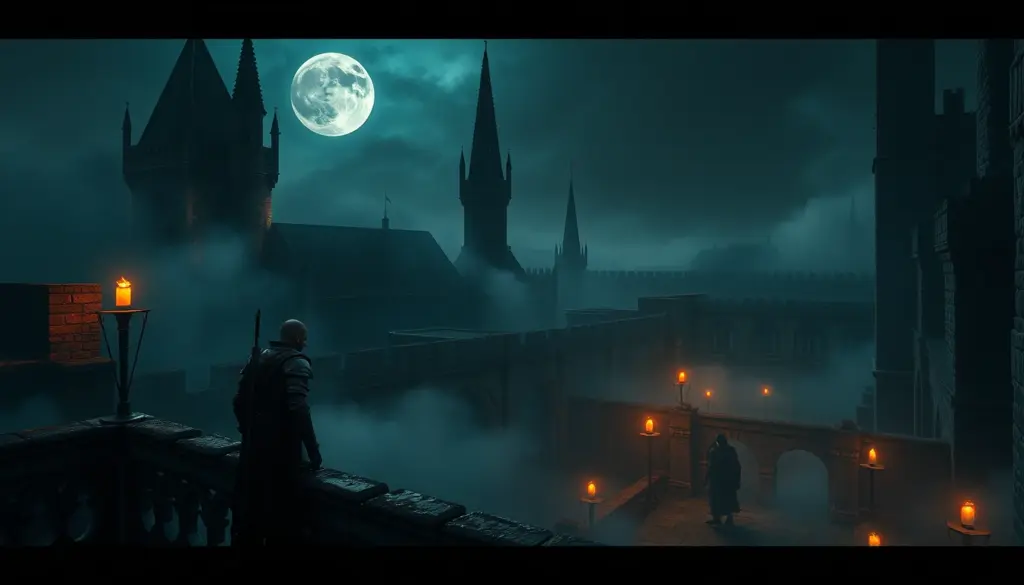
Two days. That’s how long it took The Blood of Dawnwalker to cross 1 million copies sold worldwide, according to a joint announcement from developer Rebel Wolves and publisher Bandai Namco on September 5, 2026. The vampire-hunting action RPG launched September 3 on PC, PlayStation 5, and Xbox Series X|S, and its debut has quickly become one of the more closely watched launches of the year, not because of marketing spend or a decade of hype, but because of who made it.
Rebel Wolves is a first-time studio. Its founder, Konrad Tomaszkiewicz, ran the show as game director on The Witcher 3: Wild Hunt at CD Projekt Red before leaving to build something of his own with a team of former CD Projekt Red colleagues. That pedigree gave the game an audience before a single review went live, and now it has sales numbers that outpace most debut RPGs in the broader gaming market. The bigger question is whether 1 million copies in roughly two days is actually a breakout hit, or a respectable but unremarkable result dressed up by a well-timed press release. The data points in both directions.
The Numbers Behind a Vampire RPG’s Fast Start
According to RPG Site’s report on September 5, 2026, The Blood of Dawnwalker sold 1 million copies within roughly two days of its September 3 launch across PC, PlayStation 5, and Xbox Series X|S. The outlet described it as an official announcement from Rebel Wolves and Bandai Namco rather than a leak or an estimate. Inven Global framed the timing slightly differently, putting the milestone at roughly 64 hours and 39 minutes after launch and noting that Rebel Wolves marked the occasion with a commemorative image and a thank-you message posted to its official community channels and on X.
None of the reports included a platform-by-platform breakdown. Bandai Namco did not say how many of that 1 million came from Steam, GOG, Epic, PS5, or Xbox, and it hasn’t published revenue figures either. That’s fairly standard practice for triple-A-adjacent launches: publishers like a round unit number they can put in a headline, and they save granular data for investor calls. Still, the studio backed the number with an active social post rather than a background-briefed rumor, which is why multiple outlets treated it as confirmed rather than speculative.
Pricing context matters here too. The standard edition lists at $69.99 on Steam, with a $79.99 Eclipse edition sitting above it. At that price point, 1 million units represents somewhere north of $50 million in gross transactions before storefront cuts, taxes, or bundling discounts are factored in, a meaningful number for a new IP, even if it’s short of the numbers CD Projekt Red itself has posted for Witcher and Cyberpunk launches.
Who Is Rebel Wolves, and Why Konrad Tomaszkiewicz’s Name Matters
Rebel Wolves is a Polish studio built around former CD Projekt Red staff, with Tomaszkiewicz, The Witcher 3’s game director, at the helm. Coverage of the launch has repeatedly framed the studio’s debut through that lens: one review roundup described it plainly as Rebel Wolves’ debut, “built by The Witcher 3 director Konrad Tomaszkiewicz and a team of CD Projekt Red veterans.” That framing isn’t incidental. It’s the entire marketing hook, and it shaped expectations before the game shipped.
From CD Projekt Red to an Independent Studio
Rebel Wolves isn’t the only studio built from CD Projekt Red departures. Starward Industries, another Polish studio founded by former CD Projekt Red developers, shipped the sci-fi survival game The Invincible in 2023. What sets Rebel Wolves apart is scale and ambition. Rather than a smaller narrative game, the studio went straight for an open-world action RPG in the same genre CD Projekt Red built its reputation on, competing directly against the shadow of its founder’s most famous project.
For scale, CD Projekt Red itself employed roughly 802 developers and about 1,248 people group-wide as of June 30, 2025, per the company’s own management board report. Rebel Wolves is a fraction of that size, which makes a 1-million-copy debut in roughly 48 hours a genuinely different kind of achievement than the same number would be for an established studio with a built-in fanbase spanning three previous games.
Before launch, Tomaszkiewicz told GamingBolt that pre-order numbers hadn’t been revealed publicly, but confirmed the game had reached about 1.5 million wishlists on Steam, a figure he said the studio considered a better metric than pre-orders because wishlists reflect genuine player intent rather than early promotional discounting. If a large share of that wishlist pool converted to sales within the first two days, that would represent a strong conversion rate by industry standards, though Rebel Wolves hasn’t published a wishlist-to-sale conversion figure tied directly to the 1 million milestone.
Inside the Game: Vampires, Carpathia, and a Clock That Runs the Story
The Blood of Dawnwalker is a dark fantasy action RPG set in 14th-century Carpathia, built around a vampire hunting other vampires. Xbox’s own preview coverage described the premise directly as “a dark fantasy action RPG about being a vampire hunting other vampires in 14th Century Carpathia.” That’s a narrower, darker pitch than The Witcher’s monster-of-the-week structure, and reviewers have generally responded well to the tonal shift.
The mechanical centerpiece is what several outlets have called the clock mechanic: a time-based structure meant to impose pacing and urgency on quests and exploration, in contrast to the sprawling, marker-filled open worlds that dominate the genre. One TechTimes review analysis credited the mechanic as a structural fix for open-world bloat, where side content pads runtime without adding meaningful stakes. The same coverage noted that the mechanic works better as a structural idea than the combat does in practice, a tension that shows up repeatedly in the review scores below.
Launch Timeline: From Review Embargo to the Million-Copy Announcement
The rollout followed a conventional but tightly packed schedule. The review embargo lifted on August 31, 2026, giving critics roughly three days of published opinion before the game went on sale. The Steam release clock actually started slightly early, with SteamDB logging the store page unlocking around 10 PM PDT on September 2, which translated to midnight Eastern and, for most of the world, a September 3 calendar-day launch across PC, PS5, and Xbox Series X|S.
By the time the embargo lifted, the game had already climbed to the top of Steam’s global top-seller chart, according to coverage published in the days before release. That pre-launch momentum likely fed directly into the speed of the sales milestone: a game that’s already the top seller on the platform before it’s playable has a head start that a mid-pack release doesn’t get. Two days after launch, on September 5, Rebel Wolves and Bandai Namco confirmed the 1 million figure, capping what had been a strong run atop Steam’s charts.
The rollout didn’t stop at the sales announcement. Rebel Wolves pushed a run of post-launch hotfixes in the days that followed, headlined by Hotfix 1.0.4 on September 9, which targeted stability, quest bugs, a save-blocking issue, and frame-rate drops, and Hotfix 1.0.5 on September 10, which added shader-compilation improvements aimed at the stuttering some PC players had reported. None of those patches reworked the combat that reviewers flagged, but the steady cadence signaled that Rebel Wolves was treating the launch window as an active support period rather than a finished job.
Critical Reception: A Score in the 80s, Not the 90s
The Blood of Dawnwalker landed with a Metacritic score of 83 and an OpenCritic score in the 84-85 range, earning OpenCritic’s “Mighty” label with somewhere between 89% and 93% of critics recommending it, depending on which outlet’s snapshot of the aggregator you read. That puts the game in the top 7-9% of everything scored on OpenCritic, a genuinely strong debut by most measures, and well clear of the review-bombed territory some CD Projekt Red-adjacent launches have landed in before.
What Critics Praised
The recurring theme across roundups is that critics responded strongly to the narrative hook and the clock mechanic. One GamesReviews roundup summarized the consensus as critics “praising its vampire-hunting narrative while flagging repetitive open-world design and combat jank,” a split verdict that shows up almost word-for-word across multiple independent write-ups, suggesting it reflects genuine critical consensus rather than one outlet’s framing getting echoed elsewhere.
What Critics Criticized
Combat is the sore spot. Multiple reviews describe combat as jank or, in TechTimes’ phrasing, a place where the game’s ambitions “fall flat” even as its structural ideas succeed. Open-world repetition is the second recurring complaint, somewhat ironic given that the clock mechanic was specifically designed to cut down on that kind of padding. The takeaway from the roundups: Rebel Wolves solved a structural problem the genre has struggled with for a decade, but didn’t fully solve the combat feel that action RPGs live or die on.
Review Scores by Outlet
| Outlet | Score | Scale |
|---|---|---|
| IGN | 9 | out of 10 |
| Shacknews | 9 | out of 10 |
| GameSpot | 8 | out of 10 |
| PC Gamer | 83 | out of 100 |
| Eurogamer | 4 | out of 5 |
| TheGamer | 4 | out of 5 |
| Tom’s Guide | 4 | out of 5 |
| Hobby Consolas | 72 | out of 100 |
| Metacritic (aggregate) | 83 | out of 100 |
| OpenCritic (aggregate) | 84-85 | “Mighty” rating |
Source: individual outlet scores as listed on OpenCritic’s game page, cross-referenced against review-roundup coverage published between August 31 and September 5, 2026.
How the Score Stacks Up Against The Witcher 3
The comparison Rebel Wolves can’t avoid is the one to Tomaszkiewicz’s own prior work. The Witcher 3: Wild Hunt carries a Metacritic score of 92, meaning The Blood of Dawnwalker’s 83 sits nine points behind the game its director is most famous for shepherding. GamesReviews made the comparison explicit, noting that an 83 “puts it just behind The Witcher 1 and 2, though still short of The Witcher 3’s” score. That’s a fair characterization: a strong, well-reviewed debut, but not the genre-defining reception that made The Witcher 3 a decade-long benchmark for RPGs.
Sales tell a similar story of strong but not historic. The Witcher 3 sold 6,014,576 copies in its first six weeks after its May 2015 launch, according to CD Projekt’s own investor report from that year. Extrapolating The Blood of Dawnwalker’s pace (1 million copies in roughly two days) over six weeks isn’t something Rebel Wolves has done publicly, and momentum typically slows sharply after the first week, so a direct comparison to Witcher 3’s six-week total would be premature. What’s clear is that Rebel Wolves opened faster in relative terms than a brand-new IP typically does, even if it hasn’t yet demonstrated it can sustain that pace the way its predecessor did.
Cyberpunk 2077’s Shadow: A Cautionary Tale for the Same Studio Lineage
There’s a second CD Projekt Red comparison worth making, and it cuts the other way. Cyberpunk 2077 sold over 13 million copies in its first 10 days after its December 2020 launch, according to CD Projekt’s own current report to investors, a figure later revised to 13.7 million by the end of that year. That number dwarfs The Blood of Dawnwalker’s opening pace, but it came with an asterisk CD Projekt Red is still living down: a console launch so broken that Sony pulled the game from the PlayStation Store for months and CD Projekt faced shareholder lawsuits over the launch quality.
Rebel Wolves appears to have avoided that trap. Review coverage flags combat jank and repetitive open-world design, not game-breaking bugs or platform-wide refund campaigns. For a studio built by people who lived through the Cyberpunk 2077 launch from the inside, a smaller but cleaner debut may have been the deliberate trade-off. Big first-week numbers mean less if the second month is dominated by refund headlines instead of goodwill.
September 2026 Launch Comparison
| Title | Launch Date | Publisher | Standard Price | Reported Milestone |
|---|---|---|---|---|
| The Blood of Dawnwalker | Sept 3, 2026 | Bandai Namco | $69.99 | 1 million copies in ~2 days |
| NBA 2K27 | Sept 4, 2026 | 2K | $69.99 | Multi-platform day-one release, Ultra Edition capped through Sept 6 |
| Cyberpunk 2077 (2020 launch) | Dec 10, 2020 | CD Projekt | $59.99 | 13M+ copies in 10 days |
| The Witcher 3 (2015 launch) | May 19, 2015 | CD Projekt | $59.99 | 6,014,576 copies in 6 weeks |
Source: publisher-reported figures compiled from CD Projekt investor reports, Bandai Namco and Rebel Wolves’ September 5 milestone announcement, and 2K’s NBA 2K27 launch materials.
Steam Charts vs. Third-Party Estimates: Why the Numbers Don’t Match
One quirk of this launch is how differently the official number and third-party trackers read. SteamDB’s dashboard, snapshotted a couple of days after launch, showed The Blood of Dawnwalker sitting at #4 among Steam’s top sellers, #3 in wishlist activity, and #47 in daily active users, with 127,378 followers and 8,591 user reviews at the time of the snapshot. Concurrent player counts peaked at 74,255 in a 24-hour window and 161,787 all-time, again per SteamDB, on a game listed at $69.99 on its official Steam store page.
Third-party ownership estimators, which model PC sales from concurrent-player data rather than reading real transaction logs, landed all over the map: VG Insights estimated around 214,000 owners, PlayTracker put the number near 275,500, and Gamalytic estimated roughly 437,200. None of those numbers come close to the official 1 million figure, but that’s expected. Those estimates only cover Steam, not GOG, Epic, PS5, or Xbox, and PC-only estimators have historically undercounted console-heavy RPG audiences by a wide margin. DLCompare’s own launch-day coverage acknowledged as much, noting explicitly that neither SteamDB nor Valve publishes an exact number of copies sold and that Steam data alone does not account for sales on PlayStation 5 or Xbox Series X/S. The gap between roughly 200,000-400,000 modeled PC owners and a reported 1 million cross-platform units is a reasonable split if console sales made up the majority of the total, plausible for an RPG launching day-one on PS5 and Xbox Series X|S with review scores in the high 80s across mainstream outlets.
Market Impact: What Bandai Namco’s Stock Actually Did
If a game selling 1 million copies in 48 hours were the kind of catalyst that moves a publisher’s share price, Bandai Namco’s stock (ticker 7832 on the Tokyo Stock Exchange) would be the place to see it. It isn’t. The stock closed at ¥5,780.00 on September 1, then slid to ¥5,641.00 on September 2 (-2.40%), ¥5,605.00 on launch day September 3 (-0.64%), and ¥5,565.00 on September 4 (-0.71%), a net decline of roughly 3.7% across four trading sessions that straddled the launch and the early sales momentum, based on price-history data tracked through market data providers.
That’s not a crash, and it’s not unusual. Single-title launches rarely move a diversified publisher’s stock on their own, especially one the size of Bandai Namco, whose portfolio spans toys, anime licensing, arcade operations, and Gundam-branded merchandise alongside games. The company’s broader financial story this year has been driven by a different lever entirely. Bandai Namco’s board approved raised earnings guidance for the six months ending September 30, 2026, projecting consolidated net sales of ¥690 billion and operating profit of ¥124 billion, with that upgrade attributed to its Gundam-led IP strategy rather than any single game release. The Blood of Dawnwalker is a genuine win for Rebel Wolves and a solid data point for Bandai Namco’s publishing arm, but it isn’t, on its own, moving the needle on a company whose earnings picture is built primarily on toy licensing and mobile games.
The Business Logic of Betting on Former CD Projekt Red Talent
Bandai Namco’s decision to publish a first-time studio’s debut RPG, rather than developing it in-house or leaving Rebel Wolves to self-publish, fits a pattern that’s become increasingly common since CD Projekt Red’s post-Cyberpunk exodus of senior staff. Studios built from that talent pool carry built-in credibility with RPG audiences that a brand-new team without pedigree simply doesn’t get, and publishers have shown a willingness to back them with the marketing and distribution muscle those studios lack on their own.
It’s a calculated bet, not a guaranteed one. Pedigree buys attention and wishlist adds, but it doesn’t guarantee a game will land the way its spiritual predecessor did. An 83 Metacritic score with combat jank flagged in nearly every review is a perfectly respectable outcome for a debut studio, but it’s also a signal that the next Rebel Wolves project needs a stronger combat system if it wants to close the gap with the games its founder is best known for. It also raises a broader question for the wider PC gaming market that outlets have tracked through Steam’s record-setting 2026 revenue run: whether pedigree-driven debuts like this one can keep pace with the platform’s overall growth, or whether they’re riding a rising tide that would lift most well-reviewed new releases anyway.
Predictions: Where The Blood of Dawnwalker Goes From Here
Based on the launch data, review consensus, and market context gathered above, a few reasonable predictions for the months ahead:
- Sales growth will slow sharply after the first week, following the typical curve for narrative RPGs, though a Steam sale tied to the winter holiday period should produce a second bump, similar to how most single-player RPGs see a secondary spike three to six months post-launch.
- Rebel Wolves will likely patch combat mechanics in the first two to three months, given how consistently combat jank appears across the review roundups. It’s the single most fixable complaint relative to the structural praise for the clock mechanic.
- Bandai Namco will use this launch as a template for backing additional CD Projekt Red-adjacent or narrative-RPG studios, given the favorable review scores relative to production risk on a new IP.
- Expect Rebel Wolves to announce a roadmap of free content updates or a paid expansion within six to nine months, mirroring the post-launch support model CD Projekt Red used for both Witcher 3 and, eventually, Cyberpunk 2077.
- Don’t expect Bandai Namco’s stock to show a durable, attributable bump from this title alone; any near-term share movement will track more closely with the company’s Gundam-driven earnings guidance than with any single game’s sales milestones.
Historical Context: A Genre Shaped by CD Projekt Red’s Legacy
It’s worth stepping back to see how unusual this moment is for the RPG genre. The Witcher 3 set a bar in 2015 that reshaped what publishers and players expected from open-world RPGs: dense narrative writing, morally gray choices, and a slower-burn structure than most Western RPGs of that era offered. Cyberpunk 2077’s 2020 launch showed the flip side, ambition and marketing muscle without matching technical execution, a lesson the whole industry, including Rebel Wolves’ own founders, absorbed the hard way.
The Blood of Dawnwalker is the first major test of whether that institutional knowledge can be exported to a new, independent studio and a new IP, rather than staying locked inside CD Projekt Red itself. An 83 Metacritic score and 1 million copies in roughly 48 hours suggests the answer is a qualified yes: good enough to prove the talent travels, not yet good enough to prove it can fully replicate what made its predecessor a genre landmark. That question sits alongside a broader industry backdrop of consolidation and cutbacks, the kind tracked in 2026’s wave of studio layoffs, where a well-reviewed, commercially healthy debut studio is very much the exception rather than the rule.
The launch also lands against a market that analysts still expect to keep expanding. Industry-wide gaming revenue was estimated to have reached $263 billion in 2026, a backdrop that makes room for mid-size, well-reviewed debuts like this one even as blockbuster remasters such as The Witcher 3’s own remaster push continue to compete for the same RPG audience, and even as other publishers post their own record numbers, from Capcom’s recent Resident Evil Requiem sales milestone to Steam’s platform-wide totals for the first half of the year.
Frequently Asked Questions
How many copies has The Blood of Dawnwalker sold?
Rebel Wolves and Bandai Namco announced on September 5, 2026 that the game had sold 1 million copies worldwide across PC, PlayStation 5, and Xbox Series X|S, roughly two to three days after its September 3, 2026 launch. No platform-by-platform breakdown has been disclosed.
Who developed The Blood of Dawnwalker?
Rebel Wolves, a Polish studio founded by Konrad Tomaszkiewicz, the former game director of The Witcher 3: Wild Hunt at CD Projekt Red, alongside a team of other CD Projekt Red veterans. It is the studio’s debut game.
Who published the game?
Bandai Namco Entertainment published The Blood of Dawnwalker worldwide on PC, PS5, and Xbox Series X|S.
What review scores did The Blood of Dawnwalker get?
The game holds a Metacritic score of 83 and an OpenCritic score in the 84-85 range, with OpenCritic’s “Mighty” designation and roughly 89-93% of critics recommending it, depending on the aggregator snapshot cited.
Is The Blood of Dawnwalker connected to The Witcher?
Not directly in story or setting, but its director previously led development on The Witcher 3: Wild Hunt at CD Projekt Red, and much of Rebel Wolves’ core team are CD Projekt Red veterans. Reviewers have repeatedly compared it to the Witcher games on that basis.
How much does The Blood of Dawnwalker cost?
The standard edition is listed at $69.99 on Steam, with an Eclipse edition priced at $79.99.
What platforms is it available on?
PC (via Steam, GOG, Epic Games Store, and Xbox on PC), PlayStation 5, and Xbox Series X|S.
Did the sales milestone affect Bandai Namco’s stock price?
No clear, attributable rally has been recorded. Bandai Namco’s stock (7832.T) actually declined modestly across the launch window, from ¥5,780.00 on September 1 to ¥5,565.00 on September 4, 2026, a move that tracks more closely with broader Gundam-driven earnings guidance than with any single game’s performance.