Sony is running one of its busiest accessory calendars in years. Between June and November 2026, the company is shipping four separate pieces of PlayStation-branded hardware: a fight stick, a monitor, a special-edition controller, and a pair of wireless speakers. None of them are consoles. All of them point at the same goal, pulling PS5 owners away from their TVs and into a dedicated gaming desk that Sony, not a third-party accessory maker, gets to sell them.
The rollout has been drip-fed rather than announced in one splashy event, which is partly why it took outlets like ScreenRant, Polygon, and CBR several separate stories to piece the full picture together. Add up the launch dates, though, and the pattern is hard to miss: Sony wants a slice of the desk setup, not just the living room.
What Sony Announced: Four New PlayStation Hardware Products in 2026
The official PlayStation Blog post that kicked off the wave in June 2026 bundled three of the four products together. As the PlayStation Blog put it, “This includes our first wireless fight stick, FlexStrike, our 27” Gaming Monitor with DualSense Charging Hook, which will be available in the U.S. and Japan, and our first wireless desktop speakers, Pulse Elevate.”
A fourth product, the Icon Blue Special Edition DualSense controller, arrived through a separate announcement in late August, reported by ScreenRant and UK retailer coverage site ToyScout. Stack the four releases on a calendar and they span 160 days, from the monitor’s June 5 pre-order opening to the Pulse Elevate speakers’ planned November 12 launch. That is a tighter hardware cadence than Sony has run for PlayStation accessories in recent memory, and it lands at a moment when Sony’s gaming division is already leaning harder on services and peripherals to offset a slowdown in console sales.
FlexStrike Wireless Fight Stick: Price, Specs, and Launch Details
FlexStrike, Sony’s first first-party wireless fight stick, launched globally on August 6, 2026, at $199.99 USD. Reporting from Hypebeast and 9to5Toys pegged the international pricing at €199.99 in the eurozone and £179.99 in the UK, alongside a ¥34,980 price in Japan. The stick ships with a built-in rechargeable battery and a sling-style carry case, a nod to fighting-game players who travel to locals and majors with their gear.
The timing is not an accident. Fighting games have had a strong two years commercially, and arcade-stick demand on PC and console has outgrown what third-party brands like Hori and Qanba can produce alone. By building its own stick instead of just licensing the DualSense’s Bluetooth stack to partners, Sony captures margin it previously left on the table.
PlayStation 27-Inch Gaming Monitor Brings a DualSense Charging Hook
The centerpiece of the wave is Sony’s first branded gaming monitor: a 27-inch QHD IPS panel running at 2560×1440, priced at $349.99 USD (¥49,980 in Japan). It supports up to 120Hz when connected to a PS5 or PS5 Pro and up to 240Hz on a PC or Mac, splitting the difference between a console-friendly panel and something enthusiasts running a gaming PC would still consider.
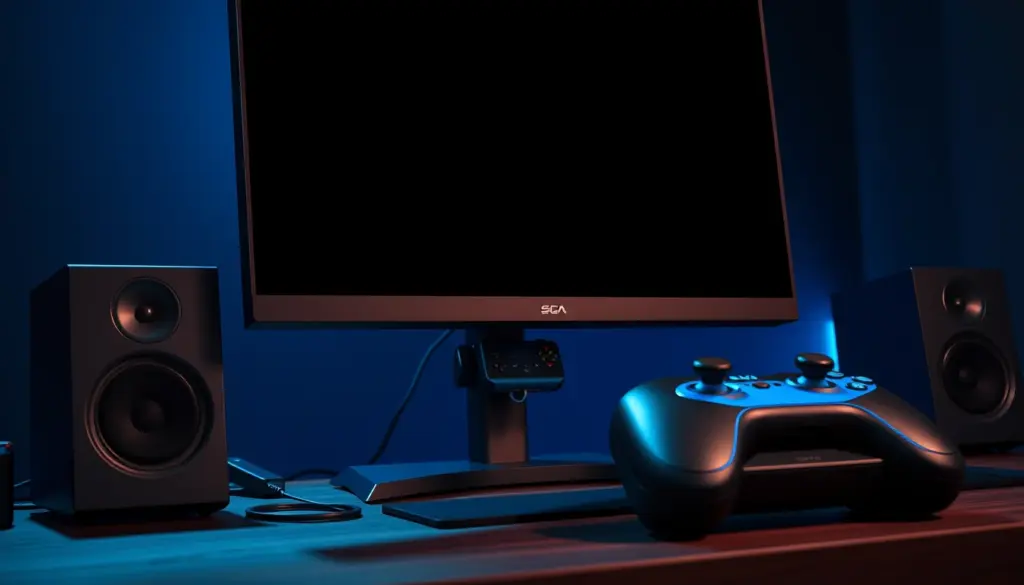
Its signature feature is mundane but clever: a physical hook built into the stand beneath the screen that holds and charges a DualSense controller. As gaming news outlet 5AU described it, “PlayStation is introducing a dedicated 27-inch Quad HD gaming monitor, complete with a built-in hook beneath the screen to rest and charge your DualSense controller.” It is a small piece of industrial design, but it is also a signal: Sony is designing hardware around its own controller ecosystem in a way third-party monitor makers can’t replicate without a licensing deal.
Pre-orders opened on June 5, 2026, 83 days ahead of the August 27 launch, an unusually long lead time for a peripheral. The monitor launched only in the United States and Japan, with no UK or EU release announced as of publication, a gap that has already drawn criticism from European coverage sites tracking the rollout.
Icon Blue DualSense: A Special Edition With an Unusual Rollout
The newest addition to the wave is the Icon Blue Special Edition DualSense wireless controller, a colorway variant of the standard PS5 pad rather than a new controller design. PlayStation Plus subscribers got a two-day head start on pre-orders, starting August 25, 2026, with general pre-orders opening August 27 and the controller launching September 25, 2026.
In the UK, ToyScout reported that the controller is sold exclusively through direct.playstation.com, with no third-party retail partners confirmed at launch. That single-channel strategy mirrors how Sony sold several PS5 console colorways in prior years, keeping margin in-house and using scarcity to drive traffic to its own storefront rather than Amazon or GAME. Unlike the other three products in the wave, Sony had not published an official retail price for Icon Blue in the coverage available at launch, leaving buyers to infer pricing from the standard DualSense’s typical $69.99 to $74.99 range.
Pulse Elevate Wireless Speakers Close Out the Lineup
The fourth and final product, Pulse Elevate, is Sony’s first wireless desktop speaker set for PlayStation, priced at $219.99 USD per pair and scheduled to launch November 12, 2026. The PlayStation Blog framed it as the piece that ties the whole setup together: “These wireless speakers will launch later this year and will pair perfectly with the 27” Gaming Monitor, creating a rich experience beyond the living room for players.”
That phrase, “beyond the living room,” is the clearest statement of intent in the entire rollout. Sony has spent nearly three decades selling the PS5 and its predecessors as TV-connected devices. Pulse Elevate, paired with the 27-inch monitor and the DualSense charging hook, describes a different setup entirely: a desk, not a couch.
The Full 2026 PlayStation Hardware Timeline
Laid out end to end, the four launches show just how compressed this hardware push really is:
| Product | Price (USD) | Pre-Order Opens | Launch Date | Regions Confirmed |
|---|---|---|---|---|
| FlexStrike wireless fight stick | $199.99 | Not separately reported | August 6, 2026 | Global |
| PlayStation 27″ Gaming Monitor | $349.99 | June 5, 2026 | August 27, 2026 | US, Japan only |
| Icon Blue Special Edition DualSense | Not officially stated | Aug 25 (PS Plus), Aug 27 (general) | September 25, 2026 | UK confirmed via direct.playstation.com |
| Pulse Elevate wireless speakers | $219.99 | Not separately reported | November 12, 2026 | Not fully detailed at announcement |
Two gaps stand out in that table. Sony has not published a retail price for Icon Blue anywhere in the coverage tracked so far, an odd omission for a product already open for pre-order. And the monitor’s US/Japan-only launch leaves two of PlayStation’s largest markets, the UK and the wider EU, without an official release window for the one product in the lineup built specifically around the DualSense.
Why Sony Is Building a Desktop Ecosystem Around the PS5
PC gaming desks, complete with monitor, mechanical keyboard, headset stand, and RGB lighting, have become a genre of their own on YouTube and TikTok. Console gaming has mostly stayed out of that aesthetic, tied instead to a TV in a living room. Sony’s 2026 lineup is a direct attempt to plant PlayStation branding inside that desk-setup culture, using a monitor and speakers that look and function like PC gear but only fully unlock their premium refresh rates when paired with Sony’s own controller and console.
It also solves a business problem. Console hardware margins are notoriously thin, and Sony has said publicly it has no plans to sell PS5 units at a loss. Accessories carry far better margins, and a monitor, a fight stick, and a pair of speakers each represent a full new product category rather than incremental controller sales. Four SKUs at $199.99, $349.99, an unstated Icon Blue price, and $219.99 respectively, sold to even a fraction of the PS5’s installed base, add up to meaningful incremental revenue without touching console pricing at all.
Market Impact: What This Means for PlayStation’s Accessory Business
The pricing math tells its own story. Using the standard DualSense’s typical $69.99 to $74.99 range as a baseline, FlexStrike costs roughly 2.7 to 2.9 times as much as a normal controller, the 27-inch monitor runs about 4.7 to 5 times that price, and Pulse Elevate sits 10% above FlexStrike and roughly 37% below the monitor. Sony has effectively built a full pricing ladder, from a $70 controller up to a $350 display, all under the same PlayStation label.
That ladder arrives as Sony’s gaming division has already been leaning on non-console revenue. The company’s own earnings disclosures, covered previously by Shattered’s reporting on Sony’s gaming profit, showed PlayStation profit climbing even as PS5 console unit sales declined, a pattern that makes services, software, and now first-party accessories a bigger share of the business than hardware sales alone. A four-product accessory wave fits that strategy neatly: it grows revenue per existing PS5 owner rather than depending on new console sales to hit targets.
How Sony’s Accessory Push Compares to Xbox and PC Peripheral Makers
Sony is not the first platform holder to chase the premium-accessory market. It already sells the DualSense Edge, a $199.99 pro-tier controller that competes directly with Microsoft’s Xbox Elite line in the same premium bracket, a rivalry Shattered has covered in detail previously. What is new in 2026 is the scope: Sony is now building an entire desk ecosystem, not just a single premium controller.
| Category | PlayStation’s 2026 Move | Established Competitors |
|---|---|---|
| Fight sticks | FlexStrike, $199.99, first-party | Hori, Qanba, Victrix (third-party, PS5-licensed) |
| Gaming monitors | 27″ QHD, $349.99, DualSense hook | Dell, Samsung, LG (PC-first, no console-specific hardware) |
| Premium controllers | DualSense Edge, $199.99 | Xbox Elite Series controllers (same premium tier) |
| Desktop speakers | Pulse Elevate, $219.99 | Logitech, Razer (PC-first desktop audio) |
The pattern across every row is the same: Sony isn’t inventing new hardware categories, it’s entering existing ones as a first-party player where it previously left the field to licensees or ignored it outright. That is a meaningfully different competitive posture than Sony has held for most of the PS5 generation, when accessories beyond the controller and headset were almost entirely left to third parties like Turtle Beach and Astro.
Historical Context: Sony’s On-Again, Off-Again Relationship With PS Accessories
Sony has flirted with first-party accessories before without fully committing. The PS4 era brought the Gold Wireless Headset and the PlayStation Camera, both solid sellers that never expanded into a broader ecosystem play. PS5 launched with the DualSense and Pulse 3D headset, then went quiet on new hardware categories for most of the console’s early years while Microsoft and PC brands filled the gap with their own monitors, headsets, and controllers.
What changed in 2026 is commitment. Four products announced and launched within a single calendar year, spanning fight sticks, displays, controllers, and audio, is a different scale than anything Sony has attempted for PlayStation accessories before. It puts Sony in more direct competition with the PC peripheral market it mostly avoided during the PS4 and early PS5 years, at the same time Valve is reportedly developing a Steam Deck successor and Microsoft continues pushing Xbox further into cloud gaming and cross-platform hardware.
The Regional Availability Problem: Why the Monitor Skips Europe and the UK
The most-criticized detail in the rollout is regional. The 27-inch monitor, the product built specifically around the DualSense charging hook, launched only in the US and Japan. UK and EU buyers, two of PlayStation’s largest markets outside the US, have no confirmed release window for the monitor as of this writing, even though the Icon Blue controller it’s designed to pair with is sold in the UK through Sony’s direct storefront.
That mismatch, a UK-available controller built to charge on a monitor the UK can’t buy, is the kind of rollout friction that tends to generate its own news cycle. It also raises a practical question for the next hardware wave: whether Sony sequences future PlayStation accessory launches by region from the outset, or continues shipping products piecemeal and dealing with regional gaps after the fact.
Competitive Comparison: PlayStation’s Desk Setup vs. the Living Room Console
The strategic question underneath all four launches is whether PS5 owners actually want a console-branded desk setup at all. PC gaming desks are built around modularity, buyers mix and match monitors, keyboards, and speakers from different brands based on price and features. Sony’s approach bets the opposite way: that PlayStation owners will pay a premium for pieces that visibly match and interlock, the DualSense hook under the monitor, the speakers positioned to flank it, the fight stick and Icon Blue controller sharing a color identity.
That is closer to how Apple sells accessories around the Mac and iPhone than how the console industry has traditionally operated. If it works, Sony captures a much larger share of what a PlayStation owner spends on their setup over a generation. If it doesn’t, the four products risk becoming a scattered lineup of niche SKUs sold mostly to Sony’s most dedicated fans rather than a genuine new revenue category.
What’s Next: 5 Predictions for PlayStation Hardware in 2027
- Expect Sony to publish an official Icon Blue DualSense price closer to the September 25 launch date, most likely in the standard DualSense’s existing $69.99 to $74.99 band rather than a premium markup, since it is a colorway rather than a new controller design.
- A UK and EU launch window for the 27-inch Gaming Monitor is likely to follow within two to three quarters of the US/Japan release, mirroring how Sony has staggered past hardware rollouts by region.
- Additional DualSense colorways tied to the Icon Blue rollout pattern are likely in 2027, following Sony’s established habit of using limited controller colors to drive traffic to its direct storefront.
- If Pulse Elevate sells well against its November 12 launch, expect Sony to expand PlayStation-branded desktop audio into a headset or soundbar tier built around the same “beyond the living room” positioning.
- Watch for Sony to bundle the monitor, DualSense hook, and speakers into a single discounted “battlestation” package once all four products are simultaneously available, a common play once a hardware family reaches full lineup status.
Why This Matters for the Console Wars Beyond PlayStation
Sony’s move doesn’t happen in a vacuum. Valve has confirmed a Steam Deck successor is in active development, though without a release window, specs, or price, according to comments from senior engineer Pierre-Loup Griffais reported by IGN earlier in 2026. Microsoft, meanwhile, has spent 2026 pushing Xbox further into cloud gaming and cross-platform hardware rather than a traditional console-accessory buildout. Sony’s four-product accessory wave positions PlayStation as the platform holder most willing to compete directly in categories, monitors and desktop speakers, that neither Microsoft nor Valve has fully entered as a first-party seller.
It also lands during a broader reassessment of what a “PlayStation” purchase even means. Sony has separately told PSN account holders that purchased games are licensed rather than owned outright, a point covered in Shattered’s reporting on that PSN email, and the company’s shift away from physical media has its own consequences for the used-game market. A hardware wave built around premium, first-party accessories fits a broader pattern: Sony wants a larger share of ongoing PlayStation spending, not just the up-front console sale.
None of these four products will move PlayStation’s overall revenue as much as a hit exclusive or a console price change would. But together they represent a repeatable playbook: identify a PC-first hardware category, build a first-party PlayStation version with a DualSense-specific hook, price it at a premium relative to the base controller, and sell it directly rather than through retail. If the Icon Blue rollout is any indication, that formula is one Sony intends to keep reusing well past 2026, alongside the console reveals and game showcases that dominate most PlayStation headlines. The takeaway: watch the accessory aisle as closely as the exclusives list.
Frequently Asked Questions
What new PlayStation hardware did Sony announce for 2026?
Sony announced four products: the FlexStrike wireless fight stick, a 27-inch Gaming Monitor with a built-in DualSense charging hook, the Icon Blue Special Edition DualSense controller, and the Pulse Elevate wireless desktop speakers.
How much does the FlexStrike fight stick cost and when did it launch?
FlexStrike costs $199.99 USD (also listed at €199.99, £179.99, and ¥34,980 in other markets) and launched globally on August 6, 2026, with a built-in battery and sling carry case.
Why isn’t the PlayStation Gaming Monitor launching in Europe or the UK?
Sony has only confirmed the United States and Japan as launch regions for the 27-inch monitor. No official reason has been given for excluding the UK and EU, and no release window for those regions has been announced as of this writing.
When does the Icon Blue DualSense controller release, and how much does it cost?
PlayStation Plus members could pre-order starting August 25, 2026, with general pre-orders opening August 27 and the controller launching September 25, 2026. Sony had not published an official retail price for Icon Blue in coverage available at launch.
What are Pulse Elevate speakers and when do they launch?
Pulse Elevate is Sony’s first wireless desktop speaker set for PlayStation, priced at $219.99 per pair, designed to pair with the 27-inch Gaming Monitor. It’s scheduled to launch November 12, 2026.
Does the PlayStation Gaming Monitor work with PC and Mac, not just PS5?
Yes. The monitor supports up to 120Hz when connected to a PS5 or PS5 Pro, and up to 240Hz when connected to a PC or Mac, making it usable outside the PlayStation ecosystem even though its charging hook is built for the DualSense.
Is Sony trying to compete with PC peripheral brands like Razer and Logitech?
The lineup suggests so. A branded gaming monitor and wireless desktop speakers are categories Sony had never sold before, categories long dominated by PC-first brands, and the products are explicitly positioned around a “beyond the living room” desk setup rather than a TV-connected console.
What’s the total timeline span of Sony’s 2026 PlayStation hardware push?
From the monitor’s June 5, 2026 pre-order opening to the Pulse Elevate speakers’ planned November 12, 2026 launch, the four-product wave spans 160 days.