
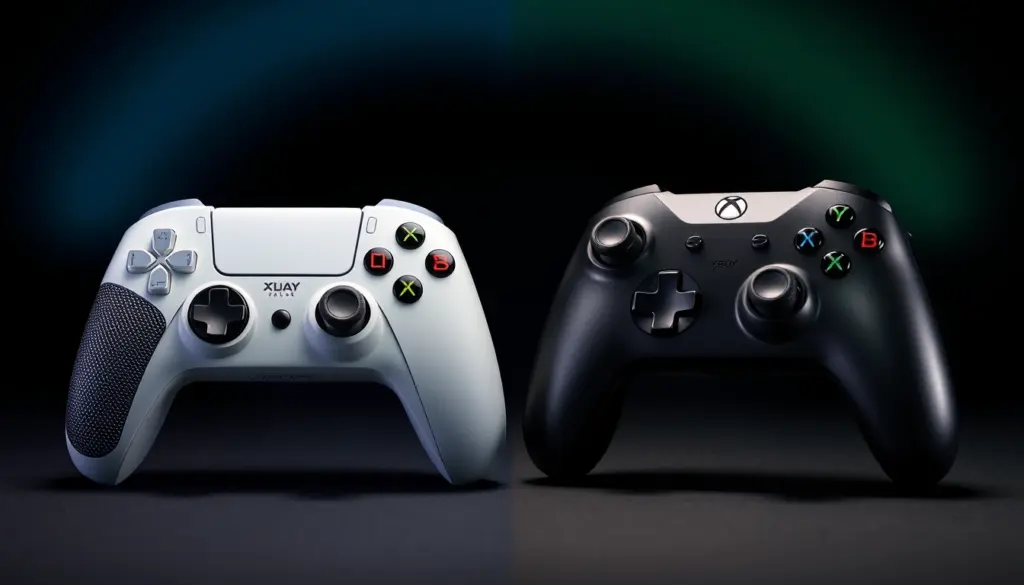
Sony’s most customizable PlayStation pad and Microsoft’s flagship Xbox controller now cost exactly the same amount for the first time in their history. As of July 2026, both the DualSense Edge and the Xbox Elite Wireless Controller Series 2 list for $199.00 on their respective first-party stores – a price convergence driven less by feature parity than by tariffs, component costs, and two separate rounds of manufacturer price increases since 2025. This DualSense Edge vs Xbox Elite comparison, part of our broader gaming hardware coverage, breaks down verified 2026 pricing, independent latency and battery benchmarks from five separate testing outlets, the stick-drift lawsuits still following both companies through the courts, and which controller actually fits which kind of player. The short version: the DualSense Edge wins decisively on input latency and haptics, the Xbox Elite Series 2 wins just as decisively on battery life and cross-platform software support, and the price tag that used to separate them is gone.

Don't miss new tech stories on Google
Add Shattered once in the Google app and our stories show up in your news suggestions.
Quick Verdict: DualSense Edge vs Xbox Elite Series 2 at a Glance
Neither controller is a straightforward upgrade over the other – they are built around different priorities. The DualSense Edge measures Bluetooth input lag at 3.9ms against the Elite Series 2’s 16.7ms, according to independent testing from gamepadla.com, making it roughly 77% faster to respond over Bluetooth. It also carries PS5-exclusive adaptive triggers and high-fidelity haptic feedback that the Elite Series 2 simply does not have. The Elite Series 2 answers back with a battery rated for up to 40 hours per charge against the Edge’s real-world 5 to 8 hours, four back paddles instead of two, and a companion app that works with any PC game, not just first-party titles.
If a reader wants the one-line answer: buy the DualSense Edge if the priority is competitive latency, haptic immersion, and living inside the PlayStation ecosystem. Buy the Xbox Elite Series 2 if the priority is battery life, four-paddle customization, and a controller that behaves the same whether it is plugged into a console, a gaming PC, or a cloud-streaming session. Both now carry the identical $199.00 price tag, so budget is no longer the deciding factor it used to be.
Pricing in 2026: How Both Premium Controllers Converged at $199
The DualSense Edge launched on 26 January 2023 at $199.99 and, remarkably, is still listed at essentially that same price – $199.00 – on PlayStation Direct as of this writing. The Xbox Elite Series 2 took the opposite path. It launched on 4 November 2019 at roughly $180 and stayed there for years, undercutting the Edge by nearly $20. That gap closed during 2025 and 2026 through a series of Xbox hardware price increases tied to U.S. tariff policy. Microsoft’s Elite Series 2 rose to $199.99 following a May 2025 hardware price adjustment, and Microsoft’s own official Xbox accessories page now lists it at $199.00 – the same figure PlayStation Direct shows for the Edge.
Both companies point to the same underlying pressures. According to a pricing analysis from The Controller People, Sony’s March 27, 2026 price announcement (effective April 2) cited “ongoing economic challenges including significant currency fluctuations and global inflationary pressures,” and the same report ties the increases to three concrete drivers: U.S. tariffs on imports from China (30%), Japan (15%), Vietnam (20%), and Malaysia (19%) that remained in effect after a 90-day truce expired without a permanent resolution; a global DRAM and NAND flash shortage as AI infrastructure buildouts compete for memory supply; and anticipated demand from GTA 6’s fall 2026 launch, which reduces retailers’ incentive to discount accessories. Sony’s standard DualSense controller climbed from $69.99 to $74.99 in September 2024, and its Limited Edition DualSense pads now sell for $84.99. On the Xbox side, the Elite Series 2 Core variant – the version without adaptive back paddles – rose from $129.99 to $149.99 in the same May 2025 adjustment. Microsoft has confirmed a further round of Xbox hardware price increases effective August 1, 2026, though that round is targeted at consoles rather than controllers specifically.
This matters for the buying decision because price used to be the DualSense Edge’s biggest weakness relative to the Elite Series 2 – reviewers routinely flagged it as the pricier, harder-to-justify option. That argument has quietly disappeared. Whatever a buyer picks in 2026, they are paying an identical $199.00 at full retail.
It’s also worth noting the DualSense Edge’s price has been unusually stable compared to nearly every other piece of PlayStation hardware. Sony opened preorders for the Edge on 25 October 2022, three months ahead of its 26 January 2023 launch, at $199.99 – and the current $199.00 listing on PlayStation Direct is, functionally, the same number more than three years later, even as the standard DualSense, the PS5 console itself, and PS Plus subscription tiers have all seen multiple increases over that same window. The Elite Series 2, meanwhile, has closed a $20 gap entirely through its own price going up rather than the Edge coming down, which is the more revealing detail buried in this pricing story.
| Controller / SKU | Current Price (Jul 2026) | Original Launch Price | Change |
|---|---|---|---|
| DualSense Edge (PS5) | $199.00 | $199.99 (Jan 2023) | ~flat |
| Xbox Elite Series 2 (full) | $199.00 | ~$180 (Nov 2019) | +$19 |
| Xbox Elite Series 2 Core | $149.99 | $129.99 | +$20 (May 2025) |
| Standard DualSense | $74.99 | $69.99 | +$5 (Sep 2024) |
| DualSense Limited Edition | $84.99 | varies | + (Apr 2026) |
| Xbox Series X console | $799.99 (from Aug 1, 2026) | $499.99 (2020) | Third hike since 2025 |
| PlayStation 5 console | price raised 2026 | $499.99 (2020) | See PS5 pricing coverage |
Full Specs Comparison: DualSense Edge vs Xbox Elite Series 2
Sony publishes almost no hard technical specification sheet for the DualSense Edge beyond feature descriptions, which is why independent measurements from outlets like Tom’s Hardware and WellPlayed matter for anything involving weight or battery life. Microsoft, by contrast, publishes an official spec sheet on xbox.com that lists exact weight and battery figures. The table below marks which numbers are official manufacturer specs and which are independently measured.
| Spec | DualSense Edge | Xbox Elite Series 2 |
|---|---|---|
| Manufacturer | Sony | Microsoft |
| Launch date | 26 January 2023 | 4 November 2019 |
| Current price | $199.00 | $199.00 (Core: $149.99) |
| Weight | 322g–336g (independent measurements; no official Sony spec) | 345g ±15g (official, fully configured) |
| Battery life | 5–8 hours (independent tests) | Up to 40 hours (official) |
| Bluetooth input latency | 3.9ms (gamepadla.com) | 16.7ms (gamepadla.com) |
| Back buttons / paddles | 2 interchangeable | 4 interchangeable (2 medium, 2 mini) |
| Adaptive triggers | Yes, full PS5 adaptive triggers | No – tension-adjustable only |
| Haptic feedback | Full PS5 haptics | Standard dual-motor rumble only |
| Trigger adjustment | 3-level software stops (Control Center) | Mechanical hair-trigger locks (physical lever) |
| Stick module replacement | Full hot-swap module, sold separately | Swappable caps only (2 classic, 1 dome, 1 tall) + 3-level tension tool |
| Connectivity | Bluetooth 5.1 + USB-C wired | Xbox Wireless + Bluetooth + ~2.7m USB-C cable |
| Companion app | DualSense Edge Control Center | Xbox Accessories App |
| Warranty | 1 year | 1 year (extended from 90 days in Sep 2020) |
| PC / native support | Works on Steam; adaptive triggers/haptics largely PS5-only | Full remap on PC via Xbox Accessories App, including non-Xbox titles |
Design and Build Quality
The DualSense Edge keeps the standard DualSense’s rounded silhouette but adds a glossy black D-pad and face-button finish, textured triggers, and a matte-finish grip that independent measurements put at 322g to 336g – noticeably heavier than the standard pad, and heavy enough that reviewers consistently describe it as feeling more substantial in hand. TrustedReviews notes the Edge carries 16 total inputs once the two back buttons are counted, versus 15 on the Elite Series 2. The touchpad, lightbar, and built-in microphone all carry over from the standard controller.
The Elite Series 2 looks like an evolved version of the standard Xbox Wireless Controller rather than a redesign: same general button layout, but with a metal D-pad, rubberized diamond-pattern grips, and a carrying case with a built-in charging dock included in the box – something the DualSense Edge does not offer at all (its case is a soft pouch). At an official 345g ±15g fully configured, it is measurably heavier than most independent Edge measurements, and reviewers have described that extra mass as contributing to a more solid, less hollow feel, particularly around the face buttons and D-pad.
Both controllers ship with a case, but only the Elite Series 2’s case charges the controller while stored – a small but frequently cited convenience difference in hands-on reviews from outlets including TechRadar.
The Elite Series 2 also carries more design history behind it. Microsoft’s first Xbox Elite Wireless Controller launched on 27 October 2015, the same day as Halo 5: Guardians, introducing steel-reinforced construction and swappable paddles years before Sony offered anything comparable. The Series 2 that ships today is a direct, iterative descendant of that 2015 design. The DualSense Edge has no such lineage – it is Sony’s first-ever premium controller for any PlayStation generation, which explains both its relatively conservative, standard-DualSense-derived shape and why Sony’s software (the Control Center app) feels newer and less deep in places than Microsoft’s decade-refined Accessories App.
Input Latency and Performance Benchmarks
The clearest, most reproducible benchmark in this entire comparison comes from gamepadla.com’s dedicated Bluetooth latency test, which measured the DualSense Edge at 3.9ms and the Xbox Elite Series 2 at 16.7ms – a gap of nearly 13ms, or roughly 77% faster response for the Edge over a wireless Bluetooth connection. For context, that difference is well below the threshold most players consciously perceive frame-to-frame, but it compounds in fast-twitch competitive titles where every millisecond of input delay stacks on top of display latency and network latency.
It’s worth separating two different connection modes here, since manufacturer wireless protocols typically outperform Bluetooth on both platforms. The Elite Series 2’s native Xbox Wireless protocol (used when connected directly to an Xbox console, not via Bluetooth) generally tests faster than its own Bluetooth mode – the 16.7ms figure specifically reflects Bluetooth-mode testing, which is how most PC and mobile users will actually connect it. The DualSense Edge has no equivalent proprietary wireless protocol outside of its wired USB-C connection and Bluetooth; Sony has not shipped a 2.4GHz USB dongle option for the Edge the way some third-party PC controllers do.
Beyond raw latency, TrustedReviews’ hands-on testing found the DualSense Edge’s haptic feedback meaningfully more precise than the Elite Series 2’s vibration motors, describing the Xbox pad’s rumble as “nowhere near as accurate or powerful” as Sony’s haptic implementation. That is a performance dimension pure latency numbers do not capture: the Edge is not just faster to respond, it also communicates more information back to the player’s hands during play.
The practical impact of a roughly 13ms latency gap depends heavily on genre. In a rhythm game, a fighting-game link, or a competitive shooter where players are actively counting frames, the Edge’s advantage is measurable and repeatable. In a turn-based RPG, a city builder, or most third-person adventure games, that same gap is effectively invisible – no independent tester has reported perceiving the Elite Series 2 as “laggy” in isolation, only slower in a side-by-side instrumented comparison. Buyers shopping specifically for competitive multiplayer titles should weight the latency numbers heavily; buyers shopping for single-player or slower-paced genres can reasonably treat this category as a wash and decide based on ecosystem and battery life instead.
Battery Life: 8 Hours vs 40 Hours
This is the single biggest practical gap between the two controllers, and it is not close. Microsoft’s official Xbox Elite Series 2 spec sheet claims up to 40 hours of battery life per charge. Independent testing of the DualSense Edge tells a consistent story in the opposite direction: TechRadar measured 6 to 8 hours, Tom’s Guide measured approximately 5 hours, and The Shortcut logged two separate test sessions at 6 hours 12 minutes and 6 hours 29 minutes. Sony has never published an official battery-life figure for the Edge, which is itself notable – Microsoft’s willingness to put a specific, testable number on its product page while Sony omits one entirely has become a recurring point of criticism in independent reviews.
Averaging the independent Edge results puts it at roughly 5 to 8 hours per charge, meaning the Elite Series 2 lasts somewhere between five and eight times longer on a single charge under normal use. For anyone who has ever had a controller die mid-session, that gap is not a rounding error – it is the difference between charging a controller nightly and charging it roughly once a week under moderate daily use.
Some of that gap is architectural. The DualSense Edge’s adaptive triggers and high-fidelity haptic motors draw meaningfully more power than the Elite Series 2’s simpler dual-motor rumble, and Sony has prioritized haptic fidelity over battery runtime in every DualSense-family controller since the base PS5 launched. Players who lean on those features – resistance in a bowstring pull, the rumble texture of driving on gravel versus asphalt – are trading battery life for that feedback whether they realize it or not.
Customization: Back Buttons, Trigger Stops and Software
The Elite Series 2 ships with four interchangeable paddles (two medium, two mini) against the DualSense Edge’s two back buttons, giving Xbox’s controller a real numerical edge in remappable inputs for players who rely on claw-grip or back-button setups in shooters and fighting games. Both controllers let players reassign what those back inputs do, but the workflow differs: the Edge’s on-the-fly button mapping happens directly through the PS5’s system menu without leaving a game, storing multiple profiles a player can cycle through instantly. The Elite Series 2 handles profile switching through a physical button combination on the controller itself for quick swaps between saved configurations, with deeper remapping done through the Xbox Accessories App on console or PC.
Trigger customization also diverges in a fundamentally different direction. The DualSense Edge offers three software-adjustable trigger stop levels (short, medium, long) through its Control Center app, changing how far the trigger travels before it registers. The Elite Series 2 uses physical hair-trigger locks – a small lever on the underside of each trigger that mechanically shortens travel distance without needing an app open, plus a separate tool-adjustable three-level stick tension system and four sets of swappable thumbstick caps (two classic concave, one dome, one tall). Competitive shooter players in particular tend to prefer the Elite Series 2’s mechanical hair-trigger locks specifically because they work identically with zero software running, including on other platforms where the Xbox Accessories App may not be installed.
Stick replacement is where the two philosophies diverge most sharply. The Edge supports full stick module hot-swaps – pull out the entire potentiometer assembly and click in a fresh one, purchased separately through PlayStation Direct – while the Elite Series 2 only swaps the plastic cap on top of a fixed internal stick, with tension adjustment handled by a separate tool rather than a full module change.
Adaptive Triggers and Haptic Feedback
This is the category where the two controllers are least comparable, because the Elite Series 2 simply does not have an equivalent feature. Sony’s adaptive triggers – first introduced on the base DualSense in 2020 and carried over fully to the Edge – use small motors inside the L2/R2 triggers to simulate physical resistance: a bowstring’s pull-back tension, the graduated pressure of a car’s brake pedal, or a rifle’s mechanical trigger click, all rendered as programmable resistance curves that game developers can tune per title. Combined with the Edge’s advanced haptic motors (as opposed to standard rumble), the result is feedback that communicates texture and force rather than just vibration intensity.
The Xbox Elite Series 2 uses conventional dual rumble motors and mechanically adjustable trigger stops rather than force-feedback motors. That’s a deliberate design choice tied to backward compatibility and cross-platform consistency – the Elite Series 2 needs to feel and behave the same on an Xbox One, an Xbox Series X|S, Windows PC, and cloud streaming, whereas the DualSense Edge’s adaptive triggers and haptics were built specifically around PS5 game engines and largely do not carry over when the Edge is used on PC via Steam. For players who value that tactile feedback layer as part of the game itself – and an increasing number of PS5 exclusives are built to use it – this single feature category is often the deciding factor, independent of price or latency numbers.
Platform, PC and Linux/SteamOS Compatibility
Officially, the DualSense Edge is built for PlayStation 5 and PC (via Steam and USB/Bluetooth), while the Xbox Elite Series 2 is built for Xbox Series X|S, Xbox One, Windows PC, and Xbox Cloud Gaming. Neither controller works natively on the other manufacturer’s console. Where things get more interesting is Steam and Linux, since both controllers see real use on Steam Deck-adjacent handhelds and Linux gaming distributions.
Linux and SteamOS Device Support
The DualSense Edge is recognized on Linux and SteamOS through standard udev rules using Sony’s vendor and product identifiers, which is what allows distributions like Bazzite and stock SteamOS to detect it as a valid input device without extra driver installation in most cases:
# DualSense Edge udev rule (vendor:product)
SUBSYSTEM=="input", ATTRS{idVendor}=="054c", ATTRS{idProduct}=="0df2", MODE="0666"
SUBSYSTEM=="usb", ATTRS{idVendor}=="054c", ATTRS{idProduct}=="0df2", MODE="0666"
The Xbox Elite Series 2 is likewise detected under the standard Xbox controller driver stack (xpad/xone kernel modules) that ships with most current Linux gaming distributions, though hair-trigger locks and paddle remapping require the Xbox Accessories App, which is Windows-only – meaning deep customization has to happen on a Windows PC or an Xbox console before the profile carries over, since there is no native Linux configuration tool for the Elite Series 2’s advanced features.
For cloud gaming specifically, both controllers pair over Bluetooth to phones, tablets, and smart TVs running the Xbox Cloud Gaming or PlayStation-compatible streaming apps, though adaptive triggers and advanced haptics on the Edge do not function over cloud streaming today regardless of platform.
Durability and the Stick-Drift Lawsuits Both Companies Face
Neither manufacturer has escaped stick-drift litigation, and both cases are still working through the legal system in 2026 with no final settlement reported. Sony was sued in February 2021 by the law firm Chimicles Schwartz Kriner & Donaldson-Smith LLP over analog stick drift affecting the standard DualSense controller, alleging unjust enrichment, breach of warranty, and consumer fraud; Sony pushed to move the case into arbitration under the PS5’s terms of service, though a group of plaintiffs opted out specifically to continue pursuing the claim in open court according to case filings covered by the Clark Law Firm.
Microsoft faces a parallel case. A class action originally filed in April 2020 by plaintiff Donald McFadden in the Western District of Washington was later amended to explicitly cover the Xbox Elite Series 2, alleging Microsoft knew about a potentiometer-based drift defect as far back as 2014. That case has since moved into arbitration, according to reporting from ScreenRant and a case-status update from The Loadout. Notably, Microsoft extended the Elite Series 2’s warranty from 90 days to a full year in September 2020 – directly following the lawsuit amendment naming the controller specifically, a timeline that press coverage at the time widely interpreted as a tacit response to the litigation risk rather than a routine policy update.
On hardware durability specifically, the DualSense Edge’s full stick-module replacement system gives it a practical advantage regardless of how the lawsuits resolve: a worn-out stick can be physically swapped for a new module without sending the controller in for service. The Elite Series 2 has no equivalent module-swap system – a drifting stick on that controller requires either living with the tension adjustment tool, a full warranty claim, or third-party repair.
That distinction matters more once the one-year warranty on either controller expires. A DualSense Edge owner facing drift after year one can order a replacement stick module and swap it in without tools beyond what ships in the box, keeping the rest of a $199 controller in service indefinitely. An Elite Series 2 owner in the same position is stuck choosing between the tension-adjustment workaround, which delays but does not fix mechanical wear on the potentiometer itself, or an out-of-warranty repair through Microsoft or a third party. Given that both companies are simultaneously arguing in court and arbitration that their potentiometer-based sticks are not defectively designed, neither is likely to expand its warranty further in the near term – which makes the Edge’s self-service repair path a genuine long-term cost advantage, even at matching purchase prices.
Real-World Use Cases: 7 Buyer Scenarios
Specs and lawsuits aside, the right pick usually comes down to how and where someone actually plays. These seven scenarios cover the situations that come up most often in buying guides and community forum threads.
None of these scenarios are mutually exclusive, and plenty of players will see themselves in two or three at once – a streamer who also plays competitive shooters, for instance, gets both the profile-switching and latency arguments pointing the same direction toward the Edge. The scenarios that conflict are the more useful ones: a PC-and-Xbox player who also cares about the absolute lowest latency has to actually pick a side, since no controller here does everything best.
- Competitive PS5 shooter players (e.g. Call of Duty on PS5): the DualSense Edge’s 3.9ms Bluetooth latency and on-the-fly profile switching make it the natural pick when every millisecond of input delay matters and the player is locked into the PlayStation ecosystem anyway.
- Marathon RPG or open-world players who hate charging cables: the Elite Series 2’s rated 40-hour battery life turns “charge before bed” into “charge once a week,” a meaningful quality-of-life difference for anyone logging long uninterrupted sessions.
- PC gamers who split time between Steam and Xbox Game Pass for PC: the Elite Series 2’s full remapping support through the Xbox Accessories App – which works even in non-Xbox PC titles – gives it broader utility than the Edge, whose adaptive triggers and haptics mostly stay locked to PS5 exclusives.
- Streamers and content creators customizing on the fly: the DualSense Edge’s system-level profile switching (no app required mid-broadcast) is faster to demonstrate live than the Elite Series 2’s app-based remapping workflow.
- Budget-conscious buyers who still want paddle customization: the $149.99 Xbox Elite Series 2 Core undercuts both full-price controllers by $50 while keeping the swappable-cap thumbsticks and hair-trigger locks, just without the extra paddles.
- Households with a history of stick drift complaints: the DualSense Edge’s swappable stick modules offer a self-service repair path that the Elite Series 2 does not match, which matters given both companies’ ongoing drift litigation.
- Cloud-gaming-first players (Xbox Cloud Gaming, GeForce Now, PS Remote Play): since adaptive triggers and advanced haptics don’t function over cloud streaming on either controller today, the Elite Series 2’s longer battery life becomes the more relevant advantage in this specific use case, since neither controller’s premium feedback features are actually usable.
| Buyer Type | Recommended Pick | Primary Reason |
|---|---|---|
| Competitive PS5 shooter player | DualSense Edge | 3.9ms latency, instant profile switching |
| Long-session RPG player | Xbox Elite Series 2 | Up to 40h battery vs 5-8h |
| Multi-platform PC gamer | Xbox Elite Series 2 | Full remap works in any PC game |
| Livestreamer / content creator | DualSense Edge | No-app profile swaps mid-stream |
| Budget buyer wanting paddles | Xbox Elite Series 2 Core | $149.99, $50 cheaper |
| Drift-repair-conscious household | DualSense Edge | Hot-swap stick modules |
| Cloud-gaming-first player | Xbox Elite Series 2 | Battery matters more when haptics don’t work over cloud |
Migration Guide: Switching From a Standard Controller
Moving from a stock DualSense or standard Xbox Wireless Controller to either premium pad takes about 15 minutes, most of it spent inside the companion app rather than fumbling with hardware. Here’s the process for each platform.
Setting Up a DualSense Edge
- Pair the Edge to the PS5 via USB-C cable first to ensure a firmware update installs before going wireless.
- Open Settings → Accessories → Controllers → DualSense Edge Controller Settings on the PS5 system menu.
- Run the recommended firmware update if prompted; this can take several minutes.
- Create a Profile under Button Assignments and map the two back buttons to the actions used most (e.g., jump, crouch, reload).
- Set Trigger Effect stops (Off / Short / Medium / Long) for L2/R2 based on the genre being played – shorter stops for shooters, standard for everything else.
- Adjust stick sensitivity curves if the standard DualSense felt too twitchy or too sluggish.
- Save the profile and assign it a Fn-button shortcut so it’s selectable without leaving a game.
- Repeat steps 4–7 for a second profile if switching between genres (e.g., shooter profile vs platformer profile).
Setting Up an Xbox Elite Series 2
- Charge the controller fully using the included case before first use to get an accurate battery baseline.
- Install the Xbox Accessories App on the console or PC being used.
- Update the controller’s firmware through the app; this is required before paddle remapping will work.
- Physically swap in the preferred thumbstick caps and back paddles based on grip style.
- Set the mechanical hair-trigger locks on the underside of the controller for shooters, or leave them off for driving/racing titles.
- Create a custom profile in the app, remap the four paddles, and adjust stick sensitivity per profile.
- Save up to three onboard profiles and learn the physical button-combo shortcut to cycle between them without the app open.
- If moving between an Xbox console and a PC, confirm the same profile syncs – profiles are tied to the controller’s onboard memory, not the device.
Pros and Cons
DualSense Edge Pros and Cons
- Pro: Lowest input latency of the two at 3.9ms Bluetooth (gamepadla.com)
- Pro: Full adaptive triggers and high-fidelity haptics, PS5-exclusive feature set
- Pro: Hot-swappable stick modules for self-service drift repair
- Pro: Instant, system-level profile switching with no app required mid-game
- Con: Battery life of just 5-8 hours in independent testing, no official Sony figure published
- Con: Only 2 back buttons versus the Elite Series 2’s 4 paddles
- Con: Adaptive triggers and haptics mostly don’t carry over to PC or cloud streaming
Xbox Elite Series 2 Pros and Cons
- Pro: Official 40-hour battery life, five to eight times the Edge’s runtime
- Pro: Four interchangeable paddles versus the Edge’s two back buttons
- Pro: Full remapping works in any PC game, not just first-party titles
- Pro: Charging case included; Core variant available at $149.99 for budget buyers
- Con: Bluetooth input latency of 16.7ms, roughly 77% slower than the Edge
- Con: No adaptive triggers; standard dual-motor rumble only
- Con: Deep customization (paddle remap, hair-trigger memory) requires the Windows-only Accessories App
The Verdict: Which Premium Controller Wins in 2026
There is no single winner here, and that’s a more useful answer than it sounds. The DualSense Edge wins on every metric tied to raw responsiveness and feedback fidelity: 3.9ms versus 16.7ms Bluetooth latency, full adaptive triggers, and haptics the Elite Series 2 has no equivalent for. The Xbox Elite Series 2 wins on every metric tied to endurance and flexibility: up to 40 hours of battery against 5 to 8, four remappable paddles against two, and software that works identically whether it’s plugged into a console or a PC running an entirely unrelated game.
What used to break the tie – price – no longer does. At $199.00 apiece, both controllers now cost the same amount, which means the decision comes down entirely to which column of specs matters more to a given player and which console ecosystem they’re already invested in. Players who are PS5-first and value feel over stamina should buy the DualSense Edge. Players who play long sessions, split time across PC and Xbox, or simply hate charging controllers should buy the Xbox Elite Series 2. The one group that should think twice about either: anyone whose primary complaint about their current controller is joystick drift, since both companies are still defending litigation over exactly that issue with no resolution in sight as of mid-2026.
Zooming out, the more interesting story in 2026 may not be which controller wins, but that the comparison is even this close. For most of the Elite Series 2’s life, its pitch to PlayStation loyalists eyeing an upgrade was straightforward: pay less, get more battery, accept worse haptics. Tariff-driven pricing has erased the “pay less” half of that pitch entirely, and it’s fair to expect similar convergence pressure on other cross-platform accessory categories through the rest of 2026 as the same component costs and import tariffs apply regardless of which logo is on the box.
Frequently Asked Questions
Is the DualSense Edge worth $199 in 2026?
For PS5-exclusive players who want the lowest input latency and full adaptive-trigger support, yes. For anyone who plays long sessions away from a charger, the 5-8 hour battery life is a real ownership cost that reviewers consistently flag.
Why did the Xbox Elite Series 2 price increase to $199?
Microsoft raised Xbox hardware and accessory prices in a series of adjustments starting May 2025, driven by U.S. tariffs on components from China, Japan, Vietnam, and Malaysia, plus a broader DRAM and NAND memory shortage. The Elite Series 2, which launched around $180, now lists for $199.00 on the Microsoft Store.
Which controller has better battery life?
The Xbox Elite Series 2, by a wide margin. Microsoft’s official spec claims up to 40 hours per charge, while independent tests of the DualSense Edge consistently land between 5 and 8 hours.
Does the DualSense Edge work on Xbox or PC?
It does not work on Xbox consoles at all. It does work on PC via Steam over USB-C or Bluetooth, but adaptive triggers and advanced haptics are largely limited to PS5 games and don’t carry over to most PC titles.
Are Xbox Elite Series 2 controllers still affected by stick drift in 2026?
Microsoft is still defending a class-action lawsuit over Elite Series 2 stick drift that has moved into arbitration, with no public settlement reported as of mid-2026. Sony faces a parallel, separate lawsuit over standard DualSense drift.
Can I buy a cheaper version of either controller?
Yes, on the Xbox side. The Elite Series 2 Core sells for $149.99 and keeps the swappable thumbstick caps and mechanical hair-trigger locks, just without the extra two paddles. Sony does not sell a cut-down version of the DualSense Edge – the standard DualSense controller at $74.99 is a completely different, non-premium product.
Is the DualSense Edge compatible with Steam Deck or Linux?
Yes. Both controllers are recognized by standard Linux input drivers and gaming distributions like Bazzite and SteamOS. The DualSense Edge uses Sony’s standard 054c:0df2 vendor/product identifiers for udev rules, and the Elite Series 2 works through the standard Xbox controller kernel driver stack, though its deep customization features still require the Windows-only Accessories App.
Which controller is better for competitive gaming?
The DualSense Edge, primarily due to its 3.9ms Bluetooth input latency versus the Elite Series 2’s 16.7ms. Competitive Xbox players who need mechanical hair-trigger locks without any app running may still prefer the Elite Series 2 despite the latency gap.