
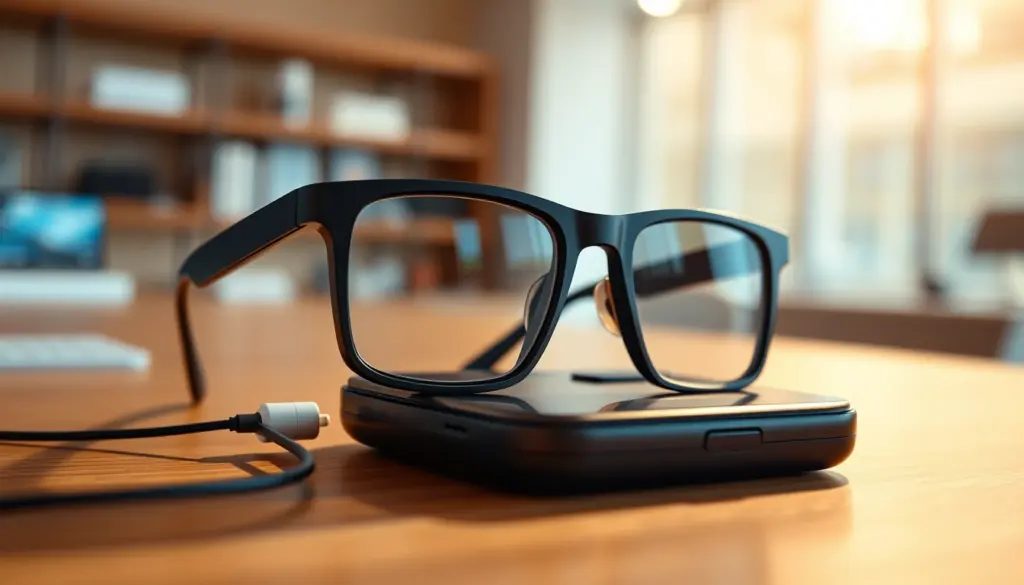
Meta’s cheapest pair of AI glasses now costs $249. The company used its Meta Connect 2026 keynote to introduce the Meta Adventurer, a black-framed, grey-lensed model that undercuts every other camera-equipped Meta Glasses product by at least $80, according to Meta’s own announcement. Pre-orders opened the same day, September 23, 2026, with shipping set for October 23. The launch sits inside a much larger rollout: a refreshed Ray-Ban Meta Gen 3 line, a new audio-only model, two celebrity collaborations, and a 90th-anniversary limited edition, spread across a collection Meta says spans 51 style combinations.
The timing matters. Meta and EssilorLuxottica moved more than 7 million Ray-Ban Meta and Oakley Meta units in 2025, more than triple the combined total from 2023 and 2024. Rather than coast on that growth, Meta just added a lower price tier, a cheaper audio-only tier, and a luxury tier in the same week. That’s a company trying to own every price band in a category it still dominates, while rivals from Xreal to Samsung prepare their own pushes. Here’s what actually shipped, what it costs, and what it signals about where AI glasses pricing goes next.
Meta Adventurer Debuts at $249, Meta’s Cheapest AI Glasses Yet
The Meta Adventurer is the new floor of Meta’s glasses lineup. It ships in a black frame with grey lenses and includes a plug-in case, according to Meta’s official product listing. At $249, it costs $100 less than the standard Ray-Ban Meta Gen 3 configuration and roughly half of what the top-tier special editions charge. Meta also introduced a limited-edition version of its existing Meta Fury frame with a clear shell and mirrored lenses, sold alongside the Adventurer at launch, according to Engadget’s coverage of the keynote.
Every model in the new collection, including the Adventurer, supports adjustable temple tips and carries the audio upgrades Meta built for capturing a wearer’s voice alongside ambient sound, per the company’s announcement. That’s a deliberate move: Meta is betting that most buyers care more about all-day comfort and clear calls than about chasing the newest camera sensor. Pre-orders for the Adventurer opened September 23 in markets where Meta Glasses already sell, with general availability landing exactly one month later on October 23.
What’s Inside (and Left Out of) the $249 Model
A $249 price point means trade-offs. Meta hasn’t published a full spec sheet breaking out every difference between the Adventurer and the pricier Ray-Ban Meta Gen 3, but the pattern across the launch is clear: the entry model gets one frame and lens configuration (black and grey) plus the plug-in case, while the more expensive lines get dozens of style options and, per Engadget, camera and microphone hardware pulled from the higher tiers. Buyers who want prescription lenses aren’t shut out. Meta says all three glasses lines, Adventurer included, support prescription options across four lens types: sun, polarized, Transitions, and clear.
This is the same playbook Meta ran with budget phones and budget VR headsets: ship a stripped-down version of the flagship experience at a price that removes the last excuse not to buy in. It also mirrors a problem playing out across the rest of consumer electronics. Component costs, especially memory, have been climbing all year, and outlets have tracked RAM eating up to 60% of some phones’ bill of materials in 2026. A wearable that holds a $249 price point while everything around it gets more expensive is notable on its own.
Ray-Ban Meta Gen 3 Jumps to $449 With 27 New Combos
Above the Adventurer sits the third-generation Ray-Ban Meta, which Meta and Engadget both confirmed starts at $449 and ships in 27 combinations of frames, colors, and lenses. That’s the model most existing Ray-Ban Meta owners will actually upgrade to, and Meta used the keynote to detail real hardware gains rather than just new paint.
Battery, Mic Array and Camera Upgrades
According to Engadget’s hands-on report from the keynote floor, Ray-Ban Meta Gen 3 runs nine hours on a charge, up from eight hours on the prior generation. Meta also added a six-microphone array the company claims cuts more than 90% of background noise during calls and voice capture, and the 12-megapixel camera now supports 3K video recording. Meta told Engadget that Dolby Atmos spatial audio recording is coming to the camera glasses in a future software update, not at launch. None of those upgrades reach the Adventurer, which keeps Gen 3 positioned as the mainstream pick for buyers who actually use the camera and calling features daily.
Ray-Ban Meta Audio Adds a $349 Non-Camera Option
Meta also launched a camera-free model, Ray-Ban Meta Audio, priced at $349 with shipping on October 13, ten days ahead of the Adventurer. Engadget reported the frames use professionally adjustable temple tips, adjustable or swappable nose pads, and overextension hinges, sold in a classic Clubmaster shape and a newer, more rectangular Burbank shape across 23 color and lens combinations.
Dropping the camera lets Meta hit a price between the Adventurer and Gen 3 while sidestepping the privacy objections that have followed camera glasses since launch. It’s a smaller, less flashy release than the Gen 3 refresh, but it fills a real gap for buyers who want Meta AI, music, and calls in a normal-looking pair of glasses without carrying a camera on their face all day. It’s also not Meta’s first camera-free wearable: the company’s Luna glasses line dropped its camera entirely after topping 7 million units sold, a sign that camera-free hardware has found real demand rather than acting as a fallback tier.
Kylie Jenner and Blackpink Lisa Collabs Target Fashion Buyers
Above the mainstream tiers, Meta leaned on celebrity partnerships. The Kylie Jenner collection adds an ivory colorway, starting at $399, and Engadget reported a parallel collaboration with Blackpink’s Lisa launching at the same $399 price. Both collabs sit $50 above standard Gen 3 pricing for what amounts to a distinct color palette rather than new hardware.
The fashion push isn’t new for Meta. Ray-Ban Meta has always sold through the lens of eyewear style as much as tech spec, which is why EssilorLuxottica, not a pure electronics company, remains Meta’s manufacturing partner. Stacking two celebrity lines into a single Connect keynote signals Meta wants glasses bought as a fashion accessory first and an AI device second, at least for buyers who aren’t price sensitive.
The 90th-Anniversary Aviator Costs $579 for a Limited Run
At the top of the new lineup sits a 90th-anniversary Aviator, marking nine decades of the Aviator shape. Engadget described the frame as milky beige with brown Transitions lenses, priced at $579 and sold for a limited time only. That’s $330 more than the Adventurer and $130 above standard Gen 3 pricing, making it the most expensive style in the new collection.
Limited runs like this rarely move volume. What they do is anchor the top of Meta’s price range, so the $449 Gen 3 and even the $399 collabs read as reasonable by comparison. It’s a pricing tactic borrowed straight from traditional eyewear retail, where a $579 anniversary piece makes a $249 pair of Adventurers look like the accessible option rather than the cheap one.
51 Style Combinations: Meta’s Full Glasses Lineup, Compared
Across the Adventurer, Ray-Ban Meta Gen 3, Ray-Ban Meta Audio, and the special editions, Meta says the total collection now spans 51 style combinations, up sharply from the narrower lineup it sold a year earlier. The table below lays out what’s actually on sale and at what price, based on Meta’s announcement and Engadget’s on-site reporting.
| Model | Starting Price | Camera | Ships | Key Detail |
|---|---|---|---|---|
| Meta Adventurer | $249 | Yes | Oct. 23, 2026 | Black frame, grey lenses, plug-in case |
| Ray-Ban Meta Audio | $349 | No | Oct. 13, 2026 | 23 combos, Clubmaster and Burbank shapes |
| Ray-Ban Meta Gen 3 | $449 | Yes | Sept. 23, 2026 | 27 combos, 9-hr battery, 6-mic array, 3K video |
| Kylie Jenner Ivory | $399 | Yes | Sept. 23, 2026 | Ivory colorway on Gen 3 hardware |
| Blackpink Lisa collab | $399 | Yes | Sept. 23, 2026 | Collaboration colorway on Gen 3 hardware |
| 90th-Anniversary Aviator | $579 | Yes | Limited run | Milky beige frame, brown Transitions lenses |
| Meta Ray-Ban Display | $799 | Yes | Available now (US) | Built-in display, now sold in more markets |
Meta Ray-Ban Display and the $1,299 VR Headset Round Out Connect 2026
Glasses weren’t the only wearable news out of Connect. Meta also widened availability of its Ray-Ban Meta Display model, the one pair in the lineup with a built-in screen, now orderable online in the US for $799, according to Engadget, with UK and Canadian pricing set at £749 and $1,149 CAD respectively. On the headset side, Meta introduced a new VR headset weighing roughly 100 grams and priced at $1,299, positioning it well above anything in the glasses lineup and squarely against dedicated mixed-reality hardware rather than everyday eyewear.
Meta also used the keynote to push its software layer further into daily use, expanding what its AI agents can do once paired with glasses and phones. That mirrors moves elsewhere in Meta’s portfolio, including the Meta Muse AI agent, which launched on a $20-to-$100-a-month subscription tier earlier this year. Hardware pricing gets the headlines, but Meta’s actual bet is that cheaper glasses plus paid software subscriptions add up to a bigger business than device sales alone.
Market Share: How Meta Built a Lock on AI Glasses
Meta isn’t cutting prices out of weakness. By every measure tracked so far in 2026, it’s the dominant player in a market that’s growing fast. Global AI glasses shipments surged 263% in the first half of 2026, according to a report covered by 9to5Mac, and IDC’s own research points to a similar surge, describing the category as reshaping the wider XR market in a recent IDC analysis. Hands-on impressions from the keynote floor, including a review from Android Central, described the new lineup as a broader, more segmented push rather than a single flagship refresh.
Where the two firms diverge is methodology. IDC’s Q1 2026 tracker put Meta at 69.2% of the broader smart-glasses category, a figure that blends display-free models with cheaper display-equipped glasses from rivals like RayNeo and Xreal. Counterpoint measures a narrower slice, display-free AI glasses specifically, and put Meta’s H1 2026 share there at 94%, with volumes up 260% year over year. Either way, Meta’s grip on the category it created is not loosening.
Who’s Chasing Meta
The rest of the field is fragmented. RayNeo holds roughly 3.4% share on the strength of cheaper display glasses, Xiaomi sits near 3.1% driven mostly by China sales, Viture holds about 2.5% after expanding into US retail with its Beast glasses, and Xreal rounds out the top five at around 2%. Xreal’s own 2026 shipments are estimated near 1 million units, priced in the $299-to-$399 range, putting it in direct competition with Meta’s mid-tier Gen 3 pricing rather than the $249 Adventurer.
| Metric | Figure | Period | Source |
|---|---|---|---|
| Global AI glasses shipment growth | +263% | H1 2026 | Report cited by 9to5Mac |
| Meta share, broad smart-glasses category | 69.2% | Q1 2026 | IDC |
| Meta share, display-free AI glasses | 94% | H1 2026 | Counterpoint |
| Meta volume growth, display-free segment | +260% YoY | H1 2026 | Counterpoint |
| RayNeo market share | ~3.4% | H1 2026 | Counterpoint |
| Xreal estimated 2026 shipments | ~1 million units | Full-year 2026 est. | Market-tracking estimate |
Why Meta Is Racing Downmarket Now
A company holding 69% to 94% of its category doesn’t usually rush out a cheaper product. Meta is doing it anyway, and the reasoning isn’t complicated. Owning the low end locks out competitors before they get a foothold. Xreal, RayNeo, and Viture have all built their businesses around pricing below Meta’s mainstream Ray-Ban tier. A $249 Adventurer removes that gap entirely, forcing rivals to either cut their own prices further or compete purely on features Meta doesn’t offer, like Xreal’s display-equipped models.
There’s also a timing pressure specific to this year. Samsung is expected to enter the category with its own glasses, and reports have pointed to a Galaxy Unpacked reveal around July 2026 as the moment Samsung starts competing directly with Meta rather than watching from the sidelines. Locking in budget-conscious buyers before Samsung ships gives Meta a head start it didn’t need to defend a year ago, when the category was smaller and less contested.
Historical Context: From Google Glass’s Collapse to a Billion-Dollar Category
It’s worth remembering how badly smart glasses failed the first time around. Google Glass launched in 2013 at $1,500, drew immediate backlash over its camera and privacy implications, and was pulled from consumer sale within two years. For most of the following decade, smart glasses read as a cautionary tale rather than a product category, a lesson in shipping expensive hardware nobody asked to wear in public.
Meta’s partnership with EssilorLuxottica changed the math by starting with glasses people already wanted to wear, then adding AI and cameras rather than starting from the tech and hoping the design caught up. That approach turned into more than 7 million units sold in 2025 alone, more than tripling the combined 2023-2024 total, and pushed smart-glasses category revenue to $436 million over the 12 months through May 2026, up 233% year over year according to retail-tracking data. The Adventurer’s $249 price tag is the next step in that same strategy: make the entry cost low enough that trying a pair stops feeling like a bet.
Competitive Comparison: Xreal, RayNeo and Samsung’s Looming Entry
Meta’s competitors are fighting on different terrain rather than matching it head-on. Xreal has built its business around display glasses, essentially a portable screen you wear, priced from roughly $299 to $399 and aimed at buyers who want a big-screen experience for video and gaming rather than an AI assistant. RayNeo has taken a similar display-first approach at a lower price, which explains its 3.4% share despite far smaller brand recognition than Meta.
Samsung represents the biggest near-term threat simply because of scale. A company that already sells hundreds of millions of phones a year entering AI glasses changes the competitive math regardless of where it prices its first model. Apple, meanwhile, has been reported to be preparing its own entry into the category, though no pricing or launch window has been confirmed. A full rundown of the rest of the Connect 2026 announcements, including software and platform updates, is available from BestInXR’s event coverage. Against that backdrop, Meta’s decision to launch a $249 tier now, ahead of Samsung’s and Apple’s expected moves, reads less like routine product refresh and more like a company trying to make price a non-issue before the competition arrives.
Predictions: Where AI Glasses Pricing Goes From Here
- A sub-$200 Meta model arrives within 12 months. The Adventurer at $249 already undercuts the rest of the lineup by a wide margin, and a stripped-down, audio-only entry model at an even lower price would extend the same logic that produced Ray-Ban Meta Audio at $349.
- Samsung’s entry pressures Meta’s mid-tier pricing, not its floor. Expect Samsung to target the $399-to-$449 range where Gen 3 and the celebrity collabs sit, rather than trying to undercut the $249 Adventurer directly.
- Display-equipped glasses stay a separate, pricier category through 2027. The gap between the $249 Adventurer and the $799 Ray-Ban Meta Display is unlikely to close soon, since adding a screen carries real cost that camera-only glasses don’t.
- Celebrity and anniversary editions become a recurring Meta tactic. The Kylie Jenner, Blackpink Lisa, and 90th-anniversary Aviator releases all launched together, suggesting Meta will keep using limited drops to anchor pricing at the top of the range.
- Component costs, especially memory and camera sensors, keep pressure on margins. With memory now eating a growing share of device bills of materials across consumer hardware, Meta’s ability to hold a $249 price point through 2027 will depend on how those input costs move.
Frequently Asked Questions
How much does the Meta Adventurer cost?
The Meta Adventurer starts at $249 in a black frame with grey lenses, plus a plug-in case, according to Meta’s announcement.
When can I buy the Meta Adventurer?
Pre-orders opened September 23, 2026, and the glasses ship October 23, 2026, in markets where Meta Glasses are already sold.
What’s the difference between the Adventurer and Ray-Ban Meta Gen 3?
The Adventurer ships in one configuration at $249, while Ray-Ban Meta Gen 3 starts at $449 and offers 27 lens-and-color combinations along with a longer 9-hour battery, a six-microphone array, and 3K video capture, per Engadget’s reporting on the launch.
Does the Meta Adventurer have a camera?
Yes. Unlike the camera-free Ray-Ban Meta Audio model, the Adventurer includes a camera, though Meta has not published a full spec comparison against the higher-tier models.
What is Ray-Ban Meta Audio and how much does it cost?
It’s a camera-free model starting at $349, shipping October 13, 2026, built around adjustable temple tips and nose pads in Clubmaster and Burbank frame shapes across 23 combinations, according to Engadget.
How big is Meta’s lead in AI glasses market share?
Estimates vary by methodology. IDC put Meta at 69.2% of the broader smart-glasses category in Q1 2026, while Counterpoint measured Meta’s share of the narrower display-free segment at 94% in H1 2026.
Is Samsung releasing smart glasses too?
Reports have pointed to a Samsung glasses reveal tied to Galaxy Unpacked in 2026, positioning Samsung as Meta’s most significant near-term competitor, though Samsung has not confirmed full pricing or specs.
What’s the most expensive glasses model Meta sells now?
The 90th-anniversary Aviator, a limited-run model in a milky beige frame with brown Transitions lenses, starts at $579, making it the priciest style in the new glasses collection, ahead of the $799 Ray-Ban Meta Display, which is a separate product line built around a built-in screen.