
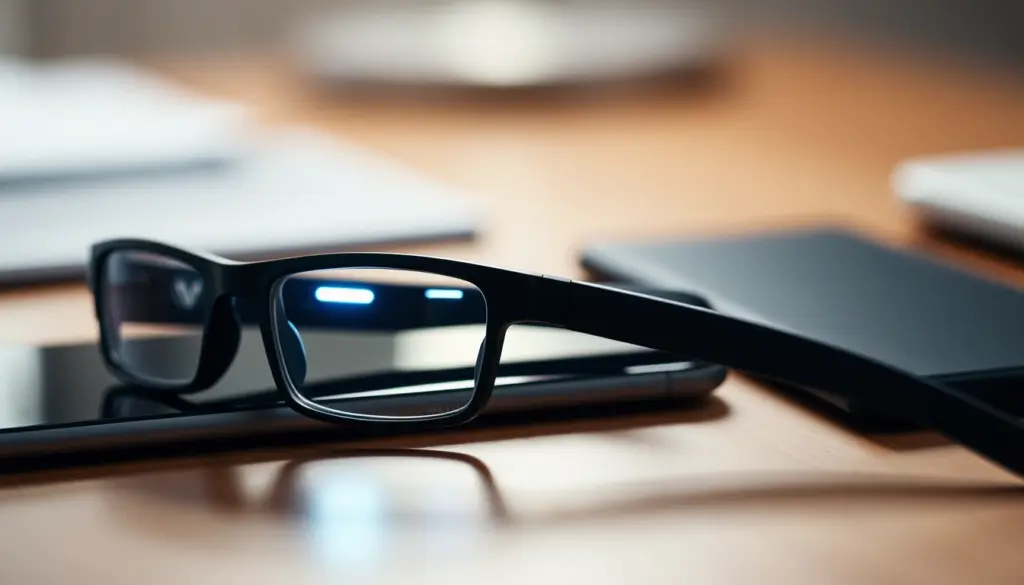
Meta is preparing to ship a smart glasses model with no camera at all, according to multiple reports citing The Information and people familiar with the plans. The device, reportedly code-named Luna, could be unveiled at Meta Connect on September 23 and 24, 2026, with shipments targeted for as early as October. The timing is not an accident. Meta’s existing Ray-Ban Meta line has spent the better part of two years picking up an ugly nickname online: “pervert glasses,” a label that stuck after repeated reports of people using the camera to film strangers, often women, without consent.
Building camera-free glasses is, mechanically, the easy part for a company that already ships millions of smart glasses a year. Convincing the public that Meta’s eyewear business has changed is the harder problem, and it’s one that predates Luna by years. This piece breaks down what’s confirmed about Luna, what Meta has already tried to fix its recording controversy, how the camera-free bet compares to what Google, Samsung, Apple, Amazon, and smaller rivals are doing, and what the reputational math looks like heading into a launch event nine days from now.
What We Know About Meta’s Camera-Free Luna Glasses
Reports describe Luna as a departure from every prior Ray-Ban Meta model in one specific way: no lens for photos or video. Instead, the glasses are built around voice. Coverage citing The Information says Luna will carry six built-in microphones, positioned to pick up a wearer’s voice clearly enough to run conversations with Meta AI and Muse, the company’s newer consumer AI agent. A side button is reportedly there to summon the assistant on demand, and speakers are aimed toward the ears rather than broadcasting outward, similar to the audio setup already used in current Ray-Ban Meta frames.
One report describes the line coming in two frame styles at launch, referred to as “Clubmaster” and “Burbank,” echoing the naming convention EssilorLuxottica already uses across its Ray-Ban catalog. Pricing has not been confirmed by Meta or EssilorLuxottica, and neither company has issued an on-record statement naming Luna specifically, so treat the code name and the exact launch date as reported rather than official until Meta confirms them at Connect.
What is notable is the strategic contrast: Meta spent 2023 through 2026 pushing cameras as the headline feature of its wearables push, betting that “look through my eyes” AI features would be the hook that got people to wear a computer on their face daily. Luna flips that pitch. It bets that voice-only AI, with zero recording capability, removes the single biggest reason people distrust the product category in the first place.
Why “Pervert Glasses” Became Meta’s Branding Problem
The nickname didn’t come from a marketing meeting. It came from a pattern of incidents that built up over roughly two years of Ray-Ban Meta sales. The glasses look like ordinary Wayfarers, they can shoot photos and video with a single press, and the only external cue that recording is happening is a small LED. Critics, researchers, and eventually mainstream outlets started documenting cases where that subtlety was exploited, including footage of strangers filmed in public without their knowledge.
The scale of the underlying hardware business is part of why the nickname carries weight. EssilorLuxottica and Meta reportedly sold around 7 million Ray-Ban Meta glasses in 2025 alone, pushing lifetime sales to roughly 9 million units by early 2026. That is a real consumer electronics hit, not a niche gadget, and it means the recording-without-consent problem scaled along with sales rather than staying a marginal edge case.
Meta has also faced direct legal exposure tied to how captured footage gets handled. A lawsuit reported by TechCrunch in March 2026 alleged that contractors reviewed footage that included nudity and sexual content captured by the AI glasses. Meta spokesperson Christopher Sgro responded at the time that the company sometimes uses contractors to review shared data to improve the product experience, consistent with its privacy policy, and that the data is filtered first to protect privacy. Sgro also said Ray-Ban Meta glasses are built to help users interact with AI hands-free, and that unless a user chooses to share captured media, it stays on the device.
Inside the LED and Tamper-Detection Fixes Meta Already Shipped
Before Luna, Meta’s answer to the recording problem was hardware and firmware, not removing the camera. Every current Ray-Ban Meta pair includes a white capture LED that flashes whenever a photo or video is recording, and Meta has said repeatedly that the light cannot be switched off by the user. The company has also built in tamper detection: if that LED is physically covered, damaged, or drilled out, the camera stops working.
Adam Mosseri, Meta’s Head of Instagram, addressed the limits of that approach directly, telling reporters, “We can’t stop people from filming other people, but we can try to make sure that that light is on if they are filming,” according to a report from Livemint. He also acknowledged that some owners tried to physically defeat the safeguard: “We now actually have the glasses basically stop working if you drill that light out, because we saw that people were trying to drill that light out,” Mosseri said, per the same report.
That tampering problem didn’t stay theoretical. As shattered.io reported on August 28, 2026, Meta pushed a firmware update specifically to close a workaround where someone would start a recording first and only cover the LED afterward, a gap the original tamper-detection design hadn’t caught. That update effectively bricked cameras on devices where the light had already been physically defeated, closing a loophole that had been circulating for months before Meta patched it.
Meta spokesperson Dina El-Kassaby framed the broader design philosophy this way: “That’s why we built privacy into our AI glasses from the ground up.” The company has repeated variations of that line across multiple statements this year, even as the “pervert glasses” label continued to spread across social platforms faster than any single fix could counter it. Luna is best read as an acknowledgment that incremental software patches to the existing camera hardware were not going to be enough to change the public conversation.
Ray-Ban Meta vs. Luna: What Changes
| Feature | Ray-Ban Meta (current line) | Luna (reported, camera-free) |
|---|---|---|
| Camera | Yes, photo and video capture | None reported |
| Capture LED | Always-on white LED, cannot be disabled | Not applicable, no camera to signal |
| Tamper detection | Disables camera if LED is covered or destroyed | Not applicable |
| Microphones | Multiple mics for Meta AI voice queries | Six built-in microphones, per Reuters and Engadget reporting |
| AI assistant access | Voice trigger plus visual “look and ask” queries | Voice-only interaction with Meta AI and Muse |
| Reported styles | Wayfarer, Headliner, and other Ray-Ban frames | Reportedly Clubmaster and Burbank, per one report |
| Reported reveal / ship window | Already shipping | Reveal targeted for Meta Connect, Sept 23-24, 2026; shipping as early as October 2026 |
How the Camera-Free Bet Compares to Rivals
Meta is not inventing the camera-free category, but it would be the biggest company to bet on it at consumer scale. Amazon’s Echo Frames, now in their third generation, already ship without a camera, pairing Alexa voice access with microphones and speakers in a form factor Amazon markets as audio-first eyewear rather than an AI vision product. Smaller player Halliday shipped its G2 glasses, priced at $599 according to reporting from Wired, Android Authority, and The Gadgeteer, built around a heads-up display and meeting-assistant features like live captioning, with no camera onboard, unveiled in July 2026 for a September 2026 ship window.
Google, Samsung, and Apple sit on the other side of the line. None of the three has announced or shipped a camera-free AI glasses product as of this month. Google’s historical Glass efforts and its newer AR prototypes have kept cameras onboard. Samsung’s concept AR glasses follow the same camera-included AR headset template rather than Meta’s stripped-down audio approach. Apple’s Vision Pro leans on multiple cameras and sensors for spatial computing, and rumored Apple smart glasses have not shipped in any form, camera-free or otherwise. Snap’s Spectacles line, aimed at AR creators, keeps a visible lens and a recording LED, putting Snap philosophically closer to Meta’s original Ray-Ban Meta design than to Luna.
Competitive Landscape: Camera-Free vs. Camera-Equipped Wearables
| Company / Product | Camera onboard? | Primary use case | Status as of Sept 2026 |
|---|---|---|---|
| Meta Ray-Ban Meta | Yes | Photo/video capture, AI visual queries | Shipping, ~7M units sold in 2025 alone |
| Meta Luna (reported) | No | Voice-only AI assistant, Meta AI and Muse | Reveal expected Sept 23-24, 2026 |
| Amazon Echo Frames (3rd gen) | No | Alexa voice access, audio | Shipping |
| Halliday G2 | No | Heads-up display, live captions, meeting assistant | Shipping, launched July 2026 at $599 |
| Snap Spectacles | Yes | AR capture for creators | Shipping to developers |
| Samsung concept AR glasses | Yes | AR headset-style display | Concept stage, not shipped |
| Apple smart glasses | Unconfirmed | Rumored spatial computing device | Not announced or shipped |
The Regulatory and Legal Backdrop Meta Is Launching Into
Luna is arriving into an environment where Meta’s glasses business is already drawing legal and regulatory scrutiny well beyond social media mockery. The March 2026 lawsuit reported by TechCrunch put a spotlight on how captured footage moves from a user’s device into Meta’s review pipeline, and plaintiffs argued the review process exposed intimate footage to contractors without adequate safeguards. That case is separate from, but reinforces, the broader public narrative that recording glasses create risk not just for bystanders filmed without consent, but for the people wearing them and sharing footage they may not expect to be reviewed by anyone else.
Consumer advocacy groups, including the Electronic Frontier Foundation, have flagged wearable AI cameras as a case study for why recording indicators alone are an insufficient safeguard, given that most bystanders don’t know to look for a small LED on a stranger’s glasses in the first place. That argument doesn’t disappear with Luna. A camera-free glasses line sidesteps the bystander-consent problem entirely for that specific product, but it does nothing to address the roughly 9 million Ray-Ban Meta units already in the wild that retain cameras, LEDs, and the tamper-detection software Meta has patched multiple times this year.
Historical Context: How Meta Got Here
Meta’s smart glasses history runs back to the Ray-Ban Stories launch in 2021, a partnership with EssilorLuxottica that underwhelmed critics and sold modestly. The company relaunched the line as Ray-Ban Meta in 2023 with better cameras, tighter integration with Meta AI, and pricing that undercut most AR headsets. Sales accelerated through 2024 and 2025 as Meta layered in generative AI features, letting wearers ask Meta AI questions about what the camera was seeing in real time.
That same “look through my eyes” feature is what eventually fed the backlash. The functionality that made the glasses genuinely useful, hands-free visual AI, is inseparable from the functionality that made them controversial, a camera that’s easy to activate and hard for a bystander to notice. Meta’s fixes through 2026 focused on making the existing camera harder to abuse: the always-on LED, the original tamper detection, and the August 28, 2026 firmware patch closing the “cover it after recording starts” workaround. Luna, if it ships as reported, is the first time Meta has responded to the controversy by removing the camera rather than hardening it.
Market Impact: What a Camera-Free SKU Does for Meta’s Wearables Business
Meta’s wearables push is no longer a side project. With EssilorLuxottica selling roughly 7 million Ray-Ban Meta units in 2025, the category has become one of Meta’s clearest hardware wins, arguably more successful in unit terms than its Quest headset line has managed at similar price points. A camera-free SKU sitting alongside the camera-equipped line lets Meta segment the market instead of picking one design philosophy: privacy-conscious buyers, workplaces with recording restrictions, and international markets with stricter biometric or recording laws all become addressable without Meta abandoning the camera-driven product that already sells well.
There’s a distribution angle too. EssilorLuxottica’s retail footprint through LensCrafters, Sunglass Hut, and its own Ray-Ban stores gives Meta a physical retail channel that most AI hardware competitors don’t have. A cheaper or differently positioned camera-free model could move through that channel to buyers who were never going to consider a camera-equipped pair in the first place, whether for personal comfort or workplace policy reasons. If Luna’s reported reliance on voice and Meta AI holds up, it also pushes more of Meta’s AI assistant usage into a form factor untethered from a phone screen, reinforcing the company’s broader Muse and Meta AI ambitions independent of the camera controversy entirely.
What Industry Voices Are Saying
Meta’s own executives and spokespeople have been the most consistent public voices addressing the recording controversy directly, rather than outside analysts. Christopher Sgro, a Meta spokesperson, addressed how the company handles shared footage after the March 2026 lawsuit: “When people share content with Meta AI, like other companies we sometimes use contractors to review this data to improve people’s experience with the glasses, as stated in our privacy policy. This data is first filtered to protect people’s privacy,” Sgro said, according to TechCrunch.
Sgro also described the baseline privacy model of the current camera-equipped glasses: “Ray-Ban Meta glasses help you use AI, hands-free, to answer questions about the world around you. Unless users choose to share media they’ve captured with Meta or others, that media stays on the user’s device,” he told TechCrunch.
Dina El-Kassaby, another Meta spokesperson, tied the company’s safety features back to product design philosophy, telling Fortune, “That’s why we built privacy into our AI glasses from the ground up.” And Adam Mosseri, Meta’s Head of Instagram, gave the most candid public assessment of the LED safeguard’s real-world limits, telling reporters covering the Luna reveal, per Livemint: “We can’t stop people from filming other people, but we can try to make sure that that light is on if they are filming.” Mosseri followed up by describing how far Meta had to go to stop physical tampering: “We now actually have the glasses basically stop working if you drill that light out, because we saw that people were trying to drill that light out.”
Can a Rebrand Fix a Trust Problem?
The honest answer is: partially, and only for the specific product it applies to. Removing the camera from Luna eliminates the mechanism that created the “pervert glasses” nickname in the first place, for that one device. It does not retroactively fix trust in Ray-Ban Meta, which will keep selling alongside Luna with its camera intact. Meta has given no indication it plans to discontinue the camera-equipped line, and given that it’s the company’s best-selling wearable to date, there’s no commercial reason to expect that.
That creates an unusual dynamic for Meta’s messaging heading into Connect. The company gets to market Luna as proof it listened to privacy criticism, while continuing to sell millions of units of the product that generated the criticism in the first place. Whether that reads to the public as a genuine pivot or as damage control layered on top of a still-unresolved product line will likely depend on how directly Meta addresses the camera-equipped line’s ongoing issues at the same event where it unveils Luna, rather than treating them as separate stories.
Predictions: What Happens Next
- Meta confirms Luna, or a similarly named camera-free model, at Connect on September 23-24, 2026, alongside continued sales of the camera-equipped Ray-Ban Meta line rather than a replacement.
- Pricing for the camera-free model likely undercuts or matches current Ray-Ban Meta pricing, since removing the camera and image sensor lowers the bill of materials, though Meta has not confirmed a figure.
- Expect Meta’s Connect messaging to lean heavily on Muse and Meta AI voice capabilities rather than the camera controversy directly, framing Luna as an AI product first and a privacy response second.
- The “pervert glasses” nickname persists in coverage and social discussion for the camera-equipped line regardless of Luna’s reception, since the underlying 9 million units already sold aren’t going anywhere.
- Watch for at least one more firmware or hardware tamper-detection update to the camera-equipped line before year-end, continuing the pattern of incremental fixes seen in the August 28, 2026 update.
What This Means for Buyers Considering Smart Glasses
For anyone shopping this category right now, the practical takeaway is that Meta is about to offer two distinct products with different tradeoffs rather than one glasses line with a single privacy posture. Buyers who want AI-assisted photo and video capture, and who are comfortable with the LED-and-tamper-detection safeguards Meta has built and repeatedly patched, still have that option in Ray-Ban Meta. Buyers who want voice-first AI assistance without any camera at all, whether for workplace policy reasons, personal comfort, or general distrust of the recording controversy, get a dedicated option in Luna once it ships.
It’s also worth remembering Luna isn’t the only camera-free option on the market by launch time. Amazon’s Echo Frames and Halliday’s G2 already occupy that space, at different price points and with different feature sets, so Meta’s entry will be judged against real competitors, not just against its own past camera-equipped products. Coverage of the reported Luna reveal from Engadget frames the timing as a direct response to that competitive pressure as much as to the privacy backlash.
Frequently Asked Questions
What is Meta Luna?
Luna is the reported internal code name for a camera-free pair of smart glasses from Meta, expected to be unveiled at Meta Connect on September 23-24, 2026, with shipments targeted for as early as October 2026, according to reports citing The Information.
Why are Meta’s Ray-Ban Meta glasses called “pervert glasses”?
The nickname spread online after repeated reports of people using the built-in camera to film strangers, particularly women, without their consent. Reporting has tied the label to the glasses’ subtle recording LED, which many bystanders don’t notice or recognize.
Does Luna have a camera at all?
No. Reports describe Luna as entirely camera-free, relying instead on six built-in microphones and voice-based interaction with Meta AI and Muse.
Will Meta stop selling the camera-equipped Ray-Ban Meta glasses?
There’s no indication of that. Ray-Ban Meta has sold roughly 7 million units in 2025 alone, and Meta has continued investing in fixes like LED tamper detection rather than signaling a discontinuation.
Can the recording LED on current Ray-Ban Meta glasses be turned off?
No. Meta has said the white capture LED cannot be disabled by the user, and the company has added tamper detection that disables the camera if the LED is physically covered, damaged, or removed.
What other companies make camera-free AI glasses?
Amazon’s Echo Frames (3rd generation) and Halliday’s G2, which launched in July 2026 at $599, are both shipping camera-free options. Google, Samsung, and Apple have not shipped or announced a camera-free AI glasses product as of September 2026.
What styles will Luna come in?
One report indicates Luna may launch in two frame styles, referred to as Clubmaster and Burbank, though Meta has not officially confirmed this detail.
Has Meta faced legal action over its smart glasses?
Yes. TechCrunch reported in March 2026 on a lawsuit alleging that contractors reviewed footage captured by AI glasses that included nudity and sexual content, raising questions about how shared footage is handled internally.