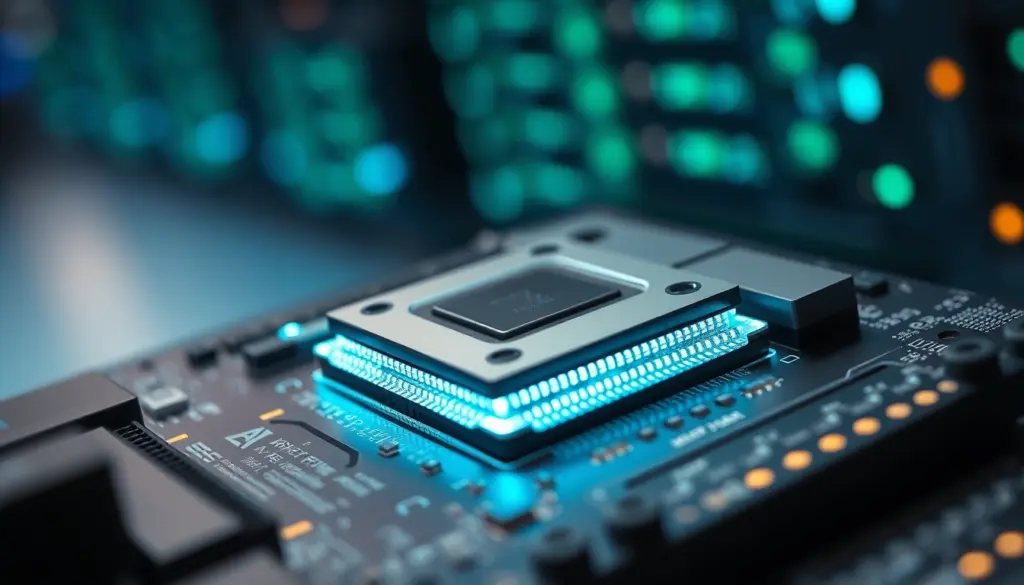
Alibaba’s chip division has put a number on the table that reframes the AI hardware race: 216 gigabytes. That’s the onboard memory capacity of the newly announced Zhenwu V900 accelerator, built by the company’s T-Head semiconductor unit and unveiled in reporting on September 22, 2026. Alibaba is calling it the most powerful AI chip made in China, and the company says it delivers three times the performance of its predecessor, the M890, according to Tom’s Hardware. The launch lands at an awkward moment for the entire industry: memory itself is running short, and the fight for AI compute is quietly turning into a fight for memory capacity per chip.
The timing is not a coincidence. Just days before the Zhenwu V900 news broke, SemiEngineering reported that Chinese AI-chip suppliers including Huawei and Cambricon were raising accelerator prices as restricted access to high-bandwidth memory (HBM) pushed up costs. Separately, Distill Intelligence’s September 11 briefing found that memory inventories at Samsung and SK Hynix had fallen below 10 days of supply as both manufacturers shifted production capacity toward HBM4. Alibaba is launching a memory-heavy accelerator into a market where memory itself has become the scarcest, most expensive input in the entire AI supply chain, a dynamic this site has tracked in Memory Chip Shortage: Stockpiles Fall Below 10 Days.
What Is the Zhenwu V900, Exactly?
The Zhenwu V900 is T-Head’s newest AI training and inference accelerator, and it’s aimed squarely at the class of problem that keeps model builders up at night: how do you fit a model with trillions of parameters onto hardware without shredding it across dozens of chips first. Alibaba has told press it is targeting models as large as 10 trillion parameters, which includes future members of its own Qwen model family. The headline spec is memory, not raw FLOPS. At 216GB of onboard capacity, the V900 carries meaningfully more memory per chip than several of its closest domestic rivals, and Alibaba is betting that capacity, not clock speed, is what actually determines whether a hyperscaler buys in bulk.
That bet reflects a real shift in how AI infrastructure teams think about cost. When a model won’t fit in a single accelerator’s memory, engineers have to shard it across multiple chips, which adds network overhead, adds latency, and burns power moving activations back and forth between devices. A chip with more memory per package can, in theory, keep more of a model resident locally and cut some of that overhead out entirely. Whether the V900 delivers on that in practice is something outside auditors haven’t yet verified. Alibaba’s three-times-performance claim and “most powerful chip in China” framing are the company’s own words, not independently benchmarked figures, and readers should treat them as a vendor claim until third-party testing catches up.
The Memory Arms Race Nobody Called Early Enough
For most of the last three years, the AI chip conversation centered on FLOPS: how many trillions of floating-point operations per second a given accelerator could push. That conversation is shifting. Huawei’s own roadmap, detailed in Tom’s Hardware reporting, shows the company pulling forward its next-generation Ascend NPUs by a full quarter. The Ascend 950PR carries 128GB of memory and 1.6 TB/s of bandwidth with 1 PFLOPS of FP8 performance. Its successor, the Ascend 960PR, arrives one quarter earlier than originally planned, now targeted for Q3 2027 instead of later, and steps up to 192GB of memory with 2.4 TB/s of bandwidth. On paper, Alibaba’s 216GB V900 configuration edges past both Huawei parts on raw capacity, though the three chips serve overlapping but not identical workloads and direct performance comparisons haven’t been independently verified.
This isn’t happening in isolation from the West, either. AMD used IFA 2026 to unveil its Threadripper Halo Station, a workstation pairing a 96-core Threadripper Pro 9995WX with dual liquid-cooled Instinct MI350P accelerators and 288GB of HBM3E, plus 2TB of DDR5 system memory, which AMD describes as capable of running trillion-parameter models on a single desktop-class machine. The company’s own AMD Helios platform, meanwhile, is already shipping 50,000 MI450 GPUs to Oracle under a deal covered in AMD Helios Ships 50,000 MI450 GPUs to Oracle. Every major chipmaker, American or Chinese, is converging on the same conclusion at roughly the same time: memory capacity per accelerator, not compute alone, decides which chip actually gets bought in volume.
Why Memory Got So Expensive So Fast
The backdrop to all of this is a memory market that has flipped upside down. Tom’s Hardware reported on September 22 that DRAM die value has now surpassed leading-edge logic silicon on a per-area basis, driven almost entirely by AI demand pulling HBM production capacity away from commodity DRAM. The same day, DRAMeXchange recorded a session-average price of $24.80 for a 16Gb DDR5 eTT chip, which works out to roughly $1.55 per gigabit, a figure that has climbed sharply through 2026. Distill Intelligence’s briefing quotes Nvidia characterizing current memory pricing conditions as extreme, with the expectation that prices climb further into 2027.
Startup Fortune reported separately that AMD has told partners its Instinct accelerators, Radeon GPUs, and motherboard chipsets will cost roughly 10% more starting in Q4 2026, citing rising TSMC wafer costs, a move this site broke down in AMD Preps 10% Price Hike, Spares Ryzen for Now. Notably, AMD is sparing its Ryzen consumer line from that increase, at least for now, which suggests the company is trying to protect PC gaming margins while passing the AI-side cost increases through to enterprise buyers who have less pricing leverage to push back with.
China’s own chip industry is caught in the same squeeze from a different angle. SemiEngineering’s September 11 chip industry review found that Huawei and Cambricon were both raising accelerator prices specifically because their access to HBM is restricted by export controls, a dynamic this site has followed in China AI Chip Prices Jump 50% as HBM Shortage Bites. Alibaba’s V900 launch effectively asks Chinese buyers to pay premium prices for premium memory capacity in a market where that memory is already the constrained resource, not the abundant one.
Zhenwu V900 vs. the Competition: A Memory Capacity Snapshot
Putting the announced specs side by side makes the shape of the race easier to see. The table below draws only on figures that have been publicly reported by named outlets; where a spec has not been confirmed, it’s marked as such rather than estimated.
| Accelerator | Maker | Memory | Bandwidth | Reported Compute | Status |
|---|---|---|---|---|---|
| Zhenwu V900 | Alibaba T-Head | 216GB | Not disclosed | Claimed 3x M890 | Announced Sept. 22, 2026 |
| Ascend 950PR | Huawei | 128GB | 1.6 TB/s | 1 PFLOPS FP8 | Shipping per roadmap |
| Ascend 960PR | Huawei | 192GB | 2.4 TB/s | 2 PFLOPS FP8 / 8 PFLOPS FP4 | Pulled forward to Q3 2027 |
| Instinct MI350P (x2, Halo Station) | AMD | 288GB HBM3E combined | Up to 16.4 TB/s combined | Not independently benchmarked | Unveiled IFA 2026 |
| Instinct MI450 (Helios platform) | AMD | Not disclosed in this report | Not disclosed in this report | Not disclosed in this report | 50,000 units shipping to Oracle |
A few things jump out. Alibaba’s 216GB figure is the largest single-chip memory number in this table, ahead of both Huawei parts, though it’s worth repeating that Alibaba hasn’t disclosed bandwidth, and independent benchmarks of the V900 don’t exist yet. AMD’s Halo Station numbers look enormous, but that’s a multi-accelerator workstation figure, not a single-chip spec, so it isn’t directly comparable to the single-die numbers from Alibaba and Huawei. The honest read here is that every vendor is racing to publish the biggest memory number first and letting the benchmarks catch up later, which is a marketing pattern buyers should treat with some skepticism.
Historical Context: How We Got Here
Three years ago, the AI chip conversation was almost entirely about Nvidia’s H100 and its dominance of the training market. Memory was a secondary spec, something you checked after you’d already decided which chip to buy based on FLOPS and software ecosystem. That started changing as model sizes outpaced Moore’s Law-era memory scaling. Mixture-of-experts architectures and multi-trillion-parameter dense models made memory capacity, not compute throughput, the binding constraint for a growing share of training and inference workloads.
China’s chip industry has been walking a parallel but distinct path, shaped heavily by US export controls that restrict access to the most advanced HBM and the equipment needed to produce leading-edge logic domestically. Huawei’s Atlas platform, which this site covered in Huawei Curbs AI Exports, Atlas Hits 120 Exaflops, represents one response to that squeeze: build the biggest cluster possible out of whatever memory and compute is available domestically. Alibaba’s approach with the V900 looks similar in spirit, maximizing what a single chip can hold rather than relying purely on scaling chip count. Domestic memory makers CXMT and YMTC are also racing to close the gap on NAND and DRAM production, a competition detailed in CXMT Chases NAND as YMTC Preps DRAM, though neither company has been confirmed as a direct memory supplier for the V900.
Market Impact: What This Means for AI Infrastructure Spending
The most immediate consequence lands on hyperscaler capital budgets. 247 Wall St. reported on September 21 that AI CPU revenue is forecast to grow from $38 billion to $155 billion by 2030, expanding at a 42% annual rate that already outpaces accelerator growth, a sign that infrastructure spending is broadening beyond pure GPU purchases into the CPUs, memory, and networking gear that surround them. Chips like the Zhenwu V900 sit right in the middle of that expanded spending category: they’re not just accelerators, they’re memory-subsystem purchases with compute attached.
For Chinese cloud providers and AI labs specifically, the V900 offers a domestically sourced alternative at a moment when access to Nvidia’s newest hardware remains restricted by export policy. If Alibaba can actually deliver chips in volume at the claimed spec, it reduces the number of accelerators a Chinese AI lab needs to string together to train a 10-trillion-parameter model, which cuts both networking overhead and the power draw of moving data between chips. That’s a real cost lever, assuming the performance claims hold up under independent testing, which as of this writing they have not.
On the memory supply side, the picture is less rosy. Every additional accelerator built with 200-plus gigabytes of onboard memory is additional demand pulled from a global HBM and DRAM supply that Samsung and SK Hynix are already struggling to keep above 10 days of inventory. Budget device makers are already feeling the squeeze, a trend broken down in RAM Now 60% of Phone Cost, Sparks Fake-Chip Checks, where memory has ballooned to as much as 60% of the bill of materials on some budget phones. High-memory AI accelerators and cheap consumer devices are now competing for the same constrained wafer capacity, and consumer electronics is losing that fight.
Competitive Comparison: China’s Domestic Chip Stack
Alibaba isn’t the only Chinese tech giant building silicon anymore. Huawei remains the most established domestic AI chip vendor through its Ascend line, and Cambricon has carved out a niche as an independent accelerator designer that both raised prices in September, according to SemiEngineering, as HBM access tightened. Alibaba’s entry into this field through T-Head signals that China’s largest cloud operators no longer want to depend entirely on third-party chip vendors, domestic or otherwise, for the silicon that powers their own AI services.
| Vendor | Primary AI Chip Line | Reported Driver of Sept. 2026 Price Action | Export Control Exposure |
|---|---|---|---|
| Alibaba (T-Head) | Zhenwu series | New V900 launch, no price action reported | Domestic design, memory sourcing not disclosed |
| Huawei | Ascend series | Price increases tied to restricted HBM access | Under US export restrictions |
| Cambricon | Cambricon accelerators | Price increases tied to restricted HBM access | Under US export restrictions |
| AMD | Instinct MI-series | Roughly 10% price hike from Q4 2026, cites TSMC wafer costs | Subject to China export limits on top-tier parts |
The pattern across this table is consistent: whether a company sits inside or outside US export restrictions, the same underlying HBM and wafer scarcity is pushing prices up. Export controls determine who can buy the newest Western silicon, but they don’t insulate any company, American or Chinese, from a global memory market that is short on supply everywhere at once.
What Buyers and Builders Should Actually Watch
For engineering teams evaluating accelerator options, the practical takeaway is to stop treating memory capacity as a secondary spec on the datasheet. It increasingly determines whether a model fits on one chip or needs to be sharded across several, and sharding decisions cascade into networking costs, power draw, and software complexity that don’t show up in a simple price-per-FLOP comparison. Teams building or fine-tuning very large models should ask vendors for real bandwidth numbers, not just capacity figures, since a chip with a lot of memory and slow bandwidth to reach it can bottleneck just as badly as one with too little memory.
It’s also worth watching how long the current memory shortage actually lasts. Samsung and SK Hynix are both shifting production toward HBM4, which should eventually ease the commodity DRAM squeeze once that capacity comes fully online, but Nvidia’s own characterization of current pricing as extreme, cited by Distill Intelligence, suggests the industry doesn’t expect meaningful relief before 2027 at the earliest.
Timeline: How the Memory Story Broke in September
The pieces of this story landed in a tight window. Arm extended its AI product lineup across cloud, mobile, and robotics hardware on September 8, setting an aggressive tone for the month. SemiEngineering flagged the Huawei and Cambricon price increases on September 11, the same day Distill Intelligence reported Samsung and SK Hynix inventories dropping below 10 days. AMD unveiled the Threadripper Halo Station at IFA 2026 on September 4, and by September 20 Startup Fortune had confirmed AMD’s roughly 10% price hike on Instinct and Radeon hardware. The Zhenwu V900 closed out the month on September 22, alongside Tom’s Hardware’s report that DRAM die value had overtaken leading-edge logic silicon by per-area value, and DRAMeXchange’s $24.80 pricing snapshot for 16Gb DDR5 eTT chips the same day. Four separate outlets, four separate companies, one consistent signal: memory, not compute, was the story of the month.
Predictions: Where This Goes Next
- Independent benchmarks of the Zhenwu V900 arrive within two to three months. Given how aggressively Alibaba has marketed the “most powerful chip in China” framing, third-party labs and rival vendors have strong incentive to test that claim quickly, either confirming or puncturing it.
- Memory capacity becomes a headline spec across every major 2027 accelerator announcement. Expect Nvidia, AMD, Huawei, and any new Chinese entrant to lead with gigabyte figures the way they used to lead with FLOPS.
- HBM pricing stays elevated through at least mid-2027. Samsung and SK Hynix’s shift toward HBM4 production takes time to ramp, and Nvidia’s own “extreme” pricing characterization points to no near-term relief.
- More Chinese cloud giants follow Alibaba into custom silicon. If T-Head’s approach gives Alibaba a cost or capacity edge over buying third-party Ascend or Cambricon chips, expect Baidu, Tencent, or ByteDance to accelerate their own in-house accelerator efforts.
- Consumer device pricing absorbs more of the memory squeeze. With AI accelerators and budget phones now competing for the same constrained DRAM and NAND supply, expect further price pressure on mid-range and budget consumer electronics through 2027.
The Bottom Line
Alibaba’s Zhenwu V900 is a genuinely significant data point, not because its performance claims are independently verified (they aren’t yet), but because of what it signals about where the entire AI chip industry is pointed. Memory capacity has quietly become the metric that determines whether a chip can actually run the models companies want to build next, and every major vendor, from Huawei to AMD to now Alibaba, is racing to lead on that number. That race is colliding head-on with a global memory shortage that shows no sign of easing before 2027, which means the chips winning headlines this month are also the chips making memory scarcer and more expensive for everyone else building hardware, from AI training clusters down to budget smartphones.
Frequently Asked Questions
What is the Alibaba Zhenwu V900?
The Zhenwu V900 is an AI accelerator chip built by Alibaba’s T-Head semiconductor division, announced in reporting on September 22, 2026. Alibaba describes it as the most powerful AI chip made in China, with 216GB of onboard memory and a claimed performance of three times its predecessor, the M890.
How much memory does the Zhenwu V900 have compared to Huawei’s Ascend chips?
The V900’s reported 216GB exceeds both Huawei’s Ascend 950PR (128GB) and the upcoming Ascend 960PR (192GB), based on figures Huawei disclosed in its own roadmap reporting. Bandwidth figures for the V900 have not been disclosed, so a full performance comparison isn’t yet possible.
Why is memory capacity becoming more important than raw compute for AI chips?
As models grow to trillions of parameters, fitting a model into a single chip’s memory reduces the need to shard it across multiple accelerators, which cuts networking overhead, latency, and power draw. Chipmakers are increasingly competing on memory capacity per package because it directly affects how efficiently large models can run.
Why is memory so expensive right now?
AI accelerator demand has pulled DRAM and HBM production capacity away from commodity memory markets. Samsung and SK Hynix inventories have fallen below 10 days of supply as both companies prioritize HBM4 production, and DRAM die value has now surpassed leading-edge logic chips on a per-area basis, according to Tom’s Hardware.
Is the Zhenwu V900 available to buy?
Reporting as of late September 2026 covers the announcement and specifications, but a confirmed public retail or per-unit price for the Zhenwu V900 has not been established in available coverage.
How does this affect AI chip prices outside China?
The same HBM and DRAM scarcity driving Chinese accelerator price increases at Huawei and Cambricon is also behind AMD’s roughly 10% price increase on Instinct accelerators, Radeon GPUs, and motherboard chipsets starting in Q4 2026, which AMD has attributed to rising TSMC wafer costs. Memory scarcity is a global constraint that doesn’t respect export control boundaries.
What should engineering teams evaluating AI accelerators watch for next?
Independent, third-party benchmarks of the Zhenwu V900 and Huawei’s Ascend 960PR, real bandwidth figures rather than just capacity numbers, and signs of whether HBM4 production ramp-up from Samsung and SK Hynix begins easing memory prices heading into 2027.