CD Projekt Red confirmed this week that it is still chasing down visual and audio bugs in The Witcher 3: Wild Hunt — Remastered, two hotfixes after the September 29, 2026 launch. The Polish studio says a fix for the game’s broken Bloom lighting effect is coming “across all platforms,” though it has not set a date. Console players waiting on a voice-volume fix are in the same holding pattern.
The admission, first reported by outlets including Nintendo Life, Polygon, and GamesRadar, lands at an awkward moment for CD Projekt Red. The remaster was supposed to be a low-risk victory lap for one of the best-reviewed RPGs of the last decade. Instead, players are cataloguing lighting glitches, audio dropouts, and save-file errors across PC, PlayStation 5, Xbox Series X|S, and Nintendo Switch 2.
Two Hotfixes in Days, and the Work Isn’t Done
The Witcher 3 Remastered went live on September 29, 2026, bringing updated lighting, path tracing support, and interface tweaks to CD Projekt Red’s 2015 open-world classic. Within days, the studio shipped two separate hotfixes rather than waiting for a single consolidated patch, a sign of how quickly bug reports piled up after launch.
Patch 5.00b addressed a batch of graphical issues first. Patch 5.00c followed and targeted problems specific to the PC versions distributed through Steam, GOG, the Epic Games Store, and Xbox Play Anywhere, according to CD Projekt Red’s own patch notes as detailed by DSOGaming. One of the PC hotfixes weighed in at roughly 5 GB, while the first PlayStation 5 patch came in much lighter at 1.1 GB.
Shipping two hotfixes in close succession is not unusual for a remaster of this scale, but it does confirm that quality assurance missed a cluster of issues that reached players at the same time on six-plus platforms.
What Patches 5.00b and 5.00c Actually Fixed
Between the two hotfixes, CD Projekt Red cleared a short but visible list of complaints: a voiceover bug, a save-file error, assorted lighting problems, audio glitches, save/load issues, and a missing DLSS toggle on the Xbox Play Anywhere build. Here is how the rollout broke down by platform and patch.
| Patch | Platforms Targeted | Approx. Size | Main Fixes |
|---|---|---|---|
| 5.00b | All platforms | Not disclosed | Various graphical issues |
| 5.00c | Steam, GOG, Epic Games Store, Xbox Play Anywhere (PC) | ~5 GB (PC) | Voiceover bug, save-file error |
| PS5 hotfix | PlayStation 5 | 1.1 GB | Stability and bug fixes |
| Planned next update | All platforms (Bloom), consoles (audio) | Unconfirmed | Bloom effect, console sound/volume issue |
Lighting issues, audio problems, save and load errors, and the missing DLSS option on Xbox Play Anywhere were all cited as addressed in the first wave of fixes. What’s left on the list, by CD Projekt Red’s own admission, is the Bloom effect and a console audio problem that still needs a release date.
The Bloom Effect: CD Projekt Red’s Open Admission
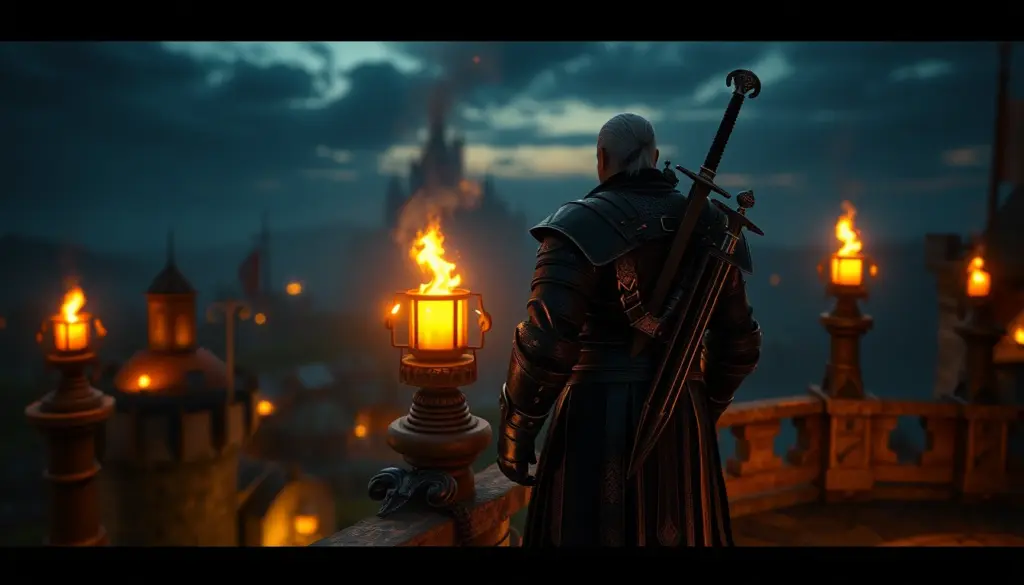
Bloom, the glow effect applied to bright light sources and reflective surfaces, has been one of the most visible complaints since launch. Screenshots circulating since late September show overexposed skies and blown-out torchlight in scenes that looked balanced in the original 2015 release.
CD Projekt Red did not dodge the criticism. The studio said: “We are looking into addressing the Bloom effect across all platforms. We’re hoping to have the changes ready for the next update but no details yet. We’ll share more as soon as we can,” according to Nintendo Life.
That is a direct acknowledgment of a problem without a committed date, which is a familiar pattern for a studio that has spent a decade managing public expectations after rocky launches. The October 1 patch notes compiled by DSOGaming show CD Projekt Red was already chipping away at related lighting work in specific zones, describing work that “made various visual adjustments in Velen, including tweaks to Bloom, vegetation lighting, saturation, and Path Tracing lighting,” per the studio’s own patch notes cited by DSOGaming. That suggests the Bloom fix is being rolled out region by region inside the game world rather than as one global toggle, which could explain why a full fix is taking longer than a single hotfix cycle.
Console Audio and the Voiceover Bug Players Are Still Reporting
Audio has been the second major headache. CD Projekt Red’s global community and social media director, Marcin Momot, has been the public face of the response, posting updates on the studio’s community channels as fixes rolled out. GamesRadar reported that “according to him, the devs plan to have the fix on consoles for the volume issue, too, with no date set as of now,” a statement attributed to Momot and documented in GamesRadar’s coverage.
Polygon’s reporting adds detail on the sequencing: “The studio’s social media director also posted to say that a fix for the voice issue is coming to consoles, but there is no date for that yet,” according to Polygon. Put together, the PC voiceover bug and save-file error were resolved in patch 5.00c, but the console-side volume problem is still open, which points to the fix requiring separate console certification before it ships, a slower process than a PC patch pushed directly through Steam or GOG.
Why Console Fixes Lag Behind PC
Sony and Microsoft both require platform certification before a patch goes live, a review step that typically adds days to weeks versus a same-day PC hotfix. That gap is a likely reason CD Projekt Red could fix the PC voiceover and save bugs within 48 hours of launch while the console audio problem remains open more than a week later.
Known Issues Tracker: What’s Fixed, What’s Pending
Stitching together the patch notes and the studio’s public statements gives a clearer status board than any single report offers on its own.
| Issue | Platform(s) Affected | Status | Source |
|---|---|---|---|
| Voiceover bug | PC | Fixed (5.00c) | Polygon |
| Save-file error | PC | Fixed (5.00c) | Polygon |
| Lighting/audio glitches | All platforms | Partially fixed | Reports |
| Missing DLSS toggle | Xbox Play Anywhere | Addressed | Reports |
| Bloom effect overexposure | All platforms | Investigating, no date | Nintendo Life |
| Console volume/sound issue | Consoles | Investigating, no date | GamesRadar |
Two items remain unresolved as of this writing: the Bloom effect and the console sound issue. Neither has a confirmed ship date, and CD Projekt Red has been careful not to promise one.
A Familiar Playbook: Cyberpunk 2077 and the Pattern of Post-Launch Repair
CD Projekt Red’s reputation runs in two directions at once. The 2015 launch of the original Witcher 3 was followed by years of free expansions and patches that turned it into one of the most respected RPGs ever made. Cyberpunk 2077 followed the opposite arc: a troubled 2020 launch, a public apology, and a multi-year repair effort that eventually rebuilt the game’s standing.
The remastered Witcher 3 sits closer to the second pattern than the first. It is not a broken launch on the scale of Cyberpunk 2077 in 2020, but it is a reminder that a remaster carries its own regression risk. Rebuilding lighting, path tracing, and audio pipelines on top of an 11-year-old game engine reintroduces bugs that the original release solved long ago. CD Projekt Red is effectively re-earning trust it already had with the base game, on a product that was marketed as a low-risk refresh rather than a new build.
A Decade of Goodwill Meets a New Engine
The original Witcher 3 launched in May 2015 and went on to win multiple Game of the Year awards, cementing CD Projekt Red as one of the industry’s most trusted RPG studios. Part of that trust came from years of free expansions and patches that kept improving the base game long after launch, a slow-build goodwill campaign that took real time to earn.
A remaster trades on that goodwill directly. Players buy it expecting a visual upgrade on a game they already trust, not a fresh set of bugs. Rebuilding lighting and path tracing on an engine that is now more than a decade old means touching systems nobody has opened in years, which raises the odds of regressions that a brand-new build wouldn’t have. The Bloom overexposure and console audio bugs are small in isolation, but they chip away at the assumption that a remaster is strictly safer than a new release.
Market Impact: Reviews, Refunds, and Studio Reputation
A separate shattered.io analysis tracked a sharp rise in negative Steam reviews tied to performance and visual complaints after launch, detailed in our report on the remaster’s review score slide. That kind of review-bombing pattern, even when it eases once patches land, leaves a public record that follows a game’s store page for months. For a title that CD Projekt Red is selling as a premium remaster rather than a free upgrade for existing owners, review sentiment directly affects conversion at the point of sale.
There’s also a hardware angle complicating the picture. Our coverage of the AMD Adrenalin 26.9.2 driver fix showed that some of the performance complaints were never CD Projekt Red’s bugs to fix in the first place, they sat on the GPU vendor side. That split between studio-side and driver-side blame makes the Bloom and audio fixes even more important as the piece CD Projekt Red can unambiguously control and be judged on.
How This Stacks Up Against Other 2026 Remaster Launches
Remasters of this scope have become a recurring category this year, and the pattern of a strong week-one sales push followed by a rocky patch cycle is not unique to CD Projekt Red. What sets the Witcher 3 Remastered apart is the breadth of platforms shipping simultaneously, PC, PS5, Xbox Series X|S, and Nintendo Switch 2, each with its own certification and patch cadence.
| Factor | Witcher 3 Remastered | Typical Remaster Pattern |
|---|---|---|
| Platforms at launch | PC, PS5, Xbox Series X|S, Switch 2 | Usually PC + 1-2 consoles |
| Hotfixes in first week | 2 confirmed (5.00b, 5.00c) | Typically 1 |
| Known unresolved issues | Bloom effect, console audio | Varies by title |
| Studio communication style | Public acknowledgment via social channels | Varies, often slower |
CD Projekt Red’s willingness to publicly name the Bloom problem, rather than quietly patching it and hoping nobody notices, is the one clear point of differentiation here. That openness won’t fix frame-rate complaints or lighting bugs on its own, but it does reduce the chance of a longer reputational hit than the bugs themselves would cause.
The Modding Community Isn’t Waiting on Official Fixes
While CD Projekt Red works through its own fix list, modders are moving faster on some cosmetic issues. Our coverage of the community DLSS 5 facelift mod for Geralt shows third-party fixes already circulating for visual complaints the official patches haven’t touched yet, though those mods come with their own frame-rate tradeoffs and are not a substitute for an official fix on every platform, particularly consoles where mods generally are not supported at all.
Switch 2 and Steam Deck: A Different Patch Cadence
The remaster’s rollout to handheld platforms adds another variable. Our report on the Switch 2 launch on September 29 and the earlier piece on Steam Deck and Switch 2 performance parity both flagged that handheld versions tend to inherit PC-side fixes later, once CD Projekt Red validates them against the lower-power hardware profile. That means Deck and Switch 2 owners could see the Bloom fix and any further patches land after the PS5 and Xbox versions, not before.
What Players Can Do Right Now
On PC
- Make sure the game is fully updated to patch 5.00c through Steam, GOG, the Epic Games Store, or the Xbox app.
- Keep GPU drivers current, since some of the reported performance issues trace back to the graphics driver rather than the game itself.
- Back up save files before applying any new patch, given the save-file error reported in the first week.
On Console
- Install the latest console patch as soon as it’s offered. The PS5 hotfix (1.1 GB) and equivalent Xbox updates roll out separately from PC.
- If audio volume is inconsistent, check in-game audio mix settings as a temporary workaround while CD Projekt Red finalizes the console fix.
- Expect the Bloom and sound fixes to arrive later on console than PC, based on the certification lag seen with the voiceover and save-file fixes.
For reference, here is the kind of changelog entry CD Projekt Red has been publishing with each hotfix, representative of the format used in the 5.00c notes:
Patch 5.00c - PC (Steam, GOG, Epic Games Store, Xbox Play Anywhere)
- Fixed an issue where voiceover lines could be cut off or silent
- Fixed a save-file error affecting some save slots
- Addressed various graphical and lighting inconsistencies
- Restored DLSS toggle on Xbox Play Anywhere build
- Known issue: Bloom effect overexposure under investigation
- Known issue: console volume/sound issue under investigation
What’s Next: Five Predictions for the Coming Weeks
None of the following is confirmed by CD Projekt Red. These are informed predictions based on the pattern of fixes shipped so far and the studio’s public statements.
- A broader patch addressing the Bloom effect across all platforms likely arrives within the next few weeks, based on CD Projekt Red’s own framing of “the next update.”
- The console audio fix probably ships separately from the Bloom patch, given it requires platform certification on PS5 and Xbox Series X|S.
- Steam review sentiment likely improves modestly once the Bloom fix lands, mirroring the slow recovery pattern seen after Cyberpunk 2077’s post-launch patches.
- Switch 2 and Steam Deck versions will likely receive the Bloom and audio fixes after the PC and primary console versions, consistent with the handheld patch lag already seen this cycle.
- Expect continued zone-by-zone lighting tweaks, similar to the Velen adjustments in the October 1 patch, rather than one single global Bloom toggle.
The Bigger Picture for CD Projekt Red
CD Projekt Red is in the middle of a long post-Cyberpunk rebuilding period, and the Witcher 3 Remastered was supposed to be the safe bet in that stretch, an already-beloved game with a fresh coat of paint. The fact that it shipped with enough bugs to require two hotfixes in its first days, with the most visible issue (Bloom) still unresolved more than a week after launch, says less about the quality of the underlying game and more about the operational difficulty of remastering a decade-old engine across four platform families at once.
How CD Projekt Red handles the next update, and how quickly it actually ships, will shape whether this remaster is remembered as a brief rough patch or a longer stumble layered on top of the studio’s already complicated reputation.
Related
- Witcher 3 Remastered Negative Reviews Hit 35% [2026]
- Witcher 3 Remastered AMD Fix: Adrenalin 26.9.2 Lands [2026]
- Witcher 3 DLSS 5 Mod Fixes Geralt, Costs 30% FPS [2026]
- Witcher 3 Remastered Hits Switch 2 Sept. 29 [2026]
- Witcher 3 Remaster: Deck, Switch 2 Parity in 27 Days [2026]
Frequently Asked Questions
Is The Witcher 3 Remastered getting a Bloom effect fix?
CD Projekt Red has confirmed it is working on a fix for the Bloom effect across all platforms, but it has not announced a release date. The studio said it hopes to have changes ready for the next update.
What did patch 5.00c fix in The Witcher 3 Remastered?
Patch 5.00c addressed issues on the PC versions distributed through Steam, GOG, the Epic Games Store, and Xbox Play Anywhere, including a voiceover bug and a save-file error.
Is there a console audio fix coming for The Witcher 3 Remastered?
Yes. CD Projekt Red’s community team has said a fix for the console volume issue is planned, though no date has been set as of this writing.
How big was the first PlayStation 5 patch for the remaster?
The first PS5 patch for The Witcher 3 Remastered was reported at approximately 1.1 GB.
When did The Witcher 3 Remastered launch?
The Witcher 3: Wild Hunt — Remastered launched on September 29, 2026, across PC, PlayStation 5, Xbox Series X|S, and Nintendo Switch 2.
Are the Witcher 3 Remastered performance issues CD Projekt Red’s fault or a driver problem?
It’s a mix. Some complaints trace back to the game’s own lighting and audio code, which CD Projekt Red is patching directly. Separately, GPU driver updates, including AMD’s Adrenalin 26.9.2, have addressed performance issues that sat on the hardware vendor side rather than in the game itself.
Will modders fix the Bloom issue before CD Projekt Red does?
Community mods addressing visual issues are already circulating on PC, but they are unofficial, carry performance tradeoffs, and are not available on console, where CD Projekt Red’s own patch remains the only path to a fix.