
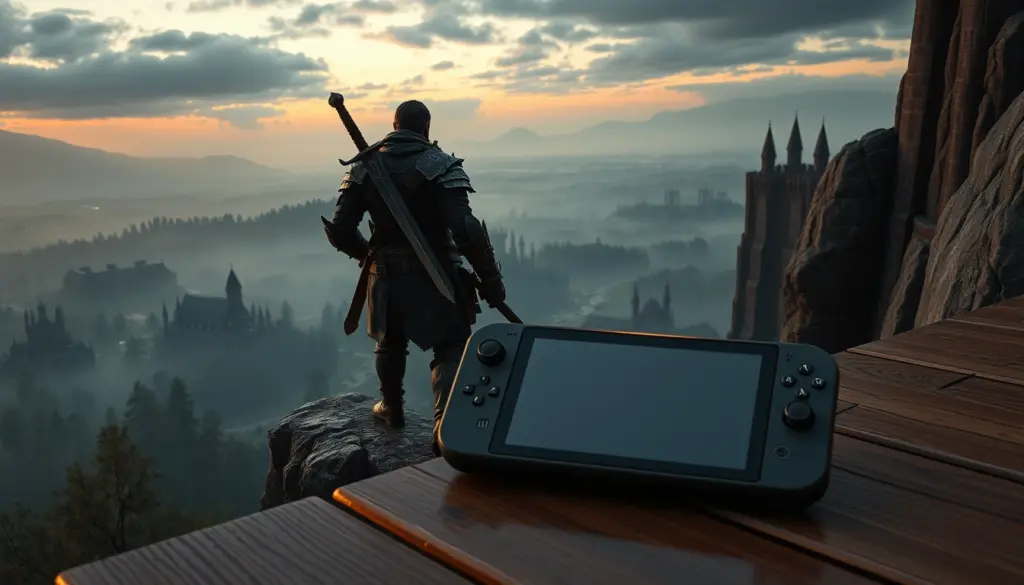
CD PROJEKT RED’s remastered edition of The Witcher 3: Wild Hunt arrives on Nintendo Switch 2 tomorrow, September 29, 2026, closing an 11-year gap since Geralt of Rivia first stepped onto PC and PlayStation 4 in May 2015. The release lands as part of a wider wave of AAA remasters and ports reaching Nintendo’s new hardware this year, and it arrives free for anyone who already owns the original game on the platforms CD PROJEKT RED has confirmed. This piece looks at what is actually confirmed for launch day, how the Switch 2 version fits into the console’s growing third-party library, and what the release signals about the remaster economy heading into 2027.

Don't miss new tech stories on Google
Add Shattered once in the Google app and our stories show up in your news suggestions.
What CD Projekt Red confirmed for September 29
The headline fact is simple: The Witcher 3: Wild Hunt – Remastered ships on PC, PlayStation 5, Xbox Series X|S, and Nintendo Switch 2 on September 29, 2026. CD PROJEKT RED’s announcement describes upgrades to visuals, gameplay, performance, and other unspecified features, without publishing a granular patch-note style breakdown ahead of launch. That vagueness is deliberate for a studio that has spent the past year rebuilding trust after the rocky 2020 launch of Cyberpunk 2077, and it means outlets and players will be doing real-time impressions work starting the moment the update goes live rather than parsing a pre-release spec sheet.
Existing owners on GOG, Steam, Epic Games Store, PlayStation 5, and Xbox Series X|S get the remastered version as a free upgrade, no repurchase required. Switch owners of the original 2019 port also get a free claim path to the Switch 2 version once it releases. That free-upgrade model is a deliberate contrast to how some publishers have handled remasters this generation, charging $10 to $40 for what amounts to a visual refresh. Our earlier coverage on CDPR’s decision to skip the upsell entirely goes deeper into the business logic behind that call.
The remastered base game folds in both expansions, Hearts of Stone and Blood and Wine, at no additional cost for existing owners. That bundling matters for the Switch 2 conversation specifically, because it means the portable version isn’t a stripped-down base-game-only release the way some past Switch ports trimmed content to hit performance targets. Pre-purchase is already open on Battle.net and directly through the Nintendo Switch 2 storefront, though CD PROJEKT RED has not published a standalone price for buyers who don’t already own the game.
Why the Switch 2 version is the story, not the remaster itself
PC, PS5, and Xbox Series X|S owners already have a version of The Witcher 3 that runs at or near 60 frames per second with ray tracing options. For them, the remaster is an incremental visual and technical bump on hardware that was already capable. Switch 2 is the platform where the question actually matters: can Nintendo’s new hardware, which sits well below PS5 and Xbox Series X in raw compute, run an open-world RPG of this scale without the compromises that defined the original Switch 1 port back in 2019?
That original Switch port, handled by Saber Interactive, became something of a technical case study in itself: a genuinely open, densely populated RPG world squeezed onto hardware roughly a decade older than the PS4 baseline it was adapted from, at the cost of a soft, sub-720p handheld resolution and a heavily compressed asset set. Switch 2’s silicon jump changes the baseline math entirely, and CD PROJEKT RED building the remaster natively for the new hardware, rather than porting the 2019 Switch 1 build forward, is the more relevant technical story for anyone deciding whether to play on the go.
No official resolution, frame rate, graphics-mode, or download-size numbers for the Switch 2 build had been published as of this writing. Any specific technical claim circulating ahead of launch should be treated as unconfirmed until CD PROJEKT RED or a hands-on outlet publishes tested figures once the update goes live. That’s an unusual amount of silence for a day-one console release, and it puts extra weight on the first wave of Digital Foundry-style breakdowns that typically arrive within 24 to 48 hours of launch.
The Switch 2 port wave: Witcher 3 is not an outlier
The Witcher 3: Wild Hunt – Remastered is landing in the middle of a genuinely crowded season for ambitious third-party ports chasing Switch 2’s new hardware ceiling. Diablo 4: Age of Hatred Collection reached Switch 2 earlier this month, bundling two expansions into a $69.99 package, evidence that Nintendo’s new console can now carry live-service, loot-heavy ARPGs that would have been unthinkable on the original hardware. Digital Foundry’s technical breakdown of the Metal Gear Solid 4 remaster hitting 60fps on Switch 2 set an early bar for how much headroom the new console actually has over its predecessor.
At the more demanding end of that spectrum sits Rayman Legends Retold, whose PC requirements reportedly call for an RTX 4080-class GPU for 4K/60 performance while still being confirmed for a Switch 2 release. That gap between PC recommended specs and a portable console target is exactly why hands-on impressions of games like the Witcher 3 remaster matter so much this year: publishers are making increasingly bold bets that Switch 2’s architecture and its DLSS-style upscaling tools can close a hardware gap that would have been unbridgeable on Switch 1. Whether that bet pays off game by game is still being tested in real time.
| Game | Switch 2 status | Notable detail |
|---|---|---|
| The Witcher 3: Wild Hunt – Remastered | Releases Sept. 29, 2026 | Free upgrade for existing owners; includes both expansions |
| Diablo 4: Age of Hatred Collection | Released Sept. 2026 | $69.99, bundles two expansions |
| Metal Gear Solid 4 Remaster | Released 2026 | Confirmed 60fps by Digital Foundry testing |
| Rayman Legends Retold | Confirmed for Switch 2 | PC specs reportedly target RTX 4080 for 4K/60 |
| Control Resonant | PC specs published | RTX 4070 Ti recommended for 60 FPS on PC |
Nintendo’s own first-party push has reinforced the sense that Switch 2 is being treated as a legitimate home for demanding, previously PC/console-exclusive experiences rather than a strictly family-and-indie machine. The gold-finished Zelda 40th Anniversary Switch 2 hardware reveal and its rapid sellout earlier this year showed Nintendo leaning hard into premium positioning for the console, a strategy that only works if the third-party library backs it up with genuine AAA ports rather than downgraded ones.
CD Projekt Red’s business calculus
Giving away a remaster to millions of existing owners is not a decision studios make lightly, and it says something about how CD PROJEKT RED is managing its release cadence heading into The Witcher 4. Our earlier report on the studio’s cost posture around Witcher 4 and how CD Projekt is positioning development spend against titles like GTA 6 outlined a company deliberately avoiding the ballooning budget model that has made some AAA sequels commercially fragile even when they sell well.
A free, high-quality remaster functions as sustained marketing for that upcoming title. Every Switch 2 owner who claims the free Witcher 3 upgrade, plays through 100-plus hours of Geralt’s story, and comes away impressed is a warmer prospective buyer for Witcher 4 than one reached through a traditional ad campaign. It also keeps The Witcher 3 visible in storefront charts eleven years after release, a form of long-tail revenue through DLC and merchandise cross-promotion that costs the studio comparatively little once the remaster work itself is done.
There’s a hardware-sales angle here too, one that benefits Nintendo more directly than CD PROJEKT RED. A widely known, well-reviewed RPG landing free for anyone who already owns it gives existing Switch and Switch 1 owners on the fence about upgrading a concrete reason to buy Switch 2 hardware now rather than waiting. That’s the same logic publishers have used with day-one remasters and backward-compatible libraries on every console generation, but it’s particularly potent when the game in question is one of the best-reviewed RPGs of the last decade rather than a mid-tier catalog title.
Historical context: from 2015 launch to 2026 remaster
The Witcher 3: Wild Hunt originally launched in May 2015 on PC, PlayStation 4, and Xbox One, and went on to win Game of the Year awards across dozens of outlets that year. A next-gen PS5 and Xbox Series X|S update followed in December 2022, adding ray tracing and performance improvements without a full remaster label. The Switch 1 port, released in October 2019, remains one of the more technically ambitious ports of the last console generation precisely because of how much the team had to compress and cut to make an open-world RPG run on comparatively weak mobile hardware.
What makes the 2026 release different from the 2022 next-gen patch is scope. That earlier update was framed as a free upgrade for PS5 and Xbox Series X|S owners with targeted improvements; this year’s remaster spans four platforms simultaneously, including a from-the-ground-up Switch 2 build, and is being marketed with the “Remastered” label rather than as a next-gen patch. It’s the first time CD PROJEKT RED has treated a Switch release of the game as a day-one platform alongside PC and the PlayStation/Xbox family rather than a delayed follow-up port, which is itself a signal of how much confidence the studio has in Switch 2’s hardware ceiling compared to its predecessor.
Market impact: what a free AAA remaster does to a launch window
Switch 2 launched into a console market still working through a hardware supply crunch tied to broader memory chip shortages that have pushed up component costs across the industry this year. Against that backdrop, a free, marquee-name RPG landing on the platform functions as a low-cost way for Nintendo to add perceived value to hardware that’s already selling at a premium relative to its predecessor. It doesn’t move the needle on unit economics the way a first-party exclusive would, but it does address one of the recurring criticisms of new console launches: a thin, unproven third-party library in the first year.
For CD PROJEKT RED, the commercial upside is less about the remaster generating direct new-copy revenue and more about defending market share for the Witcher franchise against a genre landscape that’s gotten considerably more competitive since 2015. Open-world RPGs releasing in 2026 and 2027 are being built against a much higher visual and systemic bar, and keeping The Witcher 3 in active rotation, especially on a growing platform like Switch 2, extends the commercial life of a decade-old title without requiring the studio to divert resources away from Witcher 4 development.
| Milestone | Date | Platform(s) |
|---|---|---|
| Original launch | May 2015 | PC, PS4, Xbox One |
| Switch port | October 2019 | Nintendo Switch |
| Next-gen update | December 2022 | PS5, Xbox Series X|S, PC |
| Remastered edition | September 29, 2026 | PC, PS5, Xbox Series X|S, Switch 2 |
Competitive comparison: how other Switch 2 remasters stack up
The Witcher 3 Remastered isn’t competing directly against other games for player time so much as it’s competing against other Switch 2 ports for the title of “proof the console can do this.” The Metal Gear Solid 4 remaster set an early technical benchmark by confirming 60fps performance in independent testing, which gave players a concrete number to point to when judging Switch 2’s real-world capability rather than relying on marketing language. Diablo 4’s arrival demonstrated the console could handle a live-service game with constant online connectivity, frequent content updates, and heavy particle effects during combat, a different technical challenge than a mostly single-player open-world RPG.
The Witcher 3’s specific challenge is scale and density: a genuinely open, non-linear world with long sightlines, dense foliage, and dynamic weather and lighting systems that were already pushing PS4-era hardware hard in 2015. If CD PROJEKT RED has managed a native Switch 2 build that holds a stable frame rate through Novigrad’s crowded streets or a storm rolling in over Skellige, it will say more about the console’s real-world open-world capability than a more corridor-based or instanced game would. That’s precisely why so much of the day-one conversation is likely to center on direct comparisons to the Steam Deck build, which our earlier reporting on Steam Deck performance for the remaster already covers in detail from CD Projekt Red’s own confirmation.
What’s still unconfirmed heading into launch
It’s worth being precise about what CD PROJEKT RED has and hasn’t said publicly. The company has not published a standalone retail price for the Switch 2 version for buyers who don’t already own the base game on a qualifying platform. It has not released target resolution, frame rate, or graphics-mode details for the Switch 2 build, docked or handheld. No download size has been disclosed. And no attributable on-record quote from a named CD Projekt Red spokesperson accompanied the announcement, meaning any colorful commentary about the port circulating online ahead of launch should be treated skeptically until it’s traceable to an actual named source.
That gap between confirmed platform availability and confirmed technical performance is normal for AAA console launches, but it does mean genuine “impressions” journalism won’t really exist until the servers go live and outlets can put controllers in hand. Expect the most reliable data points, docked and handheld resolution figures, sustained frame rate under load, and loading times, to surface within the first 24 to 48 hours after the September 29 release, largely from technical-analysis outlets running side-by-side comparisons against the PS5 and Xbox Series X|S versions.
Predictions: what happens after launch day
- Expect the first wave of technical breakdowns within 48 hours of the September 29 release, likely including a Digital Foundry-style frame rate and resolution analysis comparing docked and handheld Switch 2 modes against PS5 and Xbox Series X|S.
- The free-upgrade model will likely become the reference point other publishers get measured against the next time a studio tries to charge for a remaster of a game that’s over five years old.
- Switch 2’s third-party library credibility will keep building through Q4 2026 as more mid-generation remasters and ports target the platform, following the pattern set by Diablo 4, MGS4, and now Witcher 3.
- CD PROJEKT RED will likely use Witcher 3 Remastered’s Switch 2 reception, positive or negative, as a data point in its own public messaging about Witcher 4’s scope and platform ambitions.
- If performance reviews land well, expect a modest bump in Switch 2 hardware attach-rate commentary from Nintendo in its next quarterly investor update, framed around third-party AAA availability rather than first-party software alone.
How to claim the free upgrade
For existing owners, the process is designed to require no manual repurchase. GOG, Steam, Epic Games Store, PS5, and Xbox Series X|S owners of the base game receive the Remastered version as an automatic free upgrade tied to their existing library entry. Switch owners of the original Wild Hunt release get a claim path for the free Switch 2 version once the update goes live on September 29. Anyone without an existing copy can pre-purchase now through Battle.net or directly via the Nintendo Switch 2 storefront, though CD PROJEKT RED has not disclosed what that standalone purchase will cost.
Both included expansions, Hearts of Stone and Blood and Wine, come bundled into the remastered base game for existing owners at no extra charge, meaning anyone who completed the story years ago and skipped the DLC now has a reason to go back in with a technically improved build across all four confirmed platforms.
Frequently asked questions
When does The Witcher 3: Wild Hunt – Remastered release on Nintendo Switch 2?
September 29, 2026, alongside PC, PlayStation 5, and Xbox Series X|S versions.
Is the Switch 2 version free if I already own The Witcher 3?
Yes, if you own the original game on Nintendo Switch, you can claim the Remastered Switch 2 version for free once it releases. Owners on GOG, Steam, Epic Games Store, PS5, and Xbox Series X|S also receive a free upgrade.
Does the remaster include the expansions?
Yes. Hearts of Stone and Blood and Wine are both included in the remastered base game, and existing owners get them at no additional cost.
How much does the Switch 2 version cost for new buyers?
CD PROJEKT RED has not published a specific standalone price as of this writing. Pre-purchase is open through the Nintendo Switch 2 storefront and Battle.net.
What resolution and frame rate will Switch 2 run at?
No official resolution or frame rate targets have been confirmed by CD PROJEKT RED ahead of launch. Independent technical testing is expected within days of the September 29 release.
How is this different from the 2022 PS5/Xbox Series X update?
The 2022 update was a targeted next-gen patch adding ray tracing and performance improvements. The 2026 remaster spans four platforms including a native Switch 2 build and is branded as a full remaster rather than a next-gen patch.
What other major games are coming to Nintendo Switch 2 around the same time?
Diablo 4’s Age of Hatred Collection, a Metal Gear Solid 4 remaster, and the upcoming Rayman Legends Retold are all part of the same wave of ambitious third-party Switch 2 ports in 2026.
Is CD Projekt Red working on The Witcher 4?
Yes, CD Projekt Red has confirmed Witcher 4 is in development, with the studio publicly discussing a development cost approach distinct from the biggest-budget AAA sequels on the market.