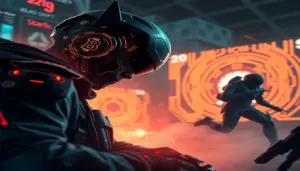

HAMSTER Corporation is putting a 46-year-old arcade cabinet back in front of players today. On October 1, 2026, the Osaka-based publisher released both Arcade Archives BALLOON BOMBER and Arcade Archives 2 BALLOON BOMBER, reviving TAITO’s 1980 shooting game across five current and last-generation platforms at once. It’s a small release by dollar value, but it says a lot about how the re-release business has learned to squeeze value out of decades-old code, and how fractured the modern console landscape has become even for a game this simple.
The split release is the real story here. Rather than one version for every system, HAMSTER shipped two separately titled products: the original Arcade Archives BALLOON BOMBER for Nintendo Switch and PlayStation 4, and an upgraded Arcade Archives 2 BALLOON BOMBER for Nintendo Switch 2, PlayStation 5, and Xbox Series X|S. Anyone searching for a single universal release covering all five platforms won’t find one. That distinction matters for pricing, for ownership, and for what buyers should actually expect to click “purchase” on.
What Arcade Archives BALLOON BOMBER actually is
BALLOON BOMBER is a 1980 shooting game originally released by TAITO, the Japanese arcade giant behind Space Invaders. The setup is simple: the player controls an anti-aircraft gun and shoots down the bomb payloads carried by enemy balloons before they reach the ground. It’s a direct descendant of the fixed-shooter genre that defined arcades in the late 1970s, and it predates almost every reference point modern players would use to describe it.
HAMSTER Corporation has run the Arcade Archives line since 2014, licensing original arcade ROMs from TAITO, Capcom, SNK, Konami, and other Japanese publishers and packaging them with save states, online leaderboards, and adjustable display filters. The series has become a quiet fixture of the Switch and PlayStation eShops, releasing a new (or very old) title almost every week. BALLOON BOMBER is simply the latest entry in a catalog that now numbers in the hundreds, and it arrives on the same storefronts that just received Nintendo’s Switch firmware update 23.0.1, which patched a startup delay affecting the original console.
Two titles, five platforms: how the split actually works
Here’s where it gets specific. Arcade Archives BALLOON BOMBER is the version built for older hardware: Nintendo Switch and PlayStation 4. Arcade Archives 2 BALLOON BOMBER is the version built for current hardware: Nintendo Switch 2, PlayStation 5, and Xbox Series X|S. The “2” in the title isn’t a sequel number for the game itself, it designates HAMSTER’s newer Arcade Archives 2 platform and feature set, which runs on next-gen consoles and brings a different save/leaderboard backend than the original line.
This two-track structure isn’t unique to BALLOON BOMBER. HAMSTER has been running Arcade Archives and Arcade Archives 2 in parallel for a while now, migrating its catalog to current-gen systems one title at a time while continuing to serve the installed base of Switch and PS4 owners who haven’t upgraded. For a publisher re-releasing 46-year-old code, maintaining two parallel SKUs per game is a notable operational commitment, and it signals HAMSTER expects enough demand on both tiers to justify the extra packaging and QA work.
Pricing: yen figures confirmed, US pricing unverified
The official Japanese pricing, confirmed in HAMSTER’s release materials, breaks down by platform and version. Nintendo Switch owners pay 838 yen, tax included, for the original BALLOON BOMBER. PlayStation 4 owners pay 837 yen, tax included, a one-yen difference that reflects each storefront’s own tax rounding rather than a deliberate price gap. The next-gen version, Arcade Archives 2 BALLOON BOMBER, is priced uniformly at 1,100 yen, tax included, across Nintendo Switch 2, PlayStation 5, and Xbox Series X|S.
HAMSTER has also built in an upgrade path. Anyone who already owns the Switch or PS4 version of BALLOON BOMBER can buy the Switch 2 or PS5 version for a reduced 330 yen, tax included, instead of paying full price again. That’s a meaningful discount, roughly 70% off the 1,100 yen full price, and it’s a pattern HAMSTER has used before to reward existing collectors when a title crosses over to its Arcade Archives 2 line.
One thing worth flagging clearly: a secondary source has reported US dollar prices of $7.99, $9.99, and $2.99 for the different SKUs, but the official Japanese pricing record only confirms yen figures. Those dollar numbers should be treated as unverified until HAMSTER or a storefront listing confirms them directly. Readers shopping on the Nintendo eShop, PlayStation Store, or Xbox Store should check the listed price at checkout rather than assuming a direct yen-to-dollar conversion.
| Version | Platforms | Price (JPY, tax incl.) | Owner Upgrade Price |
|---|---|---|---|
| Arcade Archives BALLOON BOMBER | Nintendo Switch | 838 yen | N/A (base version) |
| Arcade Archives BALLOON BOMBER | PlayStation 4 | 837 yen | N/A (base version) |
| Arcade Archives 2 BALLOON BOMBER | Nintendo Switch 2 | 1,100 yen | 330 yen for Switch owners |
| Arcade Archives 2 BALLOON BOMBER | PlayStation 5 | 1,100 yen | 330 yen for PS4 owners |
| Arcade Archives 2 BALLOON BOMBER | Xbox Series X|S | 1,100 yen | Not applicable (no prior Xbox version) |
Why Xbox Series X|S is new territory for this franchise
The Xbox Series X|S release deserves its own mention, because Arcade Archives spent most of its history as a Nintendo Switch and PlayStation exclusive line. HAMSTER began bringing select Arcade Archives 2 titles to Xbox as part of a broader push to widen distribution beyond its original two-platform base. BALLOON BOMBER’s inclusion on Xbox Series X|S means Microsoft’s console now gets day-one access to a TAITO classic that, on prior platforms, might have taken months or years to arrive, if it arrived at all.
That’s a meaningful shift for Xbox owners who’ve historically had thinner access to Japan’s retro arcade catalog compared to Switch and PlayStation users. It also means there’s no owner-upgrade discount path for Xbox, since there was never a prior Xbox version of BALLOON BOMBER to upgrade from. Xbox buyers pay the full 1,100 yen (or local equivalent) regardless of whether they own the game on another platform. The release also lands against a turbulent backdrop for the brand: Microsoft recently cut 268 jobs across its gaming division and handed the Halo franchise to Activision, a reminder that day-one third-party content like this still has to compete for attention inside a studio lineup in flux.
The five-platform list, broken down
| Platform | Title Released | Generation | Price Tier |
|---|---|---|---|
| Nintendo Switch | Arcade Archives BALLOON BOMBER | Previous-gen | 838 yen |
| PlayStation 4 | Arcade Archives BALLOON BOMBER | Previous-gen | 837 yen |
| Nintendo Switch 2 | Arcade Archives 2 BALLOON BOMBER | Current-gen | 1,100 yen |
| PlayStation 5 | Arcade Archives 2 BALLOON BOMBER | Current-gen | 1,100 yen |
| Xbox Series X|S | Arcade Archives 2 BALLOON BOMBER | Current-gen | 1,100 yen |
The business logic behind reviving a 1980 shooter
It’s easy to dismiss a sub-$10 re-release of a 46-year-old arcade game as a footnote, but the Arcade Archives model is a genuinely efficient piece of publishing. HAMSTER doesn’t build new engines or commission new art; it licenses original ROM code from TAITO, wraps it in a consistent shell with save states, scoreboards, and display options, and ships it at a price low enough that impulse purchases drive most of the revenue. Multiply that by a catalog running into the hundreds of titles, releasing on a near-weekly cadence, and you get a durable, low-overhead business built almost entirely on licensing relationships and nostalgia.
The dual-version strategy for current and previous-gen hardware extends that efficiency further. Rather than picking a single platform generation and leaving money on the table, HAMSTER ships to wherever the installed base actually is. With Nintendo Switch 2 still building out its software library and PS4/Switch owners numbering in the hundreds of millions combined worldwide, serving both tiers with one game, packaged as two SKUs, maximizes reach without meaningfully increasing development cost.
Competitive landscape: how Arcade Archives compares to other retro revival efforts
HAMSTER isn’t the only company mining decades-old arcade and console code for modern re-release. Capcom runs its own in-house compilations, Nintendo periodically revives NES and SNES titles through its subscription services, and smaller publishers like Piko Interactive and Limited Run Games handle physical reissues of retro software. What sets Arcade Archives apart is volume and consistency: a steady weekly-to-biweekly release cadence, individually priced single-game purchases rather than bundled compilations, and licensing deals that span TAITO, SNK, Capcom, Technos, Irem, and other historically significant Japanese studios.
That model trades the perceived value of a 20-game anthology for the flexibility of à la carte purchasing. A player who only wants BALLOON BOMBER doesn’t have to buy a $40 compilation to get it, they pay roughly a dollar or two (pending confirmed US pricing) and move on. For a publisher, it also means every title is its own small revenue event rather than being buried inside a larger package, which is part of why HAMSTER can justify maintaining two parallel hardware tracks for a release this size. It’s a different strategy than the one behind bigger current-gen bets like The Witcher 3 Remastered’s Switch 2 launch, where a single high-profile port carries the marketing weight that a hundred small arcade re-releases never will individually.
Historical context: BALLOON BOMBER’s place in arcade history
BALLOON BOMBER arrived in arcades in 1980, the same general era that produced Pac-Man, Defender, and Missile Command. It sits in the fixed-shooter lineage that TAITO itself helped define two years earlier with Space Invaders, trading the invading alien grid for airborne balloons dropping ordnance on a ground-based gun emplacement. Games from this period rarely get standalone attention decades later; most survive only inside multi-game anthology discs or emulation archives maintained by preservationists.
That’s precisely the gap Arcade Archives fills. By treating each title as worth an individual release rather than folding it into a bundle, HAMSTER effectively functions as a working archive of TAITO’s back catalog, one that happens to generate revenue instead of sitting in a museum case. For TAITO, a company whose corporate history stretches back to 1953 and includes some of the most important titles in arcade history, licensing deals like this keep decades-old intellectual property commercially active without requiring any new development investment on TAITO’s part.
What the dual-title naming means for buyers
The practical takeaway for anyone browsing a storefront today: search results and product listings will show two distinct entries, not one. Buyers on Nintendo Switch or PlayStation 4 should look for Arcade Archives BALLOON BOMBER. Buyers on Nintendo Switch 2, PlayStation 5, or Xbox Series X|S should look for Arcade Archives 2 BALLOON BOMBER. Picking the wrong listing won’t cause a refund headache since both are legitimate releases, but it will mean paying full price on a platform where an owner-upgrade discount might have applied, or missing out on whichever version’s feature set is a better fit.
This also matters for anyone building a wishlist or price-tracking alert. Storefront algorithms and third-party tracking tools generally treat differently-titled SKUs as separate products, so setting an alert on “Arcade Archives BALLOON BOMBER” won’t necessarily catch a price change on “Arcade Archives 2 BALLOON BOMBER,” and vice versa.
Market impact: a small release with an outsized signal
No single 1,100-yen arcade re-release moves a quarterly earnings report. But the cumulative effect of a near-weekly cadence across hundreds of titles, each sold individually across up to five platforms, adds up to a durable, low-risk revenue stream that most AAA publishers can’t replicate. It also reinforces something retro-gaming analysts have been watching for a few years: demand for decades-old arcade software hasn’t faded as hardware has gotten more powerful, it’s shifted toward convenience. Players don’t want to track down original cabinets or emulate unlicensed ROMs; they want a clean, legal, one-click purchase with modern conveniences like save states and online leaderboards layered on top. That convenience-first approach mirrors how subscription services package value too, with PlayStation Plus adding three free games and four extras for October the same month BALLOON BOMBER lands on PS4 and PS5.
For Xbox specifically, each new Arcade Archives 2 title that lands day-one chips away at a historical content gap versus Switch and PlayStation. It’s a small data point, but it’s part of a broader pattern of Xbox closing distribution gaps with Japanese publishers over the past couple of years. That gap-closing matters more as Sony and Microsoft both look ahead to next-generation hardware, with reporting pointing to PS6 and the next Xbox both targeting 2027 and AMD confirmed as the chip partner for both.
Predictions: where the Arcade Archives line goes from here
- HAMSTER will likely continue splitting new Arcade Archives releases into legacy and Arcade Archives 2 versions for as long as Switch and PS4 retain a meaningful active install base, rather than cutting over to current-gen-only releases.
- Expect more TAITO catalog titles to land simultaneously on Xbox Series X|S going forward, now that the platform has been folded into the Arcade Archives 2 release cadence rather than treated as an afterthought.
- Owner-upgrade pricing, like the 330 yen discount offered here, will likely remain standard practice for titles crossing from legacy platforms to Switch 2 and PS5, since it rewards existing customers without costing HAMSTER meaningful revenue on games priced this low.
- As Nintendo Switch 2’s install base grows through 2026 and into 2027, expect HAMSTER to gradually favor Arcade Archives 2 as the lead SKU, with legacy Switch/PS4 versions becoming a secondary release rather than a day-one parallel launch.
- US and European pricing will almost certainly get an official confirmation from HAMSTER or regional storefronts shortly after launch, resolving the current gap between the confirmed yen figures and the unverified dollar figures circulating from secondary sources.
How this fits into the broader Switch 2 and current-gen library
Arcade Archives 2 BALLOON BOMBER arrives at a moment when Nintendo Switch 2’s software library is still filling out with a mix of new releases and ported back-catalog titles. A budget-priced, single-screen shooter isn’t going to move hardware on its own, but titles like this serve a different function: they give new Switch 2 owners a reason to open the eShop between bigger releases, and they keep the platform’s day-one TAITO catalog competitive with what’s available on PS5 and Xbox Series X|S. Demand for the console itself hasn’t cooled either, as shown by the Zelda 40th Anniversary Switch 2 bundle selling out and hitting $800 on resale markets, and by publishers continuing to commit new content to the platform at events like PAX Aus 2026, where Nintendo, World of Warcraft, and Bandai Namco all confirmed presence.
It’s also a reminder that not every console-generation transition story is about teraflops and ray tracing. A meaningful share of any platform’s early software catalog is made up of exactly this kind of release: cheap, fast to produce, low-risk, and aimed squarely at an audience that already knows what it’s buying before it reads a single review.
Frequently Asked Questions
What is Arcade Archives BALLOON BOMBER?
It’s a re-release of TAITO’s 1980 arcade shooting game, published by HAMSTER Corporation as part of its long-running Arcade Archives series, where players operate an anti-aircraft gun to shoot down bomb-carrying balloons.
What’s the difference between Arcade Archives BALLOON BOMBER and Arcade Archives 2 BALLOON BOMBER?
The original Arcade Archives version released for Nintendo Switch and PlayStation 4. The Arcade Archives 2 version, built on HAMSTER’s newer platform, released for Nintendo Switch 2, PlayStation 5, and Xbox Series X|S.
What platforms is BALLOON BOMBER available on?
Five platforms total, split across two titles: Nintendo Switch and PlayStation 4 (Arcade Archives BALLOON BOMBER), plus Nintendo Switch 2, PlayStation 5, and Xbox Series X|S (Arcade Archives 2 BALLOON BOMBER).
How much does Arcade Archives BALLOON BOMBER cost?
In Japan, it’s 838 yen on Nintendo Switch and 837 yen on PlayStation 4, tax included. US and European pricing has not been officially confirmed as of publication.
Is there a discount for owners upgrading to the Switch 2 or PS5 version?
Yes. Owners of the Switch or PS4 version can buy the Switch 2 or PS5 version for 330 yen, tax included, instead of paying the full 1,100 yen price.
Is BALLOON BOMBER available on Xbox?
Yes, as Arcade Archives 2 BALLOON BOMBER on Xbox Series X|S, priced at 1,100 yen. There’s no legacy Xbox version, so there’s no owner-upgrade discount path for Xbox buyers.
Who developed and published Arcade Archives BALLOON BOMBER?
The original 1980 arcade game was developed by TAITO. HAMSTER Corporation is the publisher behind this re-release, as it is for every title in the Arcade Archives and Arcade Archives 2 series.
Are the US dollar prices for BALLOON BOMBER confirmed?
Not officially. A secondary source has cited figures of $7.99, $9.99, and $2.99 for different versions, but HAMSTER’s official pricing record only lists confirmed yen prices as of this article’s publication. Check the exact listed price on your regional storefront before purchasing.
Related
- Nintendo Switch Update 23.0.1 Fixes Startup Delay [2026]
- Witcher 3 Remastered Hits Switch 2 Sept. 29 [2026]
- Zelda 40th Switch 2 Sells Out, Scalpers Hit $800 [2026]
- Xbox Cuts 268 Jobs, Hands Halo to Activision [2026]
- PS Plus October Adds 3 Games, 4 Extras [2026]