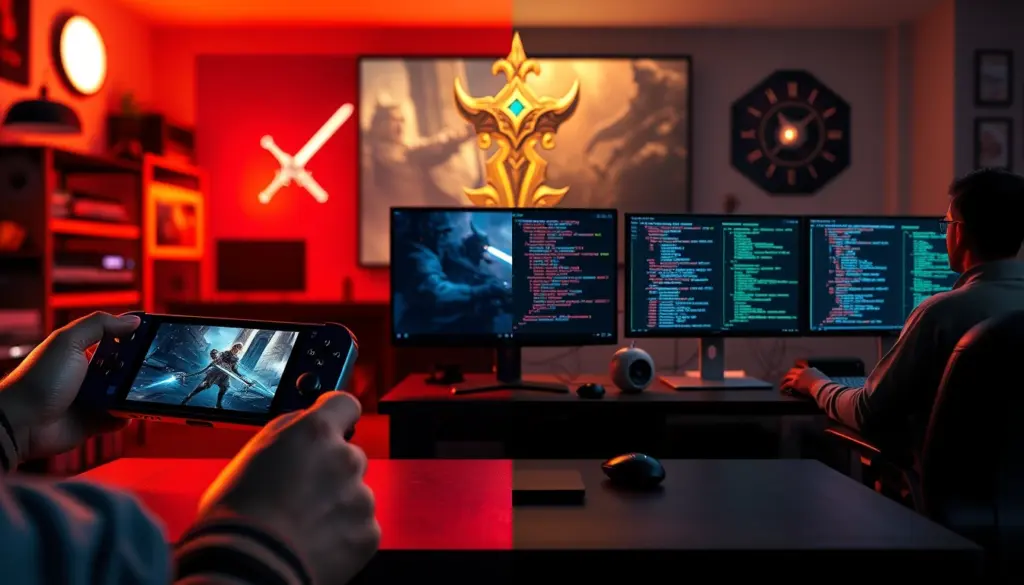
Square Enix is trying to get ahead of a worry that has followed every recent cross-platform Japanese release: will the weakest hardware in the lineup drag everything else down. On October 2, 2026, Wccftech reported that the publisher has built a dedicated optimization team for Final Fantasy VII Revelation, separate from the group building the game’s core systems. Director Naoki Hamaguchi framed it as a structural fix, not a marketing line, telling press that one group handles gameplay while “a whole other team” handles making the game run well everywhere it ships.
Revelation is due April 8, 2027, landing on PC, PlayStation 5, Xbox Series X, Xbox Series S, and Nintendo Switch 2 at once, a wider simultaneous spread than either prior chapter in the Remake trilogy attempted. That breadth is exactly why the optimization question matters. Switch 2 and Xbox Series S sit well below PS5 and high-end PC in raw horsepower, and fans who watched the series’ last two entries have specific reasons to be skeptical that a promise alone settles anything.
Square Enix confirms a separate optimization team
The news broke through a short round of press comments picked up first by Wccftech, then summarized by WindowsForum and other outlets tracking the Revelation rollout. According to Wccftech’s reporting, Hamaguchi described the studio’s internal split plainly. “The team setup is such that we can have a segment of the team focus exclusively on the gameplay elements, and leave all the optimization work to a whole other team that are all very talented people,” he said. He followed with a direct appeal to fans still bruised by prior console comparisons: “We have separate teams dedicated to focusing on the gameplay and a team dedicated to optimizing everything. Please, just believe us!”
That second line is doing a lot of work. It is an admission that Square Enix knows skepticism exists, aimed squarely at a community that has already seen what “we’re working on it” can mean in practice. The structural claim itself isn’t new. In an earlier interview translated and cited by Xeznaff, Hamaguchi said: “Optimization is handled separately for each platform.” The studio previously set release-date and platform details out in a separate announcement, which shattered.io covered when the April 2027 date and six-platform lineup were confirmed. This week’s story is narrower: it’s about whether the development process itself can actually deliver parity, not just whether the game is coming to every box under the TV.
Why Switch 2 and Xbox Series S are the flashpoints
Both Switch 2 and Xbox Series S get singled out for the same underlying reason: they are the low end of their respective hardware families, sold at a lower price alongside more powerful siblings. Xbox Series S runs the same chip architecture as Series X but ships with less memory and a smaller GPU budget. Switch 2 is a hybrid console built to work in a handheld form factor, with a battery and thermal envelope that caps what it can push compared to a plugged-in PS5 or gaming PC.
Developers have two basic options when a game has to run across such a wide performance gap. They can scale resolution, frame rate, and effects down on the weaker hardware while keeping the underlying game identical, or they can cut content and features outright. Square Enix’s public position is the former: Game Informer reported at Tokyo Game Show 2026 that the PS5 version alone is planned to support Quality, Performance Sharp, and Performance Smooth modes, alongside a 4K/60fps option on PS5 Pro. Whether Switch 2 and Series S get matching modes has not been confirmed, and reporting on the optimization-team comments does not establish that question either way.
The memory wall: Xbox Series S’s core problem
Hamaguchi has talked about this exact issue before, in the context of the prior Remake trilogy entry’s Series S port. In comments translated and cited by NintendoWire, he said: “One thing we had trouble with, and I think this is true for other developers, is the Xbox Series S’s available memory.” That is a narrower complaint than “the console is too slow.” Memory capacity determines how much texture data, geometry, and audio a game can hold in active use at once, and running short on it forces compromises that show up as pop-in, texture downgrades, or stripped-back environmental detail, not just a lower frame-rate counter.
Hamaguchi drew a direct contrast with the Switch 2 work in the same interview. “It wasn’t the same level of adjustment as with Switch 2, where we rebuilt the entire pipeline; it was really just the limited memory,” he said, describing the Series S fix as a narrower, more surgical problem than the ground-up rework Switch 2 needed. That distinction matters for anyone trying to guess what Revelation‘s Series S version will look like: a memory-bound game tends to lose fidelity in ways players notice immediately, even when the frame rate itself holds steady.
Switch 2’s different challenge: rebuilding the pipeline
Switch 2’s problem isn’t primarily memory. It’s a combination of weaker raw GPU throughput and a mobile power budget, which pushed Square Enix toward dynamic resolution scaling and upscaling tools rather than a simple settings pass. Hamaguchi told Nintendo Life that the team is “consistently aiming for 30fps wherever possible” on the console, a target that keeps the game playable but well below the 60fps modes available elsewhere.
That earlier Switch 2 port is the clearest evidence available for how the studio’s optimization work actually performs under pressure, since Revelation itself hasn’t shipped yet. Automaton’s interview with Hamaguchi covered a specific visible artifact on the Switch 2 version: jagged, unstable-looking hair rendering, which the outlet attributed to the interplay between reduced internal resolution, temporal anti-aliasing, and DLSS-style upscaling working together under tight performance limits. Nintendo Life’s hands-on testing separately noted the Switch 2 port generally held its frame-rate target but showed occasional drops during busy combat, along with lower-detail textures and distant objects compared to the PS5 and PC versions.
Final Fantasy VII Revelation at a glance
| Detail | Status |
|---|---|
| Release date | April 8, 2027 |
| Confirmed platforms | PC, PlayStation 5, Xbox Series X, Xbox Series S, Nintendo Switch 2 |
| Position in trilogy | Third and concluding entry in the Final Fantasy VII Remake project |
| Development structure | Separate gameplay team and optimization team, per director Naoki Hamaguchi |
| PS5 visual modes (announced) | Quality, Performance Sharp, Performance Smooth, plus 4K/60fps on PS5 Pro |
| Switch 2 / Series S visual modes | Not yet confirmed |
| Simultaneous launch precedent | First entry in the Remake project launching across PS5, Xbox, PC, and Switch on day one |
How other studios are handling the same Switch 2 and Series S squeeze
Square Enix isn’t alone in wrestling with this gap. Nearly every publisher moving an ambitious PS5-class game onto Switch 2 or Series S has had to pick a strategy, and the industry has split into a few camps. Capcom leaned on tooling: the company detailed REX, a set of AI-assisted programs built to help re-optimize its RE Engine across platforms, after already proving the approach works with its Resident Evil 2, 3, and 4 remakes, which crossed a combined 38 million in sales partly on the strength of Switch 2 ports. CD Projekt Red took a more traditional route, shipping a dedicated Switch 2 build of Witcher 3 Remastered in late September 2026 with its own resolution and effects targets rather than a straight port of the PS5 version.
Atlus faced a version of the same decision with its own Persona output, confirming Switch 2 as a fourth platform for Persona 6 without yet locking in a release date, which suggests the studio wanted more lead time to get the port right rather than commit to a simultaneous launch window the way Square Enix is now attempting with Revelation. Microsoft’s own hardware roadmap adds another wrinkle: reporting on next-generation Xbox hardware plans shows the company is already thinking past Series S’s limitations for its next console generation, even as current-gen Series S remains a mandatory target for any publisher selling on Xbox today.
Historical context: a trilogy that grew its platform footprint each time
The Remake trilogy’s platform story has been one of gradual expansion. The first entry launched as a PlayStation exclusive before reaching other platforms later. The second grew its day-one footprint but still followed a staggered release pattern. Revelation breaks that pattern entirely, going to PC, every current Xbox console, PS5, and Switch 2 on the same day. That’s a meaningfully bigger technical commitment than either predecessor made, and it’s the direct reason the optimization-team question has become a story at all. A simultaneous six-platform launch leaves no room for the staggered, platform-by-platform polish period the earlier games effectively got by accident.
What changed between Rebirth and Revelation
Final Fantasy VII Rebirth’s Switch 2 port arrived well after the PS5 version, giving Square Enix time to study a finished game rather than optimize a moving target. Revelation doesn’t get that luxury. Every platform ships from the same production timeline, which is precisely why Hamaguchi’s “separate teams” explanation is being scrutinized rather than simply accepted. The claim isn’t that the approach is new. It’s that doing it on this compressed a schedule, across this many platforms at once, hasn’t been tested before by this team.
Market impact: what’s riding on getting this right
Revelation closes out a trilogy that has anchored Square Enix’s single-player console business for years, and it lands during the 30th anniversary period of the original 1997 game, a timing window the publisher clearly wants to use for maximum visibility rather than let a rocky Switch 2 or Series S launch overshadow. A botched low-end port doesn’t just hurt review scores on one platform. It feeds directly into refund requests, review-bombing on storefronts, and the kind of social media comparison videos that dogged other recent cross-platform releases when the weakest version shipped visibly unfinished.
There’s also a simple commercial logic at play. Switch 2 and Series S owners represent real, additional buyers Square Enix wasn’t fully capturing when the first two Remake entries skewed toward PS5. Converting that larger addressable audience into day-one sales, instead of players waiting for patches or a cheaper used copy after a weak launch, is worth real revenue. That’s the business case for investing in a standalone optimization team rather than treating lower-end ports as an afterthought handled by whoever has spare capacity near the end of the project.
Skepticism from the industry: promises versus proof
Not every outlet covering the story is taking the reassurance at face value. WindowsForum’s write-up on the comments explicitly frames the situation as “reassurance versus evidence,” noting that Series S and PC performance “remain unproven” until the game is actually in hands. That skepticism isn’t unreasonable. A separate optimization team is a process claim, not a benchmark. It describes how Square Enix organized the work, not what frame rate or resolution the Series S version will actually hit in April 2027. Hamaguchi’s own request that fans “just believe us,” as first reported by Wccftech, underlines how much of this story currently rests on trust built from the studio’s track record rather than anything players can measure today.
A mixed track record
That track record is mixed rather than clean. The Switch 2 port of Rebirth generally hit its frame-rate target, according to Nintendo Life’s testing, but it also shipped with the visible hair-rendering issue Automaton pressed Hamaguchi on directly. A studio that can hold a frame-rate floor while still shipping a noticeable visual bug is exactly the kind of mixed result that makes “please believe us” land as plausible but unverified rather than simply reassuring.
What’s confirmed and what’s still speculation
It’s worth separating what Square Enix has actually confirmed from what’s circulating as assumption. Confirmed: the April 8, 2027 release date, the six-platform simultaneous launch, the existence of two distinct development teams for gameplay and optimization, and Hamaguchi’s direct quotes about that structure. Not confirmed: specific resolution or frame-rate targets for Switch 2 or Series S, whether those platforms will get the same visual-mode options PS5 is getting, team sizes, or any claim that either platform will force a reduction in gameplay content rather than just visual fidelity. Reports describing Switch 2 or Series S as forcing parity sacrifices are, at this stage, inference built on the hardware’s known limits and the studio’s past ports, not statements Square Enix has made about this specific game.
Predictions: what to watch before April 2027
- Expect Square Enix to publish platform-specific technical details (resolution targets, frame-rate modes) closer to launch rather than now, following the pattern it set with Rebirth’s Switch 2 reveal.
- Xbox Series S will likely need the same kind of memory-driven compromises Hamaguchi described for the previous game, given that the hardware itself hasn’t changed.
- Early marketing and preview footage will probably showcase PS5 and PC builds first, with Switch 2 and Series S comparisons arriving later and under closer scrutiny once they do.
- Expect continued “please trust us” messaging from Square Enix as the 30th-anniversary window approaches, aimed at managing community anxiety ahead of hard performance data.
- If a preview build leaks or reaches press hands-on before launch, expect immediate comparison against the Rebirth Switch 2 port’s known hair-rendering and frame-dip issues as the benchmark for whether the new optimization team actually changed outcomes.
Competitive comparison: optimization strategy by publisher
| Publisher | Title | Lower-end target | Stated approach |
|---|---|---|---|
| Square Enix | Final Fantasy VII Revelation | Switch 2, Xbox Series S | Separate dedicated optimization team, per Hamaguchi |
| Square Enix | Final Fantasy VII Rebirth (prior port) | Switch 2 | Rebuilt rendering pipeline, 30fps target, dynamic resolution |
| Capcom | Resident Evil 2/3/4 remakes | Switch 2 | RE Engine tuning plus AI-assisted REX tooling |
| CD Projekt Red | Witcher 3 Remastered | Switch 2 | Standalone Switch 2 build with its own settings targets |
| Atlus | Persona 6 | Switch 2 | Confirmed as a platform without a locked release date, allowing extra lead time |
The bigger picture for Switch 2 and Series S as a platform tier
Every one of these decisions feeds into a broader pattern across the industry in 2026: Switch 2 and Xbox Series S have become the fixed lower bound that any big cross-platform release has to design around, the same role the original Switch and Xbox One S played a generation earlier. Developers can’t ignore that bound without losing a real chunk of the addressable market, and they can’t treat it as equal to PS5 or a gaming PC without compromising the top end of the experience. Square Enix’s answer, splitting the work into two teams rather than one team doing both jobs in sequence, is a structural bet that parallel effort produces a better outcome than the sequential model the trilogy used before. Whether that bet pays off won’t be clear until Revelation is actually running on Series S and Switch 2 hardware in front of reviewers, sometime in the run-up to April 2027.
Frequently asked questions
What is Final Fantasy VII Revelation?
It’s the third and concluding entry in Square Enix’s Final Fantasy VII Remake project, following Remake and Rebirth, developed under director Naoki Hamaguchi.
When does Final Fantasy VII Revelation release?
Square Enix has set the release date for April 8, 2027.
Which platforms is Final Fantasy VII Revelation coming to?
PC, PlayStation 5, Xbox Series X, Xbox Series S, and Nintendo Switch 2, all on the same release date.
Why are fans worried about the Switch 2 and Xbox Series S versions?
Both are the lowest-performance hardware in their respective platform families, and the prior entry’s Switch 2 port and Xbox Series S work both required visible compromises, including a documented hair-rendering artifact on Switch 2 and memory-driven cuts on Series S.
Did Square Enix actually address these concerns?
Director Naoki Hamaguchi confirmed the studio runs a dedicated optimization team separate from the gameplay team, telling press “please, just believe us,” but Square Enix hasn’t released platform-specific performance targets for Revelation yet.
Has Square Enix had trouble with Xbox Series S before?
Yes. Hamaguchi has said the Series S’s available memory was a specific obstacle on the prior Remake trilogy port, distinct from the pipeline rebuild Switch 2 required.
Will every platform get the same visual modes?
Square Enix has only confirmed Quality, Performance Sharp, Performance Smooth, and a PS5 Pro 4K/60fps mode so far. Whether Switch 2 or Series S receive matching options hasn’t been confirmed.
Is this the final game in the Final Fantasy VII Remake trilogy?
Yes, Revelation is positioned as the concluding chapter of the three-part Remake project that began with Final Fantasy VII Remake in 2020.