
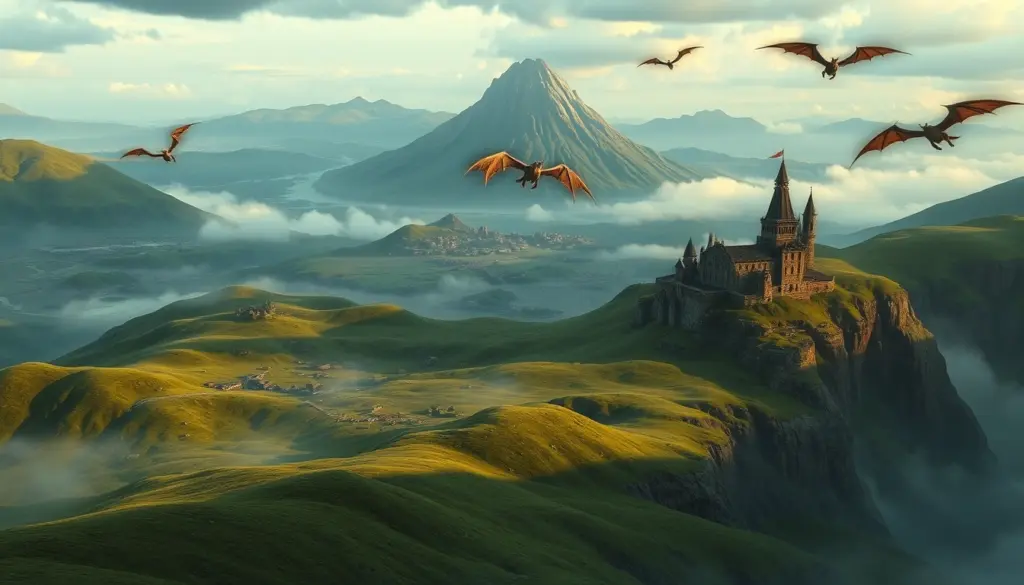
Jagex used its annual RuneFest convention in Birmingham, UK, to confirm what players have speculated about for months: a fourth mainline RuneScape MMORPG is in development, built in Unreal Engine. The studio revealed the project under the working title RS4 on October 3, 2026, with coverage spreading across outlets including Eurogamer, GamesRadar+, and Engadget through October 5. It is the first time in RuneScape’s 25-year history that Jagex has publicly committed to a brand-new mainline entry rather than an expansion or spin-off, and it lands at a moment when the broader industry is still sorting through what a fourth-generation MMO even needs to look like to compete.
RS4 is not replacing anything. Jagex has been explicit that RuneScape (often called RuneScape 3), Old School RuneScape, and the newer survival spin-off RuneScape: Dragonwilds will keep running alongside the new game. That framing matters for a franchise whose player base has stuck around specifically because Jagex rarely shuts anything down. Here is what the studio has confirmed, what remains open, and why a company betting on Unreal Engine for a 25-year-old IP is a bigger swing than it might first appear.
What Jagex Actually Announced at RuneFest 2026
The reveal happened at RuneFest, Jagex’s long-running fan convention, with reporting from Jagex’s own news page and several outlets placing the public unveiling on October 3 and coverage rolling out over the following two days. RS4 is described as being set in Gielinor, the shared world of every RuneScape game, with its story opening in Ashenfall, the same region introduced in Dragonwilds. According to GamingBolt, the narrative is pitched as taking place during the Sixth Age, years after the events of that spin-off.
Jagex has repeatedly called RS4 a working title rather than a confirmed final name, so references to “RuneScape 4” should be read as shorthand until the studio says otherwise. The company also described the project as being in early development, with a dedicated team already attached, and has set expectations that it is several years away from release. That is a notably early reveal for a studio that has historically kept new MMO development under wraps until much closer to launch.
Why Unreal Engine, and What Version Is Still Unclear
The headline technical detail is the engine switch itself. RuneScape’s existing games run on Jagex’s own proprietary tech, built up over two decades. RS4 moves to Unreal Engine, the same engine family Jagex already adopted for Dragonwilds. What the studio has not confirmed is which specific version of Unreal Engine RS4 runs on. Some outlets have assumed Unreal Engine 5 given the Dragonwilds precedent, but Jagex itself has not stated that in its own materials, so treat the exact version as unconfirmed rather than settled fact.
That gap matters more than it might seem. Epic’s engine has become something of a default choice for studios rebuilding aging tech stacks, a pattern this site has also tracked with Capcom’s push to modernize its RE Engine using AI tooling and with Unity’s own pivot, covered in our report on Unity 7 rendering games inside Unreal. Jagex choosing Unreal over continued investment in its homegrown engine is a tacit admission that building and maintaining proprietary MMO tech from scratch is no longer the efficient path, even for a studio that has run on in-house code for 25 years.
From a Dragonwilds Expansion to a Standalone MMO
Multiple reports, including one from TechSpot, trace RS4’s origins back to an expansion planned for Dragonwilds. Jagex’s reporting suggests that after playtesters responded strongly to a more traditional, full-scale RuneScape-style MMO built on the new engine, the project grew beyond the scope of a single expansion and became its own game. That origin story explains both the Ashenfall setting carried over from Dragonwilds and why the studio feels comfortable describing RS4 as additive rather than a replacement: it began life as more of the same world players already know, just built on new foundations.
Platforms, Release Window, and What Remains Unconfirmed
No platforms have been officially announced for RS4. Reporting has not confirmed PC, PlayStation, Xbox, Switch, or mobile support, and any claim stating otherwise should be treated as speculation at this stage. There is similarly no release date or release window beyond Jagex’s own framing of the project as “a few years away.” Given how early this reveal is relative to typical MMO marketing cycles, Jagex appears to be opting for a long, community-facing development process rather than a tightly controlled pre-launch marketing push.
| Detail | Status as of October 5, 2026 | Source |
|---|---|---|
| Engine | Confirmed: Unreal Engine | Jagex, Eurogamer |
| Unreal Engine version | Unconfirmed | Multiple outlets disagree |
| Final title | Unconfirmed; “RS4” is a working title | Eurogamer, VGC |
| Setting | Confirmed: Gielinor, starting in Ashenfall | GamingBolt |
| Platforms | Unconfirmed | Not addressed by Jagex |
| Release window | Unconfirmed; described as “a few years away” | Jagex, TechSpot |
| Fate of RuneScape 3 and OSRS | Confirmed: both continue | Jagex, GamesRadar+ |
RuneScape 3, Old School RuneScape, and Dragonwilds Keep Running
Jagex has been unusually direct about one thing: nobody’s existing RuneScape account is going anywhere. The studio’s own messaging, reproduced by Eurogamer, frames RS4 as sitting alongside the current RuneScape, Old School RuneScape, and Dragonwilds rather than replacing any of them. That is a meaningfully different strategy than how most long-running MMOs have handled generational leaps, where studios typically sunset an older client once the new one stabilizes. Jagex running four live RuneScape products simultaneously is an operational bet, not just a creative one, since each requires its own update cadence, moderation, and server infrastructure.
The People Behind RS4: What’s Actually on the Record
Jagex chief executive Phil Mansell has been associated with public comments about the project’s ambition, though a complete, verbatim quotation has not surfaced in the reporting reviewed for this story. Jagex chief creative officer Jon America has been cited by GamingBolt as indicating that the wider studio is involved in the project, though the full interview context has not been independently verified here. Rather than attribute invented wording to either executive, the safest summary is this: Jagex leadership is publicly associated with RS4’s ambition and studio-wide involvement, and further detail should be sourced directly from Jagex as it becomes available.
How RS4 Compares to RuneScape’s Other Live Games
Jagex now has four RuneScape-branded products in some stage of active life: the modern client generally called RuneScape 3, the deliberately old-school preservation project Old School RuneScape, the newer survival-flavored Dragonwilds, and now RS4. Laid out together, the differences in engine and maturity are stark.
| Game | Engine | Status | Role in the franchise |
|---|---|---|---|
| RuneScape (RuneScape 3) | Jagex proprietary engine | Live, ongoing updates | Modern flagship client |
| Old School RuneScape | Jagex proprietary engine | Live, ongoing updates | Preserved 2007-era version |
| RuneScape: Dragonwilds | Unreal Engine | Live | Survival spin-off, origin point for RS4 |
| RS4 (working title) | Unreal Engine | Early development | New standalone mainline MMO |
That table is also a snapshot of Jagex’s technical transition in progress. Two of its four live products already run on Unreal Engine, while its two longest-running and most heavily populated games remain on the older proprietary codebase. If RS4 succeeds, it is plausible Jagex eventually migrates more of its catalog toward Unreal over time, though the studio has made no statement suggesting that is the plan for RuneScape 3 or OSRS specifically.
Twenty-Five Years of RuneScape: A Quick Timeline
Jagex’s own framing leans heavily on RuneScape’s quarter-century run, and the timeline helps explain why a reveal like this draws so much attention from a player base that has watched the franchise evolve in increments rather than generational leaps.
| Period | Milestone |
|---|---|
| Franchise origin | RuneScape launches, beginning what Jagex now describes as 25 years of continuous operation |
| 2007-era split | Old School RuneScape later preserved as a separate, actively maintained version of the pre-2011 game |
| Recent years | RuneScape: Dragonwilds launches on Unreal Engine as a survival-genre spin-off |
| October 3, 2026 | RS4 revealed at RuneFest 2026 as a standalone Unreal Engine MMO |
| Going forward | Jagex says development is early and the game is “a few years away” |
The Keyword Signal: People Are Already Searching
Search interest around the term “runescape 4” was already active before RuneFest, a sign that speculation about a fourth mainline game has been building for a while among the franchise’s fanbase. That existing demand, combined with RuneScape’s status as one of the longest continuously operated MMOs in the industry, suggests this reveal will keep generating search traffic well past its initial news cycle, particularly as Jagex releases more concrete details over the next several years of development.
Market Impact: What a Fourth RuneScape Game Means for Jagex
Jagex has not published 2026 revenue, player-count, or investment figures tied to RS4, so any specific financial impact is unconfirmed. What is clear is the strategic signal: committing to a new, standalone MMO rather than an incremental update tells the market that Jagex believes its existing engine and content pipeline cannot carry the franchise’s next chapter. That is a different kind of bet than the live-service expansion cycles that dominate most of the industry’s current roadmap, including Steam’s own record-setting year, which this site covered in our report on Steam’s $1.7 billion September. A studio choosing to build an entirely new MMO alongside three existing live games is making a multi-year capital commitment, not a quarterly content drop.
It also arrives during a year when several major publishers have been restructuring their internal studios rather than greenlighting new flagship projects, a trend this site has tracked closely, including Xbox folding Playground Games and Turn 10 into a single studio. Jagex moving in the opposite direction, expanding its live lineup instead of consolidating it, stands out against that backdrop.
Competitive Comparison: Legacy MMOs Rebuilding on New Tech
RS4 is not the first case of a long-running online game moving to modern tooling, though it is structurally different from most. Where other studios have historically replaced an aging client outright and migrated the existing player base over, Jagex is building RS4 as an entirely separate product that will coexist with its older games rather than succeed them. That lowers the risk of disrupting RuneScape 3 or Old School RuneScape’s existing communities, since neither game needs to be shut down or rebuilt for RS4 to ship. The tradeoff is that Jagex now has to market, develop, and support four live products instead of migrating players toward one improved version, which is a heavier long-term operating cost than a straight engine swap would be.
Historical Context: Why Early MMO Reveals Are a Gamble
Announcing a major MMO years before launch is not a new strategy, and it is not one with a clean track record. The genre has a long, well-documented history of games revealed early that either shipped in a radically different form than first shown, slipped their original timelines by years, or were quietly reworked after a rocky launch before finding their footing. Jagex is aware of that history better than most studios, since RuneScape itself has survived multiple content eras, moderation overhauls, and monetization experiments over its 25 years without ever resetting its player base to zero. That survival record is likely part of why Jagex feels comfortable revealing RS4 this early: the studio has already proven it can manage a live MMO through major structural change without losing the community underneath it. The open question is whether that same institutional muscle memory transfers cleanly to building a new game from scratch on unfamiliar engine tooling, rather than incrementally evolving a codebase its own engineers already know end to end.
The AAA Budget Question Hanging Over Any New MMO
Jagex has not disclosed a development budget for RS4, and no outlet has reported one. But the announcement lands in the middle of an industry-wide conversation about what new, large-scale games should cost to build, a debate this site covered in detail around Blood of Dawnwalker’s $40 million budget. MMOs in particular carry ongoing server, live-operations, and content-cadence costs well beyond a single development budget line, which is part of why Jagex’s decision to keep three existing games running rather than consolidate them is as financially significant as the decision to build RS4 at all.
What Still Needs to Be Confirmed
Several details that would normally accompany a game reveal of this size are still missing. Jagex has not confirmed the specific Unreal Engine version, a platform list, a release window narrower than “a few years away,” subscriber or player-count figures for its existing games, or a development budget. The studio also has not confirmed RS4 as the game’s final title. Readers should treat any article, including this one, that states those specifics as settled fact with appropriate skepticism until Jagex publishes them directly.
Predictions: What Happens Next for RS4
- Jagex is likely to confirm a specific Unreal Engine version within the next few development updates, given how directly comparable questions have already been raised by the press.
- Expect Jagex to lean on community-facing development updates rather than a traditional marketing blackout, consistent with how early this reveal came relative to any release window.
- Platform confirmation will probably follow well after core gameplay reveals, mirroring how Dragonwilds’ platform rollout played out before RS4’s announcement.
- Old School RuneScape and RuneScape 3 are likely to keep receiving regular content updates through RS4’s entire development cycle, since Jagex has tied its credibility on this point to explicit public statements.
- Search interest and fan speculation around “RuneScape 4” will likely keep climbing in waves tied to each future RuneFest, rather than staying flat until a release date appears.
Why This Matters Beyond RuneScape’s Fanbase
RuneScape has operated continuously for 25 years, making Jagex one of the few studios with direct institutional experience of what it actually takes to keep an MMO’s economy, community, and codebase alive across multiple console and engine generations. A studio with that track record choosing Unreal Engine over further investment in homegrown tech is a data point other long-tenured live-service studios are likely to watch closely, especially any still weighing whether proprietary engines are worth the ongoing maintenance cost. It is a similar calculus to the one driving engine consolidation elsewhere in the industry, including Square Enix’s decision to split development of its next major project, detailed in our coverage of Square Enix splitting Final Fantasy VII Revelation across two dev teams.
Frequently Asked Questions
What is RS4?
RS4 is the working title for a new, standalone RuneScape MMORPG that Jagex revealed at RuneFest 2026 on October 3. It is built in Unreal Engine and set in Gielinor, beginning in the Ashenfall region introduced in RuneScape: Dragonwilds.
Is RuneScape 4 the game’s final title?
No. Jagex has described RS4 as a working title only and has not confirmed the game’s eventual name.
Will RuneScape 3 and Old School RuneScape shut down?
No. Jagex has explicitly said RS4 is not a replacement for any of its existing games, and both RuneScape 3 and Old School RuneScape are expected to continue receiving updates.
What engine is RS4 built on?
Unreal Engine, matching the engine Jagex already used for RuneScape: Dragonwilds. The exact Unreal Engine version has not been officially confirmed.
When will RS4 release?
Jagex has not given a release date. The studio has described the game as being in early development and “a few years away.”
What platforms will RS4 be available on?
No platforms have been officially announced. Any specific platform claims circulating online should currently be treated as speculation.
How is RS4 related to RuneScape: Dragonwilds?
Reporting indicates RS4 began as an expansion planned for Dragonwilds before growing into its own standalone MMO after strong playtester response, which is also why it shares the Ashenfall setting.
Who is leading RS4’s development at Jagex?
Jagex CEO Phil Mansell and chief creative officer Jon America have both been publicly associated with the project, though a fully verified, verbatim statement from either executive has not been published as of this writing.