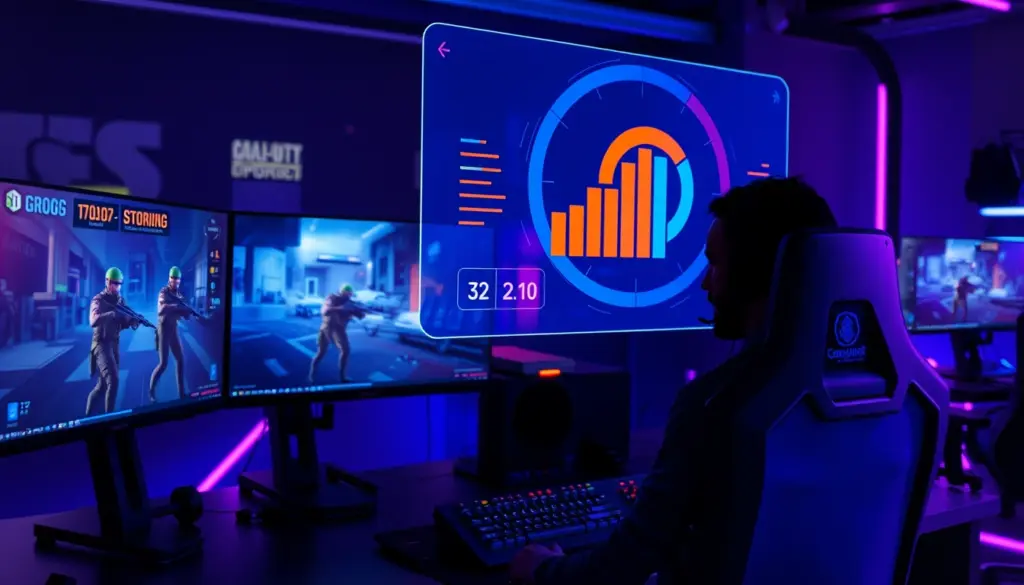
Riot Games shipped VALORANT Patch 13.06 on September 22, 2026, and buried inside the usual balance tweaks was the biggest change to how the game measures a player’s worth since launch. Average Combat Score, the stat players have used to brag, tilt, and argue over for six years, is gone. In its place sits Performance Score, a 0-500 number Riot says looks at more than kills and damage. The timing is not an accident: Champions Shanghai 2026 kicked off two days later, on September 24, putting the new scoring system in front of a global audience watching the sport’s biggest stage.
This is not a cosmetic reskin. Performance Score now decides who gets the MVP crown and how the post-match scoreboard sorts players, which means years of community shorthand (“he dropped a 300 ACS game”) stops meaning anything the moment the patch lands on a player’s client. Riot paired the scoring overhaul with a new per-agent progression system called Agent Mastery, a 2v2 limited-time mode called Gauntlet: Glitched, a merged Home and Lobby screen, and the ability to warm up in the Practice Range while sitting in queue. Taken together, Patch 13.06 is Riot’s attempt to answer a question competitive shooters keep circling back to: what number actually tells you if someone played well?
What Changed in VALORANT Patch 13.06
Patch 13.06 landed on September 22, 2026, and Riot billed it internally as “the big one,” according to the official VALORANT Patch Notes 13.06. The headline change is the swap from Average Combat Score to Performance Score, but the patch also shipped a new rifle called the Warden, the Agent Mastery progression track, Accolades, Rank Legacy, and a combined Home/Lobby interface. Riot also confirmed it banned more than 90,000 boosting accounts as part of the same update cycle, a figure the community-run tracker Valorant Updated posted directly from Riot’s own changelog summary.
None of this happened in isolation. Patch 13.05, released three weeks earlier on September 1, 2026, had already laid groundwork by introducing penalties for players caught using stream-sniping detection tools and instalock scripts, with punishments escalating from temporary suspensions to permanent bans for repeat offenders. That patch also reopened Pick’Ems for Champions Shanghai starting September 10, signaling Riot was already building toward the Shanghai event when it finalized the bigger systems overhaul in 13.06.
| Feature | What It Replaced or Added | Modes Affected |
|---|---|---|
| Performance Score | Replaces Average Combat Score (ACS) for MVP and scoreboard ranking | Competitive, Unrated, Swiftplay, Premier |
| Agent Mastery | New per-agent progression track with Current-Act and all-time levels | All agent selections |
| Gauntlet: Glitched | New limited-time 2v2 mode with ability drafting across 8 duos | Limited-time queue |
| Home/Lobby merger | Combines two separate screens into one navigation hub | Client-wide |
| Practice Range in queue | Lets players warm up while waiting for a match to be found | All queue types |
| Warden rifle | New weapon added to the in-game arsenal | All modes with gunplay |
| Accolades & Rank Legacy | New post-match recognition and historical rank tracking features | Competitive |
Performance Score Explained: How the 0-500 Scale Works
Performance Score runs on a 0-500 scale and is calculated per match rather than tracked across a season. Riot’s own description, pulled straight from the patch notes, frames the goal plainly: “Performance Score is a 0-500 number that measures more than just damage and kills to paint a fuller picture of your contributions to a match,” according to Riot Games’ official patch notes. The system is live across four modes: “Performance Score is available in Competitive, Unrated, Swiftplay, and Premier,” the same patch notes confirm.
The practical change players will notice first is on the end-of-game screen. Riot’s patch notes state that “Your MVP and Scoreboard position in these modes are now determined by Performance Score,” which means the old habit of scanning a lobby for the highest kill count no longer tells the full story of who Riot’s system considers the best performer. The end-of-game breakdown now shows a factor-by-factor explanation of what fed into the score, a transparency step Riot added specifically so players can see what moved the number instead of guessing.
Riot used its official X account to clarify intent beyond the patch notes themselves during a post-launch AMA recap. The account explained that “the new performance score is designed to help a player know how good they are at contributing to a win, i.e, players who average higher performance scores are also probably more likely to win,” according to the official VALORANT X account. Crucially, Riot was careful to frame this as a correlation rather than a guarantee, adding in the same thread that “it’s not a causal score, it correlates.” That distinction matters for anyone tempted to treat Performance Score as a hard skill rating: Riot is explicitly not claiming the number causes wins, only that it tends to track alongside them.
Why Riot Killed Average Combat Score (ACS)
ACS had been VALORANT’s public combat metric since the game’s 2020 launch, built heavily around damage dealt, kills, and multi-kill events within a round. The problem, and the one Riot is implicitly addressing with Performance Score, is that ACS rewarded fragging over almost everything else. A Sage who stalled a site with a wall and healed three teammates back to full health could finish a round with a near-zero ACS contribution next to a duelist who got three cheap kills in a lost cause. Performance Score is Riot’s attempt to credit the kind of play that wins rounds but doesn’t show up on a damage meter: information gathering, site control, trade setups, and utility usage.
It’s worth being precise about what Riot has and hasn’t published here. The patch notes describe the scale, the modes it covers, and its new role determining MVP and scoreboard order. They do not publish the exact weighting formula behind the score, meaning players and analysts can observe outcomes but can’t yet reverse-engineer precisely how much a smoke, a flash assist, or a defused spike is worth relative to a kill. That opacity is the same trade-off every competitive game makes when it introduces a hidden or semi-hidden performance metric, and it’s the detail most likely to generate community debate over the coming weeks as players compare their own Performance Score results against their gut sense of how a match went.
Agent Mastery: A New Progression Layer
Separate from the scoring change, Patch 13.06 introduced Agent Mastery, a per-agent progression system that tracks how much a player has invested in a specific character over time. Each agent gets its own Current-Act level and an all-time level, alongside a reward track and an Agent ID that functions as a visible marker of specialization. Players keep any Agent Gear they had already unlocked before the patch, and future gear unlocks continue to run on Kingdom Credits, the same currency structure Riot introduced earlier in the year.
The design tension here is one Riot will have to watch closely. A visible mastery track rewards players for sticking with an agent, which is good for players who genuinely enjoy learning Jett or Killjoy in depth. It can also create pressure to pick an agent for the progression grind rather than because the team composition needs it, the same one-tricking problem that role-queue and hero-mastery systems have produced in other competitive games for years. For players chasing rank climbs rather than cosmetic grinds, our guide to climbing VALORANT ranks breaks down how agent flexibility still affects matchmaking outcomes even with mastery tracks layered on top.
Gauntlet: Glitched — Riot’s 2v2 Draft Experiment
Gauntlet: Glitched is the most structurally different addition in Patch 13.06. It pits eight duos against each other in 2v2 battles where players draft abilities pulled from different agents and upgrade those abilities as the bracket progresses. That draft-and-upgrade loop makes the mode closer to a compact arena brawler than standard VALORANT, since abilities are no longer locked to the normal one-agent-per-player framework. It’s a sandbox for combinations Riot would never ship in ranked play, and its staying power will hinge on queue times and whether certain ability combinations end up dominating the draft pool.
Limited-time modes like this one typically serve two purposes for Riot: they give the live-service calendar something fresh between acts, and they let the design team stress-test ability interactions at a scale too chaotic for Competitive. Whether Gauntlet: Glitched becomes a recurring fixture or a one-off experiment will likely depend on engagement numbers Riot hasn’t published yet.
Combined Home/Lobby and Practice Range in Queue
The interface side of 13.06 merges what used to be two separate screens, Home and Lobby, into a single hub for queueing, party management, and mode selection. Riot’s stated goal is cutting down the number of clicks between opening the client and getting into a match. The more immediately useful change for competitive players is the ability to enter the Practice Range while sitting in queue, which turns dead matchmaking time into aim warmup time instead of a static loading screen.
What This Means for Pre-Match Routines
Pros and grinders alike have long complained about the dead time between accepting a match and the round actually starting cold. Queue-time Range access doesn’t eliminate that gap, but it shifts the player’s last few minutes before a match from passive waiting to active warmup, which could shave a small but real edge off the early-round sluggishness that’s long been a talking point in post-plant and retake discussions, the same dynamics covered in our look at post-plant utility stalls in pro VALORANT.
How Performance Score Compares to League of Legends LP
League of Legends’ LP system and VALORANT’s new Performance Score are solving different problems, even though both produce a number after a match. LP is a ranked-progression currency: win, gain LP and move toward promotion; lose, drop LP regardless of how well an individual player performed. Performance Score doesn’t touch rank progression directly. It’s a per-match contribution estimate that determines MVP and scoreboard order, sitting alongside VALORANT’s existing Rank Rating and hidden MMR rather than replacing either of them.
That distinction explains a common frustration in ranked shooters and MOBAs alike: a player can carry individual performance in a losing game and still see their rank slide. Performance Score won’t change that outcome in VALORANT’s case, since RR still follows win/loss, but it does give players a public number that credits their effort independent of the scoreboard’s final result, something LP was never designed to do.
VALORANT vs CS2: Two Different Rating Philosophies
Counter-Strike 2’s Premier mode uses a visible CS Rating tied directly to matchmaking and ladder progression, making it functionally closer to VALORANT’s RR/MMR pairing than to the new Performance Score. CS2 still exposes raw combat stats like ADR, kills, and opening-duel data, but it has never bundled those into a single post-match score the way VALORANT’s Performance Score now does. The result is two different philosophies sitting side by side in the tactical shooter genre: CS2 leans on a visible ladder rating as the primary identity marker, while VALORANT is layering a match-level performance number on top of its existing rank system without replacing it. Readers who want the tier-by-tier breakdown of how CS2’s ladder stacks up against VALORANT’s older ranked structure can check our VALORANT Ranks vs CS2 Ranks comparison, and for how CS2’s own rank history evolved, our piece on CS2 Premier vs CS:GO Ranks covers Valve’s own system overhaul.
Valve has shown its own appetite for mid-life system changes recently too, having shipped its first new competitive mode in three years alongside changes to map veto, detailed in our coverage of CS2’s veto overhaul and new Rush mode. The pattern across both games is the same: live-service shooters keep tweaking the stats layer years after launch because the original systems were built before either studio had years of match data to learn from.
VALORANT vs Overwatch 2: Role Ratings vs Match Scores
Overwatch 2’s competitive system is built around role-specific skill rating, meaning a player’s standing is tied to the role queue they play rather than a single account-wide number. That’s a meaningfully different approach from what Riot shipped in 13.06. Agent Mastery tracks a player’s history with individual agents, but it doesn’t create a separate competitive rating per role the way Overwatch 2 does. Performance Score, meanwhile, answers a narrower question than either system: not “how strong is this player in this role,” but “how much did this player contribute in this specific match.” None of VALORANT’s three layers, rank, Performance Score, and Agent Mastery, map cleanly onto Overwatch’s single role-rating approach, which makes direct side-by-side comparisons tricky without flattening what each system is actually trying to measure.
| Game | Primary Rating System | What It Measures | Resets |
|---|---|---|---|
| VALORANT | Rank Rating (RR) + Performance Score | Ladder progression (RR) and per-match contribution (Performance Score) | Act-based resets |
| CS2 (Premier) | CS Rating | Visible ladder rating tied to matchmaking | Periodic seasonal adjustments |
| League of Legends | League Points (LP) | Win/loss-driven ranked ladder progression | Seasonal soft resets |
| Overwatch 2 | Role-based Skill Rating (SR) | Per-role competitive standing | Seasonal resets per role |
Historical Context: Riot’s Long History of Ranking Tweaks
Patch 13.06 is not the first time Riot has reworked how VALORANT measures players, but it is the most structural change to the public-facing performance stat since ACS debuted during the game’s 2020 launch window. Riot has repeatedly adjusted Rank Rating gain and loss around rank disparity and promotion thresholds, tuned how quickly a player’s visible rank converges with their underlying hidden MMR, and reset progression at the start of new episodes and acts. Those changes altered how fast players moved through the ladder. Performance Score is different in kind: it doesn’t touch how rank is earned, it replaces the public stat players used to judge individual performance within a match.
That history matters for setting expectations. Riot has shown it’s willing to revisit ranking and scoring systems repeatedly rather than treating launch-era decisions as permanent, a pattern also visible in the back-to-back Patch 13.05 and 13.06 cadence, where anti-boosting enforcement and a scoring overhaul landed three weeks apart heading into the game’s biggest tournament of the year.
Champions Shanghai 2026: The Stakes Behind the Timing
VALORANT Champions 2026 runs in Shanghai, China, with 16 teams from the world’s top regions competing for a reported total prize pool of $2,250,000, according to tournament tracking site VLR.gg. The reported distribution sends $1,000,000 to the champion, $400,000 to the runner-up, and $250,000 to third place, scaling down to $20,000 for teams finishing 13th through 16th. Event listings from VLR.gg and The Spike both list the event running from September 24 through October 18, 2026, though a Shanghai municipal government events page lists an October 11 closing date, a discrepancy worth flagging until Riot’s own event hub resolves it.
Shipping a scoring overhaul two days before the sport’s biggest event isn’t a coincidence Riot is hiding. Pros, analysts, and broadcast talent will be using Performance Score live on the Champions Shanghai stage almost immediately after it replaced a six-year-old stat, which means the system’s first real stress test happens in front of the largest audience VALORANT draws all year. Franchised league viewership patterns around VCT events have already shaped how Riot times major content drops, a dynamic our coverage of Valorant Champions 2026’s viewership numbers explores in more detail.
Market Impact: What This Means for Players, Pros, and the Esports Economy
For casual and ranked players, the immediate impact is behavioral. Years of chasing a high ACS number trained a generation of VALORANT players to prioritize kills and damage above almost everything else. If Performance Score genuinely credits utility, trades, and site control the way Riot describes, expect a visible shift in how support and controller agents get played, particularly among players climbing through mid ladder where MVP bragging rights still carry social weight in party chat and post-match lobbies.
What Pros and Analysts Will Watch
For the pro scene, the stakes are different. Professional coaches and analysts already run internal statistics far more granular than any public-facing score, built from round-by-round video review and proprietary tracking. Performance Score is unlikely to replace that internal analysis, but it will shape how broadcast talent frames individual performances on stream, how fans argue about MVP snubs, and how org-run social accounts market standout players after a series. A metric that’s opaque in its exact formula but highly visible on every scoreboard is a recipe for ongoing community debate rather than a settled question, especially once Champions Shanghai generates its first batch of high-profile Performance Score outliers.
There’s also a quieter economic angle. The 90,000-plus boosting account bans that shipped alongside 13.06 signal Riot is treating account integrity and competitive trust as part of the same package as the scoring overhaul. A scoring system only matters if the ladder underneath it is clean, and Riot appears to be positioning Patch 13.06 as a trust-rebuilding moment on two fronts at once: how performance is measured, and who’s allowed to compete for rank in the first place.
Predictions: Where VALORANT’s Ranking System Goes Next
A few trends seem likely to play out over the coming acts. First, expect Riot to publish follow-up communication clarifying how Performance Score weighs specific actions, especially if Champions Shanghai produces controversial MVP calls that fans dispute on stream. Riot has a track record of responding to competitive-integrity criticism with public explainers, and a high-profile event is exactly the kind of pressure that forces transparency.
Second, Agent Mastery will likely need balance adjustments if one-tricking becomes a visible problem in Competitive queues, since Riot has historically preferred flexible agent pools over rigid specialization in its ranked design philosophy. Third, Gauntlet: Glitched’s future as a recurring mode rather than a one-off experiment will depend heavily on engagement data Riot hasn’t shared yet, and its survival into the next act would signal Riot sees real value in abnormal, draft-based formats as a retention tool between major content drops.
A Template Other Shooters Might Borrow
Fourth, expect rival shooters to watch Performance Score’s reception closely. If it lands well, a match-level contribution score that sits alongside (not instead of) a traditional rank ladder could become a template other tactical shooters borrow, the same way battle royale titles converged on similar ranked-tier structures years ago. Fifth, and most immediately, Champions Shanghai running through October 18 means the community will have a full month of top-tier matches to stress-test whether Performance Score actually correlates with winning the way Riot claims, giving analysts a real dataset within weeks rather than months.
Frequently Asked Questions
What replaced Average Combat Score in VALORANT?
Performance Score, a 0-500 rating introduced in Patch 13.06 on September 22, 2026, replaced ACS for determining MVP status and scoreboard order.
Which VALORANT modes use Performance Score?
Riot’s patch notes confirm Performance Score is live in Competitive, Unrated, Swiftplay, and Premier.
Does Performance Score affect my competitive rank directly?
No. Rank Rating and hidden MMR still govern ladder progression. Performance Score is a separate per-match contribution metric used for MVP and scoreboard placement.
What is Agent Mastery in VALORANT?
Agent Mastery is a per-agent progression system introduced in Patch 13.06 that tracks Current-Act and all-time levels, a reward track, and an Agent ID for each agent a player uses.
What is Gauntlet: Glitched?
It’s a limited-time 2v2 mode added in Patch 13.06 where eight duos draft and upgrade abilities pulled from different agents over the course of a match.
When is VALORANT Champions 2026 and what’s the prize pool?
Champions Shanghai 2026 features 16 teams competing for a reported $2,250,000 prize pool, running September 24 through October 18, 2026 according to VLR.gg and The Spike, though one Shanghai municipal listing shows an October 11 end date.
How is Performance Score different from League of Legends LP or Overwatch 2 SR?
LP and SR are ladder-progression systems tied to wins and losses. Performance Score is a per-match contribution score that doesn’t directly move a player’s rank, making it closer to a detailed stat breakdown than a ranking currency.
Did Riot publish the exact Performance Score formula?
No. Riot’s patch notes describe the scale, the modes it covers, and its role in determining MVP and scoreboard order, but the precise weighting of individual actions hasn’t been published.
Related
- How to Climb Valorant Ranks: 25 Tiers, 12 Steps [2026]
- Valorant Ranks vs CS2 Ranks: 25 Tiers vs 18 [2026]
- Valorant Champions 2026 Hits 695K, Ends VCT Era [2026]
- Post-Plant Utility Stalls Punish Fast Retakes In Pro Valorant
- CS2 Kills Map Veto, Ships First New Mode in 3 Years [2026]