Unity Software wants developers to stop treating game engines like rival tribes. On July 21, 2026, at the Unite Seoul keynote, the company unveiled Unity 7 and, in the same breath, showed something that would have sounded like a joke a year earlier: a Unity-built game rendering natively inside Unreal Engine, in real time, with no video stream and no compositing trick behind the curtain. Six weeks later Unity posted its strongest quarterly numbers in years. The two events are connected, and together they mark the most consequential shift in game-engine strategy since Unity’s 2023 Runtime Fee fiasco.
This is a news analysis of what actually happened, what Unity and Epic Games have confirmed versus what remains a roadmap promise, and why a decades-old rivalry between the two biggest engines in gaming just got a lot more complicated. For readers weighing engine choices or watching the business side of game development, the details matter more than the headline.
What Unity Announced at Unite Seoul 2026
Unity CEO Matthew Bromberg used the Unite Seoul stage to frame Unity 7 as a generational leap rather than an incremental patch. “The next-generation ‘Unity 7’ game engine is a platform optimized for the AI era of game development,” Bromberg said, adding that the future of development would be led not by the biggest studios but by “the teams that make the best use of technology.”
Unity’s own recap of the keynote lays out the pitch in blunter terms. Bromberg described Unity 7 as “designed as an open, collaborative platform where developers, artists, producers, and coding agents can work together across the full development lifecycle,” according to Unity’s official keynote recap. That phrase, “coding agents,” is doing real work here. Unity is explicitly building Unity 7 around AI-assisted and agentic workflows, not just human developers clicking through the editor.
Crucially, Unity is not asking studios to relearn their tools. Bromberg told the Seoul crowd there would be “no breaking changes, no new language to learn, none of the traditional upgrade headaches,” calling Unity 7 “a direct continuation of Unity 6,” per the same Unity keynote recap. That messaging is deliberate. Unity is still recovering trust after the 2023 Runtime Fee backlash, and a smooth, low-friction upgrade path is the opposite of the surprise-fee approach that cost it goodwill three years ago.
The company says Unity 7 will ship in preview or early beta form in December 2026, with a full production release targeted for the first quarter of 2027. As of September 30, 2026, Unity 7 has not shipped to production, and any specs described publicly should be read as roadmap commitments rather than shipped features.
The Unity-Unreal Interoperability Demo, Explained
The moment that generated the most engineering-world buzz wasn’t a slide, it was a live demo. James Stone, Unity’s senior director of technical product management, introduced it directly. “You will see, for the first time, a Unity game rendering natively inside Unreal Engine,” Stone said on stage.
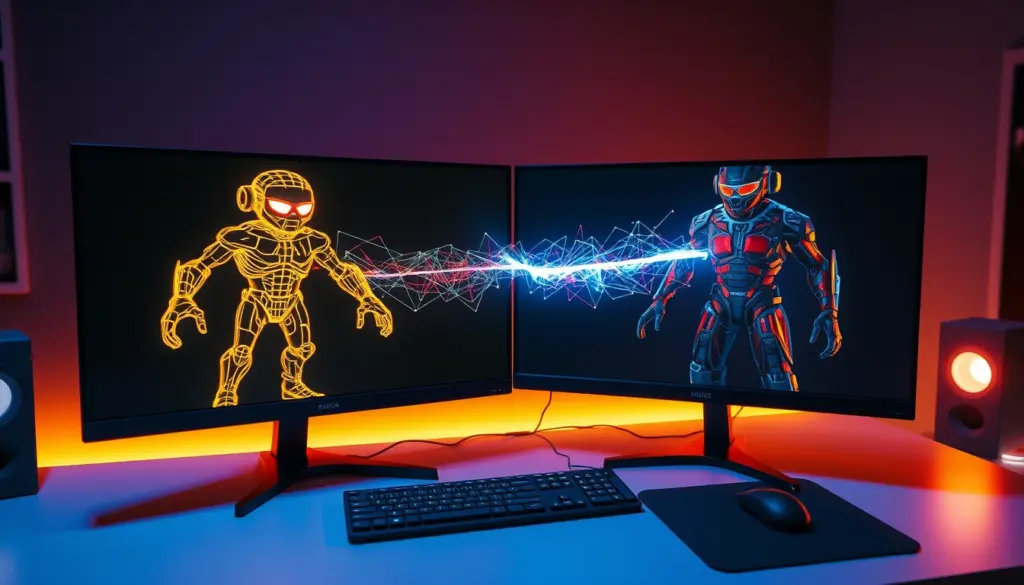
Stone was careful to head off skepticism before it started. “What you’re seeing here is a game simulated in Unity, rendered with Unreal. Now, that’s not video streamed, there’s no smoke and mirrors. This is all real time,” he told the audience, according to the same PC Gamer report. In the demonstration, Unity handled game simulation while Unreal Engine handled real-time rendering, with physics, lighting, and input synchronized live between the two engines.
The plumbing behind the trick is a client-server protocol Unity calls PolySpatial, which the company says also supports multiplayer workflows beyond the cross-engine demo. Unity paired the reveal with a deepened partnership with Meta, aimed at making development for Quest and other VR headsets faster to pick up and build for.
Coverage from Game Developer framed the reveal around a related tension: Unity is simultaneously courting generative-AI tooling while trying to reassure studios they can opt out of how much AI touches their pipeline. That balancing act, more open ecosystem plus AI-native tooling plus zero forced migration, is the throughline of Unity’s entire 2026 pitch.
What PolySpatial Actually Syncs
Unity has described PolySpatial as a protocol rather than a plugin, meaning it’s built to negotiate state between two independent engine runtimes instead of embedding one engine’s renderer inside the other as a wrapper. That distinction matters for anyone assessing how durable this demo is likely to be outside a scripted keynote. A true client-server sync has to handle latency, frame pacing, and physics divergence in ways a pre-baked video capture never has to.
Why Unity Needs This Narrative Now
Unity spent 2024 and 2025 rebuilding credibility with developers after the Runtime Fee episode. A demo that shows Unity content working inside a competitor’s engine, instead of locking developers into a walled garden, is a pointed signal that the company has shifted its posture from extraction to openness. Whether that message converts into actual studio adoption is a separate question from whether the demo itself was technically real.
Unity’s Financial Turnaround Behind the Scenes
The Unity 7 reveal landed roughly two weeks before Unity’s second-quarter 2026 earnings report, and the numbers gave the announcement some financial weight. Unity reported Q2 2026 revenue of approximately $546 million for the quarter ended June 30, 2026, up about 24% year over year from roughly $440.9 million in Q2 2025.
Strategic revenue, Unity’s category for its core engine and monetization business, reached approximately $486 million, up about 38% year over year. Within that, Strategic Grow revenue (Unity’s ad and monetization tooling) climbed roughly 63% to about $329 million, while Create Solutions revenue, the engine and developer-tools side, grew a more modest 2% to around $158 million. Net loss narrowed sharply to about $23 million, down from a loss of roughly $107-108 million a year earlier. Adjusted EBITDA rose to approximately $160 million, about a 29% margin, up from roughly $90-91 million in the prior-year quarter.
Free cash flow came in around $202 million, up from about $127 million, and adjusted earnings per share rose to roughly $0.28 from $0.18. Unity guided Q3 2026 strategic revenue to approximately $540-550 million. The company is still restructuring. It disclosed plans to close its Unity France operations and reported about $38 million in employee-separation costs in the first half of 2026, alongside a suspension of its Employee Stock Purchase Plan starting in Q1 2026.
| Metric (Q2 2026, ended June 30) | Result | Year-over-year change |
|---|---|---|
| Total revenue | ~$546 million | +24% (vs. ~$440.9M in Q2 2025) |
| Strategic revenue | ~$486 million | +38% |
| Strategic Grow revenue | ~$329 million | +63% |
| Create Solutions revenue | ~$158 million | +2% |
| Net loss | ~$23 million | Improved from ~$107-108M loss |
| Adjusted EBITDA | ~$160 million (~29% margin) | Up from ~$90-91 million |
| Free cash flow | ~$202 million | Up from ~$127 million |
| Adjusted EPS | ~$0.28 | Up from $0.18 |
| Q3 2026 strategic revenue guidance | ~$540-550 million | Forward guidance, not yet reported |
Unity trades on the New York Stock Exchange under the ticker NYSE: U. The company has not publicly disclosed a specific stock-price move tied directly to the Unity 7 announcement itself, and any claim of a Unity-7-driven share swing should be treated as unconfirmed until Unity or a filing states it directly.
Where Unity 7 Fits in the Engine’s History
To understand why Unity is emphasizing continuity so heavily, it helps to remember what came before. In September 2023, Unity announced a proposed per-install Runtime Fee that would have charged developers based on game installations rather than revenue. Studios revolted almost immediately, citing fears of billing based on fraudulent installs, retroactive exposure on already-shipped games, and existential risk to free-to-play and charity-bundle titles. Unity revised the policy within the same month, then announced further changes in January 2024 that removed the fee from certain runtime versions and limited it to games clearing specific revenue and install thresholds.
That controversy shaped every major Unity announcement since. Unity 6 became the company’s current-generation engine, and its most recent stable release line, Unity 6.4, was identified by CG Channel as the newest Unity engine and real-time-renderer build as of March 2026. Unity also shipped smaller updates in July 2026 alongside the Unity 7 reveal, including Input System 1.20.0 and Unity Hub 3.20.0, according to Unity’s developer-community update channel.
Unity’s messaging around Unity 7, no breaking changes, same architecture as Unity 6, is best read against that backdrop. A company that alienated its developer base with a surprise fee structure in 2023 is now selling the opposite promise: the biggest engine upgrade in years, delivered without forcing anyone to touch a migration guide.
Unreal Engine and Godot: The Competitive Picture
Unity isn’t operating in a vacuum. Epic Games has continued moving its own engine forward in 2026, having announced Unreal Engine 6 and unveiled Unreal Engine 5.8 at its own State of Unreal event this year, positioning Unreal’s next major version as a parallel competitive story to Unity 7’s December preview. Epic’s pitch has historically centered on cutting-edge rendering fidelity, built around technologies like Nanite and Lumen, while Unity has leaned on breadth across mobile, indie, and cross-platform development.
Godot, the open-source alternative both companies watch closely, continues to grow as a lower-friction option for indie and hobbyist developers who want to avoid licensing terms tied to either commercial engine. Godot’s appeal has always been philosophical as much as technical. There are no seat fees, no revenue thresholds, and a community governance model neither Unity nor Epic can fully replicate.
What makes the Unity-Unreal interoperability demo notable is that it cuts against the usual competitive logic. Engines compete for exclusive developer loyalty because switching costs are enormous. Entire pipelines, asset formats, and shader systems get built around one engine’s assumptions, and studios rarely want to redo that work. A protocol like PolySpatial, if it matures beyond a keynote demo, chips away at that lock-in by letting a studio simulate gameplay in one engine while rendering in another. That’s a genuinely unusual move for an industry built on walled gardens.
| Engine | 2026 status | Licensing model | Primary strength |
|---|---|---|---|
| Unity 7 | Announced July 21, 2026; preview targeted December 2026; full release targeted Q1 2027 | Subscription/revenue-tiered (post-2024 Runtime Fee revision) | Mobile breadth, cross-platform reach, AI-native tooling push |
| Unreal Engine 5.8 / 6 | Unreal Engine 6 announced; Unreal Engine 5.8 unveiled at State of Unreal 2026 | Royalty-based on commercial revenue above a threshold | High-fidelity rendering (Nanite, Lumen lineage) |
| Godot | Actively developed open-source project | Free, MIT license, no royalties | Zero licensing cost, community governance |
Market Impact: What This Means for Studios
For studios currently locked into Unity, the “no breaking changes” promise is the headline that matters more than the interoperability demo. Migration cost is the single biggest factor keeping mid-size and large studios from switching engines mid-project, and Unity is explicitly trying to remove that friction as a reason to leave. If Unity 7’s architecture genuinely mirrors Unity 6’s, as Bromberg claimed, studios evaluating a jump to Unreal or Godot lose one of their strongest arguments for staying put with the status quo, since staying put now means staying on a supported upgrade path rather than a stagnant one.
For studios building cross-platform or VR titles, the deepened Meta partnership is arguably more immediately useful than the Unreal demo. Faster onboarding for Quest development addresses a real pain point. VR tooling has historically lagged behind flat-screen development in both engines, and any concrete improvement there affects shipping timelines more directly than a rendering-interop showcase.
Unity’s improving financials also change the calculus for studios worried about vendor stability. A company posting 24% revenue growth and a narrowing net loss is a safer long-term bet than one still bleeding cash, and Unity’s Q2 2026 numbers give risk-averse studio leads a reason to trust that Unity 7 will actually ship on the stated timeline rather than get shelved mid-restructuring.
The AI-Native Framing Deserves Scrutiny
Unity’s language about Unity 7 being built for “coding agents” alongside human developers is one of the more aggressive AI positioning statements from a major engine vendor to date. It’s also the part of the pitch with the least concrete detail attached. Unity has not published specifics on what agentic tooling inside the Unity 7 editor will actually do, how it will handle asset ownership or licensing for AI-generated content, or how it addresses the same generative-AI anxieties that Game Developer’s coverage flagged. Many studios want the option to use AI tooling selectively, not have it embedded by default across their pipeline.
Unity separately claimed that shader-compilation improvements tied to its July 2026 update direction could reach up to 90%, a figure that should be treated as a company-sourced performance claim rather than an independently verified benchmark until third-party testing on shipped Unity 7 builds becomes available in preview.
Historical Context: Engine Wars Have Happened Before
The Unity-Unreal rivalry dates back well over a decade, with each engine trading dominance in different segments. Unity built its base in mobile and indie development through free-tier access, while Unreal built its reputation on AAA visual fidelity and its royalty-only licensing model, which charges nothing until a title crosses a revenue threshold. Godot’s rise over the past several years added a third option built explicitly around avoiding both companies’ commercial terms altogether.
What’s different in 2026 is the direct technical cooperation between the two commercial leaders. Historically, engine interoperability efforts came from middleware vendors trying to sit between engines, not from the engine makers themselves demonstrating cross-rendering on a keynote stage. Unity choosing to showcase this alongside its own next-generation engine, rather than treat Unreal purely as a competitor to be walled off from, suggests both companies see more value in interoperability for specific workflows, like asset exchange and hybrid rendering pipelines, than in maintaining strict silos.
What to Watch Before Unity 7’s December Preview
Several open questions will determine whether Unity 7 lives up to its Seoul framing once the December preview arrives. First, whether the “no breaking changes” promise holds for large, already-shipped Unity 6 projects, not just for new projects started fresh in Unity 7. Second, whether PolySpatial’s Unity-into-Unreal rendering pipeline works reliably outside a curated keynote demo, across a range of hardware and project complexity. Third, whether Unity’s AI-native tooling ships with clear controls for studios that want to limit or disable agentic features entirely, addressing the concern Game Developer’s coverage raised directly.
Fourth, whether Epic responds with its own interoperability move for Unreal Engine 6, or treats Unity’s demo as a one-off talking point. And fifth, whether Unity’s Q3 2026 earnings, expected several weeks after this article, confirm the growth trajectory shown in Q2 or reveal restructuring costs, including the Unity France closure, eating further into the improved margins.
Predictions for the Next Two Quarters
- Unity 7’s December 2026 preview will likely ship with a narrower feature set than the full Q1 2027 release, given how often engine preview builds trail their announced roadmaps.
- Expect Epic Games to publish its own interoperability or asset-exchange announcement within two to three months, positioning it as a response to the PolySpatial demo rather than ceding the openness narrative to Unity.
- Unity’s Q3 2026 earnings call will likely address restructuring costs tied to the Unity France closure directly, given how closely analysts are watching margin trends after Q2’s sharp improvement.
- Studios building VR or mixed-reality titles for Quest are the most probable early adopters of Unity 7’s Meta-linked tooling, ahead of broader engine-wide adoption.
- Expect continued scrutiny of Unity’s generative-AI positioning from developer communities still wary after the 2023 Runtime Fee episode, particularly around opt-out controls for AI-assisted tooling.
How This Compares to Past Unity Announcements
Unity has followed a consistent pattern of pairing major engine announcements with trust-rebuilding messaging since 2023, and Unity 7 fits that pattern closely. Where the Runtime Fee rollout was defined by unilateral changes announced with minimal developer input, Unity 7’s rollout leans on continuity language, an open cross-engine demo, and a deepened platform partnership with Meta, rather than a new monetization mechanism. That contrast is likely intentional messaging discipline from a company that knows its developer base is still cautious.
It’s also worth noting that Unity’s Q2 2026 financial recovery gives this announcement more credibility than a similar reveal would have carried during Unity’s 2023-2024 trust deficit. A financially stronger Unity is better positioned to actually deliver on a December preview and Q1 2027 release than a company still absorbing the fallout of a developer revolt.
The Bottom Line for Developers
Nothing about Unity 7 has shipped yet, and studios should treat everything short of the December preview as a roadmap commitment, not a product. But the direction is clear. Unity is betting its next engine generation on AI-native workflows, cross-engine openness, and zero-friction upgrades, all framed explicitly against the memory of its 2023 misstep. Whether Epic answers with its own interoperability push, and whether Unity 7 actually delivers a smooth Unity 6 migration at scale, will shape which engine developers trust with their next multi-year project.
Frequently Asked Questions
When is Unity 7 releasing?
Unity says a preview or early beta version will arrive in December 2026, with a full production release targeted for the first quarter of 2027. As of this writing, Unity 7 has not shipped to production.
Will Unity 7 require migrating existing Unity 6 projects?
Unity says no. CEO Matthew Bromberg described Unity 7 as a direct continuation of Unity 6’s architecture, with no breaking changes and no new language to learn, according to Unity’s own keynote recap.
What was the Unity-Unreal Engine demo actually showing?
A live, real-time demonstration where a game was simulated in Unity while rendered using Unreal Engine’s renderer, with physics, lighting, and input synchronized between the two engines through a protocol Unity calls PolySpatial. Unity says it was not a pre-recorded video.
Is Unity 7 built around AI coding tools?
Unity has described Unity 7 as designed for collaboration between developers, artists, producers, and what Bromberg called “coding agents,” positioning it as built for what the company calls the AI era of game development. Specific feature details have not yet been published.
How is Unity performing financially in 2026?
Unity reported Q2 2026 revenue of approximately $546 million, up about 24% year over year, with net loss narrowing to roughly $23 million from about $107-108 million a year earlier. The company is still restructuring, including plans to close its Unity France operations.
What is PolySpatial?
PolySpatial is the client-server protocol Unity used to sync simulation state from a Unity-run game into Unreal Engine’s rendering pipeline during the Unite Seoul demo. Unity says the same protocol also supports multiplayer workflows.
Has Epic Games responded to the interoperability demo?
No specific Epic Games response to the Unity-Unreal demo had been publicly reported as of September 30, 2026. Epic has continued its own roadmap in parallel, including Unreal Engine 6 and Unreal Engine 5.8.
Is Godot a realistic alternative to Unity or Unreal in 2026?
Godot remains a free, open-source, royalty-free option that continues active development and appeals particularly to indie and hobbyist developers wary of both commercial engines’ licensing terms, though it lacks the scale of Unity’s or Unreal’s AAA and enterprise tooling.
Related
- Rocket League Skips 2 Engines, Jumps UE3 to UE6
- Epic Kills MetaHuman Creator Web App: Nov. 5
- Nvidia RTX Mega Geometry 2.0 Streams Detail, Cuts VRAM 1GB
- CESA: 85.8% of Japan Game Devs Use Generative AI
- Desktop GPU Shipments Hit 12.5M, Nvidia Takes 90%