
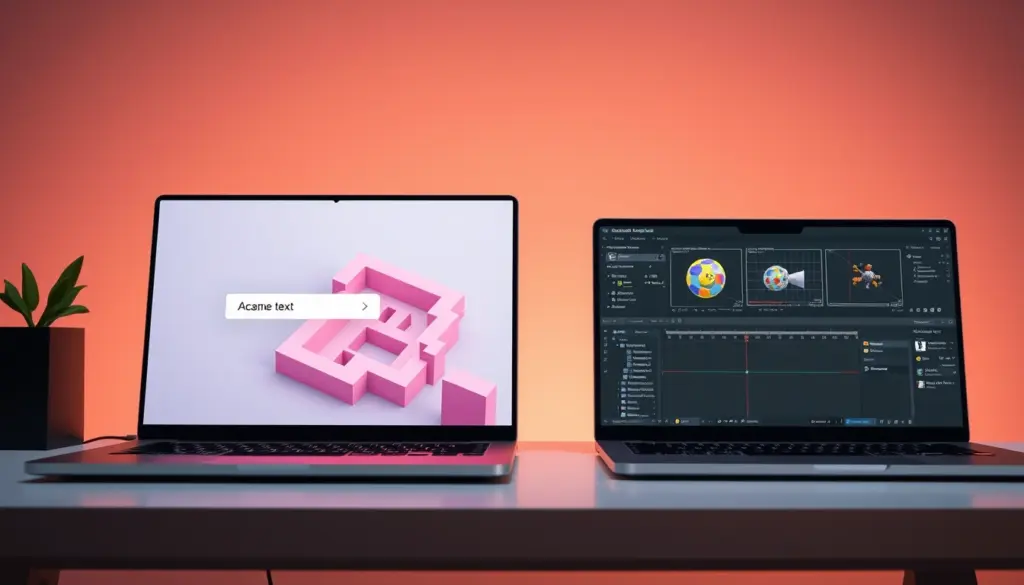
Google and Unity announced a strategic partnership on October 7, 2026, introducing an AI-driven path to building playable games without writing a line of code. The companies framed it as a shift in who gets to make games, not just how fast they get made. Unity’s press release described the effort as a platform for “the next era of interactive entertainment,” built around two connected products: Google’s experimental Playground, live immediately, and Unity Spark, a browser-based creation tool due later in 2026.
The announcement lands at a strange moment for Unity. The engine maker is still working through the fallout of its 2023 pricing controversy, fighting an active lawsuit from ad-tech rival AppLovin, and trying to convince indie developers it has moved past the runtime-fee era for good. Pairing with Google on a no-code AI tool is a bet that the next wave of game creators will come from prompts, not from years of engine training. Whether that bet pays off will shape Unity’s business, and a meaningful slice of the broader gaming industry, for the rest of the decade.
What Google Playground Actually Does, and Why It Launched First
Playground is the part of the partnership available right now. Per Unity’s own press release, it “allows users (18+) to generate and customize playable games using natural language prompts, with no coding required.” A user types a description of a game idea, and Playground turns that description into something playable in the browser, with further prompts used to tweak mechanics, visuals, or rules.
“Playground lowers the barriers to creation, so bringing game ideas to life can now be as easy as describing it through a few prompts, no coding experience required.”
Google, company blog statement (source)
That 18-and-over requirement is worth sitting with. Most mainstream game-creation tools aimed at casual users, from Roblox Studio to Fortnite’s Creative mode, skew toward teen and younger audiences. Gating an entire AI game maker to adults signals that Google is not yet confident in its content moderation for AI-generated output, or that it wants legal distance while the system is still labeled experimental. Google has not published a rationale for the age floor beyond calling Playground experimental.
Unity Spark: The Full Engine Version Coming Later in 2026
Playground is the demo. Unity Spark is the product Google and Unity actually want developers and casual creators to adopt long-term. Unity’s press release says the company will introduce Spark as “an expanded creation experience,” described directly in the following statement.
“Building on Playground, later this year Google and Unity will introduce an expanded creation experience called Unity Spark, a brand new product built from the ground up for a new generation of creators.”
Unity Technologies, company press release (source)
Unity CEO Matt Bromberg went further in comments reported by GamesBeat, pitching Spark as a social creation tool rather than a solo hobbyist app.
“Today, together with our partners at Google, we announced Unity Spark, a new way for people to come together to make and share games right in their browser, no prior Unity or game development experience required.”
Matt Bromberg, CEO of Unity (source)
Running in a browser matters here. Unity has spent two decades building an engine that exports to consoles, mobile, and PC, but Spark strips that complexity down to a web page. No installer, no SDK, no build pipeline. That is a direct answer to the friction that keeps casual creators away from Unity’s professional editor in the first place.
Who Builds What: Splitting the Work Between Google and Unity
The division of labor looks fairly clean on paper. Google supplies the generative AI models and the Playground distribution surface where finished games live. Unity supplies the parts that make a generated game actually function as a game: physics, rendering, and the runtime that turns a prompt into a playable 3D scene rather than a static demo.
“Unity Spark unlocks robust, professional-level mechanics, high-fidelity 3D capabilities, and the flexibility of the Unity runtime.”
Google, company blog statement (source)
That framing is a direct pitch to skeptics who assume AI-generated games will be throwaway toys. Unity is staking its engine’s reputation on the idea that Spark output can carry real mechanics, not just a visual shell. PocketGamer.biz reported that games built in Spark will be distributable through Google Playground, which gives Unity a built-in storefront it never had on its own.
From Prompt to Playable: How the Generation Pipeline Works
The workflow Google and Unity describe follows a simple loop: describe, generate, refine. A creator opens Playground or, later, Spark, types a plain-language description of the game they want, and the system generates a first playable draft. Follow-up prompts adjust specific elements, swapping art styles, changing rules, or adding new mechanics, without the creator touching a scripting language.
Example prompt style described by Google and Unity:
"Make a top-down maze game where the player collects keys
 and avoids patrolling guards. Add a day-night cycle."
-> Playground/Spark generates a playable draft
-> Follow-up prompts refine mechanics, art, and rules
That loop is familiar to anyone who has used an AI coding assistant to scaffold an app and then iterated with follow-up instructions. Applying the same pattern to full 3D game logic is a harder problem than generating a web form, since a game has to stay playable and consistent across every edit. Neither company has published benchmark data on how reliably Spark handles complex, multi-system edits, so that claim remains untested outside their own demos for now.
Distribution Through Playground Changes the Math for Small Creators
Discovery, not creation, has always been the harder problem for indie developers. Building a small game takes a weekend. Getting anyone to find it on the Apple App Store or Google Play, both crowded with millions of listings, can take years. By baking distribution into Playground itself, Google is promising to skip that step entirely for games made inside its own ecosystem.
That mirrors a pattern already playing out elsewhere in mobile gaming. YouTube Playables has expanded to more than 50 markets with zero in-app purchases, betting that frictionless, ad-free casual games keep people inside YouTube longer. Google is effectively running the same playbook twice: one platform for watching, one for creating, both designed to keep users from ever leaving a Google product. Mobile gaming as a category remains enormous. Mobile games generated $6.57 billion in a recent reporting period, with Roblox topping download charts, the exact audience Google and Unity are chasing with a tool that needs no engine experience at all.
Market Impact: Unity’s Rough Few Years Meet an AI Reset
Unity did not arrive at this partnership from a position of strength. The company spent much of 2023 and 2024 repairing trust with developers after a pricing change that briefly threatened to charge studios per game install, a plan it reversed only after widespread backlash across the industry. Matt Bromberg took over as CEO during that rebuilding period, and the Google partnership is one of the clearest signals yet of where he wants to take the company next: positioning Unity as the runtime underneath other companies’ AI products, rather than only selling engine licenses directly to studios.
Unity is also mid-lawsuit. AppLovin sued Unity over its Ad Quality SDK on October 2, 2026, accusing Unity of mishandling advertising data, a dispute that lands just days before the Google announcement. The timing is not necessarily connected, but it underscores that Unity is fighting on two fronts at once: defending its existing ad business while trying to build an entirely new AI creation business with Google as a partner. Unity has also been busy elsewhere in its roadmap, separately unveiling Unity 7, which lets games render inside Unreal Engine, and a plugin integration with xAI’s Grok Build announced in late September, giving Grok Build access to more than 30 Unity-specific skills, according to PocketGamer.biz. Spark is not a one-off experiment. It is one piece of a broader push to make Unity the connective layer between multiple AI companies and game creation.
Google’s Side of the Bet: One More AI Push Among Many
For Unity, Spark is a company-defining move. For Google, it is one AI product launch among a long run of them in 2026. Google has spent the year pushing AI into nearly every corner of its business, from a Gemini agent that links across three separate Google apps to a 50 percent price cut on its Nano Banana image-generation tool. Playground and Spark extend that pattern into game creation specifically, and the partnership lets Google test consumer appetite for AI-made games without building a game engine of its own from scratch.
That calculus matters for how seriously to take the partnership. Google is not betting its core business on Spark the way Unity is betting a meaningful share of its future. If Playground underperforms, Google can fold it back into an experimental lab and move on. Unity does not have that luxury. A no-code AI game maker that fails to find an audience would leave Unity’s leadership searching for its next pivot in an already difficult stretch for the company.
Competitive Landscape: How Spark Stacks Up Against Existing Tools
Google and Unity are not entering an empty market. Roblox Studio has let anyone build and publish playable experiences for years, YouTube Playables now runs ad-free casual games at scale, and open hosting sites like itch.io have long given solo developers a place to publish without an app-store gatekeeper. Spark’s pitch is narrower but sharper: skip the learning curve entirely by replacing manual building with prompt-based generation, backed by a professional-grade engine rather than a simplified block system.
| Platform | Coding Required | Underlying Engine | Built-In Distribution | Minimum Age |
|---|---|---|---|---|
| Unity Spark (Google/Unity) | No, prompt-based | Unity runtime | Google Playground | 18+ (Playground) |
| Google Playground | No, prompt-based | Google-built generation system | Playground itself | 18+ |
| Roblox Studio | Partial, Lua scripting | Roblox engine | Roblox platform | 13+ (Roblox platform) |
| YouTube Playables | No, developer-submitted games | Varies by developer | YouTube, 50+ markets | Not an authoring tool for end users |
| itch.io | Yes, for most listed games | Varies by developer | itch.io storefront | None specified for browsing |
Roblox remains the closest thing to an incumbent in prompt-free casual creation, but even Roblox Studio still expects users to learn Lua scripting for anything beyond basic templates. If Spark genuinely needs zero code for mechanics as complex as the ones Google and Unity are describing, it would sit in a category by itself. That claim has not yet been independently tested by outside developers at scale.
Historical Context: Unity’s Long Road From Engine Licensing to AI
Unity built its business for close to two decades on a straightforward model: license the engine, let studios ship on whatever platform they choose, and charge for premium tiers and services along the way. That model held through Unity’s 2020 public listing on the New York Stock Exchange and years of growth as the default engine for mobile and indie studios worldwide.
The 2023 Runtime Fee proposal broke that trust in a way the company is still recovering from. Charging developers per install, retroactively, on games already shipped, triggered an open revolt from studios large and small, and Unity’s leadership turned over in the aftermath. The Google partnership represents a different kind of bet than the one that caused that crisis: instead of squeezing more revenue out of existing developers, Unity is trying to recruit an entirely new category of non-developer creators, people who never would have opened the Unity editor on their own, through an AI layer that Google is largely funding and distributing.
Google-Unity Partnership at a Glance
| Detail | Status |
|---|---|
| Announcement date | October 7, 2026 |
| Google Playground availability | Live now, 18+ users |
| Unity Spark availability | Planned for later in 2026, no fixed date announced |
| Coding requirement | None, natural language prompts only |
| Distribution channel | Google Playground |
| Access method for Spark | Browser-based, no install required |
| Pricing | Not disclosed by either company |
What Google and Unity Still Have Not Answered
Several practical questions remain open, and neither company has addressed them directly in its announcement materials. Content moderation is the most obvious one: once anyone can generate a playable game from a text prompt, Google needs a system to catch harmful or infringing content before it reaches Playground’s public listings. The 18+ gate on Playground may be a stopgap while that moderation system matures rather than a permanent design choice.
Intellectual property is the second open question. Prompt-based generation trained on broad datasets can easily echo existing games, characters, or art styles, intentionally or not, and neither company has published guardrails around that risk. Monetization is the third unknown. Unity’s press materials describe Spark’s capabilities but say nothing about how revenue from Spark-made games would be split between creators, Unity, and Google, a gap that matters given how badly Unity’s last major monetization change damaged developer trust.
Five Predictions for Spark and Playground Through 2027
- Unity Spark’s launch slips past “later this year.” AI products with this much ambition routinely miss their first public timeline, and neither company has committed to a specific month.
- Roblox and Epic respond with their own prompt-to-game tools. Both companies already run large creator ecosystems and will not cede the no-code AI category to Google and Unity without a countermove.
- Monetization terms become the next flashpoint with developers. Given the 2023 Runtime Fee backlash, any revenue-share structure Unity attaches to Spark will face immediate scrutiny from its existing creator base.
- The 18+ age gate loosens once moderation tooling catches up. Google has strong incentive to open Playground to teen creators, the demographic most active in casual game creation on platforms like Roblox.
- The AppLovin lawsuit’s outcome shapes how aggressively Unity monetizes Spark with ads. A costly settlement or ruling against Unity would push the company to lean harder on Spark and Playground as a new, less contested revenue stream.
These are forward-looking assessments based on the companies’ public statements and Unity’s recent history, not confirmed roadmap details. Google and Unity have not committed to any of the specific outcomes described above.
Frequently Asked Questions
What is Unity Spark?
Unity Spark is a browser-based AI game creation tool Google and Unity announced on October 7, 2026, described by Unity as “a brand new product built from the ground up for a new generation of creators.” It is planned for release later in 2026 and will let people build games using natural-language prompts instead of writing code.
What is Google Playground?
Google Playground is an experimental game-creation platform that launched alongside the Unity announcement. It lets users 18 and older generate and customize playable games from natural-language prompts, with no coding required, and serves as the distribution hub where Spark-made games will eventually appear.
When will Unity Spark launch?
Neither Google nor Unity has given a specific launch date. Both companies have only said Spark is coming “later this year,” referring to 2026.
Do you need coding experience to use Spark or Playground?
No. Both tools are built around natural-language prompts. Unity CEO Matt Bromberg described Spark as requiring “no prior Unity or game development experience required.”
Is Google Playground available right now?
Yes. Playground went live at the time of the October 7, 2026 announcement, ahead of Unity Spark’s planned later release.
Why does Google Playground require users to be 18 or older?
Google has not published a detailed explanation. The age requirement likely reflects the experimental status of AI-generated content moderation, which is still immature for a tool that lets anyone generate playable games from open-ended prompts.
Where can games made with Unity Spark be played?
According to PocketGamer.biz, games created through Unity Spark will be distributable through Google Playground, giving creators a built-in audience without needing a separate app-store listing.
Is this announcement connected to Unity’s lawsuit with AppLovin?
There is no confirmed connection. AppLovin sued Unity over its Ad Quality SDK on October 2, 2026, five days before the Google partnership announcement, but neither company has linked the two events directly.