
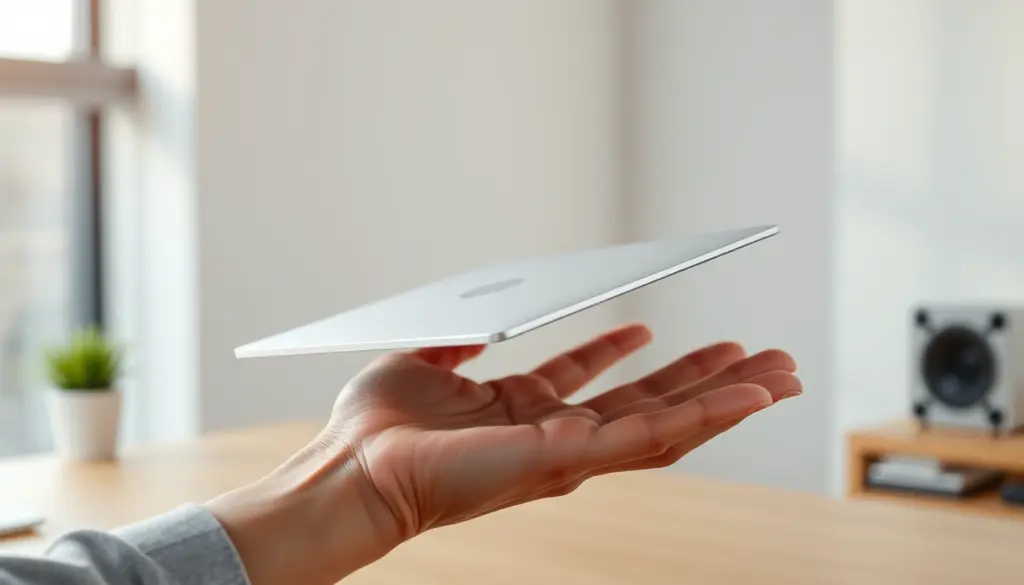
Acer used its IFA 2026 keynote in Berlin on September 2 to unveil the Swift Blade 14, a 14-inch Windows laptop that tips the scale at 799 grams. That is roughly the weight of a large bag of coffee, and it puts Acer’s new machine ahead of nearly every mainstream 14-inch competitor on the market. But the launch carries a twist that has caught the attention of hardware reporters: the chip inside the Swift Blade 14 cannot earn Microsoft’s Copilot+ PC badge, because its neural processing unit falls well short of the required bar.
The Acer Swift Blade 14 (model SFB14-53CF) pairs a carbon-fiber and magnesium-aluminum chassis with Intel’s new Core Series 3 processors, marketed under the codename Wildcat Lake. The result is a laptop that undercuts the LG Gram 14 and Apple’s MacBook Air on weight while trading away one of 2026’s most talked-about PC features: onboard AI acceleration strong enough for Windows’ Copilot+ tier. Below is what Acer actually announced, how the specs stack up against rivals, and what the trade-off says about where the thin-and-light laptop category is headed.
What Acer Announced at IFA 2026
Acer’s press materials describe the Swift Blade 14 as “built for mobile productivity,” with a design that “expands possibilities for thin-and-light laptops,” according to the company’s own press release, as reported by Wccftech. The laptop runs Windows 11 Home and ships with a choice of four processors from Intel’s Core Series 3 family: the Core 7 processor 350 at the top, followed by the Core 5 processor 320, the Core 5 processor 315, and the entry-level Core 3 processor 304. All four pair with integrated Intel Graphics rather than a discrete GPU, which is standard for this weight class.
Acer paired the Swift Blade 14 announcement with a second laptop, the 16-inch Swift Air 16, which shares the same Wildcat Lake processor family but targets buyers who want more screen and battery instead of minimal weight. Both machines mark the debut of a new naming convention inside Acer’s Swift lineup, splitting the brand between an ultra-portable “Blade” tier and a larger-screen “Air” tier.
799 Grams in Context: How Light Is Light?
Acer’s own numbers put the Swift Blade 14 at 799 grams, or 1.76 pounds, with a footprint of 312.5 by 216.8 by 12.9 millimeters. Choosing the OLED display option adds just half a millimeter of thickness, bringing the chassis to 13.5 mm. For comparison, a standard 12-ounce soda can weighs about 368 grams, so the entire laptop weighs a little more than two of them combined.
That number matters because the 14-inch Windows category has been stuck above 900 grams for years. LG’s 2026 Gram 14 lineup, built with the company’s Aerominum alloy, comes in around 1.13 kilograms (2.5 pounds) in its standard configuration, according to LG’s own product listings. Apple’s current MacBook Air, running the M5 chip, weighs 1.23 kilograms (2.7 pounds) at 13 inches and 1.50 kilograms (3.3 pounds) at 15 inches, per Apple’s published specifications. Acer’s new laptop beats both by a wide margin, though PCWorld points out that ultra-niche machines like Fujitsu’s Lifebook UH-X, at roughly 635 grams (1.40 pounds), still hold the outright weight record in the broader laptop category.
| Laptop | Weight | Screen Size | Status (Sept. 2026) |
|---|---|---|---|
| Acer Swift Blade 14 (SFB14-53CF) | 799 g / 1.76 lb | 14″ | Announced, EMEA shipping December 2026 |
| Fujitsu Lifebook UH-X | ~635 g / 1.40 lb | 13.3″ | Shipping (niche/business channel) |
| LG Gram 14 (2026, Aerominum) | ~1.13 kg / 2.5 lb | 14″ | Shipping |
| Apple MacBook Air 13″ (M5) | 1.23 kg / 2.7 lb | 13.6″ | Shipping |
| Apple MacBook Air 15″ (M5) | 1.50 kg / 3.3 lb | 15.3″ | Shipping |
Even against that backdrop, the Swift Blade 14 lands as one of the lightest mainstream Windows laptops with a full 14-inch display, a category where 799 grams has effectively never been seen before at retail.
Carbon Fiber Meets Magnesium-Aluminum
Getting a 14-inch laptop under 800 grams without turning it into a flexing, creaking mess takes deliberate material choices. Acer built the Swift Blade 14’s outer shell from carbon fiber and used a magnesium-aluminum alloy for structural components, the same combination the company highlights on its own product page. Ubergizmo’s coverage of the launch notes the chassis keeps a 90% screen-to-body ratio with 4.3 mm bezels, so Acer isn’t sacrificing display real estate to hit the weight target.
The laptop ships in two colorways, Marshmallow White and Marshmallow Blue, and includes three USB Type-C ports alongside a 3.5 mm headphone jack. Wireless connectivity covers Wi-Fi 6 and Bluetooth 5.3. A 2-megapixel FHD webcam sits above the display with a mechanical privacy shutter, a feature that has become close to standard on business-oriented ultraportables.
Wildcat Lake: Intel’s Answer for Thin, Cheap, and Long-Lasting
The chip family behind the Swift Blade 14 is Intel’s Core Series 3, built on the platform Intel calls Wildcat Lake internally. Tom’s Hardware’s reporting on the launch describes Wildcat Lake as a six-SKU consumer lineup built on Intel’s 18A process, aimed at value laptops and edge systems rather than flagship gaming or creator machines. Intel is pitching the platform on all-day battery life rather than raw compute, which lines up with Acer’s decision to pair it with a modest 50 Wh battery in such a light chassis.
Every Swift Blade 14 configuration comes with 12 GB of LPDDR5-6400 memory soldered to the board, plus up to 1 TB of PCIe Gen 4 NVMe storage. That memory ceiling is worth noting on its own: 12 GB is a step below the 16 GB that’s becoming the norm on premium thin-and-lights, a trade-off likely tied to both cost and the ongoing memory pricing pressure hitting the wider PC industry this year.
| Configuration | Processor | Graphics | Memory |
|---|---|---|---|
| Top tier | Intel Core 7 processor 350 | Intel Graphics (integrated) | 12 GB LPDDR5-6400 |
| Mid tier | Intel Core 5 processor 320 | Intel Graphics (integrated) | 12 GB LPDDR5-6400 |
| Mid tier | Intel Core 5 processor 315 | Intel Graphics (integrated) | 12 GB LPDDR5-6400 |
| Entry tier | Intel Core 3 processor 304 | Intel Graphics (integrated) | 12 GB LPDDR5-6400 |
The Copilot+ Catch: 17 TOPS vs. a 40 TOPS Bar
Here’s the part of the announcement that’s generating the most discussion among reviewers. Microsoft’s Copilot+ PC certification requires a neural processing unit capable of at least 40 trillion operations per second (TOPS). According to reporting on the Wildcat Lake platform, Intel’s Core Series 3 chips deliver only 17 TOPS of NPU performance, less than half of Microsoft’s threshold. That means the Swift Blade 14, no matter which of the four processor options a buyer picks, cannot carry the Copilot+ badge or run the on-device AI features Microsoft reserves for that tier, including local Recall indexing and several Windows Studio Effects.
This isn’t a hidden flaw so much as a deliberate positioning choice. Intel built Wildcat Lake for a different job than its higher-end Panther Lake or Lunar Lake silicon, which do clear the Copilot+ bar. Acer is using the cheaper, more power-efficient chip specifically to hit an aggressive weight and likely price target, and the AI-acceleration silicon needed for 40+ TOPS adds die area, power draw, and cost that don’t fit that goal. Buyers get one of the lightest 14-inch Windows laptops on record, but they give up the “AI PC” marketing tier in exchange.
Display Options: OLED at 90Hz, or a Simpler IPS Panel
Acer offers three display configurations on the Swift Blade 14, all at a 16:10 aspect ratio. The top option is a 2880×1800 OLED panel running at 90 Hz, rated for 400 nits of brightness and 100% DCI-P3 color coverage. Below that sits a 1920×1200 OLED option at 60 Hz, and the base configuration uses a 1920×1200 IPS panel at 60 Hz with 300 nits of brightness and 45% NTSC color coverage, a wider gap between the base and premium screens than most rivals offer.
The 16:10 choice tracks a broader shift PCMag’s laptop coverage has flagged repeatedly this year: buyers doing document and browser-heavy work prefer the extra vertical space over the wider, shorter 16:9 ratio that dominated laptops through the 2010s.
Battery, Ports, and the Compromises That Come With 799 Grams
A 50 Wh battery is small for a 14-inch laptop, roughly two-thirds the capacity found in many premium ultraportables. Acer is betting that Wildcat Lake’s power efficiency, plus the lower-resolution IPS option, keeps runtime competitive despite the smaller cell. Port selection is similarly trimmed: three USB Type-C connectors and a headphone jack, with no dedicated HDMI or full-size USB-A port listed. That’s an increasingly common trade at this weight class, but it does mean dongles for anyone connecting to an external monitor or wired peripheral.
Dual 2W speakers round out the audio setup, a modest but functional configuration for video calls and casual media playback rather than serious listening.
Meet the Sibling: Swift Air 16
Acer didn’t launch the Swift Blade 14 alone. The companion Swift Air 16 targets buyers who want a bigger canvas and don’t mind a heavier build. Reports on the Swift Air 16 point to a 16-inch chassis weighing about 1.5 kilograms, an all-aluminum design available in Elemental Blue, Sage Green, or Sandstone Gold, and the same Wildcat Lake processor range (Core 3 processor 304 through Core 7 processor 350). Tom’s Guide frames the Air 16 as a direct shot at Apple’s MacBook Air, given its bigger OLED panel and lighter build than Apple’s 16-inch-class competitor. Where the Air 16 pulls ahead is battery and ports: a 70 Wh cell versus the Blade 14’s 50 Wh, plus Thunderbolt 4 support that the smaller model lacks.
| Spec | Swift Blade 14 | Swift Air 16 |
|---|---|---|
| Weight | 799 g / 1.76 lb | ~1.5 kg / 3.3 lb |
| Display (top option) | 14″ OLED, 2880×1800, 90Hz, 400 nits | 16″ OLED, 2880×1800, 120Hz, 500 nits |
| Battery | 50 Wh | 70 Wh |
| Chassis | Carbon fiber + Mg-Al alloy | All-aluminum |
| Ports | 3x USB-C, no Thunderbolt 4 | Includes Thunderbolt 4 |
| EMEA availability | December 2026 | December 2026 |
The Swift Air 16’s OLED panel also runs at a brighter 500 nits and a faster 120 Hz refresh, both upgrades over the Blade 14’s top display option, reflecting the larger chassis’s ability to absorb extra power draw and heat.
Pricing and Availability: A Lot We Still Don’t Know
Acer has confirmed EMEA retail availability for the Swift Blade 14 starting in December 2026, but the company has not published pricing for any configuration. US availability and pricing remain undisclosed as of this writing. That leaves a real gap in the picture: weight and specs tell only part of the story for a device competing against the MacBook Air and LG Gram, both of which are well-established at their respective price points. Until Acer names a number, it’s hard to say whether the Swift Blade 14 undercuts, matches, or sits above its established Windows rivals.
Historical Context: The Long Chase for a Sub-800g Laptop
The push toward ultra-light laptops isn’t new, but progress has been slow and uneven. Intel’s original Ultrabook initiative, launched in 2011, set a weight target under 1.4 kilograms for 13-inch machines, a bar that felt aggressive at the time. Apple’s first MacBook Air, released in 2008, weighed about 1.36 kilograms and was marketed almost entirely on its thinness. It took roughly 15 years of incremental chassis engineering, better batteries, and denser memory packaging for the industry to close in on the 800-gram mark for a full-size 14-inch screen.
What’s changed this cycle is the arrival of chips purpose-built for that gap, rather than higher-end silicon simply being run at lower power limits. Wildcat Lake exists specifically to serve this segment, and Acer’s willingness to launch a flagship-weight product on a value-tier chip signals that Intel and its OEM partners see enough demand in the sub-1kg category to justify the engineering trade-offs, including the Copilot+ sacrifice.
Market Impact: What This Means for Acer, Intel, and Rivals
For Acer, the Swift Blade 14 is a chance to grab headlines in a Swift lineup that has typically lived in the shadow of the company’s Predator gaming brand and its budget Aspire line. A genuinely record-setting weight claim, even a caveated one, is the kind of spec that travels well in press coverage and retail listings, regardless of how many units actually ship.
For Intel, Wildcat Lake’s positioning is a pragmatic acknowledgment that not every laptop buyer needs, or wants to pay for, 40+ TOPS of on-device AI acceleration. Splitting the Core Series 3 lineup between Copilot+-certified Panther Lake and Lunar Lake parts and a lower-cost, lower-TOPS Wildcat Lake tier lets Intel compete on price and battery life in the value segment without diluting its AI PC marketing at the top end.
For rivals, the pressure is now on LG, Dell, HP, and Lenovo to answer with their own sub-900-gram 14-inch options, or risk ceding the “lightest laptop” headline to Acer heading into the holiday shopping season. Apple, whose MacBook Air remains well over a kilogram at every screen size, faces a harder engineering problem given aluminum’s weight relative to carbon fiber composites, though Apple has never competed primarily on raw weight.
Who Should Actually Wait for This Laptop
The Swift Blade 14 makes the most sense for road warriors and students who prioritize carry weight above nearly everything else, and who don’t rely on Copilot+-exclusive features like on-device Recall search or advanced Windows Studio Effects. Heavier multitaskers, video editors, or anyone planning to lean on local AI inference should look at Panther Lake or Lunar Lake-based machines instead, even at a weight penalty of a few hundred grams. Buyers who need Thunderbolt 4 for external displays or fast storage should also consider the Swift Air 16 or a rival machine, since the Blade 14’s port selection skips it entirely.
What Happens Next: Five Predictions
- Acer will likely price the Swift Blade 14 aggressively against the LG Gram 14 rather than the MacBook Air, given the shared Windows ecosystem and similar target buyer.
- Expect at least one other major OEM, most plausibly Lenovo or Asus, to announce a competing sub-900-gram 14-inch Wildcat Lake laptop before CES in January 2027.
- Microsoft is unlikely to lower the 40 TOPS Copilot+ threshold this cycle, meaning Wildcat Lake machines will stay marketed as value and portability plays rather than AI PCs through at least 2027.
- Battery life reviews, once independent testers get units in hand, will become the deciding factor in how the Swift Blade 14 is remembered, given its comparatively small 50 Wh cell.
- US pricing and launch timing, once announced, will likely land in Q1 2027, mirroring the staggered EMEA-first rollout Acer confirmed for the Swift Air 16.
Frequently Asked Questions
How much does the Acer Swift Blade 14 weigh?
Acer lists the Swift Blade 14 at 799 grams, or 1.76 pounds, making it one of the lightest 14-inch Windows laptops announced to date.
Does the Acer Swift Blade 14 qualify as a Copilot+ PC?
No. Its Intel Core Series 3 (Wildcat Lake) processors deliver around 17 TOPS of NPU performance, below the 40 TOPS Microsoft requires for Copilot+ certification.
What processors does the Swift Blade 14 use?
Buyers can choose from the Intel Core 7 processor 350, Core 5 processor 320, Core 5 processor 315, or the entry-level Core 3 processor 304, all paired with integrated Intel Graphics.
When can I buy the Acer Swift Blade 14?
Acer has confirmed EMEA retail availability starting in December 2026. US pricing and launch timing have not been announced.
How does the Swift Blade 14 compare to the MacBook Air on weight?
The Swift Blade 14, at 799 grams, is roughly 431 grams lighter than the 13-inch MacBook Air M5 (1.23 kg) and about 701 grams lighter than the 15-inch model (1.50 kg), based on Apple’s published specifications.
What display options does the Swift Blade 14 offer?
Three panels are available: a 2880×1800 OLED at 90Hz and 400 nits, a 1920×1200 OLED at 60Hz, and a base 1920×1200 IPS panel at 60Hz and 300 nits, all at a 16:10 aspect ratio.
Is the Swift Air 16 the same as the Swift Blade 14?
No. The Swift Air 16 is a separate 16-inch companion laptop announced alongside the Blade 14, sharing the same Wildcat Lake processor family but weighing about 1.5 kilograms with a bigger 70 Wh battery and Thunderbolt 4 support.
Why did Acer use a lower-performance chip instead of a Copilot+ certified one?
Wildcat Lake prioritizes power efficiency and cost over NPU throughput, which lets Acer hit an aggressive weight target and likely a lower price point, at the cost of Copilot+ eligibility.