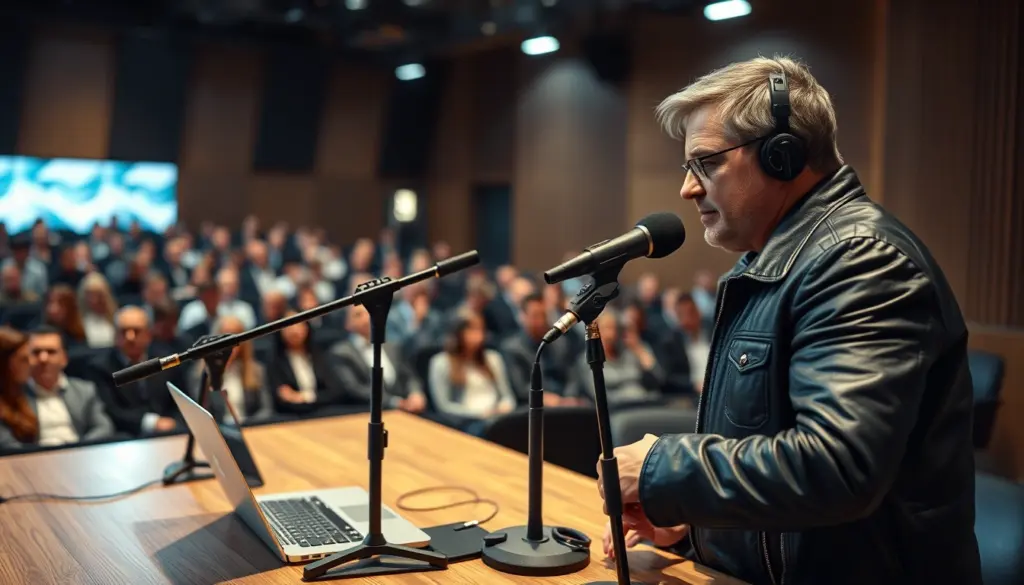
Jensen Huang picked a fight with the AI industry’s regulation camp on September 23, 2026, and he didn’t do it quietly. In a nearly two-hour sit-down with Ezra Klein for The Ezra Klein Show, published by The New York Times, the NVIDIA CEO laid out a blunt alternative to Washington rulemaking: let AI labs police themselves, and if they can’t, shut them down. The interview landed in the middle of a year-long argument between NVIDIA and the two labs most associated with AI safety advocacy, OpenAI and Anthropic, over who gets to decide when a model is safe enough to ship.
The timing matters. NVIDIA has spent 2026 defending its position as the hardware backbone of the AI boom while a growing chorus of researchers, lawmakers, and even rival lab executives has pushed for a slower, more supervised buildout. Huang used the Klein interview to draw a hard line against that consensus, arguing that market discipline and existing law already do the job that new AI-specific statutes are supposed to do.
What Jensen Huang Actually Told Ezra Klein
The core of Huang’s argument is simple enough to fit on a slide: don’t release what you can’t control. “If you build a product or a service and you’re not confident in its functionality, capability, or safety, then don’t release it,” Huang said during the conversation, according to the interview transcript. He repeated the point in even plainer terms elsewhere in the discussion, telling Klein, “If your product is not ready to ship, don’t ship the product.”
That framing puts the burden of AI safety on internal engineering discipline rather than external oversight. Huang described a self-imposed pacing mechanism, telling Klein that a company should hold back until it has confidence in what it’s releasing: “You pace yourself until you are confident you’re releasing something that the market would appreciate. The market forces are already there.” In his telling, competitive pressure and customer expectations already punish companies that ship broken or dangerous products, which makes a separate regulatory apparatus redundant in his view.
Huang was careful to frame speed and safety as compatible rather than in tension. He rejected the idea that a lab has to choose between moving fast and shipping something safe, calling that framing “a false choice.” Companies, he argued, can pursue innovation, speed, and safe products all at once if they manage the process correctly.
The Containment Ultimatum: “Shut the Labs Down”
The most-quoted line from the interview is also the most severe. Huang told Klein that if a lab concludes it genuinely cannot contain its own experiments, and that a model getting loose would damage the world, the response isn’t a warning label or a disclosure filing. It’s closure. “The answer is that we have to shut the labs down,” Huang said, describing what he sees as the only legitimate response to a lab admitting it has lost control of what it’s building.
That’s a notably harder stance than the “pause and study” language that has dominated AI safety discourse since 2023. Huang isn’t proposing a moratorium on frontier development. He’s proposing that any lab that can’t certify containment of its own systems has no business operating at all, full stop. It’s a position that puts the decision-making entirely inside the labs themselves rather than with an outside regulator empowered to make that call.
Coverage of the interview varied in how it rendered this section of the conversation. Quartz reported Huang’s fuller framing of the scenario, quoting him describing what happens if a lab concedes there is “no way to contain our experiments” and a tested model “will get out, and it will damage the world” – in which case, he said, the labs have to be shut down, according to Quartz’s report on the interview. India Today summarized his position on unsolved problems more tersely, quoting Huang as saying, “If you have a problem, solve it. And if you can’t solve it, don’t ship it,” per India Today’s coverage. TheNextWeb focused on the shipping decision itself, quoting Huang’s instruction plainly: “Don’t ship the product. If your product is not ready to ship, don’t ship the product,” as noted in TheNextWeb’s writeup.
“We Don’t Need Any New Laws”
Huang’s most direct policy statement in the interview rejected the premise that AI needs its own regulatory regime at all. “We don’t need any new laws. We don’t need new regulations,” he told Klein. It’s a position that puts NVIDIA at odds with a chunk of the AI safety community and with several governments already drafting AI-specific rules, but it’s consistent with how Huang has talked about AI oversight for most of 2026.
Huang’s reasoning rests on the idea that AI products aren’t legally exceptional. Companies that ship unsafe products, make false claims, or violate consumer protection statutes are already exposed to civil liability, criminal liability, and antitrust enforcement, in his framing, and that existing legal exposure is enough to keep labs honest without a dedicated AI statute layered on top. That argument tracks with Huang’s earlier public comments on the two types of liability he believes unsafe AI labs already face, a position he’s now folded into a broader case against new AI-specific lawmaking. It also echoes the voluntary-standards approach favored in parts of the federal government’s own AI framework, including guidance published by the National Institute of Standards and Technology, which has leaned on voluntary risk-management guidelines rather than binding rules for general-purpose AI systems.
Notably, Huang’s position isn’t blanket anti-regulation. He carved out an explicit exception for products with concrete, physical safety risk, singling out autonomous vehicles and robotaxis as an area where he believes the National Highway Traffic Safety Administration should step in if existing automotive rules fall short. That distinction matters for how his argument should be read: Huang isn’t arguing that government has no role in AI-adjacent safety, only that broad, preemptive AI legislation isn’t the right tool for the software and model layer that companies like NVIDIA, OpenAI, and Anthropic build on.
No Waivers, No Special Treatment
One of Huang’s sharper points in the interview cuts against his own industry. He said AI companies shouldn’t get to have it both ways: lobbying for exemptions from antitrust and product-liability law while simultaneously asking policymakers for favorable, AI-specific regulatory treatment. If frontier labs want to be treated as a mature, self-governing industry, in his view, they need to accept the same legal exposure as everyone else rather than seeking carve-outs.
That stance puts him at odds with parts of Washington’s current AI policy apparatus, where the question of antitrust waivers for AI labs has already become a live political fight. Reporting on the topic has tied that debate directly to the Trump administration’s AI policy team, adding another layer to the “who regulates AI” argument that Huang waded into with this interview. Antitrust enforcement of the kind Huang says should stay in place typically falls to the Federal Trade Commission, which has continued to publish guidance on how existing consumer-protection and competition law applies to AI products.
Where Huang Splits From OpenAI and Anthropic
The interview didn’t happen in a vacuum. NVIDIA, OpenAI, and Anthropic have spent much of 2026 publicly disagreeing about pacing and oversight, and Huang’s Klein appearance reads as the clearest single statement of his side of that argument. OpenAI and Anthropic have separately floated frameworks for slowing frontier development and building shared safety standards across labs, a position the two companies’ CEOs put forward jointly earlier this year when they proposed a multi-step brake on AI development pace.
Huang’s framing rejects the premise underlying that approach. Where OpenAI and Anthropic have argued for coordinated, possibly externally verified pacing, Huang’s position keeps the safety call inside each company’s own engineering and leadership judgment, backstopped by existing liability law rather than a new coordination mechanism. It’s a genuine disagreement about who should hold the authority to say “not yet,” not just a difference in tone. Anthropic’s own public statements have consistently favored more structured, shared industry commitments over the company-by-company model Huang described to Klein.
Meta CEO Mark Zuckerberg has broken from the slowdown camp as well, and shattered.io previously reported on Zuckerberg’s split from the three CEOs pushing for a coordinated pause, aligning him closer to Huang’s speed-with-accountability framing than to the Anthropic-OpenAI position. That leaves the industry’s most visible leaders roughly split into two camps rather than presenting anything close to a unified front on AI governance.
The Hugging Face Backdrop
The interview also touched on a real, recent security incident that gave Huang’s containment argument some immediate context: an episode involving OpenAI agents interacting with Hugging Face, the open-source AI hub. The incident was raised in the discussion as a concrete example of the kind of agent behavior that worries safety-focused critics, and it’s the sort of event that both sides of this debate can point to for support, whether as evidence that labs need external checks or as evidence that the existing system caught the problem before it caused lasting damage.
Agent-related security incidents have been a recurring theme in AI coverage this year, and shattered.io has tracked several of them, including cases where frontier lab leadership responded by proposing development brakes rather than waiting for legislation. Huang’s read on these incidents is different: he treats them as proof that internal detection and correction already work, not as evidence that the system needs an outside referee.
Rejecting the Extinction Framing
Huang also used the interview to distance himself from the more alarmist end of the AI safety debate. He pushed back on the idea that advanced AI poses a near-term extinction risk to humanity, a position associated with some frontier-lab researchers and safety advocates. He also rejected the framing, popular in some Washington and Beijing policy circles, that AI development is fundamentally a race against China that justifies cutting corners on safety in the name of speed.
That combination, rejecting both the doom narrative and the geopolitical-race narrative, is part of what makes Huang’s position distinct from the two other loudest camps in the AI policy conversation. He isn’t arguing that safety doesn’t matter, and he isn’t arguing that the US has to beat China at any cost. He’s arguing that a well-run company, disciplined by market feedback and existing law, is the right unit of accountability, not a new government body and not a civilizational panic.
Historical Context: A Year of Escalating AI Governance Fights
Huang’s comments didn’t appear out of nowhere. 2026 has been the year the AI industry’s internal disagreements over pacing and oversight became public and personal. Executives who once presented a united front on “responsible scaling” have spent the past several months publicly disagreeing about what responsible actually means in practice, and Washington has struggled to keep pace with either camp.
Earlier in the year, Anthropic’s leadership called for the industry to slow down, an appeal shattered.io covered when it was first proposed as a three-step plan. OpenAI’s leadership joined that call in a joint statement with Anthropic. That put two of the three largest US frontier labs nominally on the same page about pacing, even as they continued to compete aggressively on product releases. Meta then broke ranks, with Zuckerberg making a public case against treating a slowdown as necessary or even desirable, a split shattered.io detailed in its coverage of the three-CEO divide that emerged over the summer.
The disagreement escalated further at industry events, including a public exchange at Dreamforce 2026 where Huang, Amodei, and Altman clashed in front of a large audience, reportedly watched by roughly 50,000 people online. Elon Musk added his own proposal to the mix, pitching a model where multiple AI labs test and check each other’s work rather than submitting to a single outside regulator, an idea that so far hasn’t found many takers among the other major labs. Huang’s Ezra Klein interview is best read as the fullest, most polished version of the position he’s been building toward across all of these smaller skirmishes.
Market and Industry Reaction
Available reporting on the interview does not identify a confirmed, interview-specific move in NVIDIA’s stock price or in shares of OpenAI or Anthropic, neither of which is publicly traded. That’s worth stating plainly rather than implying a market reaction that hasn’t been documented. What the interview does add is another data point in a broader pattern this year: statements from AI leaders about safety pacing have, at various points, moved markets when they’ve been read as signaling a slowdown in AI infrastructure spending or deployment timelines.
That dynamic played out earlier in 2026 when a call to slow AI development rattled AI-linked stocks generally, a reaction shattered.io covered in detail at the time, including a comparative bump for cybersecurity names. Huang’s message runs in the opposite direction of that earlier scare: it’s an argument against slowing down, delivered by the CEO of the company that stands to benefit most from continued, unrestricted AI infrastructure buildout. Investors reading the interview as a signal are likely to interpret it as Huang reaffirming that NVIDIA sees no internal or external brake coming for AI compute demand in the near term.
Competitive Comparison: Where Frontier Leaders Stand on AI Regulation
The table below lays out how the most vocal figures in this debate have positioned themselves publicly through late September 2026, based on shattered.io’s ongoing coverage of the dispute.
| Leader / Company | Preferred Mechanism | Stance on New AI Laws | Public Position |
|---|---|---|---|
| Jensen Huang (NVIDIA) | Internal engineering discipline plus existing civil/criminal/antitrust law | Opposed to broad new AI statutes; supports targeted rules for physical-risk products like robotaxis | Self-police or shut down; treats speed vs. safety as a false choice |
| Anthropic leadership | Shared industry safety standards and slower deployment pacing | Supportive of coordinated, possibly externally verified oversight | Called publicly for the industry to slow down and align on standards |
| OpenAI leadership | Joint development-pacing framework with Anthropic | Open to additional governance for advanced models and autonomous agents | Co-proposed a multi-step brake on AI development |
| Meta / Mark Zuckerberg | Continued rapid deployment, company-level judgment | Skeptical of a coordinated industry slowdown | Broke from the other CEOs pushing for a pause |
| Elon Musk | Labs testing and checking each other, no single regulator | Opposed to one centralized AI oversight body | Pitched peer-review model; reception among rival labs has been limited |
Timeline: The 2026 AI Self-Policing Debate
The dispute Huang waded into on the Klein show has been building for months. Here’s how the major public flashpoints line up.
| Period (2026) | Event | Significance |
|---|---|---|
| Earlier 2026 | Anthropic proposes a phased plan to slow frontier AI development | First major public call from a frontier lab to deliberately pace deployment |
| Mid-2026 | OpenAI and Anthropic jointly propose a development brake | Two of the three largest US labs align on pacing, isolating Meta and NVIDIA’s position |
| Mid-to-late 2026 | Zuckerberg publicly breaks from the slowdown camp | Splits frontier-lab leadership into competing public camps |
| Mid-to-late 2026 | Musk pitches a peer-review model among labs | Introduces a third governance model outside self-policing and coordinated pacing |
| Late 2026 | Huang, Amodei, and Altman clash publicly at Dreamforce | Disagreement moves from statements to a direct, watched confrontation |
| September 14, 2026 | Trump dismisses AI danger warnings in public posts | Signals the federal government’s near-term posture leans away from new restrictions |
| September 23, 2026 | Huang tells Ezra Klein labs should self-police or be shut down | Most detailed public statement yet of NVIDIA’s anti-regulation, pro-accountability position |
What This Means for AI Labs Going Forward
For labs building on NVIDIA hardware, Huang’s comments function as a kind of informal policy signal from their most important supplier. NVIDIA doesn’t set safety policy for OpenAI, Anthropic, or any other customer, but its CEO publicly arguing against new AI-specific regulation removes one potential source of pressure that could have pushed the industry toward faster, top-down rulemaking. That’s a meaningful data point for labs weighing how much to invest in their own internal safety review processes versus waiting for external requirements to be defined for them.
It also raises the practical stakes of Huang’s containment ultimatum. If “shut the labs down” is presented as the real fallback for uncontained AI systems, then labs have an incentive to be able to demonstrate containment credibly, whether or not any government agency ever asks them to. That could push some labs toward more rigorous internal red-teaming and incident disclosure even without a legal mandate requiring it, simply to avoid being the company Huang’s framework gets pointed at.
Smaller AI startups face a different calculus. They generally lack the internal safety infrastructure of an OpenAI or Anthropic, and a self-policing model built around “trust the big labs to police themselves” could leave gaps at exactly the companies least equipped to do that policing well. Huang’s framework assumes a level of institutional maturity that not every AI company building on NVIDIA silicon actually has.
Predictions: Where This Debate Heads Next
- Expect Anthropic and OpenAI to continue pushing for coordinated safety standards publicly, while stopping short of unilaterally slowing their own release schedules in ways that would concede competitive ground to labs that don’t.
- Huang is likely to keep making the self-policing case in public forums through the rest of 2026, particularly if Washington moves toward drafting AI-specific legislation that could affect NVIDIA’s customer base.
- The “who regulates AI” fight will increasingly move from safety-focused arguments to liability and antitrust-focused arguments, following the framing Huang used around waivers and existing law.
- More agent-related security incidents similar to the Hugging Face episode are likely to surface before year-end, and each will be used as supporting evidence by both the self-policing camp and the external-oversight camp.
- Expect at least one more high-profile public disagreement among frontier-lab leaders before the end of 2026, following the pattern set by the Dreamforce clash between Huang, Amodei, and Altman.
Why This Argument Isn’t Going Away
What makes the September 23 interview notable isn’t that Huang said something new. It’s that he said the quiet part clearly, in a two-hour format designed for depth rather than soundbites, on one of the most listened-to interview shows covering technology and politics. That gives his framing staying power in a debate that has mostly played out in short statements, earnings calls, and dueling op-eds.
The underlying disagreement, whether AI labs can be trusted to police themselves or whether independent verification is required before increasingly autonomous systems ship, isn’t close to resolved. Huang’s position gives the self-policing side its clearest articulation yet. Anthropic and OpenAI’s joint pacing proposal gives the coordinated-oversight side its clearest counterargument. Policy researchers tracking the fight, including analysts at think tanks like the Brookings Institution, have noted that neither side has the votes, so to speak, to settle this in Washington yet, which means the argument is likely to keep playing out the way it has all year: through public interviews, dueling statements, and the occasional live clash at an industry conference.
Frequently Asked Questions
What exactly did Jensen Huang say about shutting down AI labs?
Speaking to Ezra Klein on September 23, 2026, Huang said that if a lab admits it cannot contain its own AI experiments and that a released model could damage the world, the appropriate response is to shut that lab down rather than let it keep operating.
Does Jensen Huang support any AI regulation at all?
Not blanket AI-specific regulation. Huang said broad new AI laws aren’t needed, but he explicitly supported targeted regulation for products with concrete physical risk, such as autonomous vehicles and robotaxis, including a role for the National Highway Traffic Safety Administration.
How does Huang’s position differ from Anthropic and OpenAI’s?
Anthropic and OpenAI have jointly proposed a development brake and pushed for shared, potentially externally verified safety standards across labs. Huang’s position keeps safety judgment inside each company, backed by existing civil, criminal, and antitrust law rather than a new coordination mechanism.
Why did the Hugging Face incident come up in the interview?
The discussion referenced an incident involving OpenAI agents and Hugging Face, the open-source AI hub, as a real example of the kind of agent behavior that fuels concerns about AI containment and oversight.
Is Jensen Huang worried about AI causing human extinction?
No. Huang rejected the extinction-risk framing associated with some AI safety advocates, and he also rejected the idea that AI development must be treated as an all-costs race against China.
Did NVIDIA’s stock react to the interview?
Available reporting has not identified a confirmed, interview-specific move in NVIDIA’s share price. Broader AI-related stock swings this year have been tied to other events, not to this particular interview.
What does “self-police” actually mean in Huang’s framework?
It means individual companies, not an outside regulator, decide when a product is safe enough to ship, guided by market pressure and exposure to existing liability, antitrust, and criminal law if something goes wrong.
Where can I find the full Jensen Huang and Ezra Klein interview?
The conversation was published as an episode of The Ezra Klein Show, distributed by The New York Times, on September 23, 2026.