
Nvidia used this week’s wave of platform updates to push a message it has been repeating in interviews and keynotes all year: open-source AI is not a threat to its business, it’s the raw material for it. The company detailed NVIDIA DSX, a platform that bundles open-source and modular software libraries, APIs, reference designs, and accelerated-computing hardware for building what it calls “AI factories.” It also confirmed day-zero support for open models built outside its own walls, including DeepSeek’s V4 Flash and Alibaba’s Qwen3.8-27B, on RTX hardware. The announcements land as the cost of building AI infrastructure and the question of who controls the best open models have both become front-page business stories.
None of this happened in a vacuum. Nvidia CEO Jensen Huang has spent months publicly praising Chinese open-source models even as Washington debates export limits on the chips that train them, a tension that gives this week’s open-source push a political subtext whether or not Nvidia frames it that way. Here is what the company actually announced, what Huang has said on record, and what is still unverified.
What Nvidia Announced This Week
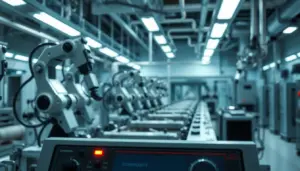
The centerpiece is NVIDIA DSX, described by the company as a platform that combines open-source and modular software libraries, application programming interfaces, reference designs, Nvidia’s accelerated-computing platforms, and partner technologies for designing, deploying, and operating AI factories. Nvidia frames an AI factory as infrastructure built specifically to produce AI services and intelligence at scale, distinct from a traditional data center built for general-purpose compute.
Alongside DSX, Nvidia announced Dynamo 1.0, an open-source software platform the company says is built to run AI applications more efficiently at scale. Nvidia has published ongoing technical detail on the AI factory concept through its own NVIDIA blog, and Dynamo joins a growing list of Nvidia-authored tools released under open licenses, a pattern that has accelerated noticeably over the past year as the company tries to make its hardware the default landing spot for workloads regardless of which lab trained the model.
Nemotron 3 Nano Ships, Bigger Models Still to Come
Nvidia also pushed out Nemotron 3 Nano, billed as the smallest model in the new Nemotron 3 family. Two larger versions are scheduled to follow in the first half of 2026, though Nvidia has not published their names, parameter counts, or exact release windows. Kari Briski, Nvidia’s vice president of generative AI software, said the goal was to provide “a model that people can depend on,” a line that signals Nvidia wants Nemotron treated as infrastructure, not a one-off research release.
That dependability pitch comes with an unusual amount of transparency for a company of Nvidia’s size. Nvidia said it is releasing the Nemotron model’s training data and other tooling so that government agencies and businesses can test the model’s security posture and customize it for their own workloads. Nvidia has also argued its models qualify as “truly open source” because it publishes the training datasets, the techniques used to build the model, and the model weights together, rather than shipping only the weights the way some rival releases do.
The $60 Million Megawatt: Pricing Out an AI Factory
Nvidia put a number behind the AI factory concept that is easy to repeat and hard to ignore: the company reported that a one-megawatt AI factory costs roughly $60 million to build. That figure helps explain why Nvidia is so invested in open tooling that lowers the integration cost of its hardware. If a single megawatt of AI capacity costs tens of millions of dollars, every enterprise buyer wants assurance that the software stack running on top of that investment won’t lock them into a single model vendor or force a costly re-architecture six months later.
It also reframes the open-source argument in dollar terms. A company spending $60 million on a single megawatt of AI factory capacity has strong incentive to run whichever open models perform best on that hardware, not whichever model happens to come from a friendly lab. That is the commercial logic Nvidia is leaning on as it adds support for models built by DeepSeek, Alibaba, Google, and its own Nemotron team side by side on the same RTX systems.
Day-Zero Support for DeepSeek V4 Flash and Qwen3.8-27B
Nvidia highlighted what it called a local AI initiative with optimizations for top open models, specifically naming DeepSeek’s V4 Flash, Alibaba’s Qwen 3.8, and unnamed models developed by Google and by Nvidia itself. The company announced day-zero support on its RTX GPU systems for Qwen3.8-27B specifically, meaning developers can run that model on RTX hardware the moment it ships rather than waiting weeks for optimized drivers and inference kernels.
Day-zero support matters more than it sounds. For years, running a freshly released open model well on consumer or workstation GPUs meant waiting for the community, or Nvidia itself, to write and tune the inference code. Collapsing that gap to zero turns RTX hardware into a default playground for whatever model ships next, Chinese-built or otherwise, and it directly supports Nvidia’s public argument that the best open model should simply be the one developers use.
Why “Truly Open Source” Is a Deliberate Phrase
Nvidia’s choice of words here is not accidental. Plenty of releases marketed as “open” ship only the final model weights, which lets a user run the model but not fully inspect how it was built or retrain it from scratch. By publishing Nemotron’s training data and techniques alongside the weights, Nvidia is drawing a contrast with that lighter-weight definition of openness, and implicitly with any rival release that stops short of full disclosure.
Jensen Huang on China: Praise, Not Panic
The open-source push is impossible to separate from what Huang himself has said about Chinese AI labs over the past several months. Speaking at the China International Supply Chain Expo in Beijing, Huang said that “China’s open-source AI is a catalyst for global progress, giving every country and industry a chance to join the AI revolution,” according to China Economic Net.
In a separate interview with Axios, Huang went further, telling the outlet plainly: “These Chinese models are excellent.” He added that “open-source models that are excellent should be used,” regardless of where they were trained. Asked about the competitive threat from Chinese AI developers, Huang told Axios: “There’s no scenario where China runs U.S. companies off the road.”
Huang has made a similar case about the value of open software more broadly. In an extended interview with CBS News, he said: “The fact that we have open software and we have open source software so that all the companies could defend themselves and upgrade their software is one of the reasons why the industry works.” Taken together, the four quotes paint a CEO actively arguing against the idea that open Chinese models are a threat worth restricting, a position that puts him at odds with parts of Washington’s export-control debate.
It is worth being precise about what is and is not confirmed here. Nvidia has not stated that its own open-source AI-factory strategy, including DSX, Dynamo 1.0, and Nemotron, is a deliberate countermeasure against China’s open-model push. That framing shows up in commentary and headlines around the announcements, but it is not something Nvidia or Huang has said outright. The facts that are confirmed: Nvidia is shipping open tools, Huang is on record praising Chinese open models by name, and the two threads are unfolding at the same time.
Separating Fact From Rumor: The LPU Denial
The China angle got messier in late summer when a report from The Information claimed Nvidia had a China-specific language-processing unit, or LPU, in development for the Chinese market. Nvidia pushed back hard. On August 20, 2026, an Nvidia spokesperson said: “The reporting in The Information on Nvidia’s LPU is incorrect. We have no LPU sales in the China market today, and no China-specific LPU product in our roadmap.”
That denial is a useful reminder of how much speculation surrounds Nvidia’s China strategy right now. Every product rumor, chip restriction, and open-model release gets read through a US-China competition lens, and not every one of those readings holds up. The open-source announcements this week are confirmed. A dedicated China chip roadmap is not, and Nvidia has explicitly said it isn’t happening, at least not yet.
Market Impact: What Enterprise Buyers Are Watching
For enterprise buyers, the practical question is less about geopolitics and more about total cost of ownership. At roughly $60 million per megawatt, an AI factory is a multi-year capital commitment, and buyers increasingly want that commitment to be model-agnostic. Nvidia’s open tooling push, including the Nemotron training-data release and day-zero support for third-party open models, is a direct answer to procurement teams who don’t want to bet an entire infrastructure build on one lab’s roadmap.
That logic also connects to Nvidia’s broader agentic AI push. The company has spent much of 2026 building safety and governance tooling, such as its AI agent safety platform, around the assumption that enterprises will run a mix of proprietary and open models in production. Industry coverage from Network World has noted that Nvidia is now treating security and governance as part of the AI factory pitch itself, not an afterthought bolted on later. An open, well-documented Nemotron family gives Nvidia a reference point it fully controls to sit inside that mixed-model environment, even as customers also run DeepSeek, Qwen, or Google models on the same racks.
| Component | What It Is | Key Detail |
|---|---|---|
| NVIDIA DSX | Platform combining open-source libraries, APIs, reference designs, and Nvidia compute for AI-factory design and operations | Bundles partner technologies alongside Nvidia’s own stack |
| Dynamo 1.0 | Open-source software platform for running AI applications more efficiently at scale | First full release under the Dynamo name |
| Nemotron 3 Nano | Smallest model in the new Nemotron 3 family | Training data and tooling released for security testing and customization |
| Local AI initiative | Optimizations for top open models on RTX systems | Covers DeepSeek V4 Flash, Alibaba Qwen 3.8, plus Google and Nvidia models |
| Day-zero RTX support | Immediate optimized support for a newly released open model | Confirmed for Qwen3.8-27B |
| AI factory economics | Nvidia’s published cost figure for AI infrastructure | Approximately $60 million per megawatt |
Competitive Landscape: Nvidia’s Open Bet vs the Field
Nvidia is not the only company racing to make openness a selling point. Google has pushed Ironwood TPU pricing aggressively against Nvidia’s own B200 hardware, betting that cheaper silicon paired with its own model ecosystem can peel away price-sensitive customers. Huang has responded by forecasting demand for Nvidia’s chips roughly doubling, a bet that depends partly on developers staying inside Nvidia’s software ecosystem even when they choose a non-Nvidia-trained model.
On the model side, Chinese labs have kept shipping. DeepSeek cut pricing on its V4 Flash release, and Alibaba’s Qwen line keeps iterating fast enough that Nvidia felt it needed day-zero support commitments to keep pace. Mistral, meanwhile, has pushed its own large open releases, underscoring that the open-weights race now has serious entrants on at least three continents. Analysis from SiliconANGLE frames the AI factory concept as Nvidia’s attempt to extend its market beyond the traditional data center entirely. The common thread across all of them is that the hardware layer, where Nvidia still holds the dominant position, matters as much as the model layer.
That hardware dominance is also why chip-export politics keep intruding on what is, on paper, a software story. Reports of Nvidia weighing lower-tier RTX Pro hardware for Chinese buyers, and a separate federal smuggling case tied to roughly $300 million in diverted Nvidia chips, show how tightly the open-software narrative and the export-control narrative are now intertwined, even when Nvidia itself keeps the two separate in its own announcements.
Historical Context: From Closed CUDA to Open Weights
Nvidia built its dominance on a closed, proprietary layer: CUDA, the software stack that made its GPUs the default choice for machine learning for more than a decade. That strategy worked because there was no credible open alternative good enough to threaten it. The last two years changed that equation. Open-weight models from Meta, Mistral, DeepSeek, and Alibaba got good enough that developers started asking why they needed a closed model at all, and some started asking the same question about the hardware stack underneath it.
Nvidia’s answer has been to open more of its own stack rather than fight the trend. Tools like Dynamo and the full-disclosure approach to Nemotron are part of a pattern that started with smaller open releases and has steadily grown in scope. TechTarget’s reporting on Nvidia’s broader strategy has described this shift as an attempt to replicate the company’s data-center dominance in new categories before a rival software ecosystem can take root. The company is betting that if developers are going to demand openness somewhere in the stack, Nvidia would rather be the open, dependable layer than get bypassed entirely by a competitor’s open ecosystem.
Nemotron 3 Roadmap: What’s Confirmed and What’s Not
| Release | Status | What’s Known |
|---|---|---|
| Nemotron 3 Nano | Shipped | Smallest model in the family; training data released alongside weights |
| Nemotron 3, second model | Scheduled, first half of 2026 | Name, size, and exact date not yet published by Nvidia |
| Nemotron 3, third model | Scheduled, first half of 2026 | Name, size, and exact date not yet published by Nvidia |
| Dynamo 1.0 | Released | Open-source platform for running AI applications efficiently at scale |
| China-specific LPU | Denied by Nvidia | Spokesperson said no China LPU sales today and none on the roadmap, as of August 20, 2026 |
What This Means for Developers and IT Buyers
For developers, the near-term change is practical: more open models will run well on RTX hardware on release day, without the usual waiting period for community optimization. That shortens the loop between a new open model shipping anywhere in the world and teams being able to actually use it in production. It also lowers the switching cost between models, since the same RTX stack can run DeepSeek, Qwen, Google’s, or Nvidia’s own Nemotron releases without separate integration work for each one.
For IT buyers already committed to Nvidia hardware at the scale Huang has been describing in public appearances, the Nemotron training-data release is arguably the more consequential piece. Government agencies and regulated businesses that need to audit a model’s training process before deploying it now have a fully documented Nvidia-built option, rather than having to choose between a closed commercial model and a weights-only open release that can’t be fully inspected.
Predictions: Where Nvidia’s Open-Source Bet Goes Next
Based on the pattern Nvidia has set this year, a few developments look likely heading into 2026.
- Expect the two remaining Nemotron 3 models to ship with the same training-data transparency as Nemotron 3 Nano, since Nvidia has made that disclosure a brand differentiator rather than a one-off.
- Day-zero RTX support will likely extend to more Chinese-built open models beyond Qwen3.8-27B, given how quickly DeepSeek and Alibaba are iterating.
- Pressure on Nvidia to clarify its China hardware roadmap will keep building, especially after the LPU denial, and further denials or clarifications are likely before the end of 2026.
- Rivals including Google will keep pairing aggressive pricing with their own model ecosystems, forcing Nvidia to lean harder on open tooling like Dynamo to keep developers inside its stack.
- Expect continued public commentary from Huang distinguishing between open-model competition, which he has repeatedly welcomed, and chip-export policy, which he has been careful to frame as a separate, government-level question.
None of these are certainties. Nvidia has not published a roadmap date for the next two Nemotron releases, and nothing in the public record confirms that its open-source strategy is explicitly designed to counter China, however convenient that narrative might be for commentators covering the announcement.
FAQ
What is NVIDIA DSX?
NVIDIA DSX is a platform that combines open-source and modular software libraries, APIs, reference designs, Nvidia’s accelerated-computing platforms, and partner technologies for designing, deploying, and operating AI factories.
What is Nemotron 3 Nano?
Nemotron 3 Nano is the smallest model in Nvidia’s new Nemotron 3 family. Nvidia released its training data and other tools alongside the model weights so government and business users can test its security and customize it.
How much does an Nvidia AI factory cost to build?
Nvidia reported that a one-megawatt AI factory costs approximately $60 million to build, a figure the company has used to justify its push for open, hardware-agnostic software tooling.
Does Nvidia support DeepSeek and Qwen models on its hardware?
Yes. Nvidia highlighted a local AI initiative with optimizations for DeepSeek’s V4 Flash and Alibaba’s Qwen 3.8, plus models from Google and Nvidia itself, and confirmed day-zero support on RTX GPU systems specifically for Qwen3.8-27B.
Is Nvidia’s open-source push a response to China?
That connection is not confirmed. Nvidia has not described its open-source AI-factory strategy as a deliberate countermeasure against China. Jensen Huang has instead publicly praised Chinese open-source models, including calling them “excellent” in an interview with Axios.
Is Nvidia building a China-specific chip?
Nvidia has denied this. On August 20, 2026, an Nvidia spokesperson said reporting on a China-specific language-processing unit was incorrect, stating the company has no LPU sales in China today and no China-specific LPU product on its roadmap.
What makes Nvidia call Nemotron “truly open source”?
Nvidia says its models qualify as truly open source because it publishes the training datasets and techniques used to build the model alongside the model weights, going further than releases that share only the final weights.
When will the next two Nemotron 3 models ship?
Nvidia has said two larger Nemotron 3 models are scheduled for the first half of 2026, but it has not published exact names, sizes, or release dates for either one.
Related
- China Weighs Nvidia RTX Pro 5500 for 2 Chinese Firms
- Nvidia GPU Smuggling Case: $300M, 4 Chips Named
- DeepSeek V4.1-Flash Cuts Output Price 70%
- Huang’s 2x Chip Vow Locks Up 37% of HBM Supply
- NVIDIA’s AI Agent Safety Platform: 100+ Partners