
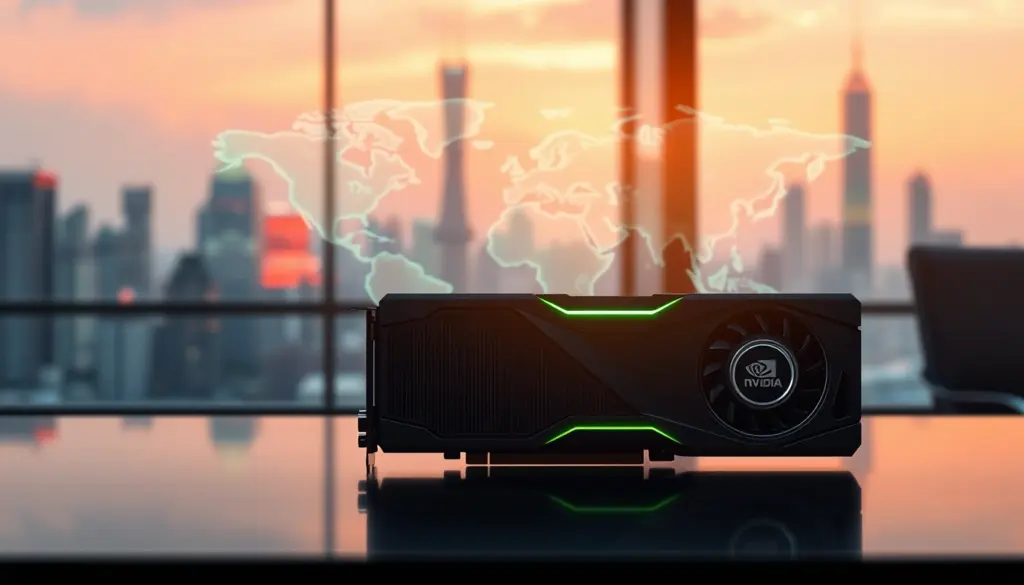
Beijing has signaled it may let two of China’s largest tech companies buy Nvidia hardware again, and the chip world noticed within hours. On Sunday, September 27, 2026, The Information reported that China’s Ministry of Industry and Information Technology (MIIT) asked domestic firms including ByteDance and Alibaba to submit how many units of Nvidia’s new RTX Pro 5500 chip they want to buy, and what they plan to do with them. MIIT reportedly told some of those companies that the government intends to approve the purchases. Reuters and Bloomberg both picked up the report within a day, and by Monday, September 28, financial outlets were flagging Nvidia stock as a story to watch heading into the week.
Nothing here is finalized. Reuters said explicitly it could not independently verify The Information’s account, and neither MIIT, Nvidia, ByteDance, nor Alibaba has issued a public statement confirming an approval, a quantity, or a delivery date. But the fact that a Chinese ministry is even discussing green-lighting new Nvidia silicon for two of the country’s biggest AI spenders is itself the headline, coming after two years of on-again, off-again restrictions on which Nvidia chips could legally reach Chinese buyers.

Don't miss new tech stories on Google
Add Shattered once in the Google app and our stories show up in your news suggestions.
What China’s MIIT Actually Signaled
Strip away the headlines and the core of the report is narrower than it first appears. According to The Information’s sourcing, cited by two people familiar with the matter, MIIT asked select Chinese companies, including ByteDance and Alibaba, to report two things: the volume of RTX Pro 5500 units they intend to order, and the specific use case for those chips. Separately, the ministry told some of those companies that Beijing “intends to approve” the purchases once that information is submitted.
That is a procedural signal, not a completed transaction. No binding purchase orders have been confirmed, no shipment dates have surfaced, and no dollar value for the deal has been verified by a primary outlet. A widely circulated claim that ByteDance alone wants to order 1 million units originated from a lower-authority industry newsletter and has not been corroborated by Reuters, Bloomberg, or any other major wire service, so it should be treated as unverified until a primary source confirms it.
What is solid: the story has now moved from a single anonymous-sourced report to secondary confirmation by two major financial wires within roughly 24 hours, which is usually a sign that a story has legs even before the underlying facts are locked down.
Inside the RTX Pro 5500: What Nvidia’s New Chip Actually Is
The RTX Pro 5500 is a new Nvidia product that Bloomberg reports was released in September 2026, built for high-end professional and workstation computing rather than as a data-center AI training accelerator. That distinction is doing a lot of work in this story. Nvidia’s data-center GPUs, the ones used to train large language models at scale, have been the primary target of years of US export restrictions. A workstation-class chip sits in a different regulatory bucket, and industry executives quoted in the reporting reportedly expect the RTX Pro 5500 to fall outside the toughest US controls, though that has not been confirmed by any regulatory body.
Detailed specifications, including CUDA core counts, VRAM capacity, memory bandwidth, and pricing, have not been published in verifiable form as of this writing. Readers should be skeptical of any spec sheet circulating online that claims precision here; the confirmed facts are limited to the chip’s category, its September 2026 release window, and its positioning as professional-tier rather than data-center-tier hardware. For broader context on how Nvidia’s chip lineup keeps shifting under supply pressure, our earlier coverage of Rubin Ultra losing a third of its memory to the HBM shortage shows the same squeeze playing out on Nvidia’s flagship data-center side.
Why Beijing Needs to Sign Off on This at All
It might seem odd that a Chinese company buying an American chip needs approval from Beijing rather than just Washington. But China has built its own layer of domestic oversight on top of US export rules, partly to track how much foreign AI compute its national champions are accumulating, and partly to manage the optics of relying on American silicon while Beijing simultaneously funds a domestic chip industry meant to replace it.
MIIT asking for unit counts and use cases fits that pattern. It lets the ministry track concentration risk (how much of the country’s AI compute sits on foreign hardware that Washington could restrict overnight) and steer purchases toward approved applications. It is also consistent with Beijing’s broader posture this year of alternating between encouraging domestic alternatives, like Alibaba’s own Zhenwu V900 chip aimed at 10-trillion-parameter models, and quietly permitting continued Nvidia purchases when domestic supply cannot keep pace. We covered that tension directly in our report on Alibaba’s Zhenwu V900 packing 216GB and targeting 10 trillion parameters, a chip built specifically to reduce dependence on exactly the kind of Nvidia hardware now back on the table.
The H20 Shadow: How We Got Here
To understand why a workstation GPU purchase counts as news, you have to look back at the H20. Nvidia built the H20 specifically to comply with earlier US export thresholds, a China-only, deliberately hobbled version of its data-center accelerators. It became the center of a much bigger fight: Washington restricted it, then partially eased the restriction, then Chinese state guidance reportedly discouraged domestic firms from buying it anyway, worried about both security and the optics of dependency. The H20 saga turned a single product line into a two-year case study in how fast export policy can whipsaw a supply chain.
The RTX Pro 5500 situation looks different so far. It is not (as far as confirmed reporting shows) a chip built to route around a specific export threshold the way the H20 was. It is a professional GPU that happens to be useful for AI workloads, caught up in the same approval bureaucracy because Beijing wants visibility into every meaningful Nvidia purchase by its largest tech firms, not because the chip itself was engineered as a workaround.
Timeline: US-China Nvidia Chip Flashpoints in 2026
The RTX Pro 5500 report is the latest entry in a year that has already seen several major swings in how Nvidia hardware moves between the US and China. The table below lays out the confirmed sequence of events as reported by named outlets.
| Date | Event | Source |
|---|---|---|
| Earlier 2026 | H20 export restrictions and subsequent partial easing create ongoing uncertainty over China-market Nvidia data-center chips | Reuters, Bloomberg (prior reporting) |
| September 2026 | Nvidia releases the RTX Pro 5500, a professional/workstation-class GPU | Bloomberg |
| September 27, 2026 | The Information reports MIIT asked ByteDance, Alibaba and other firms for intended RTX Pro 5500 order volumes and use cases | The Information (via Reuters, Bloomberg) |
| September 27, 2026, 15:33 UTC | Reuters publishes its account of the report, noting it could not independently verify the claims | Reuters |
| September 28, 2026 | Bloomberg reports China “may let” Alibaba and ByteDance purchase the chips; Nvidia shares flagged as “in focus” by financial media | Bloomberg, TradingView/Stocktwits |
ByteDance and Alibaba’s AI Chip Hunger
ByteDance and Alibaba are not casual chip shoppers. Both companies run some of the largest AI training and inference operations in China, powering everything from ByteDance’s recommendation and generative-video systems to Alibaba’s Qwen model family and its cloud business. Both have also been racing to build or buy AI compute wherever they can find it, a dynamic that has run alongside China’s broader memory and chip price pressure this year. Our earlier report on China AI chip prices jumping 50 percent as the HBM shortage bites covers how tight domestic and imported chip supply has already become before this latest RTX Pro 5500 news even broke.
That backdrop makes the MIIT signal more meaningful than it might look in isolation. If Beijing is willing to let two of its biggest AI spenders add another source of Nvidia compute, even at the workstation tier rather than full data-center scale, it suggests the pressure to keep pace with US model training capacity is outweighing, for now, the government’s preference for domestic silicon.
Market Reaction and What Wall Street Is Watching
Financial media treated the report as a potential positive catalyst for Nvidia, with outlets including TradingView and Stocktwits flagging the stock as “in focus” heading into the September 28 trading session. No verified, source-attributed figure for Nvidia’s exact share-price move tied specifically to this report was available at publication time, and any specific percentage circulating online should be treated with caution until a named financial outlet confirms it with a timestamped price series.
The more durable market signal is structural rather than a single day’s price move. Any credible path back into China’s AI compute market, even a narrow, workstation-tier one, matters for Nvidia because the company has spent two years navigating a shrinking and unpredictable addressable market there. Jensen Huang has previously pushed back publicly on the idea that Nvidia can simply write off China, a stance we detailed in our coverage of Huang putting Nvidia’s two biggest AI buyers on notice, and this report gives that argument fresh, if still unconfirmed, ammunition.
Nvidia’s China Product Ladder
Nvidia has spent years building, adjusting, and sometimes abandoning China-specific chip variants as US rules shifted underneath it. The table below places the RTX Pro 5500 report in that broader pattern, using only the category and status details that have been confirmed by named reporting rather than speculative specs.
| Product | Category | Public Status as of Sept. 28, 2026 |
|---|---|---|
| H20 | China-compliant data-center AI accelerator | Subject to a well-documented, multi-year export-control and licensing dispute |
| RTX Pro 5500 | Professional/workstation GPU | Chinese approval reportedly “intended” but not finalized; no confirmed shipment or unit data |
| Rubin Ultra | Next-generation data-center accelerator | Facing its own supply constraints tied to the HBM memory shortage |
| Domestic alternatives (e.g. Alibaba Zhenwu V900, Huawei Atlas) | China-built AI accelerators | Actively marketed by Chinese firms as substitutes for restricted Nvidia hardware |
What’s Still Unconfirmed
It is worth being explicit about the gap between what has been reported and what has been confirmed, because this is exactly the kind of story that tends to harden into accepted fact before the details are settled. As of September 28, 2026, the following remain unverified by a primary source: the total number of RTX Pro 5500 units any company plans to order, the dollar value of any prospective deal, a finalized approval order from MIIT, a public statement from Nvidia or Jensen Huang addressing the report, and any confirmation from ByteDance or Alibaba themselves.
Reuters’ own framing, that it could not independently verify The Information’s account, is the clearest marker available of how far along this story actually is. It is credible enough to move markets and warrant coverage from three major outlets within a day, but it is not yet a closed transaction.
Competitive Landscape: Domestic Silicon Isn’t Standing Still
Even if Beijing does clear the RTX Pro 5500 for ByteDance and Alibaba, that approval would arrive into a market where Chinese chipmakers have spent the past year building credible alternatives. Huawei’s Atlas line has continued to scale, with the company also curbing some of its own AI chip exports this year even as it expands domestic capacity, a dynamic we tracked in our piece on Huawei curbing AI exports as Atlas hits 120 exaflops. Alibaba’s own Zhenwu V900 is explicitly positioned as a domestic answer to exactly this kind of import uncertainty.
That competition matters for how to read this news. A green light for a workstation-tier Nvidia chip is not evidence that China has abandoned its push for chip self-sufficiency. It reads more like a pragmatic patch: domestic supply, memory shortages and all, still cannot fully cover what ByteDance and Alibaba need right now, so Beijing is willing to open a narrow, monitored door back to Nvidia rather than let its biggest AI companies fall behind on compute.
Historical Context: A Decade of Chip Export Whiplash
US restrictions on advanced chip sales to China trace back several years, escalating each time both governments recalibrated how much AI compute the other side should be allowed to accumulate. Nvidia has responded each time by engineering a new tier of product meant to satisfy the letter of whatever the current rule is, from earlier restricted data-center parts through the H20 and now into workstation-class hardware like the RTX Pro 5500 that sits in a different regulatory category altogether.
What makes 2026 different is the pace. Where earlier rule changes played out over many months, this year has compressed export-control news into a near-weekly cadence, forcing Nvidia, its Chinese customers, and the analysts covering them to treat every report, confirmed or not, as market-moving. That compression is itself a market signal: it reflects how central AI chip access has become to both countries’ broader technology competition.
Predictions: What Happens Next
- Expect Nvidia, ByteDance, or Alibaba to eventually confirm or deny the report on the record, most likely in an earnings call or investor filing rather than a standalone press release, given how each side has handled similar reports in the past.
- If approval does proceed, expect it to come with disclosed use-case restrictions rather than an open-ended purchase, consistent with MIIT’s reported request for intended applications alongside order volumes.
- Watch for competing claims about unit volumes to keep circulating before any are confirmed; the unverified 1-million-unit figure attributed to ByteDance is likely to resurface in secondary coverage regardless of whether it holds up.
- Domestic chipmakers, including Huawei and Alibaba’s own chip division, are likely to use any RTX Pro 5500 approval as a talking point for why continued state investment in homegrown AI silicon remains necessary, not less.
- US regulators may weigh in on whether the RTX Pro 5500’s classification as a workstation product, rather than a data-center accelerator, holds up under scrutiny, especially if order volumes turn out to be large enough to raise questions about end use.
Risks for Nvidia, ByteDance, and Alibaba
For Nvidia, the risk is reputational whiplash: getting cast as either the company enabling China’s AI buildout or the company being shut out of it, depending on which week’s headline lands. For ByteDance and Alibaba, the risk is dependency on a supply line that Washington has shown it will restrict on short notice, a lesson both companies already absorbed during the H20 dispute. And for Beijing, the risk is a domestic optics problem: encouraging companies to buy foreign chips even as the government funds homegrown alternatives can undercut the narrative of chip self-sufficiency it has spent years building.
None of that changes the near-term calculus, though. Chinese AI firms need compute now, and a workstation-tier Nvidia chip that plausibly sits outside the toughest US restrictions is a pragmatic way to get more of it without picking a fresh fight with Washington.
Frequently Asked Questions
Has China officially approved ByteDance and Alibaba to buy Nvidia’s RTX Pro 5500?
No. As of September 28, 2026, China’s Ministry of Industry and Information Technology has reportedly signaled it intends to approve the purchases, according to The Information, but Reuters said it could not independently verify the report, and no final approval, purchase order, or shipment has been publicly confirmed.
What is the Nvidia RTX Pro 5500?
It is a new Nvidia chip, reported by Bloomberg to have released in September 2026, designed for high-end professional and workstation computing rather than as a dedicated data-center AI training accelerator. Detailed specifications have not been independently verified as of publication.
Why does a Chinese company need government approval to buy a chip?
Beijing has built its own domestic review process for major foreign AI hardware purchases, partly to track how much AI compute its largest firms hold on foreign chips and partly to manage the balance between using Nvidia hardware and promoting domestic alternatives.
How many RTX Pro 5500 chips do ByteDance and Alibaba want to buy?
No confirmed figure exists. A claim that ByteDance alone wants 1 million units has circulated from a lower-authority industry source but has not been corroborated by Reuters, Bloomberg, or any other major outlet.
Is the RTX Pro 5500 the same as the H20?
No. The H20 was a China-specific, export-compliant data-center AI accelerator that became the center of a lengthy US-China restriction dispute. The RTX Pro 5500 is described as a professional/workstation-class GPU, a different product category that industry executives reportedly expect to fall outside the toughest US data-center chip restrictions, though that has not been formally confirmed by regulators.
How did Nvidia’s stock react to the news?
Financial outlets including TradingView flagged Nvidia shares as “in focus” heading into the September 28, 2026 trading session, but no verified, source-attributed percentage move tied specifically to this report was available at publication time.
What does this mean for China’s push toward domestic AI chips?
It does not signal an end to that push. Chinese firms including Alibaba and Huawei continue to develop and market domestic AI accelerators as alternatives to Nvidia hardware. A narrow approval for a workstation-tier chip looks more like a pragmatic supplement to current compute shortages than a reversal of China’s self-sufficiency strategy.
Where can I follow official updates on this story?
Nvidia publishes official announcements through its newsroom, while US export-control policy updates are published by the Bureau of Industry and Security. Coverage of the story so far has come primarily from The Information, Reuters, and Bloomberg.