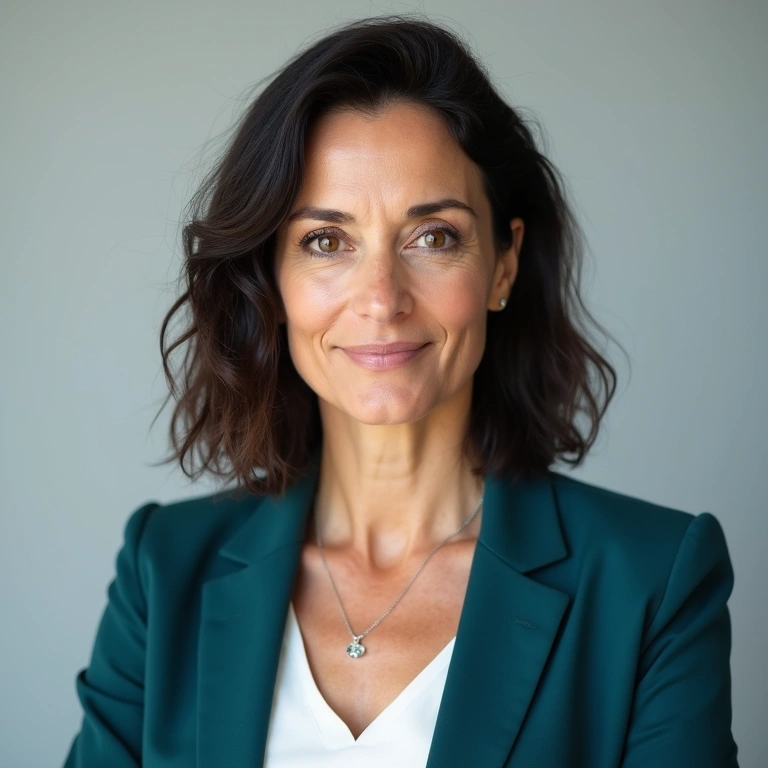

Olugbenga “GB” Agboola, founder and CEO of African fintech giant Flutterwave, has been named to the Founders Council of the Silicon Valley & The World Advisory Board, an initiative launched by media company Semafor. The seat puts Agboola in the same room as the chief executives steering the world’s two biggest AI chipmakers, Nvidia and AMD, alongside leaders from OpenAI, Microsoft and Alphabet. The appointment was first reported by Daily Post Nigeria on October 8, 2026, and picked up by outlets including the Houston Chronicle, BigGo Finance and Anambra People magazine over the following two days.
For a hardware-watching audience, the headline detail is who else sits on the council. Jensen Huang and Lisa Su, the rival chiefs of Nvidia and AMD, both carry co-chair titles on the same board as Agboola. That pairing matters more than it might first appear, because it puts a fintech operator from Lagos directly inside the circle of people shaping how AI infrastructure gets built, funded and governed over the next several years.
What Happened: Flutterwave’s CEO Lands a Seat at the Table
According to the Daily Post Nigeria report that broke the story, Agboola’s appointment is part of an expanded Global Advisory Board that now counts more than 50 global entrepreneurs, business leaders and technology figures. The initiative itself is described by Semafor as a multi-year effort connecting the people who build technology with policymakers and others grappling with its economic and social fallout. Agboola’s specific placement is on the Founders Council, a subset of the board apparently reserved for company founders rather than career executives or financiers.
The timing lines up with a broader year for Silicon Valley & The World. Semafor’s own announcement page, dated in its URL to July 2026, frames the move as an expansion of a board that already existed, not a brand-new launch. That detail matters for anyone trying to gauge how significant the appointment is: Agboola is joining a growing structure, not founding one.
Neither Semafor nor Daily Post Nigeria’s report includes compensation figures, a term length, or a product or investment tied to the appointment. No qualifying on-record quote from Agboola, Semafor, or any of the listed co-chairs has surfaced in the reporting so far. That’s worth flagging up front, because it shapes how much weight the story can carry on its own: this is a governance and visibility story, not a financial one.
Who Is Olugbenga Agboola?
Agboola co-founded Flutterwave in 2016 as a payments infrastructure company built to let businesses accept and send money across Africa’s fractured banking systems. The company has since become one of the continent’s highest-profile fintech unicorns, processing payments for merchants ranging from small e-commerce sellers to multinational brands operating across Nigeria, Kenya, Ghana, South Africa and dozens of other markets. Flutterwave has not disclosed a current valuation tied to this appointment, and none is cited in the reports naming Agboola to the Founders Council.
What the appointment signals, more than any dollar figure, is a recognition that African fintech founders are increasingly being pulled into rooms built around AI policy and infrastructure, spaces that have historically skewed almost entirely toward US and, to a lesser extent, Chinese technology leadership.
Inside the Silicon Valley & The World Advisory Board
Semafor built Silicon Valley & The World as a standing forum meant to run for multiple years, pairing technology builders with the policymakers, investors and civil-society figures who have to live with the consequences of what gets built. The board’s stated focus, per Semafor’s own description, is technology and artificial intelligence and their effects on economies and societies. That is a broad mandate, and the structure appears designed to match it: a core group of co-chairs, a wider Founders Council for company builders, and now a Global Advisory Board that has grown past 50 names.
The six co-chairs listed in the current announcement span six different organizations, which is itself notable. It is not a board stocked entirely with AI-lab executives or entirely with hardware makers. It mixes a model developer (OpenAI), two chipmakers (Nvidia and AMD), a platform giant (Microsoft), a search-and-cloud giant (Alphabet and Google), and a venture firm (ICONIQ Capital) that has quietly backed many of the companies the other five represent.
The Co-Chairs: Six Names From OpenAI to AMD
Here is the confirmed co-chair lineup as named in the reporting around Agboola’s appointment:
| Name | Title | Organization |
|---|---|---|
| Olugbenga “GB” Agboola | Founder & CEO | Flutterwave (Founders Council) |
| Sam Altman | CEO | OpenAI (Co-Chair) |
| Jensen Huang | Founder & CEO | NVIDIA (Co-Chair) |
| Lisa Su | Chair & CEO | Advanced Micro Devices (Co-Chair) |
| Satya Nadella | Chairman & CEO | Microsoft (Co-Chair) |
| Ruth Porat | President & Chief Investment Officer | Alphabet and Google (Co-Chair) |
| Divesh Makan | Partner | ICONIQ Capital (Co-Chair) |
Why Nvidia and AMD Share a Seat
Huang and Su rarely appear on the same roster outside of earnings season comparisons and chip-benchmark stories. Their companies compete directly for AI data center GPU spend, and reporting on this site has tracked that rivalry closely, including Su’s public comments on AI chip demand outpacing supply through 2028 and AMD’s $8.2 billion acquisition of Fei-Fei Li’s World Labs. Putting both chiefs on the same advisory board, even a loosely structured one, is a reminder that the AI hardware fight and AI governance conversations are converging into the same small set of rooms. Huang has also been vocal about keeping that governance light-touch, telling AI labs in recent remarks that no new laws are needed if labs police themselves, a stance that will likely shape how he engages with a board built partly around AI’s societal effects.
The Non-Hardware Names: Altman, Nadella, Porat, Makan
Altman’s presence is the least surprising of the six; OpenAI has spent much of 2026 on a public-facing push that includes everything from releasing a large batch of disputed AI-generated math proofs to expanding its consumer and enterprise footprint globally. Nadella and Porat represent the two platform companies with the deepest enterprise AI distribution, Microsoft through Azure and Copilot, and Alphabet through Google Cloud and Gemini; this site has covered how the Google-versus-Anthropic rivalry is already showing up in prediction markets, with the two companies recently splitting 43% to 41% on one tracked index, a split worth watching as both companies’ leadership gets pulled into the same advisory structures. Makan’s ICONIQ Capital is less of a household name but has quietly held stakes across the AI and fintech ecosystem, making him the connective tissue between the operators and the capital that funds them.
Separating Confirmed Fact From Headline Spin
The headline that broke this story, and the one most outlets have repeated, describes the board as “OpenAI, NVIDIA, Microsoft and AMD-led.” That framing is catchy, and it isn’t wrong exactly, but it is incomplete. The confirmed co-chair list includes six people across six organizations, not four. Alphabet and Google, through Porat, and ICONIQ Capital, through Makan, are just as much co-chairs as the four companies named in the viral headline. Readers searching for this story should know the four-company framing understates the board’s actual composition by two organizations.
A second claim circulating in some secondary coverage states that Agboola is the only Black man named to the Founders Council. That characterization appears in at least one separate report but is not confirmed by the Daily Post Nigeria story or by Semafor’s own announcement, both of which simply list names without racial or demographic breakdowns. Until Semafor publishes a fuller roster of the Founders Council, that claim should be treated as unverified, not as established fact.
Why a Fintech Founder on a Hardware-Heavy Board Matters
Boards built around AI’s societal impact have, until fairly recently, looked almost entirely like a map of Northern California. Adding a payments-infrastructure founder from Lagos changes the texture of the conversation in a specific way: Flutterwave’s business exists because formal banking rails in much of Africa were historically too fragmented, too slow or too expensive for cross-border commerce to run smoothly. That is a very different starting problem than the one Huang, Su, Nadella, Porat or Altman solve day to day, and it gives the board a data point on what AI-driven infrastructure actually needs to do in markets outside the US, EU and China.
It also puts a hardware lens on a market most chip-industry coverage rarely mentions. Nvidia and AMD both talk about AI inference running everywhere from hyperscale data centers to edge devices, and this site has tracked how far that push has gone, including Nvidia’s recent RTX Spark launch events aimed at developer and consumer markets. Africa’s payments infrastructure, run at Flutterwave’s scale, is itself a large distributed compute and fraud-detection problem, which makes Agboola a more natural fit for a hardware-adjacent policy conversation than the headline framing gives him credit for.
Flutterwave’s Market, By the Numbers
Independent research on Africa’s fintech sector gives some sense of the market Flutterwave operates in, and why a founder from that market earning a global policy seat is a meaningful data point rather than a vanity appointment. McKinsey & Company’s research on Nigeria’s fintech potential found that payment solutions represented around 15% of Nigeria’s banking revenue pools, while fintech overall accounted for roughly 1.25% of the country’s retail banking revenue as of 2019, the early window in which Flutterwave was scaling. A separate McKinsey report on fintech in Africa put the sector’s total revenue at an estimated $4 billion to $6 billion in 2020, against a financial-services market addressable by fintech companies worth roughly $150 billion. The World Bank, citing McKinsey’s research, estimates Nigeria’s fintech sector alone makes up about one-third of Africa’s total fintech market.
| Metric | Figure | Source |
|---|---|---|
| Payment solutions share of Nigeria’s banking revenue | ~15% | McKinsey & Company |
| Fintech share of Nigeria’s retail banking revenue (2019) | ~1.25% | McKinsey & Company |
| Africa fintech sector revenue (2020) | $4B–$6B | McKinsey & Company |
| Africa financial-services market addressable by fintech (2020) | ~$150B | McKinsey & Company |
| Nigeria’s share of Africa’s fintech market | ~1/3 | World Bank, citing McKinsey |
Those figures are dated to research published between 2020 and 2024, and no newer, directly comparable market-size figures tied to this specific appointment have surfaced. They are included here as background on the scale of the market Flutterwave built its business in, not as a measure of the company’s own revenue or valuation, neither of which has been disclosed in connection with the board seat.
The Hardware Angle: Huang and Su’s Widening Policy Footprint
For readers tracking the chip industry specifically, this appointment is a smaller data point in a much larger pattern: Nvidia and AMD’s chief executives are showing up on more non-technical boards and advisory structures than at any point in either company’s history. Huang has spent much of 2026 positioning Nvidia as the default infrastructure layer for AI everywhere, from hyperscale data centers to consumer devices, while Su has made AMD’s supply-constrained growth story, tracked on this site’s coverage of her comments that demand is outpacing supply into 2028, a recurring talking point in investor calls. Both now carry co-chair titles on a board explicitly built around AI’s societal effects, which suggests their companies see policy visibility as being as strategically important as product roadmaps.
That shift matters for competitive analysis of the AI hardware market. A board seat does not move revenue, but it does shape who gets a seat at the table when governments start drafting AI chip export rules, data-center energy policy, or AI safety standards that eventually touch hardware procurement. Huang and Su sitting on the same board as OpenAI’s Altman gives both chip companies a direct line into how the model layer is thinking about future compute needs, which is valuable intelligence regardless of what the board formally produces.
Market Impact: What This Means for AI Chip Makers and Fintech Investors
No stock-moving reaction has been reported in connection with this appointment, and nothing in the available reporting ties it to a funding round, acquisition, or product announcement for Flutterwave, Nvidia, AMD, OpenAI, Microsoft or Alphabet. The market impact here is reputational and relational rather than financial. For Flutterwave, the appointment is a credibility marker that can matter in future fundraising conversations or regulatory discussions across the African markets where it operates, simply because its founder now sits in rooms with the chief executives of the world’s largest AI companies.
For Nvidia and AMD specifically, the pattern of their chiefs joining broad societal-impact boards, rather than purely industry trade groups, suggests both companies are trying to get ahead of AI governance conversations before regulation catches up with deployment. That is consistent with Huang’s public comments favoring self-policing over new legislation, and it gives both companies a voice in framing how AI hardware gets discussed at a policy level well before any formal rulemaking begins.
Competitive Landscape: Who Else Could Have Gotten This Seat
Africa has produced several fintech founders with global visibility over the past decade, running payments and banking infrastructure companies across markets Flutterwave also competes in. None of the available reporting on the Silicon Valley & The World Founders Council names any other African fintech founder as part of the current roster, which makes Agboola’s seat, as far as confirmed reporting shows, a singular rather than a shared recognition at this stage. That could change if Semafor publishes a fuller Founders Council list; until then, the comparison is less about naming rival founders and more about noting that this is reportedly a first of its kind for a continent-based fintech operator at this specific table.
Historical Context: Tech Advisory Boards and the Diversity Debate
Advisory boards built around AI and technology policy have faced recurring criticism for skewing heavily toward US-based, venture-backed leadership, with limited representation from the Global South, where a large share of the world’s population will eventually use AI-powered financial and communication tools. Semafor’s own description of Silicon Valley & The World as a board meant to connect technology builders with “the world” implicitly acknowledges that gap. Agboola’s appointment, alongside the board’s growth past 50 global figures, reads as an attempt to address that criticism directly, even if the board’s co-chair tier remains dominated by US-headquartered companies.
That tension, between a board built to represent “the world” while its most powerful seats stay concentrated among a handful of Silicon Valley companies, is likely to follow this initiative as it grows. It is a familiar pattern across corporate advisory structures: visible diversity additions at the broader council level, while the small co-chair tier that actually sets direction stays unchanged.
What’s Unconfirmed, and Why It Matters
- No compensation, fee, or equity arrangement tied to the Founders Council seat has been disclosed.
- No term length for the appointment has been published.
- No direct, on-record quote from Agboola, Semafor, or any of the six named co-chairs has surfaced in reporting so far.
- The claim that Agboola is the only Black man on the Founders Council is not confirmed by Semafor’s announcement or by the Daily Post Nigeria report.
- No valuation, funding round, or product tied to Flutterwave has been announced alongside this appointment.
Each of those gaps matters because the story has traveled fast across multiple outlets in a short window, October 8 through October 10, 2026, and fast-moving stories are where unverified secondary claims most easily get repeated as fact. Treating the board’s composition and Agboola’s specific role with the above caveats is the difference between accurate reporting and amplifying a headline that overstates what is actually confirmed.
5 Predictions for What Comes Next
- Semafor publishes a fuller Founders Council roster. Given the board already exceeds 50 global figures, expect additional names, possibly including other African or Global South founders, to surface as the initiative matures.
- Nvidia and AMD’s chiefs keep collecting non-technical board seats. Huang and Su’s presence here fits a broader 2026 pattern of chip executives seeking policy visibility ahead of AI hardware regulation, and more such appointments are likely before year-end.
- Flutterwave leans on the appointment in future fundraising or regulatory conversations. A seat alongside OpenAI, Nvidia, Microsoft and Alphabet’s leadership is the kind of credibility marker fintech founders typically cite directly in investor materials.
- The “only Black man” claim gets either confirmed or quietly dropped. Expect either an official Semafor statement clarifying Founders Council demographics, or the claim simply fading from coverage without correction.
- Coverage outside Nigeria-focused and tech-trade outlets stays thin. Unless a co-chair makes a public statement or the board publishes concrete output, this story is likely to remain a niche business and tech headline rather than a mainstream one.
Frequently Asked Questions
Who is Olugbenga Agboola?
Olugbenga “GB” Agboola is the founder and CEO of Flutterwave, a payments infrastructure company serving businesses across Africa.
What is the Silicon Valley & The World Advisory Board?
It is a multi-year initiative launched by media company Semafor that connects technology builders with policymakers and other stakeholders focused on the economic and social effects of technology and AI.
Who are the board’s co-chairs?
The confirmed co-chairs are Sam Altman of OpenAI, Jensen Huang of Nvidia, Lisa Su of AMD, Satya Nadella of Microsoft, Ruth Porat of Alphabet and Google, and Divesh Makan of ICONIQ Capital.
Is the board really “led” by just OpenAI, Nvidia, Microsoft and AMD?
Not exactly. That framing, used in the headline that broke the story, omits two of the six confirmed co-chairs: Alphabet and Google’s Ruth Porat, and ICONIQ Capital’s Divesh Makan.
Is Agboola being paid for this role?
No compensation, fee, or equity arrangement has been disclosed in connection with the appointment.
Is Agboola the only Black man on the Founders Council?
That claim appears in some secondary coverage but is not confirmed by Semafor’s own announcement or by the original Daily Post Nigeria report, both of which list names without demographic detail.
How big is the overall Global Advisory Board now?
Reports describe the expanded Global Advisory Board as including more than 50 global entrepreneurs, business leaders and technology figures.
Why does a chip-focused audience care about a fintech CEO’s board seat?
Because Nvidia’s Jensen Huang and AMD’s Lisa Su, the two chief executives steering the AI hardware market, are co-chairs of the same board, giving the appointment relevance for anyone tracking how chipmaker leadership is engaging with AI policy conversations beyond pure product and earnings news.