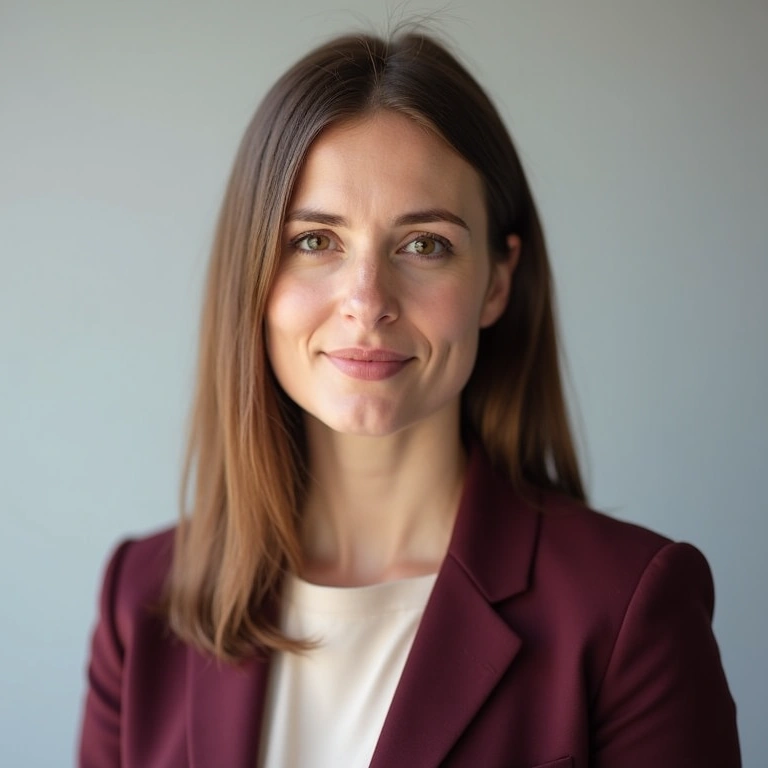

Meta’s superintelligence talent war has produced its first big public defection. Andrew Tulloch, a prominent AI researcher who joined Meta last year as part of the company’s aggressive recruiting push, is leaving for rival lab Anthropic, according to reports from the Wall Street Journal, Business Insider, Ynetnews, TradingView, and CNN. The move lands on September 11, 2026, and it is already being read across Silicon Valley as a signal that money alone may not be enough to keep top researchers loyal to Meta’s Superintelligence Labs.
Tulloch’s name carries weight in machine learning circles. He spent 11 years at Meta before leaving in 2023 for OpenAI, then co-founded Thinking Machines Lab, the startup led by former OpenAI CTO Mira Murati. Meta reportedly paid a massive sum to bring him back in 2025, and now, barely a year later, he’s headed to Anthropic instead. Business Insider reports he will start there next week, working on the company’s inference and performance team, an area focused on how models are trained and how they respond to users once deployed.
What we know about Andrew Tulloch’s move to Anthropic
The core facts are consistent across the outlets that first reported the story. Tulloch is departing Meta for Anthropic, where he’ll join the inference and performance team. According to Business Insider’s reporting, that team’s mandate covers both training efficiency and the tuning of how models behave once they’re answering real user queries, two areas that sit at the center of Anthropic’s competitive pitch to enterprise customers.
What makes the story land harder than a routine hire is the money attached to it. One report describes Tulloch as having received a compensation package exceeding $1 billion to join Meta Platforms last year. A separate report puts the figure differently, describing a pay package potentially worth up to $1.5 billion when he was lured back to the company. Meta has gone beyond simply declining to confirm the numbers: the company reportedly dismissed the widely cited $1.5 billion figure as “inaccurate and absurd.” Even so, neither figure has been confirmed by Meta in any detailed breakdown, and the gap between the two numbers is a reminder that pay packages tied to unvested equity, retention bonuses, and multi-year stock grants are notoriously hard to pin down from the outside. Still, both numbers point in the same direction: Meta paid an extraordinary sum to bring Tulloch back into the fold, and it wasn’t enough to keep him past a single year.
Neither Meta nor Anthropic has issued a public statement confirming the exact timing of the exit or offering an on-record quote about the move. The reporting so far is sourced to people familiar with the matter and to the outlets’ own reviews of the situation, which is standard practice for these kinds of personnel stories in AI, an industry where non-disclosure agreements and unvested stock make companies reluctant to comment on departures.
Who is Andrew Tulloch, and why does this hire matter
Tulloch isn’t a household name outside AI research circles, but inside them he’s considered one of the sharper minds working on large-scale model training. His resume traces the last decade of the field’s biggest shifts. He spent 11 years at Meta, then left in 2023 to join OpenAI at a moment when the company was scaling GPT-4 and starting to plan its next generation of models. From there he co-founded Thinking Machines Lab alongside Mira Murati, a startup that drew outsized attention for assembling a team of well-known former OpenAI researchers even before shipping a public product.
Meta’s decision to pay whatever it took to bring him back last year fits a pattern the company has followed since launching its Superintelligence Labs division: recruit aggressively from rivals, offer compensation packages that dwarf typical tech salaries, and bet that concentrating enough talent in one place will produce a breakthrough. Tulloch’s exit, only a year after rejoining, is the clearest evidence yet that the strategy has a retention problem, not just a recruiting one.
Meta’s superintelligence spending spree, in context
Meta’s push to build out its AI research bench has been one of the most closely watched storylines in tech since 2025. The company built a reputation for offering researchers pay packages that outstrip anything previously seen in the industry, part of a broader effort by CEO Mark Zuckerberg to close the gap with OpenAI, Anthropic, and Google DeepMind on frontier model capability. Reports describing individual compensation deals worth into the hundreds of millions, and in some cases into the billions when stock vesting schedules are included, have become a recurring feature of coverage on the AI labor market over the past year.
That strategy has produced a roster stacked with well-known names, but it has also raised a question that Tulloch’s departure now puts front and center: does spending at that scale actually buy loyalty, or does it just buy a year or two of a researcher’s time before a better opportunity, a better team fit, or a more interesting technical mandate pulls them elsewhere? Anthropic, for its part, has generally been described in reporting as offering lower base compensation than Meta but more autonomy and a research culture that many scientists say they prefer.
Why Anthropic keeps winning these fights
Anthropic has spent the last two years building a reputation as the lab researchers want to work at even when it can’t always match a rival’s headline salary number. The company’s safety-first branding, its research-driven internal culture, and its steady stream of Claude model releases have made it a magnet for scientists who want to work on frontier capability without some of the product pressure that comes with being embedded in a consumer social media company’s org chart.
Putting Tulloch on the inference and performance team is a notable placement. That group sits at the intersection of two things Anthropic has staked its reputation on: training efficiency (getting more capability out of the same compute budget) and response quality (how a deployed model actually behaves when a paying customer is on the other end). Given Tulloch’s background spans exactly that range, from Meta’s infrastructure work to OpenAI’s model training to Thinking Machines Lab’s research agenda, the placement reads as a targeted hire rather than a generic add to headcount.
Market and industry impact
Individual researcher moves rarely move stock prices on their own, but they do shape how investors and rivals read the broader competitive picture. A high-profile departure from Meta’s Superintelligence Labs division, especially one involving a researcher the company reportedly paid an unprecedented sum to retain, feeds into an ongoing narrative that Meta’s AI spending has yet to translate into a clear capability lead over Anthropic, OpenAI, or Google DeepMind. Wall Street analysts and tech reporters have flagged AI talent retention as a soft metric worth watching alongside harder numbers like capital expenditure and model benchmark scores.
For Anthropic, landing a researcher with Tulloch’s background adds to a hiring narrative the company has leaned on as it competes for enterprise customers who care as much about the people building a model as they do about benchmark scores. Anthropic has been positioning itself as the enterprise-safe alternative to both OpenAI and Meta, and every high-profile hire reinforces that pitch to customers evaluating which AI vendor to build on top of.
Competitive comparison: Meta, Anthropic, OpenAI on talent retention
The table below lays out how the three labs most frequently named in this talent war compare on the dimensions that matter most to researchers deciding where to work, based on public reporting over the past year rather than any figures disclosed directly by the companies.
| Lab | Known recruiting approach | Reported compensation strategy | Recent high-profile talent story |
|---|---|---|---|
| Meta Superintelligence Labs | Aggressive direct recruiting from rival labs | Reports of packages reaching into the hundreds of millions to low billions with equity | Andrew Tulloch departs for Anthropic after roughly a year back at the company |
| Anthropic | Research-culture and mission-driven pitch | Generally described as offering less cash upfront than Meta, with equity upside | Continues to draw researchers from Meta, OpenAI, and startups into inference and safety teams |
| OpenAI | Mix of internal promotion and external hires | Competitive packages tied to broader compute and product scale | Lost Tulloch to Thinking Machines Lab in 2023 before he moved on to Meta |
A brief history of AI’s researcher poaching wars
The pattern playing out with Tulloch didn’t start in 2026. The AI talent market has been unusually fluid since the release of ChatGPT in late 2022 kicked off a race among every major tech company to build or acquire frontier model capability, a trend TechCrunch has tracked closely through years of lab-to-lab researcher movement. Google, Meta, Microsoft, Amazon, and a wave of well-funded startups have all competed for a research talent pool that industry surveys have repeatedly described as small relative to demand, since the number of scientists with hands-on experience training frontier-scale models numbers in the low thousands worldwide.
Meta’s entry into this bidding war accelerated sharply after it stood up its Superintelligence Labs division, a move widely covered as Zuckerberg’s answer to falling behind on model quality relative to OpenAI and Anthropic. The company’s willingness to offer compensation packages far above prior industry norms reset expectations across the sector and forced competitors to either match the spending or lean harder on non-monetary pitches like research autonomy and mission alignment. Anthropic has largely taken the second path, and Tulloch’s move suggests that approach is still working even against Meta’s checkbook.
Timeline: Andrew Tulloch’s career moves
| Period | Company / Role | Notable detail |
|---|---|---|
| Roughly 2012–2023 | Meta | Spent 11 years at the company before his first departure |
| 2023 | OpenAI | Left Meta to join OpenAI |
| 2023–2025 | Thinking Machines Lab (co-founder) | Co-founded the startup with former OpenAI CTO Mira Murati |
| 2025 | Meta (returns) | Rejoined Meta with a compensation package reported at over $1 billion by one outlet and up to $1.5 billion by another |
| September 2026 | Anthropic | Departs Meta to join Anthropic’s inference and performance team, reportedly starting the following week |
What Meta loses when a researcher like this leaves
Beyond the headline dollar figure, the practical cost to Meta is harder to quantify but arguably more important. Frontier model training runs depend on institutional knowledge, specific infrastructure choices, and relationships between researchers that don’t transfer cleanly when someone leaves. A researcher with Tulloch’s range, spanning large-scale infrastructure at Meta, model training at OpenAI, and independent research at Thinking Machines Lab, carries a kind of cross-lab perspective that’s difficult to replace by hiring one person or even several.
There’s also a morale dimension that companies rarely discuss on the record. When a researcher who was paid an industry-record sum to stay leaves within a year anyway, it sends a signal to the rest of the team about whether the money is actually buying what the company hoped it would buy. Reports have not indicated whether other Superintelligence Labs researchers are reconsidering their positions, but the optics of the exit alone are likely to generate internal conversation.
What Anthropic gains
Anthropic’s placement of Tulloch on its inference and performance team lines up with where the company has been investing lately: making its Claude model family faster and cheaper to run at scale while keeping response quality high enough for enterprise customers who are increasingly price-sensitive about inference costs. A researcher who has worked on infrastructure at Meta’s scale and on model training at OpenAI’s scale brings direct experience with exactly the kind of tradeoffs that team has to make daily, balancing compute cost against latency against output quality.
It also reinforces Anthropic’s public narrative heading into any future funding or IPO conversations: that its research culture is a durable competitive advantage independent of how much cash a rival is willing to offer. That’s a useful story to tell investors and enterprise customers alike, particularly as Anthropic continues to compete with OpenAI and Google for large contracts where the buyer wants some confidence that the underlying research team is stable.
The unanswered questions
Several details remain unconfirmed as of this writing. Neither Meta nor Anthropic has issued an official statement confirming the exact date Tulloch’s employment at Meta ends, and there’s no on-record quote from Tulloch himself explaining his reasoning for the move. The two competing figures for his 2025 Meta compensation package, one above $1 billion and another up to $1.5 billion, have not been reconciled by either company, and it’s possible the discrepancy reflects different ways of valuing unvested equity rather than a factual dispute.
It’s also unclear whether Tulloch’s move is an isolated case or the first of several departures from Meta’s Superintelligence Labs division. Industry watchers will likely be looking closely at LinkedIn updates, conference speaker lists, and future funding announcements from Anthropic and other labs for signs of a broader pattern.
Predictions: what happens next
- Expect Meta to respond to the coverage either with silence or a brief statement thanking Tulloch for his contributions, following the pattern the company has used with prior high-profile departures rather than disputing the reported compensation figures.
- Anthropic is likely to lean into the hire in its own recruiting materials and investor conversations, framing it as validation of its research-culture pitch over Meta’s compensation-first approach.
- Watch for additional departures from Meta’s Superintelligence Labs over the next two to three quarters. A single high-profile exit rarely happens in isolation in a labor market this tight, and other researchers hired under similar packages may be fielding competing offers already.
- Compensation figures for AI researchers at frontier labs are likely to keep climbing rather than stabilize, since Meta’s willingness to pay extraordinary sums has reset the market baseline even for companies that don’t want to match it dollar for dollar.
- Expect continued scrutiny from business media on whether Meta’s Superintelligence Labs spending is producing measurable capability gains proportional to its cost, a question that becomes harder for Meta to deflect every time a marquee hire leaves early.
Why this story matters beyond one researcher
Individual hiring and departure stories can feel like inside-baseball for people who don’t follow AI research closely, but they matter because they’re one of the few visible signals of how the underlying competition between labs is actually going. Model benchmark scores can be gamed or cherry-picked, and capital expenditure figures only show intent, not results. Who chooses to work where, and for how long, is a more honest signal of which labs researchers believe are best positioned to do meaningful work over the next several years.
Tulloch’s path, from Meta to OpenAI to his own startup to Meta again and now to Anthropic, also illustrates just how fluid the senior AI research talent pool has become. Loyalty to any single company appears to be secondary to the specific team, technical mandate, and research autonomy on offer at any given moment, a dynamic every major lab now has to plan around rather than assume away.
Frequently asked questions
Who is Andrew Tulloch?
Andrew Tulloch is an AI researcher who spent 11 years at Meta, left in 2023 to join OpenAI, co-founded Thinking Machines Lab with former OpenAI CTO Mira Murati, then rejoined Meta in 2025 before departing for Anthropic in September 2026.
Why is Andrew Tulloch leaving Meta for Anthropic?
Reports from Business Insider, the Wall Street Journal, Ynetnews, TradingView, and CNN confirm the move but do not include an on-record explanation from Tulloch himself. No official statement from Meta or Anthropic has been published detailing his reasoning.
How much was Andrew Tulloch reportedly paid to join Meta?
Reporting varies. One report says he received a compensation package exceeding $1 billion to join Meta Platforms last year. Another describes a pay package potentially worth up to $1.5 billion, a figure Meta has publicly disputed, reportedly calling it “inaccurate and absurd.” Neither Meta nor Tulloch has confirmed an exact figure.
What will Andrew Tulloch do at Anthropic?
According to Business Insider’s reporting, he will join Anthropic’s inference and performance team, which focuses on optimizing model training and how models respond to users in production.
When does Andrew Tulloch start at Anthropic?
Business Insider’s reporting indicates he is expected to start next week, though neither company has issued an official confirmation of the exact date.
Is this the first high-profile departure from Meta’s Superintelligence Labs?
Meta’s Superintelligence Labs division has faced ongoing scrutiny over researcher retention since it was formed, but Tulloch’s exit is one of the more closely covered individual departures given the scale of his reported compensation package and his high profile in the research community.
What is Thinking Machines Lab?
Thinking Machines Lab is an AI startup co-founded by former OpenAI CTO Mira Murati along with Andrew Tulloch and other former OpenAI researchers, formed after Tulloch’s initial departure from Meta in 2023.
Does this affect Anthropic’s competitive position against OpenAI and Meta?
It’s one data point rather than a decisive shift, but it reinforces Anthropic’s reputation among researchers as a lab that can compete for top talent on culture and research autonomy even when it doesn’t match a rival’s headline compensation figure.