Google put a satellite into low-Earth orbit on October 1, 2026, and most of the coverage that followed focused on the launch itself: four Tensor Processing Units, a Falcon 9 rocket, a refrigerator-sized box called MVP. That part of the story is already old news. The detail that matters more for anyone tracking where Google is actually headed sits one layer down, in the fine print of the company’s own announcement: the MVP flight was never the finish line. It was the opening move in a plan that leads to a second launch, a new hardware partner, and a bet that laser-linked satellites can eventually do the kind of machine learning work that today happens exclusively in terrestrial data centers.
Google calls the effort Project Suncatcher, and the company has now laid out, in writing, what comes after the first satellite. The next step is a learning mission built with Planet, the commercial satellite imaging company, involving two prototype satellites targeted for early 2027. That single sentence, buried in Google’s own blog post, reframes the October 1 launch from a headline event into a checkpoint inside a much longer roadmap. This piece covers that roadmap: who Google is building it with, why it chose laser communication over radio, how the plan compares with a crowded field of rivals also chasing orbital compute, and what the next 18 months are likely to look like.
What Already Happened: MVP Was the Minimum Viable Test
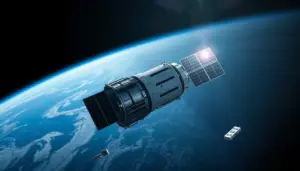
SpaceX flew the MVP satellite on a Falcon 9 as part of the Transporter-18 rideshare mission out of Vandenberg Space Force Base, carrying four TPUs onboard with combined computing capacity roughly equivalent to one data-center server, according to Google’s own fact sheet. A Google representative, Ben Beals, described the satellite as a very minimal test, according to reports. That framing is worth sitting with, because it tells you Google itself does not consider MVP the interesting part of this story. Shattered.io’s coverage of the launch day and the reported 15-minute test windows already walked through the hardware specifics, so this piece picks up where those left off: the roadmap Google says it’s actually building toward.
Google’s research publication on the project describes Suncatcher as a moonshot exploring a new frontier, one that equips solar-powered satellite constellations with TPUs and free-space optical links, aiming to one day scale machine learning compute in space, according to Google Research’s own blog. Note the phrase “one day.” Google is not claiming this works yet. It’s claiming the physics are worth testing, and MVP was step one of that testing process, not the payoff.
The Real Milestone: A 2027 Learning Mission With Planet
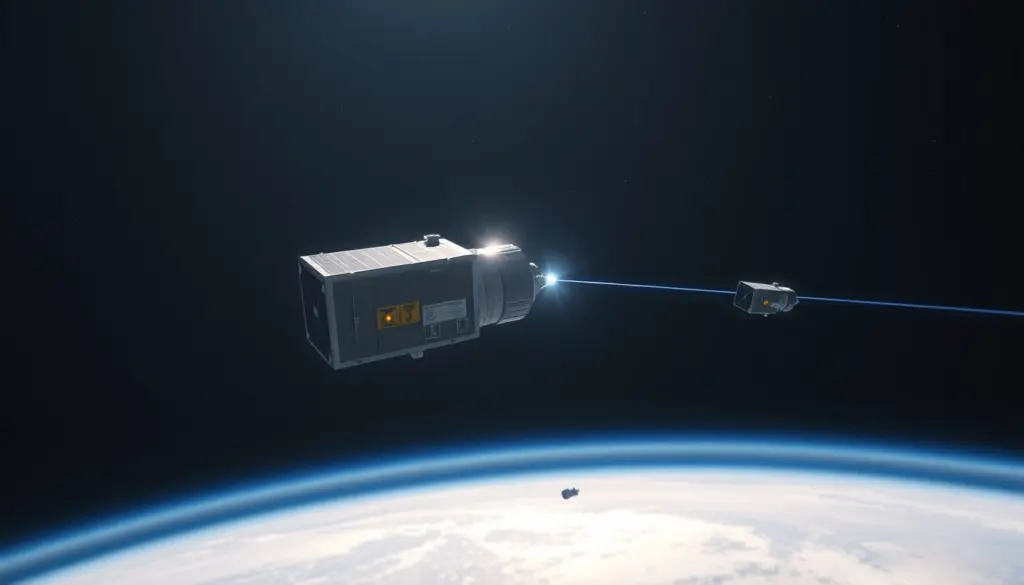
Google’s own blog post lays out the next step in plain terms: the company’s next step is a learning mission in partnership with Planet to launch two prototype satellites by early 2027 that will test the hardware in orbit, laying the groundwork for a future era of massively scaled computation in space, according to Google’s announcement. That is a meaningfully different mission profile from MVP. One satellite testing four TPUs is a hardware-survival check: can the chips handle launch stress, thermal swings, and radiation exposure. Two satellites working together is a systems check: can two independent spacecraft coordinate compute, synchronize workloads, and move data between each other reliably enough to act as a single unit.
That distinction is the entire point of the roadmap. A single orbiting TPU cluster is a novelty. A constellation of satellites that can split a training job across multiple nodes, the way a terrestrial data center splits work across racks, is the actual commercial target. Google’s fact sheet confirms the first prototype mission was developed in partnership with Planet and flew onboard the Transporter-18 rideshare mission with SpaceX, according to Google Research. The 2027 mission extends that partnership rather than starting a new one, which suggests Google is treating Planet as a long-term build partner rather than a one-off vendor.
Why Planet, Specifically
Planet built its business on Earth-imaging satellites, not AI accelerators, which makes the pairing worth a second look. The company’s own statement on the deal frames it less as a subcontracting job and more as co-ownership of the research question. Planet said it was pleased to announce its participation in Google’s Project Suncatcher, calling it a bold research initiative to explore building scalable machine learning compute systems in space, according to Planet’s own announcement.
Planet brings something Google doesn’t have in-house at scale: a working satellite bus manufacturing line and an existing relationship with launch providers. Google supplies the chips and the machine learning workload. Planet supplies the spacecraft, the power system, and the operational experience of actually running satellites day to day. Satellite imaging companies like Planet already solved a version of this problem, keeping sensors cool, powered, and pointed correctly in orbit, which is a large part of what an AI-compute satellite also needs. That division of labor is probably why the partnership extends into the 2027 mission rather than ending after MVP.
Laser Links: Betting Against Radio for Inter-Satellite Data
The hardest unsolved problem in orbital computing isn’t the chips, it’s the wiring. Training large models on Earth depends on extremely fast links between GPUs and TPUs sitting centimeters apart in the same rack. Spread that same cluster across satellites orbiting hundreds of kilometers apart, and the interconnect problem changes entirely. Google’s answer is optical: the satellites will communicate via lasers, according to Google’s fact sheet, rather than conventional radio-frequency links.
Free-space optical links carry more bandwidth per unit of power than radio and don’t need spectrum licensing, which matters once you’re talking about a constellation instead of a handful of satellites. The tradeoff is precision: laser links require the satellites to point at each other with far tighter tolerances than a radio dish needs, and that pointing has to hold steady while both spacecraft are moving at orbital velocity. Kepler Communications already operates what’s reported to be the largest compute cluster currently in space, roughly ten satellites carrying around 40 Nvidia Orin processors interconnected by optical laser links, according to Network World. Google isn’t inventing the laser-link concept from scratch. It’s applying a technique other orbital-compute operators are already using, at a different scale and with different chips.
The Suncatcher Timeline So Far
| Date | Milestone | Scope | Source |
|---|---|---|---|
| Oct. 1, 2026 | MVP satellite launch | 1 satellite, 4 TPUs, single-server-equivalent compute | Google / SpaceX Transporter-18 |
| Oct. 1, 2026 | In-orbit hardware survival test begins | Radiation, thermal, and launch-stress tolerance of TPUs | Google Research |
| Unconfirmed | MVP operational lifetime | Reported as roughly one year to as long as six years; not officially confirmed | Secondary reports |
| Early 2027 | Learning mission with Planet | 2 prototype satellites, multi-node coordination test | Google blog announcement |
| Not yet dated | Constellation-scale deployment | Thousands of satellites reportedly discussed; unconfirmed by Google | Secondary reports |
Why Bother Putting Compute in Orbit At All
The obvious question is why any of this is worth the cost and risk of a satellite program when terrestrial data centers already work. The answer Google and most of the industry point to is power, not performance. Training runs for frontier models now draw amounts of electricity that strain regional grids and trigger years-long permitting fights for new substations and gas turbines. Orbit removes two of the three hard constraints on a terrestrial data center: there’s no grid interconnection queue, and solar panels in space receive direct, unfiltered, round-the-clock sunlight over large stretches of most orbits, without clouds, nightfall, or atmospheric scattering cutting into the yield.
Cooling flips the other direction. A data center on Earth can reject waste heat into air or water. A satellite can only radiate heat into space, which is a slower process per unit of surface area, so orbital compute has to be engineered around heat rejection the way terrestrial facilities are engineered around power delivery. That’s one of the reasons an unmanned test satellite like MVP matters more than its small size suggests: thermal performance in real orbital conditions is exactly the kind of data that’s hard to simulate accurately on the ground. The same tradeoff shows up in Google’s earlier, lower-power orbital tests, including the reported 1-kilowatt power ceiling on its first in-orbit experiments, part of the same underlying story: a company trying to decouple AI compute growth from grid capacity growth.
The Competitive Field: Google Is Not Alone in Orbit
Project Suncatcher’s most distinguishing feature isn’t that Google is chasing orbital AI compute, it’s how late Google is to a field that already has several active players. Starcloud has discussed a long-term vision involving a constellation in the tens of thousands of satellites and flew an Nvidia H100 chip to orbit in November 2025, according to CNBC. Nvidia itself announced a Vera Rubin Space-1 module aimed squarely at orbital data centers, geospatial intelligence, and autonomous operations, expected to reach availability in 2027, according to CNBC and Nvidia’s own materials. SpaceX, separately from its rideshare business with Google, has discussed a Starmind AI1 satellite program with Nvidia using Rubin GPUs and Vera CPUs for orbital AI workloads, targeting a first launch in late 2027, according to MarketWatch and Interesting Engineering.
Kepler Communications, Sophia Space, and a company now operating under the name Orbital have all also been named by Nvidia as customers using its accelerated-computing platforms for space missions, according to Network World and Nvidia’s own September 2026 materials. None of these programs have yet put a full AI training cluster into continuous operation in orbit. Every one of them, Google included, is still in the test-and-validate phase. What separates Suncatcher from most of that list is the laser-link architecture and the explicit two-satellite coordination test set for 2027, which is a more conservative, incremental step than the thousands-of-satellites pitches coming from some competitors.
How the Major Orbital Compute Programs Compare
| Company | Hardware | Reported Scale | Timeline | Source |
|---|---|---|---|---|
| Google (Project Suncatcher) | 4 TPUs on MVP; 2 satellites planned with Planet | Single-server-equivalent today; constellation unconfirmed | Launched Oct. 2026; next mission early 2027 | Google Research |
| Starcloud | Nvidia H100, planned Blackwell hardware | Discussed up to 88,000 satellites long-term | First H100 satellite flew Nov. 2025 | CNBC |
| Nvidia (Vera Rubin Space-1) | Space-qualified Vera Rubin, IGX Thor, Jetson Orin | Module-level product, not a satellite fleet | Expected availability 2027 | CNBC / Nvidia |
| SpaceX (Starmind AI1, with Nvidia) | Nvidia Rubin GPUs, Vera CPUs | Up to 1 million satellites discussed long-term | First launch targeted late 2027 | MarketWatch / Interesting Engineering |
| Kepler Communications | ~40 Nvidia Orin processors | 10 satellites, largest active compute cluster in orbit | Operating now | Network World |
Read that table carefully and a pattern emerges: everyone describes an enormous eventual constellation, and almost nobody has more than a handful of satellites actually flying today. Kepler’s ten-satellite cluster is the only program on the list currently running continuous operations rather than one-off test flights. Google’s approach, deliberately small steps from one satellite to two, looks more cautious than the headline numbers coming from Starcloud or SpaceX, which may reflect how seriously Google is treating the unresolved engineering problems around thermal management and laser-link pointing accuracy.
Historical Context: Space Computing Didn’t Start With AI
Putting processors in orbit is not new, but putting processors capable of running large neural networks in orbit is. Satellites have carried onboard computers since the earliest Sputnik and Explorer missions, but those systems handled telemetry and basic control loops, workloads that are trivial by modern standards. The shift that makes Suncatcher and its rivals possible is the same one that made the current AI boom possible on the ground: chips originally designed for terrestrial data centers, Nvidia’s GPUs and Google’s TPUs, have become efficient enough per watt that flying a handful of them stops being an engineering stunt and starts being a plausible commercial experiment.
Earth-observation satellites did some of this groundwork already. Planet’s own fleet has spent more than a decade proving that commercial satellite constellations can be built, launched, and operated at a cadence and cost that would have been unthinkable for a government space program two decades ago. Suncatcher is, in a sense, trying to borrow that commercial satellite playbook and apply it to a payload type, AI accelerators, that nobody had tried to fly at this scale before 2025.
Market Impact: What This Means for Google Cloud and TPU Supply
In the near term, Suncatcher has essentially zero effect on Google Cloud customers or TPU allocation, since the entire program remains a research effort with a single-digit number of satellites. The more interesting market question is what Google is signaling to investors and competitors about where it expects compute scarcity to bite hardest. Google has spent 2026 managing TPU supply and pricing across its terrestrial fleet, a dynamic visible in moves like the pricing adjustments around Gemini 4 Argon. A credible path to orbital compute, even years away from commercial viability, gives Google a talking point that Microsoft, Amazon, and Meta don’t currently have in their own capital-expenditure narratives: a second, physically distinct supply of AI compute that isn’t gated by grid interconnection queues.
That matters for how analysts model Google’s long-run AI infrastructure spending. If orbital compute eventually becomes cost-competitive with terrestrial data centers, which is still a large if, it changes the unit economics behind every future Gemini or rival large-model release, because power would stop being the primary constraint on how much compute a company can field. For now, Suncatcher functions more as a hedge and a research signal than as a line item that moves Google’s cloud revenue.
The Problems Nobody Has Solved Yet
Three engineering problems sit between where Project Suncatcher is today and the constellation Google describes as its long-term goal. The first is radiation tolerance: commercial AI chips aren’t designed for the ionizing radiation environment outside Earth’s protective magnetosphere, and nobody yet has multi-year data on how TPUs or GPUs degrade under sustained orbital exposure. The second is thermal rejection at scale. A single test satellite can radiate away the heat from four chips, but a cluster running real training workloads continuously generates far more heat, and radiator surface area doesn’t scale as cheaply as chip count does. The third is the laser-link pointing problem described above, which gets harder, not easier, as the number of satellites in a constellation grows, because every satellite has to maintain multiple simultaneous optical links to its neighbors.
None of these are the kind of problem Google can solve with a single announcement. They’re the reason the company’s own public language stays deliberately modest, calling MVP a very minimal test rather than a breakthrough, and describing the field as a new frontier rather than a solved one, according to Google’s own research publication.
What Google and Planet Have Said, in Their Own Words
Google Research describes the overall ambition plainly: Project Suncatcher is a moonshot exploring a new frontier, equipping solar-powered satellite constellations with TPUs and free-space optical links to one day scale machine learning compute in space, according to Google Research’s official blog.
Our next step is a learning mission in partnership with Planet to launch two prototype satellites by early 2027 that will test our hardware in orbit, laying the groundwork for a future era of massively-scaled computation in space.
Google, official company blog (source)
Google’s fact sheet adds the operational detail behind that plan: this initial mission onboard the Transporter-18 rideshare mission with SpaceX was developed in partnership with Planet, and to communicate between satellites, the spacecraft will use lasers, according to Google’s official fact sheet.
Planet is pleased to announce our participation in Google’s Project Suncatcher, a bold research initiative to explore building scalable machine learning (ML) compute systems in space.
Planet, official company statement (source)
Taken together, those statements describe a partnership built for the long haul rather than a one-off demo. Planet isn’t describing itself as a contractor filling a purchase order. It’s describing co-ownership of an open research question, which lines up with Google extending the relationship into the 2027 mission instead of moving to a different hardware partner.
Predictions: Where Suncatcher Goes From Here
- The 2027 Planet learning mission will likely slip by at least a few months. Two-satellite coordination missions with new laser-link hardware have historically been difficult to hit on the first scheduled window, and Google’s own language (early 2027) already carries room to move.
- Google will publish incremental technical results, not a dramatic reveal. Expect research papers and blog updates on thermal performance and radiation data from MVP well before any announcement of a larger constellation.
- Competitive pressure from Starclock, SpaceX’s Starmind AI1, and Nvidia’s Space-1 module will push Google to formalize a timeline for constellation-scale deployment sooner than it otherwise would, if only to keep pace with competitor announcements, even if the underlying engineering isn’t ready.
- Laser-link reliability, not chip survivability, will turn out to be the harder problem to solve at scale, based on how much attention Google is already giving it relative to MVP’s simpler radiation and thermal testing.
- None of the current orbital-compute programs, Google’s included, will reach a commercially meaningful scale (a true multi-satellite training cluster running production workloads) before 2029 at the earliest, given how early every competitor still is in flight-testing phase.
Frequently Asked Questions
What is Google’s Project Suncatcher?
Project Suncatcher is Google’s research effort to test whether solar-powered satellites carrying Tensor Processing Units, connected by laser-based optical links, can eventually support machine learning compute in orbit, according to Google Research.
What happens after the MVP satellite launch?
Google says its next step is a learning mission with Planet involving two prototype satellites targeted for early 2027, intended to test hardware coordination in orbit rather than a single satellite’s survival, according to Google’s official announcement.
Why is Planet Google’s partner for this mission?
Planet already operates a commercial satellite imaging fleet and has the manufacturing and operational experience to build and fly spacecraft. Planet itself describes its role as building and operating an advanced space platform for the project, according to Planet’s own announcement.
Why does Google want to put laser links between satellites instead of radio?
Free-space optical links can carry more data per unit of power than radio links and don’t require the same spectrum licensing, which becomes more important as a constellation grows. Google’s fact sheet confirms the satellites will communicate via lasers rather than radio.
Is Google the only company trying to build AI data centers in space?
No. Starcloud, Nvidia, SpaceX, and Kepler Communications are all pursuing versions of orbital AI compute, at varying scales and timelines, according to reporting from CNBC, MarketWatch, Interesting Engineering, and Network World. Kepler currently operates what’s reported as the largest active compute cluster in orbit.
How long will the MVP satellite operate?
Google has not officially confirmed an exact operational lifetime for MVP. Secondary reports vary widely, from roughly one year to as long as six years, so this detail should be treated as unconfirmed until Google states it directly.
Could orbital data centers actually replace terrestrial ones?
Not in the near term. Every active program, Google’s included, is still in early flight-testing with a handful of satellites. Unsolved problems around radiation tolerance, heat rejection at scale, and laser-link reliability stand between today’s test flights and any constellation large enough to matter commercially.
When will Google know if Project Suncatcher actually works?
The clearest signal will come from the 2027 Planet learning mission, since that test is specifically designed to validate multi-satellite coordination rather than single-chip survival. Results from that mission, expected sometime after the early 2027 launch window, will likely determine whether Google moves toward a larger constellation or scales back the program’s ambitions.