
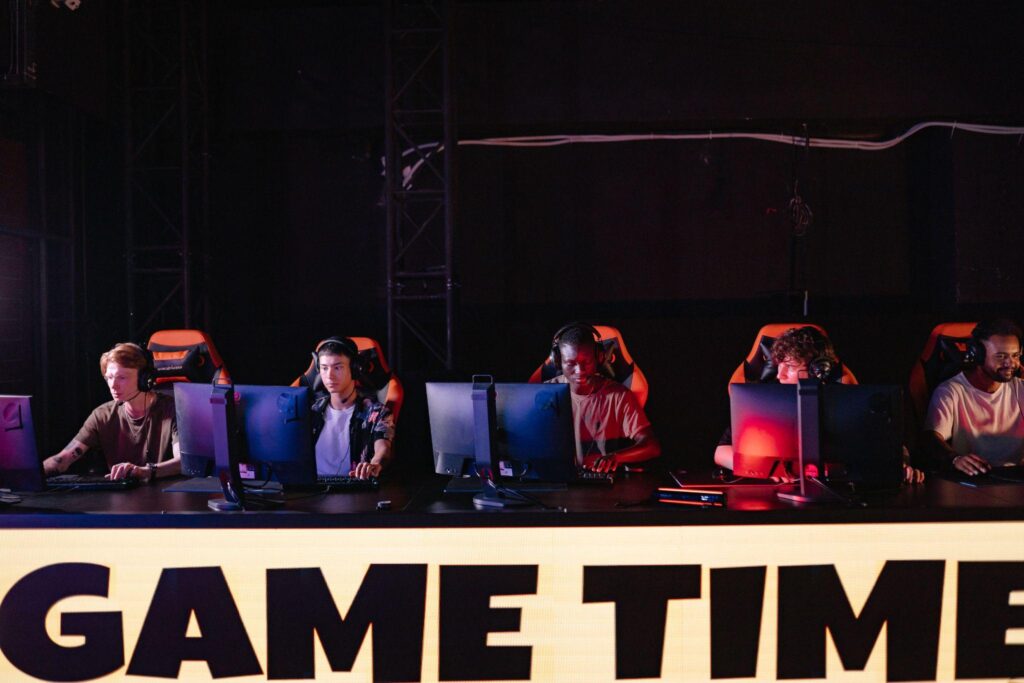
Online gaming used to depend heavily on what could be downloaded and processed on a player’s own device. Faster internet connections and more capable browsers have changed that experience considerably. Today, complex visual content can arrive almost instantly.
Streaming is only part of the change. Modern platforms also need to process user input, update information, manage communication, and keep different parts of a session synchronized. Understanding the technology behind these functions explains why online play feels increasingly immediate.
Video Streaming Has Become Faster and More Responsive
Video streaming works by breaking visual and audio content into small pieces of data that can be transmitted across the internet. Instead of waiting for an entire video file to download, a player’s device receives enough data to begin displaying it while additional information continues to arrive.
Adaptive streaming systems also adjust quality according to connection conditions. If available bandwidth changes, the resolution or amount of data being transmitted can be adjusted to keep the stream moving. This process is often called adaptive streaming.
Several factors affect what players actually see:
- Bandwidth determines how much data can be transferred within a given period.
- Latency measures the delay between data being sent and received.
- Frame rate affects how smooth movement appears on screen.
- Resolution determines the level of visual detail displayed.
These elements work together. A high-resolution stream isn’t necessarily better if the connection can’t deliver it consistently without interruptions.
Real-Time Interaction Requires More Than a Video Feed
Watching a stream is mostly a one-way process. Interactive gaming is different because information must constantly travel in both directions. A player makes a selection, the platform receives it, and the updated state needs to appear on screen quickly.
This can be seen clearly when accessing a live dealer casino, where streamed video is combined with interactive controls and continuously updated game information. The video shows activity taking place in real time, while the digital interface lets the player make selections from a phone, tablet, or computer.
That combination requires several systems to remain synchronized. The video stream, interface controls, session information, and player inputs can’t operate as completely separate elements.
Timing is especially important. An input received after a defined interaction period has closed cannot simply be processed as though it arrived earlier. Platforms therefore use timestamps and server-based processing to establish the sequence of events. What appears to the player as one screen is actually the result of several technologies exchanging information continuously.
Low Latency Makes Interaction Feel Immediate
Latency is the time required for information to travel between a player’s device and the systems processing the session. It is commonly measured in milliseconds. Lower latency means actions and updates can be communicated more quickly.
Physical distance matters because data has to travel through networks to reach a server. Routing quality, local connection conditions, network congestion, and the type of connection being used can all add additional delay.
Platforms use several technologies to reduce noticeable waiting:
- Content delivery networks place data closer to users in different geographic regions.
- Edge computing allows some processing to occur nearer to the player rather than at a distant central location.
- Efficient data protocols reduce unnecessary information exchanged between devices and servers.
- Persistent connections can keep communication channels open instead of establishing a new connection for every action.
Connection quality also depends on conditions outside the platform itself, including competing network traffic and local network stability. The objective isn’t simply greater internet speed. Consistent data delivery is equally important for responsive interaction.
Browsers Now Handle Work Once Left to Dedicated Software
Installing separate software was once common for accessing more technically demanding online experiences. Modern browsers can now perform much more of that work directly. This has made it possible for sophisticated gaming interfaces to operate through an ordinary website.
Modern HTML provides the structure for interactive web content, while JavaScript manages many of the actions that occur when a user selects an option or moves through an interface. WebGL can use a device’s graphics hardware to render detailed two-dimensional and three-dimensional visuals inside the browser.
Browsers also support technologies that maintain continuous communication with online servers. WebSockets, for example, allow information to move in both directions through an open connection. The server doesn’t have to wait for the browser to request every individual update.
For players, the practical result is easier access across devices. A well-designed browser experience can adapt to different screen dimensions and input methods. However, browser version, available memory, device processing power, and connection quality can still affect performance.
Cloud Infrastructure Keeps Sessions Connected
A modern online gaming platform can’t depend on a single computer handling every request. Large numbers of simultaneous sessions require infrastructure that can distribute processing across multiple systems.
Cloud computing infrastructure helps platforms allocate computing resources according to current demand. When more people connect, additional capacity can be made available. Load balancing systems distribute requests so that one server isn’t unnecessarily overloaded while another remains underused.
Session management is another important part of this process. Session management allows an online service to retain relevant settings and activity as users move through different parts of a platform.
The system also has to respond when a connection briefly drops. Depending on the service, session information can be maintained on the server so the player doesn’t necessarily have to begin again after a short interruption.
This happens largely out of view. Players see an interface, but behind it can be databases, application servers, content delivery systems, and network services working together to maintain a consistent session.
Mobile Hardware Has Changed How Platforms Deliver Games
Mobile devices create different technical demands from desktop computers, especially around screen size, connection stability, and available processing power.
Responsive Design Adapts the Interface to Smaller Screens
Responsive design allows buttons, menus, text, and visual elements to reorganize according to the available screen space. This prevents the interface from simply shrinking a desktop layout until it becomes difficult to use.
Performance Tools Reduce the Load on Mobile Devices
Large visual assets can take longer to load and consume more mobile data. Platforms can compress assets, deliver appropriately sized images, and load resources only when they are actually needed.
The Technology Is Becoming Less Visible to Players
The biggest change in online gaming technology isn’t one individual feature. It is the way streaming, cloud computing, browser technology, network infrastructure, and mobile hardware now operate together.
For users, successful technology often goes unnoticed. A stream loads, an input receives a quick response, and the interface adjusts naturally to the device being used. Behind those simple actions is a network of systems designed to exchange and process information in real time.