
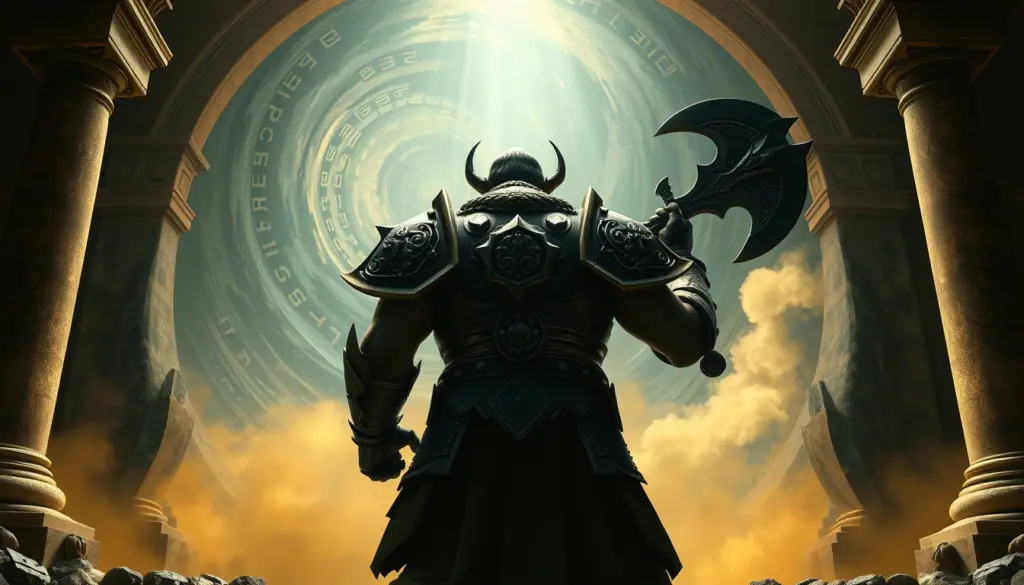
Sony Interactive Entertainment turned a routine San Diego Comic-Con panel into the biggest God of War news cycle since Ragnarök‘s 2022 launch. On July 24, 2026, Santa Monica Studio confirmed a release date for God of War Laufey – February 16, 2027, exclusively on PlayStation 5 – and then, in the same panel, all but confirmed that a new Kratos-led sequel is already in development.
The reveal landed days after God of War: Sons of Sparta, the franchise’s 2D prequel spin-off, posted a 69 on Metacritic – the lowest critic score any mainline God of War entry has ever received. A new release date, a surprise sequel tease, and a franchise-low review score, all inside the same two-week window, make late July 2026 a pivotal stretch for Sony’s most commercially important first-party series.
What Sony Announced at the SDCC 2026 God of War Panel
Santa Monica Studio’s San Diego Comic-Con panel, titled “Forging God of War’s Next Heroes,” was built to promote God of War Laufey, first shown in gameplay form at a June 2, 2026 State of Play (PlayStation Blog). Instead, the panel produced two separate headlines. The first was expected: Laufey finally has a release date, February 16, 2027, alongside confirmation that the game ships on physical disc. The second was not – studio head of creative Cory Barlog confirmed that a new, as-yet-untitled God of War game starring Kratos is already in early development and will pick up directly where Laufey’s story leaves off.
Coverage of the panel spread fast across gaming outlets, including Kotaku, Forbes, Complex, and GosuGamers – a reflection of how rare it is for a platform holder to confirm a sequel to an unreleased game at the same event where that unreleased game finally gets a date. For a franchise that has anchored PlayStation’s first-party lineup since 2018, the double announcement reads as a statement of confidence at a moment when Sony’s hardware business is under real pressure (more on that below).
God of War Laufey: Release Date, Platform, and Story
God of War Laufey releases February 16, 2027, as a PlayStation 5 exclusive, with a confirmed physical disc edition. The game is set immediately after Faye’s funeral at the start of the 2018 God of War reboot. Faye – also called Laufey, the name Norse mythology gives to Loki’s mother – wakes in “the Everywhen,” an afterlife realm that spans multiple mythologies, including Egyptian and Mongolian pantheons alongside the Norse one. It is the first mainline entry in the franchise’s 20-plus-year history where Kratos is not the playable lead.
Kratos still appears, but in a limited, cameo capacity – voiced once again by Christopher Judge, who has played the character since the 2018 reboot. Faye’s arc centers on protecting the plans she made for Kratos and Atreus before her death, which keeps the father-and-son relationship that anchored 2018’s God of War and 2022’s Ragnarök present even though neither is directly playable this time.
Voice Cast and Key Creative Roles
- Deborah Ann Woll as Faye / Laufey, the playable lead
- Christopher Judge returns as Kratos in a reduced role
- Jack Quaid voices Phranque, a new sentient-cube companion
- Perlina Lau voices Rue, a sword-guardian companion
- Cory Barlog, Santa Monica Studio’s head of creative, leads the project
Sony has not released a story trailer beyond the June State of Play gameplay reveal, and pricing for Laufey has not yet been announced. What is confirmed, per the SDCC panel, is that the physical edition ships day one – notable given Sony’s own plans, covered in our report on PlayStation ending disc production by 2028, to wind down new physical-media manufacturing within roughly two years of Laufey’s launch window.
The New Kratos-Led Sequel: What We Know–and Don’t
The bigger story out of SDCC wasn’t Laufey’s release date – it was Barlog’s confirmation that a new Kratos-led God of War game is already in development. According to Barlog, the new title “connects directly to the events of the Laufey game,” meaning Sony is now treating Laufey not as a standalone spin-off but as the connective chapter between Ragnarök and whatever comes next for Kratos himself.
Beyond that, almost nothing has been confirmed. Santa Monica Studio gave no title, no platform, and no release window. Kotaku’s reporting on the panel describes the new Kratos game as “likely still many years away,” a framing consistent with the fact that Santa Monica Studio is currently juggling at least three other God of War-branded projects at once: Laufey itself, a from-the-ground-up remake of the original Greek-era trilogy (announced February 12, 2026), and the already-released 2D prequel Sons of Sparta. Whether the new Kratos game targets PlayStation 5 or Sony’s next hardware generation is, at this point, unconfirmed and worth treating as open speculation rather than fact – a question we return to later in this piece.
How the Reveal Happened: Barlog’s On-Stage Moment
Part of what made the announcement land so hard is how it happened. By multiple accounts of the panel, Barlog appeared to let the confirmation slip out ahead of schedule, catching himself mid-sentence and joking with the audience about a “code of silence” before the studio leaned into the reveal rather than walking it back. It’s a very different rollout than Laufey’s own carefully staged reveal – first teased with a gameplay demo at a scheduled State of Play in June, then given a release date at a scheduled panel in July. The new Kratos game, by contrast, arrived as a half-improvised confirmation rather than a marketing beat, which is likely why it generated as much coverage as the release date it was supposed to be a supporting note to.
Sony has a history of using Barlog for exactly this kind of unscripted-sounding franchise news – a pattern we revisit in the historical-context section below.
Sons of Sparta’s Franchise-Low Score: A Complication
The SDCC announcements didn’t happen in a vacuum. God of War: Sons of Sparta, the 2D action-platformer prequel that shadow-dropped February 12, 2026 – the same day Sony announced the Greek Trilogy Remake – landed at 69 on Metacritic. That’s a new low for the mainline franchise, breaking the previous record-low of 80, set by 2013’s God of War: Ascension, by more than ten points.
Reviewers criticized weak animation work, repetitive combat encounters, and underwhelming enemy AI, while praising the game’s bestiary variety and its framing of a young Kratos training alongside his brother Deimos at the Spartan agoge. Sons of Sparta was developed by Mega Cat Studios in partnership with Santa Monica Studio, with original 2005-era Kratos voice actor TC Carson returning to narrate as an adult Kratos looking back on his youth. It launched at $29.99 standard / $39.99 for a Digital Deluxe edition.
The timing matters. A spin-off scoring a franchise-low just five months before the flagship Laufey release gets its date – and before Santa Monica publicly commits to an entirely new Kratos mainline entry – puts real pressure on the studio to show the core series hasn’t lost its footing, even as it experiments with side projects.
God of War by the Numbers: Franchise Sales and Revenue
God of War is Sony’s most commercially proven first-party franchise, and the numbers explain why Santa Monica Studio now has four projects running in parallel. As of a November 2023 disclosure, the series had sold more than 66 million lifetime units, with the 2018 reboot alone accounting for 23 million copies. Ragnarök moved 5.1 million copies in its first week – the fastest-selling first-party PlayStation launch ever recorded – climbing past 11 million within ten weeks and 15 million within its first year. Per a 2025 Sony financial disclosure, the 2018 game and Ragnarök combined have generated more than $1.4 billion in revenue.
| Game | Release Year | Platform | Metacritic Score |
|---|---|---|---|
| God of War | 2005 | PS2 | 94 |
| God of War II | 2007 | PS2 | 93 |
| God of War III | 2010 | PS3 | 92 |
| God of War: Ascension | 2013 | PS3 | 80 |
| God of War (reboot) | 2018 | PS4, PC (2022) | 94 |
| God of War Ragnarök | 2022 | PS4/PS5, PC (2024) | 94 |
| God of War: Sons of Sparta | 2026 | PS5 | 69 |
| God of War Laufey | 2027 (Feb 16) | PS5 | Not yet released |
| Untitled Kratos sequel | TBA | TBA | Not yet released |
The pattern is stark: every mainline, Kratos-led entry has scored in the low-to-mid 90s on Metacritic. The two outliers – Ascension in 2013 and now Sons of Sparta in 2026 – are also the only two entries that stepped away from a straightforward central protagonist in a full 3D action-adventure format. That’s a data point Santa Monica Studio will likely be conscious of as it builds out the untitled Kratos sequel.
PlayStation Studios’ 2026-2027 Exclusive Lineup
God of War Laufey doesn’t arrive in isolation – it’s one piece of a first-party slate Sony is leaning on heavily as console-hardware sales cool. Alongside Housemarque’s Saros and Insomniac’s Marvel’s Wolverine, both due in 2026, Laufey heads into 2027 as one of PlayStation’s most-watched exclusives, followed by Naughty Dog’s Intergalactic: The Heretic Prophet, the God of War Greek Trilogy Remake, and now the untitled Kratos sequel.
| Title | Studio | Release Window | Platform |
|---|---|---|---|
| Saros | Housemarque | 2026 | PS5 |
| Marvel’s Wolverine | Insomniac Games | Fall 2026 | PS5 |
| God of War Laufey | Santa Monica Studio | Feb 16, 2027 | PS5 exclusive |
| Intergalactic: The Heretic Prophet | Naughty Dog | Not before 2027 | PS5 |
| God of War Trilogy Remake | Santa Monica Studio | TBA (early development) | PS5 (presumed) |
| Untitled Kratos sequel | Santa Monica Studio | TBA (early development) | TBA |
Three of six titles on that list now carry the God of War name in some form, which underscores how central the franchise has become to Sony’s release strategy – a bet the studio can comfortably make given the sales figures above, even with Sons of Sparta‘s reception acting as a cautionary note.
Physical Discs in a Digital-First Era
Laufey’s confirmed physical disc edition is a small detail with outsized significance given where Sony’s broader disc strategy is heading. As we reported in our coverage of Sony’s plan to end new physical-disc production by 2028, roughly 85% of PlayStation software sales are already digital, and Sony has told partners it intends to stop manufacturing new physical PS5 discs within that window. A confirmed, day-one physical edition for a February 2027 first-party flagship – arriving inside that same shrinking runway – reads as reassurance to a still-vocal segment of the install base.
That vocal segment is not small. Our earlier reporting on the “Don’t Kill the Disc” petition tracked a Change.org campaign that passed 330,000 signatures opposing Sony’s format shift, while our analysis of the $7.2 billion used-game resale market laid out the secondary-market and consumer-ownership stakes tied to physical media’s decline. Laufey shipping on disc doesn’t reverse that trajectory, but it does show Sony isn’t ready to cut physical support from its highest-profile exclusives just yet.
Amazon’s God of War Series Hits a Snag
The games aren’t the only God of War production running into complications this summer. Amazon’s live-action God of War series, which had been building toward Kratos actor Ryan Hurst, is now recasting the role after Hurst tore a bicep performing a stunt in late June 2026, according to Deadline, Variety, and The Hollywood Reporter. Hurst, who reportedly gained roughly 40 pounds of muscle to prepare for the role, required surgery, with recovery estimated at up to six months – longer than Amazon was willing to pause production for.
The recast forces reshoots of four already-filmed episodes. Per PC Gamer’s reporting, production is expected to resume around mid-October 2026, pushing the show’s premiere to an estimated mid-2028 – well behind its original, faster-tracked timeline. Supporting cast members, including Mandy Patinkin and Ólafur Darri Ólafsson, remain attached. The series already has a two-season order, with both seasons planned to shoot back-to-back once production restarts, meaning the setback delays the whole run rather than just its first episodes.
Competitive Context: Xbox’s Own Exclusives Reversal
Sony’s God of War push is easier to read against what its closest competitor is doing. Microsoft spent the past two years pursuing a multiplatform-first strategy for Xbox software, only to reverse course this year – a shift we covered in depth in Xbox’s return to console exclusives as hardware revenue sinks 33%. Xbox’s flagship 2026 exclusivity play, Halo: Campaign Evolved, actually launched on PS5 in July, ending 25 years of Xbox-only Halo releases – and it, too, ran into reception trouble, landing at 81 on Metacritic, the lowest score in the mainline Halo series’ history, as detailed in our report on Halo Campaign Evolved’s record-low review score.
That gives both major console makers a nearly identical 2026 storyline: a marquee franchise entry that broke a decades-old exclusivity pattern (Halo going to PS5; Laufey stepping away from Kratos) landed alongside a franchise-low critical score (81 for Halo, 69 for Sons of Sparta). The difference is timing and framing – Sony’s low score hit a side spin-off while its flagship release is still five months out, giving Santa Monica Studio room to course-correct before Laufey ships, whereas Halo’s low score hit the actual marquee release itself.
PS5 vs. Xbox Series X Market Position
The exclusives race matters more than usual right now because both platforms are fighting for a shrinking pool of console buyers. Our side-by-side breakdown of PS5 vs. Xbox Series X lifetime sales and specs shows just how lopsided that race already is heading into 2027, which raises the stakes on every exclusive both companies still have left to lean on – God of War chief among Sony’s.
Market Pressure: Why Sony Needs a Win
Sony is leaning into God of War at a moment when it can’t afford a misstep on its biggest franchise. Our earlier reporting on PS5 sales sliding amid rising console prices documented a steep year-over-year sales decline tied directly to hardware price increases, part of a broader 2026 console-market contraction hitting Sony, Microsoft, and Nintendo alike. In that environment, a proven, 66-million-unit franchise with a $1.4 billion two-game revenue track record is exactly the kind of asset a platform holder protects rather than experiments with – which helps explain why Santa Monica Studio now has four God of War-branded projects in flight simultaneously rather than one.
It also explains the format hedge. Laufey is a lower-risk narrative side-step (new protagonist, smaller scope implied by the afterlife setting) that still carries the God of War name into a tough sales window, while the untitled Kratos sequel is being teased early enough to keep long-term fan attention anchored on the character who actually drives the franchise’s biggest sales numbers.
Speculation: A PS6-Era Kratos Game?
With zero platform or release-window details attached to the new Kratos game, speculation has understandably turned to whether it’s being built for Sony’s next hardware generation rather than the current PS5. Our earlier report on PS6 cost leaks and Sony’s rumored 2028 delay covered leaked component-cost estimates and a possible codename, none of it officially confirmed by Sony. Given that Santa Monica Studio has publicly described the new Kratos game as being in “early development” with no window at all – and that Laufey itself doesn’t ship until February 2027 – a Kratos sequel realistically wouldn’t arrive before 2028 at the earliest under any scenario.
To be clear, Sony has not confirmed the new Kratos game as a next-generation title, and treating it as one remains speculation rather than fact. But the timeline math alone – a multi-year-away sequel announced the same year PS6 leaks have been circulating – is why that theory has taken hold as quickly as it has among fans and outlets covering the reveal.
What Industry Voices Are Saying
Cory Barlog has been the public face of God of War’s biggest creative swings for over a decade, and his own past comments help frame how Santa Monica Studio tends to talk about the franchise’s future before it’s ready to fully commit.
“There’s always going to be Kratos games.”
Cory Barlog, Creative Director, Santa Monica Studio – GamesRadar+
That comment, made around the Laufey rollout, is effectively Barlog reassuring fans that a Faye-led entry is an expansion of the franchise rather than a replacement for its lead character – a framing borne out by the SDCC panel’s Kratos-sequel confirmation.
“I think a lot of people have to play it.”
Cory Barlog, Game Director, Santa Monica Studio – Gamereactor
Barlog said that years earlier, responding to fan skepticism about how radically the 2018 reboot changed God of War’s combat and camera from the PS2/PS3 originals – skepticism that proved unfounded once the game shipped to a 94 Metacritic score. It’s a useful historical data point given that Laufey is, once again, asking the fanbase to trust a significant structural change (a non-Kratos protagonist) sight unseen.
“Yes, we are making another #GodofWar”
Cory Barlog, Game Director, Sony Santa Monica – Game Informer
That confirmation, from a 2014 PlayStation Experience panel, was the earliest public word that the 2018 reboot existed at all. The parallel to this year’s SDCC moment is hard to miss – Barlog, once again, is the one who ends up confirming a next God of War game in a moment that reads more like a slip than a planned marketing beat.
Historical Context: A Franchise Built on Reinvention
God of War has reinvented itself before, and not always smoothly. The original PS2/PS3 trilogy (2005-2010) built the character as a rage-driven, camera-fixed hack-and-slash icon, scoring in the low-to-mid 90s across all three entries. 2013’s Ascension tried to expand the formula with multiplayer and a prequel structure and became the franchise’s first real critical stumble, at 80 Metacritic. The 2018 reboot answered that stumble by rebuilding the series almost from scratch – a single continuous camera shot, a Norse-mythology setting, and a father-son dynamic replacing the rage-fueled revenge plot – and it worked, restoring the franchise to 94 Metacritic and becoming Sony’s best-selling first-party launch to that point.
Sons of Sparta‘s 69 score is now the second real stumble in franchise history, and like Ascension, it came from a project that stepped outside the core 3D-action format (2D platforming, in this case) rather than from a mainline Kratos entry. If Santa Monica Studio’s track record holds, that pattern points toward Laufey and the untitled Kratos sequel doubling down on the combat-forward, cinematic formula that has worked in every mainline entry rather than chasing further format experiments – though that is our analysis of the historical pattern, not a claim Sony has made directly.
Predictions: What Comes Next for God of War
- The untitled Kratos sequel likely doesn’t ship before 2028. With zero window disclosed and Laufey itself not out until February 2027, a multi-year gap is the most realistic reading of “early development.”
- Expect the Trilogy Remake to serve as a lower-risk bridge release. Santa Monica Studio can keep the God of War name visible between Laufey and the new Kratos game without the full risk of an all-new narrative entry.
- Sons of Sparta’s reception will likely push future spin-offs back toward combat-first design. Given the franchise’s own history with Ascension, a second format stumble makes further genre experiments less likely in the near term.
- The Amazon series’ delay to roughly mid-2028 pushes it behind, not alongside, the games. A show originally meant to ride Laufey-era momentum may now land closer to the untitled Kratos game’s own release window instead.
- Sony will keep leaning on proven franchises over new IP while the console market contracts. Four simultaneous God of War projects, against a backdrop of falling PS5 sales, fits a broader 2026 industry pattern of publishers consolidating around their safest bets rather than funding new risk.
Frequently Asked Questions
When does God of War Laufey release?
February 16, 2027, as a PlayStation 5 exclusive, with a confirmed physical disc edition alongside digital.
Is Kratos playable in God of War Laufey?
No – Laufey is the first mainline entry where Kratos is not the main playable character. He appears in a limited capacity, voiced by Christopher Judge, while the story is led by Faye, voiced by Deborah Ann Woll.
What is the new Kratos-led God of War game?
An as-yet-untitled sequel confirmed in early development at Santa Monica Studio during the SDCC 2026 panel. It has no announced platform, title, or release window, but creative head Cory Barlog confirmed it connects directly to the story of God of War Laufey.
Why did God of War: Sons of Sparta score so low on Metacritic?
Reviewers cited weak animation, repetitive combat, and underwhelming enemy AI. Its 69 Metacritic score is the lowest of any mainline God of War release, breaking the previous low of 80 set by 2013’s God of War: Ascension.
Is the new Kratos game a PS6 title?
Sony has not confirmed this. It’s a theory circulating based on the sequel’s total lack of a release window combined with ongoing, unconfirmed PS6 leaks – treat it as speculation, not a confirmed fact.
What is the God of War Greek Trilogy Remake?
A ground-up remake of the original 2005-2010 PS2/PS3 trilogy, announced February 12, 2026, and also in early development at Santa Monica Studio, with no release window yet.
What happened to Amazon’s God of War TV series?
Lead actor Ryan Hurst tore a bicep in a stunt accident in late June 2026 and is being recast as Kratos, forcing reshoots of four completed episodes and pushing the show’s premiere to an estimated mid-2028.
How many copies has the God of War franchise sold?
More than 66 million lifetime units as of a November 2023 disclosure, with the 2018 reboot and Ragnarök alone generating over $1.4 billion in combined revenue per a 2025 Sony disclosure.
Related Coverage
- Halo Campaign Evolved Scores 81, Lowest in 25 Years
- Xbox Exclusives Return as Hardware Revenue Sinks 33%
- PS6 Cost Leak Hits $960 as Sony Delays to 2028
- PlayStation Ends Discs in 2028: 85% Now Digital
- PS5 Sales Crash 58% as Console Prices Surge
- Sony’s Disc Exit Threatens $7.2B Used-Game Market
- PS5 vs Xbox Series X: $649 Each, 91M vs 34M