
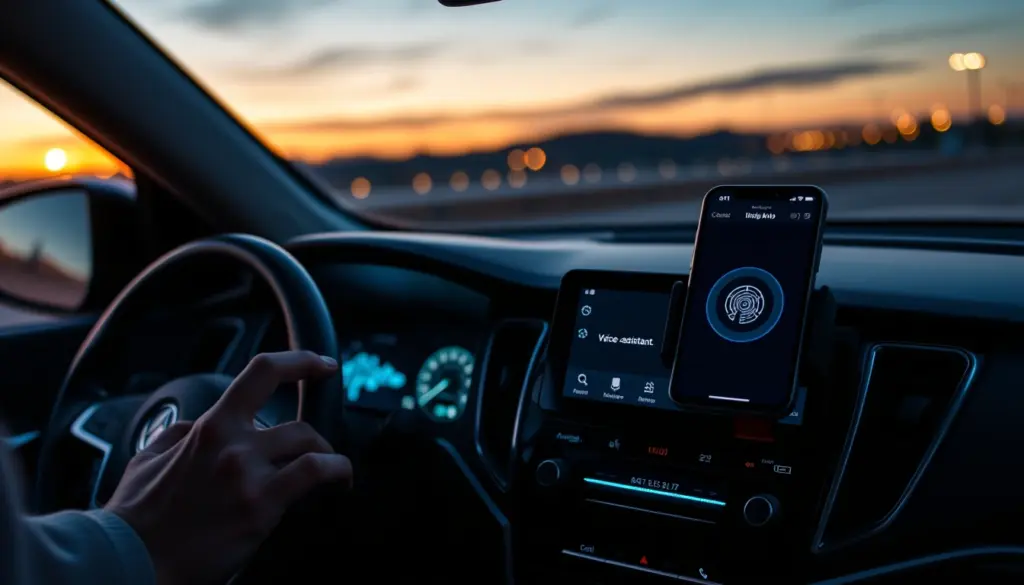
Google has stopped hinting and started confirming. After months of a quiet support-page warning that Google Assistant would remain “available for use until March 2026” on Android Auto, the company has now told users directly that the assistant’s shutdown is bigger and sooner than that message suggested. According to 9to5Google, Google began emailing users on August 4, 2026 to say Assistant will be pulled from Android phones, tablets, Wear OS watches, headphones, and Android Auto starting September 4, 2026. Gemini takes its place everywhere.
The move caps an eighteen-month migration that started as a slow rollout and has repeatedly slipped its own deadlines. It also closes the loop on the Android Auto-specific warning that first surfaced in November 2025, a warning that many drivers read as narrower than what’s now happening. This is a Google Assistant shutdown story, but it’s really a story about how Google walks back a decade-old product once it decides an AI chatbot should replace it.
What Google Just Confirmed About the Assistant Shutdown
The headline fact is simple: Google Assistant goes away on September 4, 2026, and it isn’t coming back. Google’s message to users, reported by XDA Developers and 9to5Google, states plainly that “once availability is removed, you will no longer be able to use or switch back to Google Assistant on your phone, tablet, or paired devices.” That is a harder line than the earlier Android Auto notice, which framed the change as a timeline rather than a point of no return.
Google says the removal “may take a few weeks to reach everyone,” so the September 4 date marks the start of a staged rollout rather than a single global switch-flip. Users can currently still toggle back to classic Assistant from inside the Gemini app on supported devices, a fallback that disappears once the September cutover reaches their account. The company frames this as a continuation of the Gemini rollout that began appearing in Android Auto in November 2025, not a new, separate decision.
The Original March 2026 Android Auto Warning, Explained
To understand why this week’s news reads like a plot twist, it helps to go back to November 24, 2025. That’s when a support-page banner on Google’s Android Auto help center first surfaced the line “Google Assistant is still available for use until March 2026,” alongside “Gemini is replacing Google Assistant on most mobile devices.” 9to5Google and Android Central both flagged the banner as evidence that Assistant’s clock was ticking specifically inside the car, even as it kept running everywhere else.
At the time, the wording was narrow on purpose. It named Android Auto, not phones or watches, and it didn’t say what would happen after March. Coverage from TechRepublic treated it as Google “quietly putting a timebox on Assistant inside the car” rather than announcing a company-wide retirement date. That caution turned out to be justified, because the March date never became the actual cutoff. Instead, Google folded Android Auto into a much larger, later deprecation.
Why the Timeline Moved From March to September 2026
Google Assistant’s phase-out has already slipped once. The broader Assistant-to-Gemini switch for mobile devices was originally targeted for the end of 2025, according to reporting from The Decoder, before Google pushed it into 2026. The March 2026 Android Auto line was itself a product of that first delay. Now the company has replaced a car-specific soft deadline with a single, harder date that covers five device categories at once.
Two things likely drove the consolidation. First, running two separate deprecation clocks (one for Android Auto, one for everything else) creates confusing support messaging, and Google’s own wording had already generated a wave of “is Assistant dying or not” coverage. Second, Gemini’s in-car experience needed more runway before Google could commit publicly to killing the old fallback. XDA Developers, testing Gemini in Android Auto ahead of the cutover, found real gaps between the two assistants that a hard March deadline would have exposed to millions of drivers with no way back.
Which Devices Lose Google Assistant on September 4
The September 4, 2026 cutoff is broader than the original Android Auto notice by design. It covers Android smartphones and tablets, Wear OS watches, headphones and earbuds that route voice commands through a phone, and Android Auto sessions projected from a connected phone. Two categories are explicitly carved out for now: cars running Google built-in (the embedded infotainment system some automakers ship instead of phone projection) keep Assistant, and Google TV, Home speakers, and smart displays are on a separate, slower Gemini rollout with no confirmed shutdown date.
That carve-out matters for the Android Auto conversation specifically, because it means the assistant experience in a given car now depends entirely on how that vehicle connects to Android. A driver using phone-based Android Auto loses classic Assistant on the same September timeline as their phone. A driver in a car with Google built-in keeps it, at least until Google decides otherwise.
Google Assistant Shutdown Timeline by Platform
| Platform | Status as of Aug. 30, 2026 | Replacement | Notes |
|---|---|---|---|
| Android phones & tablets | Removal begins Sept. 4, 2026 | Gemini | Rollout may take several weeks to reach every account |
| Wear OS watches | Removal begins Sept. 4, 2026 | Gemini | Bundled into the same phone-linked cutover |
| Headphones & earbuds | Removal begins Sept. 4, 2026 | Gemini | Applies when paired to an Android phone |
| Android Auto (phone-projected) | Removal begins Sept. 4, 2026 | Gemini | Originally flagged separately via a March 2026 support-page notice |
| Cars with Google built-in | Assistant remains active | Not announced | Explicitly exempted from the Sept. 4 change |
| Google TV & smart displays | Assistant remains active | Gemini (in progress) | No firm cutoff date reported |
| Google Home speakers | Assistant remains active | Gemini (in progress) | Separate, slower migration track |
What Replaces It: How Gemini Works in Android Auto
Google’s own framing hasn’t changed since the November 2025 notice: “Gemini is replacing Google Assistant on most mobile devices,” and it’s positioned as understanding “the same commands as Google Assistant” while also letting drivers “speak naturally” instead of memorizing rigid phrasing. In practice, that means Gemini in Android Auto is built around open-ended conversation rather than a fixed command list, aiming to handle multi-step requests like planning a route with a stop along the way in a single exchange.
That conversational model is a deliberate departure from how Assistant worked. Classic Assistant matched voice input against a defined set of intents; if a phrase didn’t map to a known command, it failed predictably. Gemini instead generates a response probabilistically, which gives it more flexibility with phrasing but introduces a different failure mode: it can misread intent in ways a rules-based system never would. For a feature people use while driving, that trade-off is getting real scrutiny, especially as Google keeps shipping new Gemini builds at a fast clip, including a 3.8 Flash preview that appeared in testing just weeks after the prior version.
The Reliability Question at 70 Miles an Hour
The core tension in every report on this transition is the same: Assistant was boring and predictable, and Gemini is neither yet. That’s a fine trade for browsing recipes at the kitchen counter. It’s a much bigger deal for adjusting navigation or skipping a song without looking at the screen.
Early Complaints: Gemini’s Rocky Reception in the Car
Reviewers who tested Gemini in Android Auto ahead of the full cutover didn’t find a clean upgrade. XDA Developers reported that “some commands don’t work consistently, resulting in frequent ‘something went wrong’ errors,” and separately noted that “most more complicated automations (especially complicated custom ones) just don’t work with Gemini yet.” The outlet’s overall verdict was blunt: it called the current state “a markedly worse experience with Gemini” compared with the assistant it’s replacing.
User sentiment gathered in that same reporting leaned the same direction. One driver quoted in the coverage summed up the core complaint about moving a chat-style AI into a moving vehicle: “I don’t want to talk to an LLM whilst I’m driving; I just want it to tell my car where I want to go and what song I want to play.” That’s not a rejection of Gemini as a product, it’s a specific objection to conversational AI replacing single-purpose voice commands in a context where distraction has real safety stakes.
Google Assistant vs. Gemini in Android Auto
| Attribute | Google Assistant | Gemini |
|---|---|---|
| Command style | Fixed phrases, defined intents | Natural, conversational language |
| Reliability on simple commands | Consistent, deterministic | Intermittent “something went wrong” errors reported by testers |
| Complex custom automations | Broadly supported | Many custom automations reportedly don’t work yet |
| Response style | Terse, task-focused | More conversational and verbose |
| Availability after Sept. 4, 2026 | Being removed on phone-connected devices | Default assistant across Android |
How This Fits Google’s Broader Assistant-to-Gemini Migration
Android Auto was never the whole story, it was the most visible early test case. Google’s official Gemini blog post laid out the broader plan in plain terms: “Over the coming months, we’re upgrading more users on mobile devices from Google Assistant to Gemini; and later this year, the classic Google Assistant will no longer be accessible on most mobile devices.” The official announcement also described the change more simply as “the Assistant experience on mobile is upgrading to Gemini,” language that treats the switch as an upgrade rather than a discontinuation, even though for the affected devices the old assistant literally stops working.
That messaging gap, upgrade versus shutdown, has shaped a lot of the confusion around this story. Google’s own material never uses the word “shutdown.” Every outlet covering it, including this one, is applying that label to what the company calls an upgrade because for millions of Assistant-only users, that’s functionally what’s happening: a tool they rely on today won’t exist in its current form after September 4. Google has taken the same approach with other products lately, framing 2026 feature rollouts like Gemini 3.5 Transcribe in Gmail and Gemini Omni 1.1 Flash as additions even when they quietly replace older tools underneath.
Market Impact: Why Google Is Forcing the Issue Now
Google isn’t retiring Assistant because it’s broken, it’s retiring it because keeping two assistants running in parallel is expensive and confusing to build for. Every Android feature team maintaining voice integrations has had to support both systems since Gemini started appearing in Android Auto in November 2025. A hard deadline forces third-party developers, smart home partners, and Google’s own product teams to converge on one voice stack instead of two.
There’s also a competitive angle. Google needs Gemini’s usage numbers to reflect genuine adoption, not just availability, if it wants to keep pace with how Microsoft, OpenAI, and Amazon frame their own assistant products to investors. Making Gemini mandatory rather than optional on Android is the fastest way to generate that usage. OpenAI has been running a parallel consolidation on its own side, retiring older models like DALL-E and o3 to push users toward fewer, more current systems, so Google’s Assistant cutover fits a broader industry pattern of forcing consolidation rather than leaving legacy tools running indefinitely. The risk for Google is reputational rather than financial in the near term: forcing an unfinished conversational assistant into safety-relevant contexts like driving is the kind of decision that generates negative press well before it shows up in any earnings call.
Historical Context: Assistant’s Decade in the Car
Google Assistant debuted in May 2016 alongside the Allo messaging app and the first Google Home speaker, then reached phones directly with the Pixel launch that October. Android Auto predates it slightly, having rolled out to users in March 2015 after its 2014 announcement at Google I/O. The two products were paired for most of Assistant’s life: voice control became one of the main reasons to use Android Auto at all, since dashboard touchscreens are a poor interface for typing while driving.
Killing Assistant on Android Auto specifically is therefore symbolically bigger than killing it on a phone home screen. It removes the voice layer from what is, for many drivers, the single most safety-relevant use case Assistant ever had. That’s exactly why the reliability complaints from early Gemini testing carry more weight here than they would for a chatbot living inside a browser tab, even as Google touts accuracy gains elsewhere in its Gemini speech-recognition lineup and the wider AI and machine learning push across its product line.
Competitive Landscape: How Alexa and Siri Are Handling the Same Shift
Google isn’t the only company retiring a decade-old assistant for a generative one in 2026, and the comparisons are instructive. Amazon’s Alexa+ went live for all US users on February 4, 2026, according to Elephas, priced free for Prime members or $19.99 a month for everyone else. Amazon also removed its last local, offline voice-processing option in March 2025, meaning every Alexa+ voice command now streams to Amazon’s cloud, the same architectural trade-off Google is making by replacing a mostly on-device Assistant flow with a cloud-dependent Gemini model.
Apple took a different route entirely: rather than build its own large model, it licensed one. Under a deal both companies announced on January 12, 2026, Apple’s overhauled Siri runs on a custom 1.2-trillion-parameter Gemini model, reportedly costing Apple roughly $1 billion a year, according to AI2Work. That means Google is simultaneously killing its own decade-old assistant and getting paid to power its biggest rival’s replacement, an unusual position that underscores how much the assistant category has consolidated around a handful of foundation models rather than proprietary voice stacks.
Why the In-Car Comparison Favors Caution
None of the three companies has fully solved the reliability problem Gemini is running into on Android Auto. Alexa+’s cloud-only architecture introduces latency that Amazon’s older, more limited local commands didn’t have. Apple phased its Siri rollout across multiple iOS point releases rather than flipping it on everywhere at once, a staggered approach Google is now effectively mirroring with its multi-week September rollout window. Regulators are watching this whole category more closely too, following moves like Anthropic’s EU AI Act compliance changes for Claude, and a voice assistant that mishears a navigation command is a different order of risk than a chatbot that mislabels an image.
What Android Auto Users Should Do Before September 4
There’s no action required to keep using voice commands in Android Auto, Gemini takes over automatically as accounts are migrated. What’s worth doing before the rollout reaches your device is testing Gemini now, since it’s already available as an option for most Android Auto users ahead of the mandatory switch. Custom routines built around specific Assistant phrasing, especially smart home commands with unusual wording, are the most likely thing to break and are worth re-testing under Gemini while classic Assistant is still available as a fallback.
It’s also worth checking whether a given vehicle uses phone-projected Android Auto or an embedded Google built-in system, since only the former is affected by the September 4 date. Drivers who aren’t sure can check their car’s infotainment settings menu, where Google built-in systems typically identify themselves by name rather than showing a projected phone interface.
Predictions: Where This Goes From Here
- Expect the September 4 date to slip again for at least some device categories, following the same pattern that turned the original late-2025 target into March 2026 and then September 2026.
- Google built-in cars are likely to get their own deprecation notice within the next twelve months once Gemini’s in-car reliability issues are addressed, rather than remaining exempt indefinitely.
- Google TV, Home speakers, and smart displays will probably receive a firm cutoff date by early 2027, following the same playbook used for mobile and Android Auto.
- Third-party smart home integrations built around Assistant’s rigid command syntax will need active rebuilding, and expect a wave of complaints from users of complex custom automations once the mandatory switch reaches them.
- Google will likely keep using “upgrade” rather than “shutdown” in its own communications, even as coverage continues to frame it as a retirement, because the semantic gap softens the message for users who don’t follow tech news closely.
The Bigger Picture for Google Assistant Shutdown Coverage
The Google Assistant shutdown is a case study in how carefully worded support-page language can undersell what’s actually coming. The March 2026 Android Auto notice was accurate as far as it went, Assistant genuinely was available until that point, but it left out the fact that the company had already decided on a much bigger, later cutoff covering five device types at once. Readers who took the November 2025 warning at face value now have a compressed window to adjust before the real deadline lands on September 4, 2026.
The pattern is worth remembering the next time Google, or any platform holder, posts a quiet support-page timeline instead of a press release. Narrow, product-specific wording is often the first signal of a much larger change still being finalized behind the scenes.
Frequently Asked Questions
When does Google Assistant actually shut down?
Google began notifying users on August 4, 2026 that removal starts September 4, 2026 for Android phones, tablets, Wear OS watches, headphones, and phone-projected Android Auto. The rollout may take several weeks to reach every account after that date.
Is the March 2026 Android Auto date still accurate?
No. That date came from a November 2025 support-page notice specific to Android Auto. It has been superseded by the broader September 4, 2026 shutdown, which covers Android Auto along with four other device categories.
Will Google Assistant still work in my car after September 4?
That depends on how your car connects. Phone-projected Android Auto loses classic Assistant on the same timeline as your phone. Cars with the embedded Google built-in system are explicitly exempted for now.
What replaces Google Assistant?
Gemini replaces Assistant across every affected device category. It uses natural, conversational language instead of Assistant’s fixed command phrasing.
Is Gemini as reliable as Google Assistant for voice commands?
Early testing by outlets including XDA Developers found inconsistent results, with some commands failing and complex custom automations not yet working the way they did under Assistant. Google has not published its own reliability data for the Android Auto rollout.
Can I keep using Google Assistant if I don’t want Gemini?
Not after the removal reaches your account. Google’s messaging states that once availability is removed, users cannot switch back to Assistant on affected phones, tablets, or paired devices.
How does this compare to Amazon and Apple’s assistant changes?
Amazon’s Alexa+ rolled out to all US users on February 4, 2026 and, like Gemini, depends entirely on cloud processing after Amazon removed its local-only voice option in March 2025. Apple took a licensing approach, rebuilding Siri on a custom Gemini model under a deal announced in January 2026 rather than retiring an assistant of its own.
Do Google Home speakers and Google TV lose Assistant too?
Not on the September 4, 2026 timeline. Those categories are on a separate, slower Gemini migration with no confirmed cutoff date as of this writing.