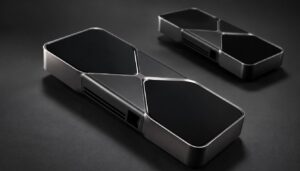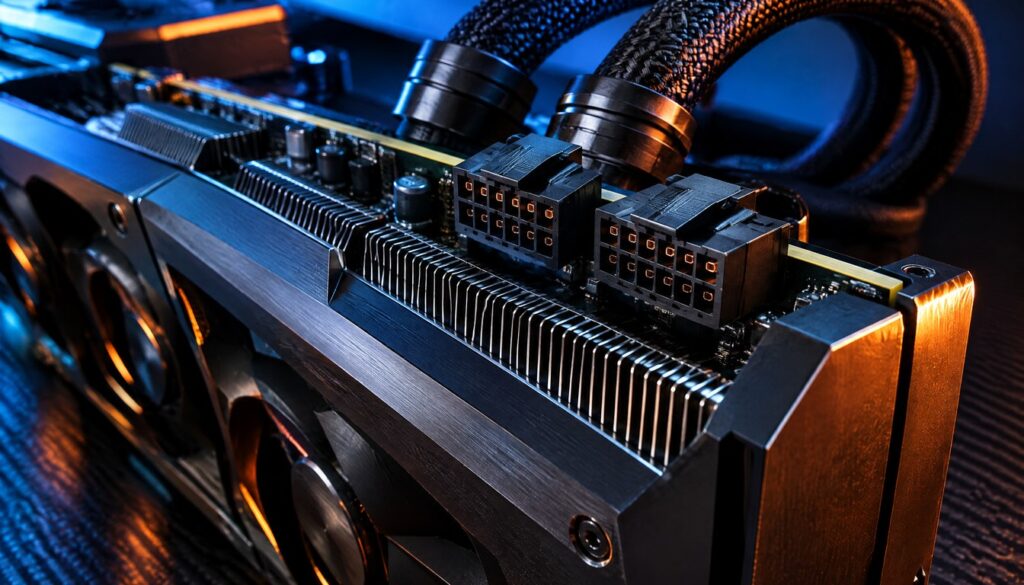
Vince “KINGPIN” Lucido, the extreme overclocker behind EVGA’s most aggressive graphics cards, says NVIDIA tried to strip a power connector off his flagship board right before launch, and the fallout limited how many units ever reached buyers. The claim, made in a video on his Overclocking Kingpin YouTube channel and first reported by Wccftech on October 11, 2026, reopens a dispute that EVGA fans have whispered about for years: why did the EVGA GeForce RTX 3090 Ti K|NGP|N HYBRID arrive three months late, and why did so few of them exist.
Lucido’s account, corroborated by VideoCardz and Hardware Busters, puts a name and a date on a long-running grievance in the high-end GPU community. NVIDIA, he says, pushed EVGA to cut the KINGPIN HYBRID down to a single 12VHPWR connector late in development. EVGA shipped the card with two 16-pin connectors anyway, but Lucido says the back-and-forth derailed the production schedule and choked supply of a card that overclockers had been waiting years for.
What KINGPIN Actually Said
The quote at the center of this story is specific enough to matter. In his own words, captured on video and republished across the enthusiast press:
“Right before the 3090 Ti KP launched, NVIDIA tried to force us to use one power connector on the card and it really screwed the production timeline up of my card and it actually ended up being severely limited because of it.”
Vince “KINGPIN” Lucido, extreme overclocker and EVGA KINGPIN graphics-card designer — via VideoCardz
That’s the whole dispute in one sentence: NVIDIA wanted one connector, Lucido wanted two, and the fight happened right before launch, not months in advance when a design change would have been easy to absorb. Lucido has built his reputation on pushing GPUs past their rated limits for world-record overclocking runs, and for him, a second power connector was not a cosmetic choice. More power delivery headroom is the difference between a card that survives a liquid-nitrogen overclocking session and one that trips a protection circuit mid-run.
NVIDIA has not issued its own public statement addressing Lucido’s claim, and no outlet covering the story has produced an NVIDIA-side account of the negotiation. Everything currently in circulation traces back to Lucido’s video. That matters for how readers should weigh this: it’s a credible, named, on-the-record account from someone with direct involvement in building the card, but it is one side of a two-party conversation.
The Card at the Center of the Story
The EVGA GeForce RTX 3090 Ti K|NGP|N HYBRID was never a volume product. It launched roughly three months after the standard RTX 3090 Ti, aimed squarely at overclockers willing to pay for headroom most gamers would never touch. EVGA sold it directly for $2,499, bundled with a 1,600 W SuperNOVA power supply, a pairing that signals how much power draw the card was engineered to tolerate under extreme conditions.
According to EVGA’s own product listing, the card shipped with two 16-pin power connectors rather than the single connector NVIDIA reportedly wanted. That detail is confirmed directly on EVGA’s official product page, which still documents the HYBRID cooling configuration and connector layout. The company closed its GPU business entirely in 2022, not long after this card’s limited run, which is part of why the KINGPIN HYBRID has taken on a near-mythical status among collectors: it was arguably the last extreme-overclocking flagship EVGA ever built.
Neither Lucido’s video nor the outlets covering it have published a specific production unit count, an original planned quantity, or a documented manufacturing schedule showing exactly how many cards were lost to the dispute. Readers should treat “severely limited” as Lucido’s characterization rather than an audited figure. What is independently verifiable is that the card is genuinely hard to find today, and secondary-market pricing for a working unit reflects that scarcity.
Why One Connector vs. Two Actually Matters
The 12VHPWR connector that NVIDIA introduced alongside the RTX 30-series Founders Edition refresh is rated for up to 600 W through a single 16-pin interface, replacing the old arrangement of multiple separate 8-pin PCIe connectors. For a reference-clocked RTX 3090 Ti, one connector is plenty. For a card built to chase overclocking world records on liquid nitrogen, it’s a different calculation entirely.
Running two connectors instead of one spreads current across more physical contacts and more separate cables. That reduces the load any single pin has to carry, which matters because the thinner pins inside a compact high-density connector carry less margin for error than older, bulkier 8-pin plugs. For a KINGPIN-branded card specifically marketed as a tool for pushing past factory limits, that margin isn’t a luxury. It’s the product’s entire reason to exist.
This is also where the story connects to a much bigger, better-documented controversy that NVIDIA’s connector strategy has generated since. The RTX 4090 launch in late 2022 produced widespread reports of melted 12VHPWR connectors, a problem serious enough that NVIDIA and partner board makers spent months publishing guidance on fully seating the plug and avoiding sharp cable bends near the connector housing. If a single 12VHPWR connector was already running close to its practical limits on cards drawing far less power than an extreme-overclocked 3090 Ti, Lucido’s insistence on a second connector for his flagship looks less like stubbornness and more like an early warning.
The Pattern Didn’t Stop at the 3090 Ti
NVIDIA eventually revised the design into 12V-2×6, a version with adjusted pin geometry meant to reduce the risk of a dangerous partial connection. That update did not close the book on the problem. Through 2025 and into 2026, outlets including TechPowerUp and TweakTown have continued documenting melted RTX 5090 connectors, in some cases on cards running undervolted or with a reduced power limit, which should theoretically make a meltdown less likely, not more.
Reported RTX 5090 incidents have pointed toward current imbalance across the connector’s individual pins rather than simple user error as the recurring culprit. One widely cited case measured a single wire carrying far more current than its neighbors while other contacts sat nearly idle, the kind of uneven load distribution that two separate connectors would make structurally harder to produce. Modders have gone as far as soldering wires directly to RTX 5090 PCBs to bypass the stock connector entirely, a workaround that underscores how persistent the concern has become even four years after the original 3090 Ti dispute.
Seen against that backdrop, the 3090 Ti KINGPIN story reads less like an isolated anecdote about one overclocker’s frustration and more like the opening chapter of a connector debate NVIDIA still hasn’t fully closed four years and two GPU generations later.
Timeline: From 8-Pin to 12V-2×6
Tracking how NVIDIA’s power delivery standard evolved helps explain why the KINGPIN dispute landed at such an awkward moment. The table below lays out the key transition points as reported across the enthusiast press.
| Generation / Connector | Introduced | Rated Power | Key Reported Issue |
|---|---|---|---|
| RTX 30-series (standard), multiple 8-pin | 2020 | Varies by board, typically 150W per connector | Bulky cabling, no major safety controversy |
| 12VHPWR (16-pin), RTX 3090 Ti transition | 2022 | Up to 600W | KINGPIN dispute over one vs. two connectors |
| 12VHPWR, RTX 4090 launch | Late 2022 | Up to 600W | Widespread melted-connector reports |
| 12V-2×6 (revised pin geometry) | 2023 | Up to 600W | Reduced partial-insertion risk |
| 12V-2×6, RTX 5090 generation | 2025 | Up to 600W | Continued melting reports linked to current imbalance |
EVGA’s RTX 3090 Ti KINGPIN HYBRID at a Glance
For readers who want the specifics in one place, here is what’s confirmed about the card itself, separated clearly from what remains unverified.
| Detail | Status | Source |
|---|---|---|
| Product name: EVGA GeForce RTX 3090 Ti K|NGP|N HYBRID | Confirmed | EVGA official listing |
| Power connectors: two 16-pin (12VHPWR-style) | Confirmed | EVGA official listing |
| Launch price: $2,499 with 1,600W SuperNOVA PSU bundle | Confirmed | EVGA direct sales |
| Launched roughly three months after standard RTX 3090 Ti | Confirmed | Wccftech, VideoCardz |
| NVIDIA wanted single connector; Lucido wanted two | Confirmed (Lucido’s account) | Overclocking Kingpin YouTube channel |
| Exact production unit count or units lost to the dispute | Unconfirmed | Not published by any outlet |
| NVIDIA’s own account of the negotiation | Unconfirmed | No NVIDIA statement identified |
How This Compares to Other Connector Flashpoints
The KINGPIN dispute isn’t the only recent example of NVIDIA’s power delivery choices creating friction with partners or buyers. Earlier this year, reports documented an RTX 5090 power connector reaching 92°C under load, a temperature that pushed one enthusiast to build a DIY cooling modification that brought it back down to 40°C. That case, like the KINGPIN dispute, centered on how much thermal and electrical margin NVIDIA’s 16-pin standard actually leaves on the table once a board pushes toward the top of its rated envelope.
There’s also a supply-side dimension to NVIDIA’s current GPU strategy that echoes the KINGPIN story’s underlying theme: NVIDIA making decisions about its flagship silicon that constrain what partners and buyers can actually get. Reports have detailed how NVIDIA has been shifting GB202 chip supply toward RTX Pro cards and away from the consumer RTX 5090, squeezing availability of the flagship gaming card even as demand stays high. A separate analysis walked through why the economics favor RTX Pro over the $1,999 RTX 5090 from NVIDIA’s perspective, even if it frustrates the enthusiast market the KINGPIN card was built for.
NVIDIA has also tightened policy in other directions this year. Coverage of a new five-point export pledge RTX 5090 buyers now have to sign shows a company increasingly willing to impose terms on its highest-end hardware, whether that’s a connector specification handed to a partner or a usage agreement handed to a customer. The throughline across all of these stories is the same: NVIDIA controls the top of its product stack tightly, and partners or buyers who want something different have to push back loudly to be heard.
Market Impact: A Niche Dispute With a Long Shadow
In pure sales terms, the RTX 3090 Ti KINGPIN HYBRID was never going to move the needle for NVIDIA or EVGA. It was a four-figure niche product aimed at a few thousand overclockers worldwide, not a mainstream SKU. But the story’s resurfacing in 2026 matters for a different reason: it’s a data point in a growing archive of instances where NVIDIA’s power connector decisions have created friction, cost, or risk for the people actually building and buying its highest-end cards. EVGA exited the graphics card business entirely in 2022, and while the company never attributed that decision publicly to this specific dispute, the KINGPIN HYBRID’s delayed, limited launch stands as one of the last chapters in EVGA’s GPU story. For current buyers evaluating RTX 5090 or upcoming RTX 6000-series extreme overclocking boards, the lesson embedded in Lucido’s account is concrete: connector specifications aren’t just an engineering footnote, they can determine whether a flagship card ships on time, in volume, or at all.
For partner board makers watching this story resurface, it also reinforces a negotiating reality that hasn’t gone away. NVIDIA designs the reference specification and partners build around it, but when a partner’s engineering judgment conflicts with NVIDIA’s preference on something as fundamental as power delivery, the partner doesn’t automatically win that argument, even when the partner is right.
Desktop GPU Supply Context
The KINGPIN dispute also lands against a backdrop of tight GPU supply more broadly. Desktop GPU shipment data for 2026 put total unit volume at roughly 12.5 million, with NVIDIA holding around 90% of that market, a dominance level that gives the company enormous leverage over partners like EVGA was and current board makers like ASUS, MSI, and Gigabyte still are. Memory pricing has added pressure on top of that: reports of an AMD GDDR6 price hike this October, while NVIDIA held GDDR7 pricing steady, show how component costs are squeezing partner margins from a different direction entirely.
Put together, the picture is one where NVIDIA’s partners operate with thinner margin for pushback than they did a decade ago, when multiple GPU vendors with comparable market share gave add-in-board partners more room to set their own terms on things like connector choice, cooling design, and clock targets.
What Happens if History Repeats
Several predictions follow naturally from where this story sits today:
- Expect calls from the enthusiast overclocking community for NVIDIA to formally respond to Lucido’s account, though NVIDIA has historically declined to comment on internal partner negotiations, and there’s no indication that pattern will change here.
- Expect this story to get cited repeatedly as context any time a future extreme-overclocking card from any partner ships with a connector configuration that deviates from NVIDIA’s reference design, since it’s now a documented, named precedent.
- Expect continued scrutiny of 12V-2×6 connector reliability on RTX 5090 cards to keep surfacing in parallel, since the underlying current-imbalance concern that motivated Lucido’s two-connector preference in 2022 has not been resolved by the newer connector revision.
- Expect NVIDIA’s next flagship generation to face early questions from reviewers and overclockers about connector count and power delivery margin specifically because of how this story has resurfaced, putting pressure on NVIDIA to preempt the criticism rather than respond to it after launch.
- Expect secondary-market and collector interest in the original EVGA RTX 3090 Ti KINGPIN HYBRID to tick upward now that its production backstory has a name, a quote, and a date attached to it, even without a confirmed unit count.
What Buyers and Builders Should Actually Watch
For anyone shopping at the extreme end of the GPU market today, the KINGPIN story is a reminder to look past the sticker spec sheet and ask what margin a connector actually has versus what the card can draw. A single 12VHPWR or 12V-2×6 connector rated at 600 W is not the same thing as a connector that will always deliver 600 W safely across every individual pin under every real-world cable and seating condition. The RTX 5090 melting reports from 2025 and 2026 make that distinction concrete: several of the documented failures happened on cards drawing well under their rated limit, where current imbalance across pins, not total wattage, was the actual failure mode.
That’s precisely the risk Lucido says he was trying to engineer around in 2022 with a second connector. Whether or not NVIDIA ultimately agrees that his instinct was correct, the subsequent four years of 12VHPWR and 12V-2×6 incident reports have not made his argument look unreasonable in hindsight.
The Bigger Picture for EVGA’s Legacy
EVGA’s exit from the graphics card market in 2022 closed a chapter that the company had built over two decades, much of it anchored by Lucido’s KINGPIN-branded extreme overclocking cards. Those boards were never about volume sales; they existed to set world records and to give EVGA bragging rights at the top of the enthusiast hierarchy. The RTX 3090 Ti K|NGP|N HYBRID, delayed and limited according to its own designer, turned out to be close to the company’s last word in that category.
That context gives this story more weight than a typical supply-chain anecdote. It’s not just about one card’s launch schedule. It’s a firsthand account, from the person most qualified to give it, of friction between a GPU maker and one of its most technically demanding partners, right at the moment that partner was building what turned out to be one of its final flagship products.
Frequently Asked Questions
What exactly did NVIDIA reportedly want changed on the RTX 3090 Ti KINGPIN HYBRID?
According to Vince “KINGPIN” Lucido, NVIDIA wanted EVGA to use a single 12VHPWR power connector on the card instead of the two connectors Lucido’s team had designed in.
Did EVGA end up using one connector or two?
EVGA’s official product listing confirms the retail RTX 3090 Ti K|NGP|N HYBRID shipped with two 16-pin connectors, meaning Lucido’s design ultimately went to market despite the reported pressure from NVIDIA.
How much did the card cost and what did it include?
EVGA sold the RTX 3090 Ti K|NGP|N HYBRID directly for $2,499, bundled with a 1,600 W SuperNOVA power supply.
How late did the card launch compared to the standard RTX 3090 Ti?
Reports indicate the KINGPIN HYBRID arrived approximately three months after the standard GeForce RTX 3090 Ti.
Has NVIDIA responded to Lucido’s claim?
No. As of this reporting, no outlet has published an NVIDIA statement addressing Lucido’s account of the connector dispute.
Is this connected to the RTX 4090 and RTX 5090 melting connector issues?
Not directly, but it’s part of the same underlying design lineage. The 12VHPWR connector introduced around the RTX 3090 Ti generation became associated with melted-connector reports on the RTX 4090 in 2022, and the revised 12V-2×6 version has continued generating similar reports on RTX 5090 cards through 2025 and 2026.
Do we know exactly how many RTX 3090 Ti KINGPIN HYBRID units were produced?
No. No outlet covering this story, including Lucido’s own video, has published a specific production unit count or an original planned quantity.
Is EVGA still making graphics cards?
No. EVGA exited the graphics card business in 2022, not long after the KINGPIN HYBRID’s limited run, and has not returned to the GPU market since.