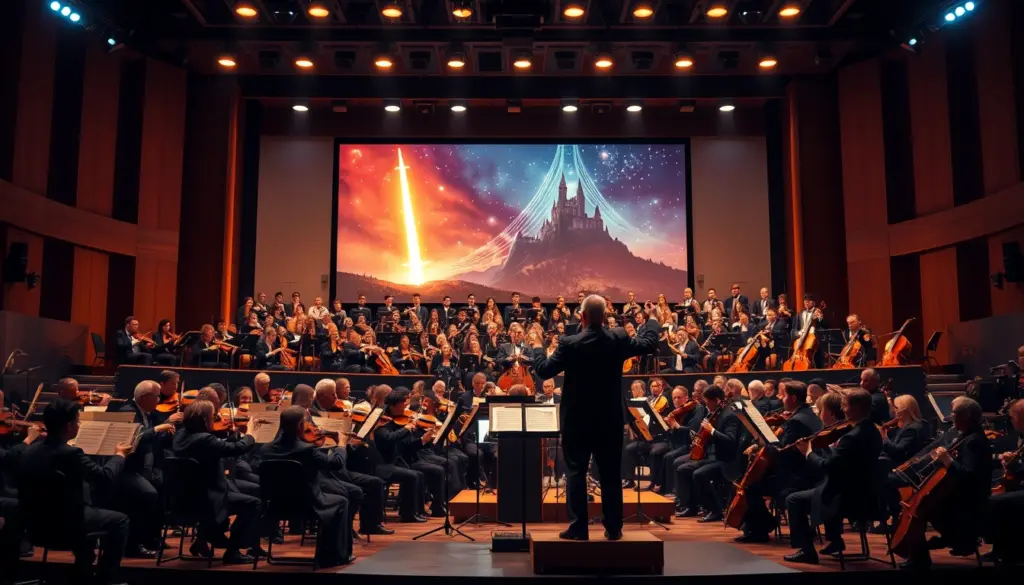
A community orchestra in Melbourne’s outer south-east just landed one of the more unusual bookings in this year’s Melbourne International Games Week (MIGW) 2026 calendar. The Casey Philharmonic Orchestra has confirmed Level Up! Orchestral Game Music, a full-length concert built entirely around video game scores, set for Saturday, October 10, 2026 at Bunjil Place Theatre in Narre Warren. The show slots into MIGW 2026 as a dedicated music event, joining the festival’s existing lineup that already includes High Score, the region’s game-audio conference held at ACMI on October 3 and 4.
On paper this looks like a niche listing. In practice, it’s a data point in a much bigger story: orchestras and touring producers worldwide have spent the last two decades turning game soundtracks into a reliable live-concert category, and Level Up! is the latest local proof that the trend has reached amateur and semi-professional ensembles, not just the big licensed tours. This piece breaks down what’s confirmed about the concert, what it says about the wider orchestral game-music business, and where the format is likely headed next.
What’s confirmed about Level Up! Orchestral Game Music
The concert is presented by the Casey Philharmonic Orchestra, which describes itself as a community orchestra based in the City of Casey, an outer south-eastern municipality of Melbourne. The performance is scheduled for Saturday, October 10, 2026, with listings pointing to a 7:30pm start. The venue, Bunjil Place Theatre’s own event listing, is the primary performing-arts space serving that part of Melbourne and regularly hosts the orchestra’s mainstage productions.
According to the orchestra’s own event page, the program draws from a mix of long-running franchises and newer releases. Titles named in the announcement include Final Fantasy, Hollow Knight, Skyrim, The Legend of Zelda, Undertale, Halo, Kingdom Hearts, and Super Smash Bros. The page also flags the inclusion of new Australian titles, specifically referencing the upcoming indie game Bones (listed elsewhere as “Bones: Wandering Soul”) alongside another Australian-developed game, Copycat. The exact relationship between the “Bones” and “Bones: Wandering Soul” naming isn’t fully consistent across the available listings, so that detail should be treated as provisional until the orchestra publishes a final setlist.
Level Up! is explicitly framed as a special MIGW 2026 performance, per the Casey Philharmonic Orchestra’s own concert page, tying a suburban community orchestra’s calendar to a festival that has become the largest games-industry gathering in the Asia-Pacific region. That framing matters more than it might first appear, because it signals how far game-music programming has spread beyond flagship touring shows and into local arts institutions that never used to touch the medium.
Melbourne International Games Week 2026: the festival behind the concert
Melbourne International Games Week was established by the Victorian state government in 2015 and is run through Creative Victoria, the state’s creative-industries agency, with a steering committee of industry figures set up in 2017 to guide its format and programming. It has grown from roughly 60,000 attendees in its first year to well over 100,000 in-person participants in its most recent editions, according to Creative Victoria’s own event reporting, with organizers describing the 10th edition as having drawn more than 110,000 people on-site plus a further million online.
The festival bundles together consumer-facing shows like PAX Australia with trade events such as Game Connect Asia Pacific, plus specialist strands that have been added over the years, including a queer-games festival and an esports conference. High Score, the game-audio-focused component of MIGW, launched in 2018 specifically to give game music its own dedicated programming track and runs this year at ACMI on October 3 and 4. Level Up! Orchestral Game Music sits adjacent to that strand rather than inside it, since High Score is confirmed for ACMI on October 3 and 4, a week before the Casey Philharmonic show at Bunjil Place.
That gap between the two events, roughly a week apart at two different venues, is a useful illustration of how MIGW has expanded: rather than concentrating game-music programming into a single conference slot, the festival now spans multiple weekends and pulls in outer-suburban arts organizations that aren’t part of the games industry proper. Background on the festival’s growth is documented on its Wikipedia entry, which tracks its expansion from a single-week trade event into a sprawling, multi-venue program.
The bigger trend: orchestras have been playing game music for over 20 years
Level Up! isn’t a novelty booking. It’s part of a live-music category that dates back to at least 2003, when Symphonic Game Music Concerts debuted at Leipzig’s Gewandhaus in Germany, widely credited as the first regular orchestral video game music series outside Japan. Video Games Live, the touring production co-founded by composer Tommy Tallarico, followed in 2005 with a debut show at the Hollywood Bowl performed with the Los Angeles Philharmonic. Video Games Live’s own materials put that first show’s paid attendance above 11,000, and the tour has since claimed individual dates drawing tens of thousands of attendees, including a 2016 Beijing performance the production credits with a Guinness World Record for largest video game symphony audience.
Nintendo has run its own version of this model with Zelda music specifically. Symphony of the Goddesses toured internationally with arrangements approved by producer Eiji Aonuma and composer Koji Kondo, with some stops fielding a 66-piece orchestra and a 24-person choir. Nintendo has since confirmed a global 40th-anniversary Zelda orchestral tour opening in Japan in January 2027, with an Australian leg reported to begin in Melbourne in May 2027, less than a year after Level Up! puts Zelda music on a Casey Philharmonic program in the same city.
What’s changed over the last five years isn’t the existence of these tours, it’s who else has started running them. Community and regional orchestras, university ensembles, and mid-size civic venues have picked up the format because the licensing infrastructure and arrangement libraries built for the big tours have made it cheaper to stage a smaller version. Level Up! is a direct example: a self-described amateur community orchestra performing repertoire that used to require a flagship touring production and full studio-orchestra budget.
Market size: how big is orchestral game music, really
Precise figures for the live orchestral game-music niche are hard to pin down because most market research bundles concerts in with soundtrack sales, streaming royalties, and licensing. Industry estimates for the broader game-music market (scores, soundtrack releases, streaming, and live events combined) put current global revenue somewhere in the $1.3 billion to $2.6 billion range, with growth forecasts pushing that toward $2.2 billion to $5 billion by the early-to-mid 2030s depending on the methodology used. That’s a wide band, and none of the widely cited figures come from a single audited source, so treat them as directional rather than precise.
Within that market, live events (as opposed to in-game scores or streamed soundtracks) are consistently described as a smaller but faster-growing slice, with some analysts pointing to attendance growth above 20% year-over-year in several major markets. Box-office data for individual tours is rarely disclosed publicly. Even Video Games Live, the best-known touring production in the category, doesn’t release per-show gross revenue, which makes it difficult to benchmark a show like Level Up! against the flagship tours in dollar terms.
Ticket pricing for Level Up! itself is set through Bunjil Place’s standard structure for Casey Philharmonic mainstage shows. That’s a useful comparison point in its own right: the orchestra is charging the same rate for a game-music concert as it does for its classical programming, rather than pricing it as a premium novelty event or discounting it as a fringe experiment.
Ticket pricing comparison: Level Up! vs. touring productions
| Event | Type | Typical top ticket price | Venue scale |
|---|---|---|---|
| Level Up! Orchestral Game Music (Casey Philharmonic) | Community orchestra, single date | A-Reserve adult tier priced in line with the orchestra’s standard mainstage shows | Regional theatre (Bunjil Place) |
| Casey Philharmonic: The Nutcracker | Community orchestra, seasonal classical | Same A/B-Reserve structure as Level Up! | Regional theatre (Bunjil Place) |
| Video Games Live (touring) | Professional touring production | Varies by city and hall; individual dates not publicly itemized | Major concert halls, arenas for flagship dates |
| Symphony of the Goddesses (Zelda touring) | Licensed touring production | Varies by venue; historically staged with 60+ piece orchestras | Mid-to-large concert halls |
| Zelda 40th Anniversary Orchestral Tour (2027) | Nintendo-backed global tour | Not yet published | International, multi-continent |
The structural point here is that Level Up! competes for the same audience attention as the big licensed tours without carrying their production overhead. A community orchestra doesn’t need to fly in a 60-piece touring ensemble or clear rights across a dozen territories; it draws from local musicians and stages a single date. That’s precisely why the format has been able to spread into second- and third-tier cities and suburban venues that would never host a full Video Games Live date.
The program: why these specific franchises
The announced setlist leans heavily on franchises with well-established orchestral pedigree. Final Fantasy is the clearest example: composer Nobuo Uematsu wrote the scores for the first nine mainline entries starting with the original 1987 release, and his work has been credited with helping legitimize game music as concert repertoire in the first place. Touring programs built around his catalog, including Distant Worlds and Final Symphony, have been running internationally for well over a decade.
The Legend of Zelda material, composed primarily by Koji Kondo with later contributions from other Nintendo staff composers, has its own dedicated touring history through Symphony of the Goddesses and Nintendo’s own streamed orchestral concerts. Skyrim’s score, written by Jeremy Soule, is a standard inclusion in fantasy-themed game-music programs, and Halo’s early choral-and-orchestral cues (originally composed by Martin O’Donnell and Michael Salvatori) are similarly common concert staples.
The inclusion of Hollow Knight and Undertale is more interesting from a programming standpoint, because both are indie titles rather than big-budget franchise releases. Hollow Knight’s score, composed by Christopher Larkin, and Undertale’s soundtrack, written by creator Toby Fox, both built large fan followings through streaming and fan arrangement culture rather than through official touring concerts. Their appearance on a community-orchestra bill alongside Final Fantasy and Zelda suggests programmers are now treating indie scores as concert-worthy in their own right, not just as filler between bigger franchise medleys.
Local Australian games get a rare orchestral platform
The most distinctive part of the announcement is the inclusion of Australian-developed titles. The orchestra’s promotional material references “the upcoming indie game Bones,” with other listings using the fuller title “Bones: Wandering Soul,” alongside a second Australian game, Copycat. Neither title has the international profile of the AAA franchises sharing the bill, which is exactly the point: MIGW has spent years pushing Creative Victoria’s broader mandate to showcase Victorian and Australian game development, and a concert slot for local indie scores is a concrete extension of that mission into live music programming.
It’s worth noting what isn’t confirmed here. The exact scope of the Bones/Copycat segments, whether they get a full suite treatment or a shorter excerpt, and who composed each score, hasn’t been detailed in the available announcements. Readers should treat that part of the program as directionally confirmed but not fully specified until the orchestra publishes a complete running order.
Casey Philharmonic Orchestra: from Nutcracker to Nintendo
The Casey Philharmonic Orchestra positions itself as a community ensemble serving Melbourne’s outer south-eastern suburbs, splitting its calendar between core classical repertoire and themed, audience-friendly programs. Its recent history includes a fantasy-themed concert billed as “Wizards and Dragons” in 2025 and its recurring seasonal staging of Tchaikovsky’s The Nutcracker at Bunjil Place. Level Up! extends that same pattern, a themed pop-culture program bookended by traditional classical work, into video game music specifically.
That trajectory matters for how the concert should be read. This isn’t a professional touring outfit pivoting into games as a new revenue line; it’s a suburban community orchestra applying a format it already uses for holiday programming and fantasy-themed shows to a new genre of source material. The choice says more about how normalized game music has become as a category of “accessible” orchestral programming than it does about any strategic bet by the orchestra itself.
Competitive landscape: how game-music concerts stack up
| Production | First launched | Model | Typical scale |
|---|---|---|---|
| Symphonic Game Music Concerts | 2003 (Leipzig) | Fixed concert series at a resident concert hall | Single-city, recurring series |
| Video Games Live | 2005 (Hollywood Bowl debut) | Global touring production with visuals | Arena and major concert-hall dates |
| Symphony of the Goddesses | 2011 | Licensed Nintendo touring concert (Zelda-only) | Mid-to-large concert halls, 60+ piece orchestras on some dates |
| Symphonic Legends (WDR Orchestra) | 2010 | Broadcaster-orchestra partnership, Nintendo-focused | Single-city resident orchestra |
| Level Up! Orchestral Game Music | 2026 | Community orchestra, single-date, festival-tied | Regional theatre, single performance |
What stands out in that lineup is how recently the “community orchestra” tier has entered the category. Every other major entry on this list is either a purpose-built touring production or a resident professional orchestra with broadcaster backing. Level Up! is the first widely documented example, in the Melbourne market at least, of a genuinely amateur ensemble taking on the format at a mainstage regional venue rather than as a fringe or fundraiser event.
Why this matters beyond one concert listing
Game-music licensing has historically been one of the friction points that kept orchestral tribute concerts limited to a handful of well-funded touring productions. Publishers had to sign off on arrangements, clear rights across territories, and in Nintendo’s case, personally approve orchestrations through figures like Aonuma and Kondo. The fact that a suburban community orchestra can now stage a multi-franchise program spanning Square Enix, Nintendo, Bethesda, Microsoft, Disney, and multiple indie studios in a single evening suggests that licensing pathways for this kind of programming have gotten considerably easier to navigate over the past decade.
That has knock-on implications for arts venues generally. Regional and civic theatres have spent years looking for programming that draws younger, non-traditional classical-music audiences without abandoning the orchestral format entirely. Game music, with its built-in fan base and streaming-era rediscovery through platforms like YouTube and Spotify, has become one of the more reliable answers to that problem, alongside film-score and anime-music concerts.
Historical context: how we got from chiptunes to concert halls
Video game music spent its first two decades largely confined to hardware limitations: early consoles could only produce simple synthesized tones, and full orchestral scores weren’t technically possible until CD-based storage and, later, dedicated studio recording sessions became standard. Final Fantasy’s transition from Uematsu’s early synthesized compositions to fully orchestrated scores in later entries tracks that broader industry shift. By the time Skyrim shipped in 2011 with a score built for full orchestra and choir from the outset, game music had already established itself as a legitimate compositional discipline rather than a technical workaround.
The concert format followed a similar arc: niche fan-organized performances in the early 2000s, then professional touring productions through the 2010s, and now, in 2026, a spread into community and civic orchestras that treat game scores as standard repertoire alongside Tchaikovsky and Beethoven. Level Up! is a snapshot of that final stage in progress.
What to expect at Bunjil Place on October 10
Based on the confirmed program, attendees should expect a two-hour evening performance opening around 7:30pm, mixing large-franchise medleys (Final Fantasy, Zelda, Halo, Kingdom Hearts, Smash Bros) with dedicated segments for atmospheric indie scores (Hollow Knight, Undertale) and at least one segment spotlighting Australian-developed games. Musical direction for the show is credited to the orchestra’s regular conductor. As with any community-orchestra production, the exact running order and whether visuals or gameplay footage accompany the music (a staple of touring productions like Video Games Live) hasn’t been detailed publicly, so that’s a reasonable open question heading into October.
Predictions: where orchestral game music goes from here
- Expect more regional and community orchestras to add game-music programs to their annual calendars over the next two to three years, following the same “themed show alongside classical mainstage” pattern Casey Philharmonic already uses for holiday programming.
- Nintendo’s confirmed 2027 Zelda 40th-anniversary tour, with its reported Melbourne stop in May 2027, will likely put direct pricing and scale pressure on smaller local productions staged in the same city within a 12-month window.
- Indie studios are likely to start treating orchestral concert inclusion as a marketing opportunity in its own right, given the visibility Hollow Knight and Undertale are getting on a mixed bill with AAA franchises.
- MIGW’s game-music programming will likely keep splitting across multiple weekends and venues (as seen with High Score at ACMI and Level Up! at Bunjil Place a week apart) rather than consolidating into one festival-week concert slot.
- Ticket pricing for community-orchestra game-music shows will likely stay anchored to each orchestra’s standard mainstage rates rather than premium pricing, since Level Up! is priced identically to Casey Philharmonic’s Nutcracker run.
What we still don’t know
A handful of details remain unconfirmed ahead of the October 10 date. The full running order and exact arrangement credits for each franchise segment haven’t been published. The precise nature of the Bones/Copycat inclusion, whether it’s a standalone suite or a shorter excerpt within a broader Australian-games segment, isn’t fully specified. And whether the concert will include visual accompaniment (gameplay footage, artwork projections) common to larger touring productions hasn’t been detailed in the orchestra’s public materials. Readers planning to attend should check the venue’s official listing closer to the date for the finalized program.
Frequently asked questions
What is Level Up! Orchestral Game Music?
It’s a concert of video game soundtracks performed by the Casey Philharmonic Orchestra at Bunjil Place Theatre in Melbourne, staged as part of Melbourne International Games Week 2026.
When is the concert and where is it held?
The performance is scheduled for Saturday, October 10, 2026, at Bunjil Place Theatre in Narre Warren, Melbourne.
Which games are featured in the program?
Confirmed titles include Final Fantasy, Hollow Knight, Skyrim, The Legend of Zelda, Undertale, Halo, Kingdom Hearts, and Super Smash Bros, alongside Australian-developed titles referenced as Bones (or Bones: Wandering Soul) and Copycat.
Is Level Up! part of Melbourne International Games Week 2026?
Yes, it’s promoted as a special MIGW 2026 performance, alongside other confirmed festival events like High Score at ACMI on October 3 and 4.
How does this compare to Video Games Live or other touring game-music concerts?
Level Up! is a single-date, community-orchestra production rather than a professional touring show. It doesn’t carry the visual production or multi-city licensing scale of Video Games Live or Nintendo’s Symphony of the Goddesses tours, but it draws on the same catalog of orchestrated game scores that those tours helped popularize.
Who composed the music being performed?
The program spans multiple composers, including Nobuo Uematsu (Final Fantasy), Koji Kondo (The Legend of Zelda), Jeremy Soule (Skyrim), Christopher Larkin (Hollow Knight), Toby Fox (Undertale), and Yoko Shimomura (Kingdom Hearts), among others whose work is included in the franchise medleys.
Is this the first time a community orchestra has performed game music in Melbourne?
It’s not the first orchestral game-music event tied to MIGW, since High Score has run as a game-audio conference strand since 2018, but Level Up! is a distinct example of a fully amateur community orchestra staging a dedicated game-music mainstage concert at a civic venue.
Will there be more orchestral game-music events at future MIGW editions?
Nothing has been confirmed for future editions, but given MIGW’s growth pattern and the addition of High Score in 2018, further expansion of music-focused programming is a reasonable expectation rather than a confirmed plan.