
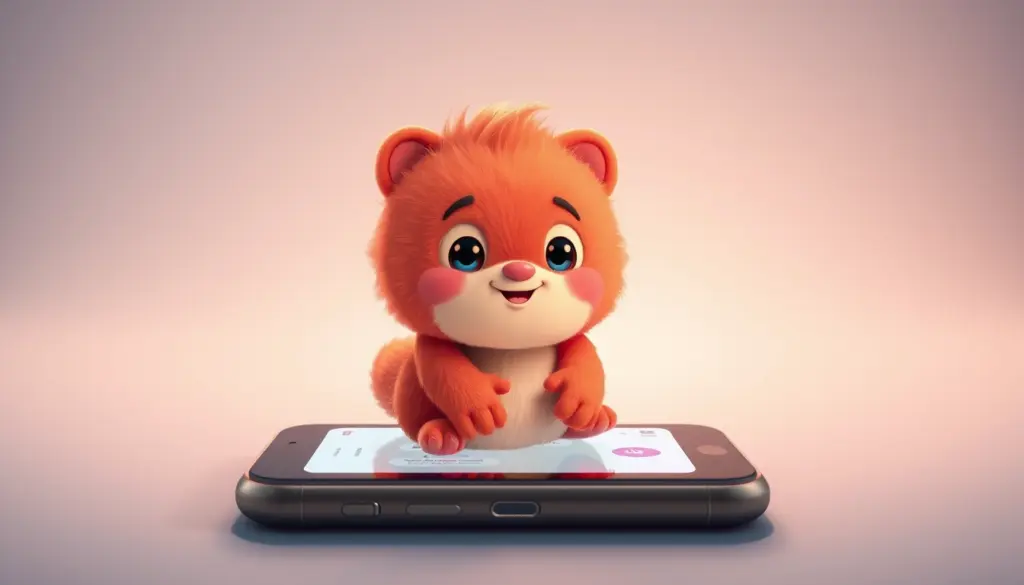
Meta’s AI agent Muse has a face now, and it looks like it wants a hug. The mascot, named Jolly, is a fuzzy, rosy-cheeked character that Meta has started attaching to Muse marketing since the assistant’s September 8, 2026 introduction. By October 2, reports from outlets including Fortune, Mashable, Android Authority, techbuzz.ai, and tech-insider.org had landed on the same framing: Meta has given AI a cute face, and the comparison everyone keeps reaching for is Clippy, Microsoft’s much-mocked Office assistant from the late 1990s.
The pairing is not an accident. Clippy became tech folklore as the assistant nobody asked for and everybody complained about, and invoking it next to a brand-new AI mascot is either a cautionary tale or a bet that cute branding works regardless of history. Meta’s chief AI officer Alexandr Wang has leaned into the second read, posting Jolly memes on X as the character started showing up in company messaging. Meanwhile outside critics, led by industry commentators tracking the launch, have been blunter about what Jolly actually is. Mashable and other outlets picked up the story within hours of it circulating, which is itself part of the point critics are making.
What is Meta Muse, and where does Jolly fit in?
Muse is Meta’s personal AI agent, introduced on September 8, 2026, roughly four weeks before the Jolly mascot campaign picked up steam. Meta has previously pointed to rapid download growth for Muse and positioned it as a consumer-facing answer to OpenAI’s agent products and Google’s Gemini assistant line. The assistant’s pitch is straightforward: a single AI agent that handles day-to-day tasks, from scheduling to app integrations, wrapped in a conversational interface.
Jolly is the character Meta has wrapped around that product. Described in coverage as a fuzzy, customizable mascot with rosy cheeks, Jolly is not reported to be an AI model, an autonomous agent, or a standalone piece of software. It functions as a branding layer, the kind of mascot a company uses to soften a product that might otherwise read as just another chatbot. That distinction matters because some early chatter conflated Jolly with Muse’s underlying technology. The reporting is clear that Jolly is the face, not the engine. For background on how Muse has performed against rivals, see our earlier coverage of Muse’s download numbers against ChatGPT’s launch pace and the head-to-head prompt test between Muse and ChatGPT-6.
The Clippy comparison, explained
Clippy, officially Clippit, shipped inside Microsoft Office from 1997 and became one of the most ridiculed pieces of software UX in tech history. It popped up uninvited, offered unhelpful suggestions, and was eventually retired, only to become an enduring meme and a shorthand for assistant software that annoys more than it helps. Comparing Jolly to Clippy is therefore a loaded move. It can read as an affectionate callback, a warning about overbearing AI mascots, or straight mockery, and the current wave of coverage leans toward mockery.
Ed Zitron, founder of the PR firm EZPR and a longtime critic of AI hype and Big Tech messaging, gave the comparison its sharpest edge. Discussing the Jolly campaign, Zitron said: “It’s entirely marketing.” He went further, arguing the mascot’s real function is self-referential: “It exists to get quoted in articles that say that ‘Meta has given AI a cute face.'” That second line is notable because it predicts, almost exactly, the kind of coverage Jolly generated, including headlines built around the phrase itself.
Zitron’s critique lands at a moment when Meta is spending heavily to make Muse feel ubiquitous. Our prior reporting covered Meta’s stock hitting a 52-week high on the back of the Muse AI launch, so the company has real financial incentive to keep the assistant in headlines, cute mascot or not.
Who else is running with Jolly
Mascots only work as marketing if other companies pick them up, and reports indicate that is already happening. Spotify and GitHub are both named in coverage as having posted their own versions of Jolly to announce their respective Muse integrations. Neither company’s exact integration details, pricing, or rollout timeline are confirmed in the available reporting, but the cross-posting itself signals that Meta is treating Jolly as a shareable brand asset rather than a one-off joke, something partners can remix for their own announcements.
That kind of multi-company mascot adoption is unusual for an AI assistant. Most competing products, including OpenAI’s agent lineup, have stuck to abstract branding (wordmarks, gradients, geometric logos) rather than a character with a face. Meta betting on a mascot that other companies are willing to reuse is, on its own, a notable marketing experiment regardless of how the Clippy comparison lands critically.
GitHub, in particular, is a telling adopter. Developers tend to be the audience least impressed by mascot marketing, and GitHub’s own engineering blog has historically favored plain, technical announcements over character-driven campaigns. A Jolly variant showing up in that context suggests Meta pushed the mascot kit out broadly enough that even developer-facing partners found it easier to reuse than to ignore. Spotify’s version, aimed at a more consumer-oriented audience, fits the mascot’s intended use case more naturally.
OpenAI’s side of the mascot question
Coverage of the Jolly campaign also name-checks OpenAI in connection with AI-agent mascots, though the specifics are thin. There is no confirmed product name, price, technical specification, or launch date tied to an OpenAI mascot in the reporting reviewed here. What is confirmed is that OpenAI and Meta are already running a parallel competition on the agent side of the business, documented in our earlier piece on OpenAI’s dots agent taking on Meta’s Muse. Whether OpenAI answers Jolly with a mascot of its own, or skips the character branding entirely, is an open question the current reporting does not resolve.
That gap is worth flagging plainly: anything beyond “OpenAI is mentioned alongside Meta in this conversation” is speculation at this point, and speculation is exactly what sloppy AI coverage tends to produce. We’re sticking to what’s confirmed.
The lack of a confirmed OpenAI mascot is itself a data point worth watching. OpenAI has generally kept its public-facing design language minimal, built around a plain wordmark and a dark, understated interface, including on its own developer-facing tooling and documentation. If that pattern holds, OpenAI may let Meta own the “cute AI character” lane entirely, betting instead that capability and integration breadth will outweigh personality branding in the long run.
Why mascots for AI agents, and why now
The timing isn’t random. AI assistants in 2026 face a trust problem that pure capability improvements haven’t solved. Our earlier reporting on the 85.5% trust gap facing OpenAI and Meta’s AI agents found that most users remain skeptical of letting an AI agent act autonomously on their behalf, even as the underlying models get more capable. A mascot is a cheap, low-risk way to address an emotional problem (does this feel safe and friendly?) that a changelog of model benchmarks cannot touch.
There’s also a product-adoption angle. Agentic AI products ask users to hand over more control than a search box or a chatbot ever did: calendar access, app permissions, sometimes payment information. Softening that ask with a friendly character is a known consumer-tech playbook, used everywhere from mobile game onboarding to smart-speaker voice design. Whether it works for an AI agent that can take real-world actions is the open question Jolly is now testing in public.
Historical context: assistant mascots that came before Jolly
Clippy is the most-cited precedent, but it’s not the only one. Microsoft’s Office Assistant family included several characters beyond Clippy, most of which were retired for the same reason: they interrupted more than they helped. Apple’s Siri, Amazon’s Alexa, and Google Assistant all deliberately avoided cartoon mascots, instead opting for voice-first, faceless branding, a choice widely read in the industry as a direct reaction to the Clippy backlash.
The table below lays out how Jolly’s approach compares with the mascot strategies (or deliberate absence of one) used by prior assistant products.
| Assistant / Product | Mascot approach | Era | Outcome |
|---|---|---|---|
| Microsoft Clippy (Clippit) | Animated paperclip character | 1997 onward | Widely mocked, retired, became a meme |
| Apple Siri | No visual mascot, voice-only | 2011 onward | Avoided mascot backlash entirely |
| Amazon Alexa | No visual mascot, voice-only | 2014 onward | Avoided mascot backlash entirely |
| Google Assistant | Abstract colored dots, no character | 2016 onward | Neutral branding, no backlash |
| Meta Muse (Jolly) | Fuzzy, customizable character mascot | Introduced Sept. 8, 2026 | Under discussion; Clippy comparisons active as of Oct. 2, 2026 |
The competitive landscape: Muse, dots, and Gemini
Muse does not exist in a vacuum. It is one of at least three major personal AI agent products competing for consumer attention right now, alongside OpenAI’s dots and Google’s Gemini-based agent tools. Each company is making a different bet on what makes an agent sticky: Meta is leaning into character branding and social integrations through Instagram and WhatsApp, OpenAI has focused on breadth of app integrations, and Google has tied its agent push to the broader Gemini model family. None of the three has settled the mascot question the way Jolly is now forcing the conversation.
| Company | Agent product | Visual branding approach | Known partner integrations |
|---|---|---|---|
| Meta | Muse | Jolly mascot (fuzzy, customizable character) | Spotify, GitHub (per reports) |
| OpenAI | dots | No confirmed mascot as of Oct. 2, 2026 | Not specified in current reporting |
| Gemini-based agents | Abstract, no character mascot | Not specified in current reporting |
That table will almost certainly need updates as the quarter plays out. If Jolly drives measurable engagement for Meta, expect rivals to test their own character mascots rather than risk ceding the “approachable AI” lane entirely.
Market impact: what a mascot actually buys Meta
Mascots are cheap relative to model training budgets, but they are not free in reputational terms. A character that becomes a punchline can actively damage a product’s credibility, which is the precise risk Zitron is pointing to when he frames Jolly as existing purely to generate quotable headlines. If that’s accurate, Meta has already gotten what it wanted from a pure media-attention standpoint: the phrase “Meta has given AI a cute face” ran across Fortune, Mashable, Android Authority, and smaller outlets within days of the campaign picking up steam.
The harder question is whether attention converts into usage. Meta has previously highlighted strong download figures for Muse relative to ChatGPT’s early trajectory, and a friendly mascot could plausibly lower the psychological barrier for a first-time user deciding whether to grant an AI agent calendar or messaging access. But mascots also carry a counter-risk: once a character becomes associated with mockery, as Clippy did, it is very difficult to detach the underlying product from the joke. Meta is, in effect, running a live experiment on whether 2026 audiences will treat a cute AI mascot more charitably than 1997 audiences treated Clippy.
There is also an internal cost worth noting. Design and marketing teams at a company the size of Meta, which maintains its own corporate newsroom at about.fb.com, do not build and ship a mascot kit casually. Character design, licensing for customizable variants, and coordinating rollout across partner companies like Spotify and GitHub all require real budget and real headcount. Whatever the critical reception, Meta has clearly decided that cost is worth paying to make Muse feel less like infrastructure and more like a product people want to open.
What’s confirmed and what isn’t
It’s worth being precise about the boundaries of this story, because mascot news tends to attract speculation faster than it attracts facts. Confirmed: Muse launched September 8, 2026; Jolly is the mascot attached to Muse marketing; Alexandr Wang has posted Jolly memes; Ed Zitron has publicly called the campaign “entirely marketing”; and Spotify and GitHub have each posted their own Jolly variants tied to Muse integrations.
Not confirmed, as of this writing: any product price tied to Jolly or a Jolly-branded feature, hardware specifications, a public release date beyond the September 8 Muse launch, user-count figures specific to the mascot campaign, App Store ranking changes attributable to Jolly, or general public availability claims. Also unconfirmed is the precise technical or functional relationship between Jolly and Muse beyond Jolly serving as a mascot, and whether Jolly itself qualifies as an AI model, an autonomous agent, or a physical product (reporting indicates it is none of those things, just a branding character). Readers should treat any claim beyond this list, including ones that may circulate on social media, with caution until a named outlet confirms it.
Predictions: where the Jolly campaign goes next
- Expect more partner companies beyond Spotify and GitHub to post Jolly variants in the coming weeks, since mascot reuse is a low-cost way for integration partners to ride Meta’s marketing wave.
- Expect at least one rival AI lab to publicly address the mascot question, even if only to explain why it is avoiding a character-based approach, mirroring how Apple and Amazon once positioned Siri and Alexa against Clippy.
- Expect continued media use of the “Meta has given AI a cute face” framing specifically, since Zitron’s prediction that the campaign exists to generate that exact quote has already proven accurate once.
- Expect scrutiny of Muse’s actual usage numbers to intensify as journalists try to separate mascot-driven attention from genuine daily active user growth.
- Expect Meta to lean further into cross-platform mascot placement (Instagram, WhatsApp, and partner apps) rather than treating Jolly as a one-time campaign, given the company’s pattern of sustained Muse promotion documented in earlier coverage of its stock performance tied to the AI push.
The bigger pattern: AI branding is getting friendlier, not simpler
Step back from Jolly specifically, and the Clippy comparison tells a broader story about where AI marketing is heading in late 2026. Model capability gains have slowed in terms of headline-grabbing novelty between major releases, pushing companies to differentiate on interface and personality instead of raw benchmark scores. A mascot is, in that sense, a symptom of a maturing market: when every major lab has a capable agent, the fight shifts to who feels most trustworthy to hand your calendar to.
That shift cuts both ways for users. A friendlier interface could genuinely make agentic AI tools less intimidating for people who have avoided them. It could also paper over legitimate concerns about what these agents can access and do once a cute character has lowered the reader’s guard. Readers evaluating whether to adopt Muse, dots, or any competing agent should weigh the permissions they’re granting independently of how approachable the branding looks.
Frequently asked questions
What is Jolly?
Jolly is the mascot character Meta has attached to marketing for Muse, its personal AI agent. Reports describe it as a fuzzy, customizable character with rosy cheeks. It is not an AI model or a separate product.
When did Meta launch Muse?
Meta introduced Muse on September 8, 2026. The Jolly mascot campaign and the Clippy comparisons followed roughly a month later, with coverage landing on October 2, 2026.
Why are people comparing Jolly to Clippy?
Clippy was Microsoft’s much-mocked Office assistant character from 1997, and the comparison is being used by critics, including Ed Zitron, to suggest Jolly is a marketing device rather than a meaningful product feature.
Who is Ed Zitron?
Ed Zitron is the founder of the PR firm EZPR and a prominent critic of AI industry hype and Big Tech marketing practices. He described the Jolly campaign as existing specifically to generate favorable headlines.
Which other companies are using the Jolly mascot?
Reports indicate Spotify and GitHub have both posted their own versions of Jolly to announce their Muse integrations. Specific integration details for either company are not confirmed.
Does OpenAI have a mascot to compete with Jolly?
Not confirmed. OpenAI is mentioned in coverage alongside Meta in the context of AI-agent mascots, but no product name, price, or launch date for an OpenAI mascot has been reported.
Is Jolly available to the public as its own app?
No. Jolly is a mascot layered onto Muse’s marketing, not a separate downloadable product. There is no confirmed general-availability claim for Jolly independent of Muse.
Does the mascot change what Muse can actually do?
No. The character is a branding layer. Muse’s underlying capabilities as a personal AI agent are unaffected by how it is marketed visually.
Related
- Meta Muse Downloads Hit 2.8M, Beat ChatGPT’s Pace
- Meta Muse Tops ChatGPT-6 3-2 in 5-Prompt Test
- OpenAI’s dots Take On Meta’s 2.8M-User Muse
- Meta Stock Hits $779.82 High on Muse AI Launch
- OpenAI, Meta Push AI Agents Despite 85.5% Trust Gap