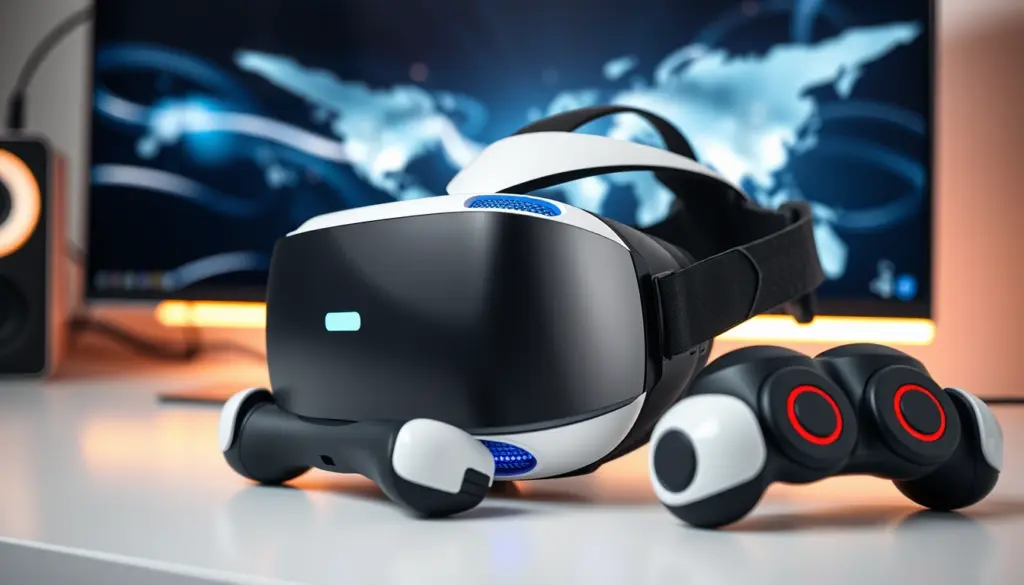
Valve’s first VR headset in seven years is drawing a split verdict just as the company pushes a major SteamOS update to every Steam Deck and Steam Machine owner. The Steam Frame, a standalone headset priced at $1,059 for the 256GB model and $1,299 for 1TB, cleared its reservation lottery last month and is now facing full reviews that praise the hardware while questioning the price. Meanwhile, Valve shipped SteamOS 3.8.28 to the wider Steam Deck install base on October 3, 2026, according to Valve’s own Steam Deck news page, extending the same software foundation that powers the Frame’s ARM-based variant of SteamOS 3.
The timing matters. Valve has spent years treating VR as a side project while Meta poured billions into the Quest line and Sony iterated on PlayStation VR2. The Frame is Valve’s answer, built around a 4nm Qualcomm Snapdragon 8 Gen 3 chip, 16GB of LPDDR5X memory, and dual LCD panels running at 2,160 by 2,160 pixels per eye. It is also, by most early reviews, a hard sell against a $599 Meta Quest 3 and a $349 Quest 3S. This piece breaks down what shipped, what reviewers found, how the reservation system worked, and what it means for the broader VR and Steam hardware market heading into 2027.
What Valve actually announced with Steam Frame
Valve priced the Steam Frame at $1,059 for the base 256GB configuration and $1,299 for the 1TB version, according to IGN and Ars Technica reporting dated September 14, 2026. UK pricing landed at £889 and £1,089 respectively, per BBC coverage from the same week. Both storage tiers use UFS flash with microSD expansion, so buyers who pick the cheaper model aren’t permanently capped if they need more room for game installs.
Under the hood, the Frame runs on a 4nm Snapdragon 8 Gen 3 processor paired with 16GB of unified LPDDR5X RAM, a spec sheet that puts it closer to a flagship phone than a gaming PC on paper. Valve offset that with software: the headset runs SteamOS 3 adapted for ARM rather than the AMD architecture inside the Steam Deck, and leans on Proton alongside FEX x86 emulation to run conventional PC game code on non-x86 silicon. TweakTown and VR.org both reported this architecture in their September 2026 hands-on coverage, and it’s the same emulation stack Valve has refined since the original Steam Deck shipped on AMD hardware.
Display specs are where the Frame tries to win on paper. Dual LCD panels deliver 2,160 by 2,160 pixels per eye through pancake lenses, with a refresh range Valve lists at 72 to 144Hz, though VR.org flagged the top end as experimental rather than a stable default. Field of view lands around 110 degrees according to both IGN and Ars Technica, and the whole unit weighs roughly 440 grams, about 15% lighter than the 515-gram Meta Quest 3.
Steam Frame specs: the full breakdown
| Spec | Steam Frame | Source |
|---|---|---|
| Starting price (256GB) | $1,059 / £889 | IGN, Ars Technica, BBC (Sept. 14, 2026) |
| 1TB price | $1,299 / £1,089 | VR.org (Sept. 8, 2026), BBC (Sept. 14, 2026) |
| Processor | Qualcomm Snapdragon 8 Gen 3 (4nm) | TweakTown, VR.org |
| Memory | 16GB LPDDR5X unified RAM | TweakTown |
| Storage | 256GB or 1TB UFS, microSD expansion | TweakTown, VR.org |
| Operating system | SteamOS 3 (ARM build), Proton + FEX x86 emulation | Ars Technica |
| Display | Dual LCD, 2,160 x 2,160 per eye, pancake lenses | Ars Technica, IGN |
| Refresh rate | 72-144Hz (144Hz listed as experimental) | TweakTown, VR.org |
| Field of view | ~110 degrees | IGN, Ars Technica |
| Weight | ~440g | Ars Technica, IGN |
| Battery | 21.6Wh, rear-mounted, replaceable | VR.org, BBC |
| Battery life (demanding VR) | ~90+ minutes in Performance mode | Ars Technica |
| Connectivity | Wi-Fi 7, Bluetooth 5.4, 6GHz streaming dongle | TweakTown, Ground News |
| Controllers | Ringless, 18 IR LEDs each, 1 AA battery, ~40-hour life | VR.org, TweakTown |
| Bundled software | Half-Life: Alyx voucher | Ground News |
The reservation lottery: how Valve controlled launch demand
Rather than running a standard first-come, first-served preorder, Valve used a randomized reservation lottery, a tactic it has used before with limited-run hardware. Customers signed up and selected either the 256GB or 1TB configuration, with sign-ups closing on September 17 at 10:00 a.m. Pacific time, according to TweakTown’s coverage. Valve then sent purchase invitations to selected buyers on September 18, per Ground News reporting from October 1, 2026, while everyone else dropped into a reservation queue for later allocation.
The stated goal, per TweakTown, was managing limited launch inventory and discouraging scalpers, the same problem that has dogged GPU launches and limited-run consoles for years. What isn’t confirmed in current reporting is whether the lottery structure carries forward past the initial September batch, or whether it varies by country. Anyone still in the queue should treat their position as provisional until Valve communicates otherwise.
Reviewer verdict: strong hardware, tough value case
Early reviews converge on a familiar tension: impressive build quality paired with a price that’s hard to justify next to Meta’s cheaper headsets. Ars Technica called out the Frame’s weight, resolution, field of view, and 144Hz ceiling as genuine wins, but criticized battery life sitting just over 90 minutes under heavy load and concluded the headset was difficult to recommend over the $599 Quest 3 or the $349 Quest 3S for anyone shopping primarily on price.
BBC’s review leaned more positive on comfort, specifically crediting the rear-mounted battery for avoiding the front-heavy feel that plagues many headsets, while still flagging the price gap as the headset’s biggest obstacle. IGN’s coverage focused on the spec sheet itself, highlighting the 440-gram weight, 110-degree field of view, pancake optics, and per-eye resolution as the headline wins.
Valve’s own engineers have been candid about the tradeoffs baked into the design. Pierre-Loup Griffais, a Valve software developer, told IGN that the team built the Frame primarily as a streaming-first device: “We see the Steam Frame as a streaming first headset, which for us, we think for the majority of people using it means a wireless streaming VR headset.” That framing explains some of the review friction, since a device optimized for streaming PC content wirelessly will inevitably trade off standalone battery runtime.
Valve’s development team told Automaton that comfort came first in the design brief: “Our most important goal with Steam Frame was to make a comfortable, wireless PC VR headset.” Jeremy Selan, a Valve software engineer, expanded on the ambition behind blending standalone and PC-tethered play in an interview with IGN, explaining that the headset “draws upon a lot of the technology from Valve Index and that VR catalog” while waiting for onboard computing to catch up enough to support both local and streamed content without compromise.
Steam Frame vs. Meta Quest 3 and PlayStation VR2
Price is the Frame’s biggest competitive liability. Meta’s Quest 3 sells for $599 and the Quest 3S for $349, meaning the Frame’s 256GB model costs roughly 77% more than the Quest 3 and triples the Quest 3S. Sony’s PlayStation VR2, which Sony lists at its official PS VR2 page, runs $399 and uses OLED panels rather than the Frame’s dual LCD setup, though it requires a PlayStation 5 to function at all, unlike the Frame’s standalone design.
| Headset | Price (entry model) | Weight | Platform dependency |
|---|---|---|---|
| Steam Frame (256GB) | $1,059 | ~440g | Standalone (SteamOS/ARM), PC streaming optional |
| Meta Quest 3 | $599 | ~515g | Standalone (Horizon OS) |
| Meta Quest 3S | $349 | Lighter entry tier | Standalone (Horizon OS) |
| PlayStation VR2 | $399 | Console-tethered | Requires PS5 |
On raw hardware, the Frame’s 2,160 x 2,160-per-eye resolution and up-to-144Hz refresh ceiling compete well against Quest 3’s panels, and the lighter 440-gram build is a genuine advantage for long sessions. What current reporting does not establish is a confirmed head-to-head resolution, refresh, or battery comparison against PlayStation VR2, so treat any claim beyond pricing and platform architecture as unverified for now.
Why Valve went standalone after years on the sidelines
Valve’s VR history runs through the Valve Index, a PC-tethered headset that never got a true successor despite strong reviews at launch. The gap let Meta define the mass-market VR conversation almost entirely on its own terms, with Quest 2 and Quest 3 selling in the tens of millions while Valve focused on Steam Deck and storefront business. The Frame is Valve’s attempt to reenter that conversation on different footing: rather than compete purely on price, it leans into PC-class fidelity and the existing Steam library.
Jeremy Selan told Eurogamer that expanding the addressable VR market, not just winning share from Meta, was the point: “It’s absolutely our goal to expand the market.” Selan and hardware engineer Gabe Rowe also told IGN that the wait for standalone-capable VR hardware was deliberate, saying the team wanted “SteamOS and ARM and all of that support, which is the ability to allow us to play content locally,” so the headset could blend streamed and local content rather than forcing players to choose one mode permanently.
That technical patience echoes Valve’s approach to the original Steam Deck, which also waited for mobile silicon to mature before shipping rather than rushing a compromised product. The Frame’s Snapdragon 8 Gen 3 chip, built by Qualcomm on a 4nm process according to Qualcomm’s own Snapdragon 8 Gen 3 product page, is a mobile-class part repurposed for sustained VR rendering, a similar bet to how Valve previously picked a custom AMD APU for the Steam Deck rather than off-the-shelf laptop silicon.
SteamOS 3.8.28 and what it means for the wider ecosystem
Valve pushed SteamOS 3.8.28 to all users on October 3, 2026, per Valve’s own Steam Deck news page, with a beta/preview build having circulated since around September 28. Boiling Steam described the release as a major update for both Steam Deck and Steam Machine hardware. Current reporting doesn’t give a full changelog breakdown for graphics drivers, desktop mode changes, or compatibility fixes, so specific performance claims beyond “major update” should wait for Valve’s detailed patch notes.
The timing isn’t coincidental. SteamOS now spans two different chip architectures: AMD’s x86 silicon in the Steam Deck and Steam Machine, and Qualcomm’s ARM-based Snapdragon in the Frame. Keeping both on a unified SteamOS 3 branch, with Proton and FEX handling the x86-to-ARM translation on the Frame side, is the connective tissue that lets Valve claim over 100 games running natively at launch on the headset, per TweakTown, without each title needing a dedicated ARM port.
That dual-architecture maintenance burden also explains why Valve has been cautious about hardware surveys and install-base messaging lately. This site’s own coverage of the most recent Steam hardware survey showed 32GB of RAM overtaking 16GB as the most common configuration among Steam users, a reminder that the PC side of Valve’s ecosystem keeps moving even as the Frame adds an entirely new architecture to support.
Steam Deck 2 speculation resurfaces, still unconfirmed
A leak attributed to XDA Developers and summarized by NewsNow on October 2, 2026, pointed to a mystery “Gainsborough” APU, reigniting chatter about a Steam Deck 2. Pocket Tactics reported on October 1 that a successor remains in the pipeline, but neither outlet’s reporting rises to a confirmed specification, price, or release window. This site previously covered Steam Deck 2 development amid a broader RAM shortage squeezing component costs across the industry, and that pressure hasn’t eased: DRAM and NAND pricing remain elevated heading into 2027, which complicates any next-gen handheld math regardless of chip choice.
Until Valve says otherwise, Gainsborough is a leak, not a roadmap. Readers should treat any specific Steam Deck 2 launch date circulating online as speculation rather than confirmed fact.
Market impact: where Steam Frame fits in VR’s slow climb
VR adoption has grown steadily rather than explosively since Quest 2’s 2020 launch, with Meta’s cheaper hardware doing most of the work expanding the install base. Valve entering at a premium price point doesn’t target that mass-market buyer. It targets PC gamers who already own a capable rig and want a high-fidelity way to stream or play their existing Steam library in VR. That’s a narrower audience than Meta’s, but it’s one with higher average spend and stronger brand loyalty to Valve’s ecosystem.
The bigger structural story is Valve betting on ARM and Qualcomm silicon for the first time at this scale, a notable shift from its AMD-only approach with Steam Deck. It also mirrors a pattern playing out elsewhere in gaming hardware, where Qualcomm’s newest Snapdragon silicon has been landing in flagship devices across categories, not just phones. If the Frame sells well despite its price, expect Valve to lean further into ARM for future hardware. If it doesn’t, the Quest 3 and Quest 3S will keep defining the VR price floor by default.
Historical context: Valve’s uneven hardware record
Valve’s hardware history is a mix of hits and quiet exits. The original Steam Controller and Steam Link saw limited traction before discontinuation, while the Valve Index earned praise but stayed a niche, PC-tethered product. Steam Deck, by contrast, became a genuine commercial success and reshaped how PC gamers think about portable play, paving the way for competitors like ASUS and Lenovo to enter the handheld PC category. The Frame is Valve’s attempt to repeat the Deck’s trick, rebuilding a stagnant hardware category (standalone VR) by applying Steam’s software ecosystem and Valve’s willingness to wait for the right chip generation, rather than competing purely on launch-day price.
That pattern also connects to how Valve’s competitors have approached VR and mixed-reality hardware lately. Apple’s entry into the space, covered in this site’s reporting on the Vision Pro N224 and its design overhaul, shows a similar willingness to iterate slowly on hardware rather than rush annual refreshes, even if Apple’s price point sits at the opposite extreme from Meta’s budget-focused Quest 3S. Meta, meanwhile, has pushed in a different direction entirely with lightweight AI glasses rather than full headsets, a strategy this site detailed in its look at Meta’s 100-gram VR glasses priced at $1,299 and the cheaper $249 AI glasses line Meta expanded to 51 styles. Those two product lines show Meta hedging across both ends of the price spectrum while Valve bets everything on one premium standalone headset.
What to expect next
- Expect Valve to expand the Steam Frame reservation queue in waves through late 2026 as initial lottery winners complete their purchases, rather than opening unrestricted retail sales immediately.
- Expect pricing pressure from Meta if Quest 3 sales soften against the Frame’s premium positioning, though a direct price cut this close to the holiday quarter is unlikely.
- Expect SteamOS updates to keep arriving on a parallel track for both the AMD-based Steam Deck/Steam Machine line and the ARM-based Frame, since Valve now has to maintain compatibility across two chip architectures.
- Expect Gainsborough APU leaks to keep circulating without an official Steam Deck 2 confirmation until Valve is ready to control its own announcement, following the same pattern as the Frame’s own lead-up.
- Expect third-party VR game developers to watch Frame sales closely before committing resources to native ARM builds, since the Proton/FEX emulation layer currently carries most of the compatibility burden.
Frequently asked questions
How much does the Steam Frame cost?
The 256GB model costs $1,059 (£889 in the UK), and the 1TB model costs $1,299 (£1,089), according to IGN, Ars Technica, VR.org, and BBC reporting from September 2026.
How do I get a Steam Frame if I missed the reservation window?
Buyers who weren’t selected in Valve’s initial September lottery were placed into a reservation queue, per TweakTown’s reporting. Current sources don’t confirm exactly when or how queue slots convert into purchase invitations, so check Valve’s official Steam store page for updates.
What chip does the Steam Frame use?
A 4nm Qualcomm Snapdragon 8 Gen 3 paired with 16GB of LPDDR5X RAM, according to TweakTown and VR.org’s September 2026 specification reporting.
Is the Steam Frame better than the Meta Quest 3?
It depends on priorities. The Frame is lighter, has a higher refresh ceiling, and taps into the Steam library, but costs 77% more than the Quest 3 and has shorter battery life under heavy load, per Ars Technica’s review. Reviewers have generally found the Quest 3 or Quest 3S a better value for most buyers.
Does the Steam Frame need a PC to work?
No. It’s a standalone headset running its own ARM build of SteamOS 3, though Valve designed it as what engineer Pierre-Loup Griffais called a streaming first device, meaning it’s built to also stream from a PC over Wi-Fi 7 or a bundled 6GHz dongle for the best experience.
What is SteamOS 3.8.28?
It’s the SteamOS update Valve rolled out to all Steam Deck and Steam Machine users on October 3, 2026, following a beta period that started around September 28, according to Valve’s Steam Deck news page and Boiling Steam’s coverage.
Is Steam Deck 2 coming?
It’s unconfirmed. A leaked Gainsborough APU reported by XDA Developers has fueled speculation, and Pocket Tactics reports a successor remains in development, but Valve hasn’t announced a specification, price, or release window.
Does the Steam Frame come with any games?
Yes. Reporting from Ground News indicates the package includes a voucher for Half-Life: Alyx, Valve’s flagship VR title originally built for the Valve Index.