
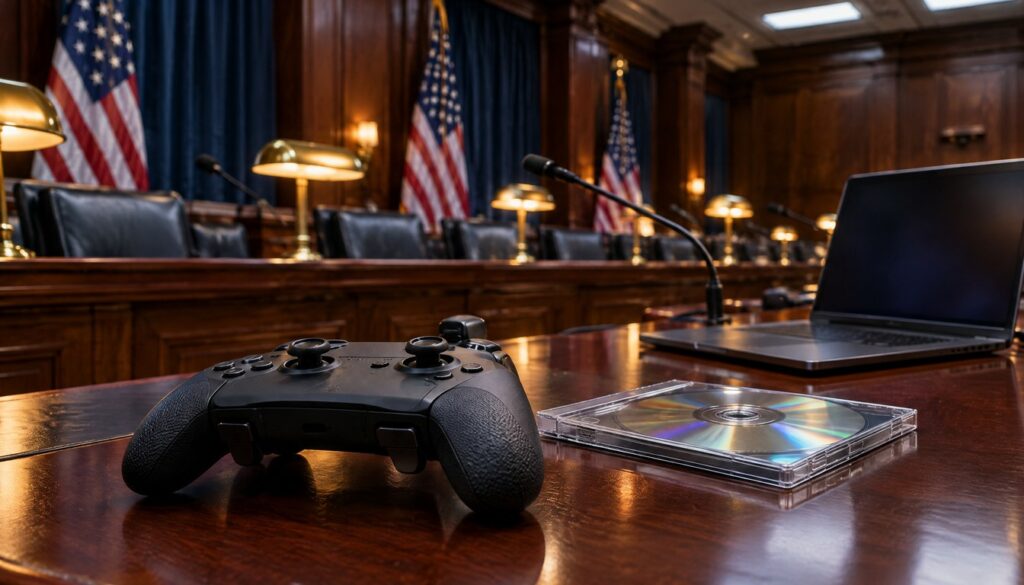
A New York congressman wants to settle, by law, a question that has nagged PC and console owners for more than a decade: when you buy a digital game, do you actually own it? On October 16, 2026, U.S. Representative Ritchie Torres, who represents New York’s 15th congressional district, announced plans to introduce the Power To The Players Act, a proposal that would direct the Federal Trade Commission to write rules guaranteeing that paid-for digital games are treated as owned property rather than revocable licenses. The announcement was picked up within hours by Polygon, Kotaku, Yahoo News, GamingBible, ComicBook.com, and more than a dozen other outlets, turning a long-simmering industry gripe into a genuine Washington talking point.
The bill has not yet been formally introduced in Congress, so there is no bill number, no cosponsor list, and no vote scheduled. What exists right now is a public announcement, a stated policy direction, and a handful of pointed quotes from Torres himself. That has not stopped the story from dominating gaming news cycles this week, because it touches something almost every player has felt: the sinking realization that a storefront can vanish, a server can go dark, and a purchase can disappear with it.
What Is the Power To The Players Act?
According to Torres’s announcement, as reported by Polygon and Kotaku, the Power To The Players Act would task the Federal Trade Commission with establishing regulations that protect consumers’ ability to own and keep playing the video games they purchase. The proposal rests on three pillars: treating digital purchases as ownership rather than a license that can be revoked at will, protecting a buyer’s ability to transfer or resell a game they bought, and requiring that games with online components offer a functional offline mode once the publisher shuts down supporting servers.
Each of those three pillars maps directly onto a specific consumer complaint that has built up over the past several years. Gamers have watched digital-only titles vanish from storefronts without warning, watched always-online games become permanently unplayable the moment a publisher flips the server switch, and found themselves legally barred from reselling a digital copy the way they could a physical disc. Torres’s framing treats these as the same underlying problem: contracts dressed up as sales.
Who Is Ritchie Torres, and Why Is He Pushing This?
Torres has represented New York’s 15th district, covering parts of the Bronx, since 2021, and has built a reputation for consumer-facing legislative pushes that cut across party lines. Gaming is not traditionally his lane, which is part of why the announcement caught attention; it signals that digital ownership has moved from a niche gripe on gaming forums into mainstream consumer-protection territory, the same category as right-to-repair laws and subscription cancellation rules.
In his own words, reported by multiple outlets, Torres boiled the proposal down to a single sentence: “I think there should be a simple rule: if you pay for it, you own it.” That line, carried by Kotaku in its coverage of the announcement, has become the shorthand the rest of the gaming press is using to describe the bill, and it is doing a lot of work to frame this as a plain-language fairness issue rather than a dense regulatory fight.
The Core Provisions, Broken Down
Strip away the press-release language and the proposal is built around a narrow but consequential set of changes to how digital storefronts are allowed to operate. The table below lays out what the current model looks like against what the Power To The Players Act would require if it became law and the FTC wrote the rules Torres is asking for.
| Area | Current digital game model | Proposed under the Act |
|---|---|---|
| Ownership status | Purchases are typically licenses, revocable at the publisher’s discretion | Purchases treated as ownership, not a revocable license |
| Resale and transfer | Digital licenses generally cannot be resold or transferred | Consumers protected in their ability to transfer or resell purchased games |
| Server shutdowns | Online-dependent games can become fully unplayable once servers close | Games with online components required to offer a functional offline mode after shutdown |
| Enforcement body | No dedicated federal oversight of game licensing terms | FTC directed to write and enforce consumer-protection regulations |
| Legal status (as of Oct. 18, 2026) | Not applicable | Announced by Torres; not yet formally introduced in Congress |
Notice what is missing from that table: a bill number, an effective date, penalty amounts, and a list of which publishers or platforms would be covered by name. None of that has been confirmed in the reporting available as of this writing, and any article claiming otherwise is getting ahead of the facts. What is confirmed is the policy direction and the regulator Torres wants to put in charge of it.
“A Rental Disguised as a Sale”: Torres Makes His Case
Torres has leaned hard on plain language rather than legal jargon to sell the proposal. In the announcement, he argued that “consumers must have the right to own, the right to play, and the right to transfer the games they buy.” The framing deliberately avoids the word “license,” which is the term publishers’ end-user agreements rely on to justify revoking access.
That rhetorical choice is the whole fight in miniature. Every major digital storefront, from Steam to the PlayStation Store to the Microsoft Store, sells games under terms that call the transaction a license grant, not a transfer of ownership. Torres’s bill does not ask publishers to change their marketing copy; it asks the FTC to make the legal substance match what buyers already believe they are getting when they click “purchase.”
Why Now: A Decade of Delistings and Dead Servers
Digital ownership has been a slow-burn controversy for years, and this proposal did not appear in a vacuum. ComicBook.com’s coverage of the announcement specifically ties the bill to the problem of delisted games being made playable offline, and GamingBible framed its story around the pressure digital-only models have put on PlayStation specifically. The table below walks through some of the better-known flashpoints that built the public appetite for a bill like this one.
| Year | Flashpoint | Why it mattered |
|---|---|---|
| 2019 | French consumer group UFC-Que Choisir sued Valve over Steam licensing terms | A Paris court found EU consumer law requires resale rights for digital licenses; Valve appealed |
| 2022 | Sony warned of possible removals from PlayStation video libraries | Highlighted that even purchased digital media, not just games, can lose accessibility |
| 2023 | Nintendo closed Wii U and 3DS eShop storefronts | Cut off new digital purchases and some re-download access on discontinued platforms |
| 2024 | Ubisoft shut down servers for the always-online racer The Crew | Rendered a fully purchased game permanently unplayable, becoming a rallying point for ownership advocates |
| 2026 | Rep. Ritchie Torres announces the Power To The Players Act | First federal legislative proposal aimed squarely at digital game ownership rights |
Each of those incidents individually was treated as a one-off scandal. Taken together, they built the exact narrative Torres is now using in Washington: that digital storefronts have quietly rewritten the meaning of “buy” without consumers ever agreeing to it in plain terms. Not every platform has leaned the same way, though. Nintendo has repeatedly said it has no plans to ditch physical media even as digital purchases keep growing as a share of overall game sales, a stance that puts it slightly out of step with the fully digital-first approach other platforms have taken.
The FTC’s Potential Role
Handing enforcement to the Federal Trade Commission is a deliberate choice. The agency already has broad authority to police unfair and deceptive trade practices, which gives Torres a plausible path to new rules without necessarily needing an entirely new regulatory body. It also means that, if the bill moves forward, the fight will partly shift from Congress to a rulemaking process at the FTC, where industry lobbyists, consumer groups, and publishers will all get a seat at the table to argue over definitions like “functional offline mode” and “transferable.”
That rulemaking path matters because it is typically slower and more technical than a straight congressional vote, but it also tends to produce more durable, detailed rules than a short statute could on its own. Nothing in the current reporting specifies a timeline for when, or whether, the FTC would actually receive this directive, since the bill itself has not been introduced yet.
What Publishers and Platforms Stand to Lose
For the companies that run digital storefronts, this proposal is not a footnote. Steam, the PlayStation Store, the Microsoft Store, and the Nintendo eShop are all built on licensing terms that assume the platform can revoke access, and all of them generate meaningful revenue from the fact that digital purchases cannot currently be resold the way a physical disc can. Valve’s storefront alone is coming off a record-setting $1.7 billion September, a scale that shows exactly how much is riding on digital sales staying non-transferable. A rule requiring transferability would open the door to secondary markets for digital keys, something publishers have resisted for years precisely because it would cut into new-sale revenue.
The offline-mode requirement is arguably the more technically disruptive piece. Games built around always-online architecture, matchmaking servers, and live-service backends were not necessarily designed with a shutdown-day offline mode in mind, and retrofitting one after the fact can be expensive or, in some cases, close to impossible depending on how deeply server dependencies are baked into the game’s code. If the FTC eventually writes rules along these lines, it could change how publishers architect online components from the design stage forward, not just how they wind games down. It would also land at an odd moment for the hardware side of the business, with video game hardware sales sitting at a 13-year low even as software and subscription revenue keeps climbing.
Subscription services add another wrinkle. Tiers like PlayStation’s Essential, Extra, and Premium plans bundle access to large libraries for a monthly fee rather than a one-time purchase, and the pricing gap between those PS Plus tiers shows how much platforms already rely on access-based, rather than ownership-based, models. It is not clear from the current proposal whether subscription-bundled titles would even fall under the Act’s ownership definition, since a subscription was never framed as a purchase in the first place.
Competitive Comparison: The US Is Late to This Conversation
Framing this as a uniquely American debate undersells how far behind the US actually is. The 2019 French court ruling against Valve already established, at least within the EU’s legal framework, that consumer protection law can require digital license resale rights, a precedent that has hovered over the industry for years without a US equivalent. The European Union’s broader digital content rules already require clearer disclosure of licensing terms at the point of sale, something that has no direct federal counterpart in the United States.
What makes the Power To The Players Act notable isn’t that it’s breaking new conceptual ground globally, it’s that it would be the first serious attempt to bring US federal law into the same conversation European regulators and courts have been having for years. If the FTC ultimately gets this directive, American consumers would, for the first time, have a federal regulatory hook resembling protections EU buyers have had informal legal precedent for since 2019. State-level consumer rules are already moving in a similar direction on a different front; California’s SB 923 expanded CCPA deletion rights this year, showing that lawmakers outside Washington are also willing to force tech platforms to hand consumers more control over digital assets and data.
Reaction From the Gaming Press and Public
The speed and breadth of coverage is itself a data point. Within roughly 24 hours of the announcement, the story had been picked up by Polygon, Kotaku, Yahoo News, Digg, GamingBible, ComicBook.com, and Ground News, among others, an unusually fast and wide spread for a bill that has not even been formally filed yet. That kind of pickup usually signals either a slow news day or a topic with genuine pent-up public interest; given how often “I bought this game and now it’s gone” posts circulate on gaming forums, the latter explanation looks far more likely here.
Torres himself seems aware the simplicity of the message is the point. As he put it in the announcement covered by Kotaku, a game that can be taken away the moment a company pulls the plug “is not a purchase,” calling it instead “a rental disguised as a sale.” That line is built for headlines, and it has already become the single most-quoted phrase in coverage of the announcement.
The Long Road Ahead: What Still Has to Happen
It is worth being precise about where this actually stands, because enthusiasm in gaming media can easily outrun legislative reality. As of October 18, 2026, the Power To The Players Act exists as an announced intention, not a filed bill. That means there is no bill number to track, no committee assignment, no scheduled markup, and no list of cosponsors. Torres would need to formally introduce the legislation, find cosponsors on both sides of the aisle, survive committee review, and win floor votes in both chambers before it could reach a president’s desk, and even then the actual regulatory detail would be left to an FTC rulemaking process that could take months or years to finalize.
Consumer-protection bills touching entrenched industries rarely move quickly through Congress, and gaming industry trade groups have historically pushed back hard against resale and ownership mandates, arguing they threaten business models built around live services and ongoing monetization. None of that guarantees failure, but it does mean gamers should not expect this to become enforceable law within the next several months.
Historical Context: How We Got Here
The shift from owning physical media to licensing digital access did not happen overnight, and it did not happen through any single decision gamers got to vote on. It crept in through end-user license agreements that almost nobody reads, click-through terms that redefined “buy” buttons as license grants, and storefronts that made digital purchases convenient enough that physical media usage has been in steady decline for years. By the time players started noticing the catch, digital distribution was already the dominant way most people acquire games on PC and increasingly on consoles.
That slow creep is exactly why a bill like this resonates even before it has a single cosponsor. It is less a response to one scandal and more a response to a decade of small print finally catching up with consumer expectations that were set, implicitly, by decades of physical media where owning a cartridge or disc really did mean owning it.
What This Means for Gamers Right Now
Practically speaking, nothing changes today. Your existing digital library is governed by the same license terms it always was, and no storefront is required to change its resale policy or add offline modes because of an announcement alone. What has changed is that there is now a named federal lawmaker, with a specific proposal and a direct line to a powerful regulator, putting digital game ownership on record as a policy priority rather than just a recurring internet complaint.
For now, the most useful thing players can do is pay attention to how the bill evolves once, or if, it is formally introduced, since the gap between an announced intention and an enforceable regulation is often where the real policy details, and the real industry pushback, actually show up.
Predictions: Where This Goes From Here
- Expect the Entertainment Software Association and major publishers to push back once the bill is formally introduced, likely framing resale and offline-mode mandates as threats to live-service business models.
- If the federal bill stalls in committee, watch for individual states to introduce copycat consumer-protection bills targeting digital game licensing, mirroring how states have led on right-to-repair legislation.
- Any FTC rulemaking that results from this, even in a best-case scenario for Torres, is unlikely to produce enforceable rules within the next 12 to 18 months given how long FTC rulemaking processes typically take.
- Publishers may get ahead of the regulatory risk by voluntarily clarifying licensing disclosures at checkout, similar to how some already flag “requires internet connection” warnings, rather than wait for a mandate.
- Expect this story to resurface heavily if Torres formally introduces the bill in the coming weeks, with a second wave of coverage once there is an actual bill number and cosponsor list to report on.
The Bigger Picture for Digital Ownership
Whatever happens to this specific bill, it has already accomplished something: it has put “if you pay for it, you own it” into the mouth of a sitting member of Congress, on the record, tied to a specific regulatory ask. That is a different kind of pressure than another forum thread about a delisted game. As Torres summarized the goal of the legislation, the bill is meant to ensure that “consumers own what they buy and can keep playing long after a company moves on.” Whether that becomes enforceable law or another stalled proposal, the fact that it is being argued in these terms, ownership versus license, at the federal level is itself a meaningful shift in how this debate is being framed.
Frequently Asked Questions
Is the Power To The Players Act already law?
No. As of October 18, 2026, it has only been announced by Rep. Ritchie Torres. It has not been formally introduced in Congress, so there is no vote, no effective date, and no enforcement mechanism yet.
Who proposed the Power To The Players Act?
U.S. Representative Ritchie Torres, who has represented New York’s 15th congressional district since 2021.
What would the bill actually require?
Based on the announcement, it would direct the FTC to write rules treating digital game purchases as ownership rather than revocable licenses, protect consumers’ ability to resell or transfer purchased games, and require online games to offer a functional offline mode after their servers shut down.
Which games or platforms would be covered?
This has not been specified in the reporting available. No particular publisher, platform, or retailer has been named as a target of the legislation.
Would this let people resell their Steam or PlayStation library?
That is the stated goal of the transfer and resale provision, but there is no confirmed detail yet on how such a resale mechanism would actually work in practice, since the FTC would need to write specific rules first.
Does this bill affect games that have already shut down, like The Crew?
The announcement does not specify whether any offline-mode requirement would apply retroactively to already-shuttered games. The reporting available focuses on the forward-looking policy goal rather than remedies for past shutdowns.
How is this different from existing consumer protection law?
Currently, there is no dedicated federal rule in the US requiring digital game purchases to be treated as ownership rather than a license. This proposal would task the FTC with creating that rule, something the EU has moved closer to through separate digital content regulations and court rulings like the 2019 French case against Valve.
When could this become law?
No timeline has been confirmed. The bill still needs to be formally introduced, assigned to committee, and passed by both chambers of Congress before heading to the president, a process that for consumer-protection bills of this kind typically takes well over a year, if it succeeds at all.