
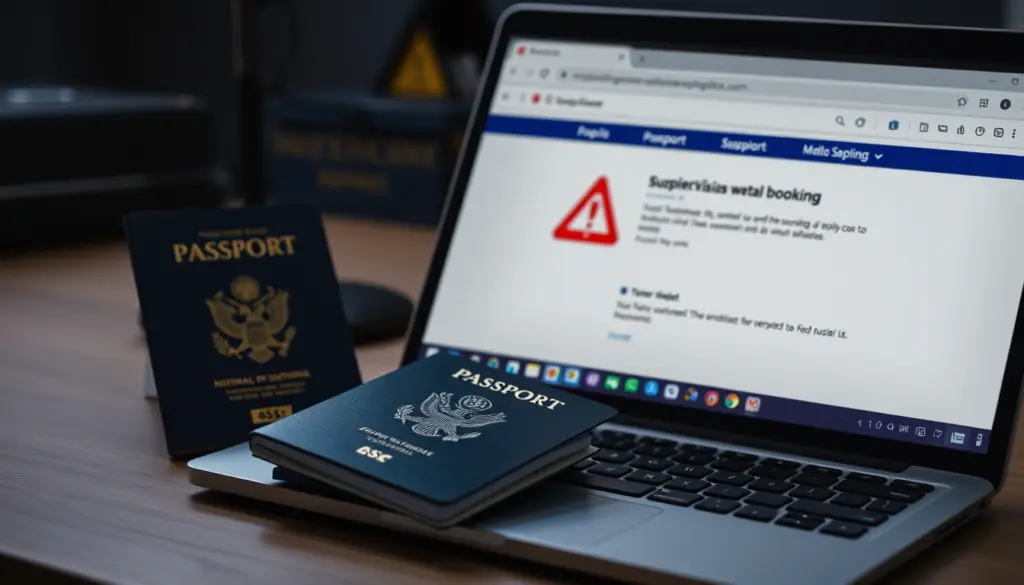
Schengen consulates in Türkiye received 1,268,376 short-stay visa applications in 2025, and 14.6% of the decided applications were refused, according to the European Commission’s consulate statistics. Demand that large, combined with long appointment queues and refusal rates that reach a third at some consulates, has created a steady market for fraud. Scammers sell guaranteed approvals, resold appointment slots, forged bank statements and, more recently, EU passports that no longer exist. This guide breaks down the six patterns that matter and the technical checks that expose them.
The refusal data scammers exploit
Refusal rates differ sharply between countries and even between consulates of the same country. In 2025, Lithuania refused 35.5% of decided applications lodged in Türkiye, Malta 34.9% and Estonia 30.6%, while Portugal refused 3.5%. At consulate level, Germany’s Ankara post reached 44.2%. A consulate-by-consulate table of 2025 Schengen refusal rates in Türkiye compiled from the Commission’s dataset shows the full spread. Fraudsters use exactly these gaps in their pitch: “Germany refuses almost half, but we have a guaranteed route.” No such route exists. Consulates decide every case individually, and no intermediary can influence the outcome.
Red flag 1: “visa guarantee” and “100% approval”
Turkey’s Advertising Board (Reklam Kurulu) examined six visa-intermediary firms at its 370th meeting on 11 June 2026. Their ads promised a “visa appointment guarantee”, a “visa guarantee”, “100% approval” and “fast result guarantee”. The Ministry of Trade announced precautionary suspension orders of up to three months on 16 June 2026, and its 26 July update reported that the misleading ads of five firms had been stopped. Any website or social account using that vocabulary is advertising something it cannot deliver.
Red flag 2: appointment slots for sale
Appointment scarcity is the most profitable pain point. On 11 August 2026, Turkish media reported an investigation into 49 suspects accused of promising visa appointments within 15 days, with a 100% guarantee in case of refusal, using software tied to an intermediary system. The case is at the allegation stage, but the pattern is familiar: bots grab slots as they open and sell them on. Legitimate appointments are booked only through the provider each consulate designates, and the booking itself is free or carries a fixed published service fee.
Red flag 3: lookalike booking sites
Phishing pages copy the branding of official visa application centres and live on domains that differ by one character, a hyphen or a different top-level domain. The goal is passport scans, payment card numbers and account logins. Treat every link from an ad, a message or a WhatsApp group as untrusted, and type the provider’s address from the consulate’s own website instead. Our explainers on recognising phishing attacks and what the HTTPS padlock really means cover the mechanics. A padlock only proves the connection is encrypted, not that the site belongs to the organisation it imitates. Check the full domain and the certificate details before entering anything.
Red flag 4: EU passports “for sale”
For years, Malta offered citizenship in exchange for investment. On 29 April 2025 the Court of Justice of the European Union ruled in Commission v Malta (C-181/23) that naturalisation in return for predetermined payments breaches EU law, describing it as the commercialisation of EU citizenship. Malta then replaced the scheme through national legislation. Offers of a “guaranteed Maltese passport” for a fixed sum are therefore a warning sign, not a product. What remains legal is residence, such as Malta’s permanent residence programme. It is filed only through agents licensed by Residency Malta Agency, and those agents appear on the agency’s official list. A residence card does not become a passport, and any seller who blurs that line is either misinformed or dishonest.
Red flag 5: forged supporting documents
Some “consultants” offer to prepare bank statements, employment letters or hotel bookings that do not reflect reality. Consulates verify these documents, and forged paperwork can lead not only to refusal but to entry bans and criminal liability. The same data-breach economy that leaks passports, covered in our report on 6 million exposed passport records, also supplies the raw material for identity fraud. A service that asks for your documents and then “improves” them is exposing you to both risks.
Red flag 6: paid “EES registration” and fake travel authorisations
The EU’s Entry/Exit System began its phased rollout in October 2025. It records the biometrics and entry and exit data of non-EU short-stay travellers at the border, and it does not require any advance registration or payment. The separate ETIAS travel authorisation applies only to visa-exempt travellers, which does not include Turkish citizens who need a Schengen visa. Sites charging for “EES registration” or an “ETIAS visa” for Turkish passport holders are selling nothing.
A security checklist before you apply
- Start from the consulate’s official website and follow its link to the designated application provider. Never start from an ad.
- Compare the domain character by character, then open the certificate details and check the organisation name.
- Never pay visa or service fees to a personal bank account or through a messaging app.
- Share passport scans only on the official portal, and enable two-factor authentication on any email account linked to your application.
- Treat “guaranteed”, “100%” and “fast-track approval” as disqualifying words.
- For residence programmes, confirm the representative on the official licensing authority’s list, not on the seller’s own website.
The bottom line
A one in seven refusal rate across Türkiye, and far higher at some consulates, will keep the scam market busy. The defences are unglamorous: official sources, verified domains, traceable payments and a healthy suspicion of anything described as guaranteed. Every one of these frauds depends on the applicant skipping one of those checks.