
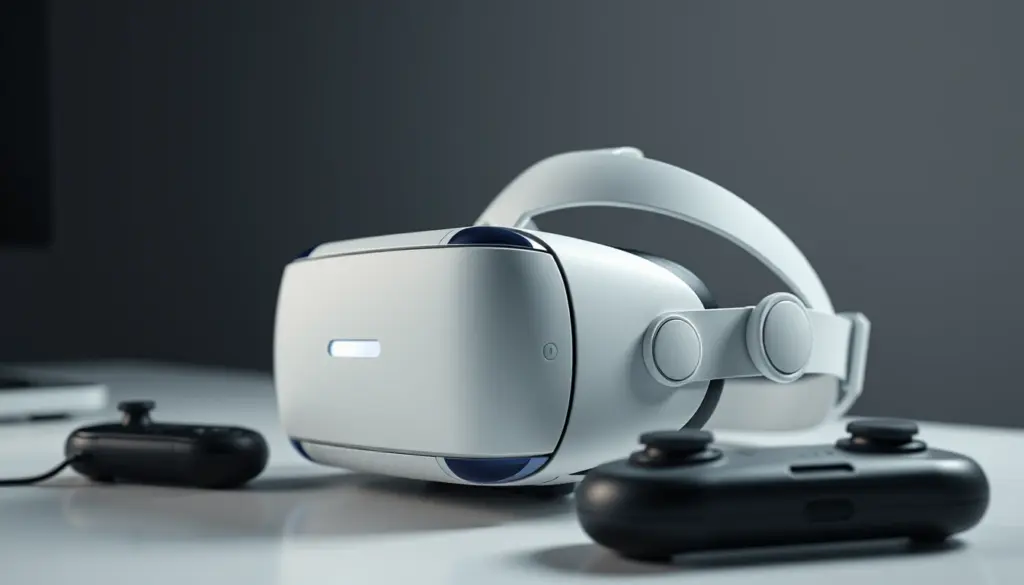
Valve’s first standalone VR headset in years is about to ship, and it is not bringing a new flagship game with it. According to a report published by IGN on September 14, 2026, Steam Frame is launching without a purpose-built exclusive title, leaning instead on a seven-year-old game and a bet that a huge existing library beats a single showcase.
That is a notable departure from how most VR hardware makers have played this game for a decade. Meta paired its headsets with fresh first-party titles. Sony built PSVR2’s launch around new content. Valve’s own Valve Index shipped in 2019 with Half-Life: Alyx, a game built specifically to sell the hardware. Steam Frame gets no equivalent. Instead, Valve is repackaging Alyx and pouring its engineering effort into making sure thousands of existing Steam titles simply work on day one, whether they were built for VR or not.
The strategy raises a real question for anyone about to spend money on new hardware: is a library of old and unrelated games a fair trade for a headset that has no game designed to prove what it can do? Steam Frame games searches have spiked since the announcement, and the answer Valve is giving, through its own developers, is that compatibility itself is the pitch.
What IGN’s Report Actually Says About Steam Frame Games
IGN’s September 14 story, titled “Why There’s No New Game for the Steam Frame,” lays out a straightforward premise: Valve chose not to build a new headline game for its newest hardware. The company is instead supporting Steam Frame with Half-Life: Alyx, the VR title that originally launched alongside Valve Index back in 2019. That is the closest thing Steam Frame has to a marquee experience at launch, and it is not new.
The report frames this as a deliberate trade-off rather than an oversight. Valve’s public rationale, relayed through its own software team, is that a headset succeeds or fails based on how much a buyer can actually do with it in the first week of ownership. A single new game, however good, only occupies a few hours of that week. A library of thousands of already-owned titles occupies a lot more.
It is worth being precise about what is confirmed here and what is not. IGN’s reporting confirms Valve is leaning on Half-Life: Alyx and prioritizing broad compatibility. It does not name any new, unannounced VR title being built specifically for Steam Frame’s launch window. Other outlets covering the headset’s rollout, including UploadVR and Road to VR, have described the same pattern: no fresh flagship game, an old one doing the marketing work instead.
Inside the Steam Frame: Hardware and Software Basics
Steam Frame is Valve’s standalone VR headset, meaning it runs on its own chip rather than requiring a tethered PC to function, unlike the Valve Index. It is built around a Qualcomm Snapdragon 8 Gen 3 chipset, the same class of mobile silicon found in flagship smartphones, and it runs SteamOS, Valve’s own operating system rather than a stripped-down mobile OS.
That combination is the whole story behind the “no new game” decision. A Snapdragon chip cannot brute-force its way through the same workloads as a gaming PC, so every title Valve wants working on the headset has to be tested, tuned, or streamed. Running SteamOS instead of a closed mobile platform also means Steam Frame inherits the entire Steam catalog as a starting point, rather than a curated app store built from scratch, which is exactly the asset Valve is choosing to lean on instead of commissioning new content.
For local playback, that catalog has to run natively on Snapdragon silicon. For everything else, Valve is using Steam Link, its existing streaming technology, to pull the game from a separate gaming PC over a local network and beam the video feed to the headset. Shattered.io covered the pricing side of that hardware equation when Valve confirmed Steam Frame’s launch price amid a broader memory-chip shortage squeezing every device with RAM in it this year.
Valve’s Track Record: How Valve Index Launched With Alyx in 2019
To understand why skipping a new game is unusual for Valve specifically, it helps to look at what the company did last time. Valve Index launched in 2019 as a tethered, PC-only headset, and Valve built Half-Life: Alyx to go with it. Alyx was not a tech demo. It was a full, multi-hour entry in one of Valve’s most valuable franchises, designed from the ground up for VR, and it is widely credited with pulling PC VR sales upward at a moment when the category was stalling.
That precedent matters because it sets the expectation Steam Frame is now failing to meet, at least by the traditional definition. Valve proved with Index and Alyx that it is willing and able to build a system-selling exclusive when it wants to. Seven years later, with a new headset that is arguably a bigger technical undertaking, since it has to work standalone rather than lean on a full gaming PC, Valve chose not to repeat that move. It reused the same game instead of building a sequel or a new IP to match it.
Half-Life: Alyx Becomes the De Facto Launch Title Again
Half-Life: Alyx is doing double duty on Steam Frame. It is both the most recognizable VR game in Valve’s catalog and, by default, the headset’s unofficial system seller, despite not being built for this hardware generation. That puts Steam Frame in an odd position: its most compelling piece of software predates the device by seven years, and anyone who already bought a Valve Index and played through Alyx has already had the experience Steam Frame is now leading with.
For new buyers who skipped Index entirely, that is less of a problem. Alyx remains one of the best-reviewed VR titles ever released, and running it on a standalone headset without a gaming PC nearby is a legitimate technical achievement regardless of the game’s age. But it does not change the underlying fact IGN’s report highlights: there is no new content built specifically to make the case for Steam Frame the way Alyx made the case for Index.
Jeff Leinbaugh on Valve’s Compatibility-First Bet
Jeff Leinbaugh, a Valve software developer, spoke to IGN about the reasoning behind the decision, and his comments are the clearest statement of Valve’s actual strategy. Leinbaugh said the team “really prioritized getting software compatibility in a good state so that there would be a huge number of games, I mean as big as possible, available to play on the device or stream to the device on day one.”
“Really prioritized getting software compatibility in a good state so that there would be a huge number of games, I mean as big as possible, available to play on the device or stream to the device on day one.”
Jeff Leinbaugh, Valve software developer, via IGN
Leinbaugh also described the kind of library Valve wants Steam Frame owners to have on day one, saying the goal is to give people “a lot of options of what games to play, whether they’re VR games or not VR games.” That second detail is easy to miss but important: Valve is not only talking about VR content. It is explicitly counting flat, non-VR Steam games that can run or stream on the headset as part of the value proposition, which is a broader and less flashy pitch than a single new exclusive.
What “Day One Compatibility” Actually Means for Buyers
Compatibility sounds like a solved, boring engineering problem until you remember that most of the Steam library was never built with a standalone ARM-based headset in mind. Getting a huge number of games playable on day one means Valve has spent the run-up to launch testing existing titles rather than commissioning new ones, an approach that trades a marketing moment for a broader but less certain software experience.
The practical result for a buyer is a headset where the interesting question is not “what is the killer app,” but “which of the games I already own will actually run well.” That is a harder thing to put in a trailer, and it explains why the coverage around Steam Frame’s launch keeps circling back to the same headline: there is no single answer to “what should I play first” the way there was for Valve Index.
Steam Frame vs Valve Index: Launch Strategy Compared
| Aspect | Valve Index (2019) | Steam Frame (2026) |
|---|---|---|
| Headset type | Tethered, requires a gaming PC | Standalone, runs on its own chip |
| Core platform | PC hardware via SteamVR | Qualcomm Snapdragon 8 Gen 3 |
| Operating system | Windows, via SteamVR client | SteamOS |
| Flagship launch game | Half-Life: Alyx (new, built for the hardware) | None confirmed as new, Alyx reused |
| Software strategy | One system-selling exclusive | Broad day-one compatibility across the Steam library |
| PC streaming option | Not applicable, already tethered | Steam Link streaming from a separate PC |
Steam Link Streaming as the Software Safety Net
Steam Link is the second half of Valve’s compatibility bet, and it matters as much as native support does. Games that are too demanding for the Snapdragon chip to run locally can instead be streamed from a separate Windows or SteamOS gaming PC over a local network, with Steam Frame acting as a display and input device. That approach effectively removes the ceiling on what the headset can play, provided the owner has a capable PC nearby and a fast enough local connection.
It also explains why Valve can credibly claim a “huge number of games” available on day one without having ported all of them to run natively on mobile silicon. Native, on-device compatibility and PC streaming are two different technical paths that both count toward the same headline number, and the split between them is likely to matter a great deal to reviewers once independent testing starts.
Why Skipping an Exclusive Fits Valve’s Business Model
Valve does not make money the way a traditional console maker does. It does not need to sell a fixed number of headsets to recoup a subsidized loss on hardware, because its revenue engine is Steam itself, the storefront, not the device. A new exclusive game is expensive, slow to build, and only pays off if it moves headset units. Broad compatibility is comparatively cheap to expand over time, and it strengthens the thing Valve actually profits from: more hours spent inside the Steam ecosystem, on any device.
Seen that way, the decision to skip a new flagship title looks less like a gap in Steam Frame’s lineup and more like Valve applying the same logic it has used for years on Steam Deck, where the pitch was never a single console-style exclusive but the ability to carry an existing PC library around. Shattered.io’s earlier coverage of SteamOS’s expansion to rival handhelds pointed at the same pattern: Valve increasingly sells an operating system and a library, not a single hero product.
How Steam Frame’s Approach Compares to Rival VR Headsets
Every major VR platform has answered the “what do I play first” question differently, and Steam Frame’s answer sits at one extreme end of that spectrum. Meta has generally paired new headset generations with a mix of ported hits and first-party titles from its own studios. Sony built PSVR2’s launch narrative around new, PlayStation-exclusive content to differentiate it from PC-based VR. Valve, on Steam Frame, is explicitly choosing neither path, betting that raw library size beats any single piece of new content.
| Platform | Launch software approach | Primary hook |
|---|---|---|
| Valve Index (2019) | One new built-for-hardware exclusive | Half-Life: Alyx |
| Steam Frame (2026) | Reused older exclusive plus broad library compatibility | Day-one access to existing Steam catalog |
| Rival standalone VR headsets | Mix of first-party titles and ported content | Curated app-store style library |
| Rival PC-tethered VR headsets | New platform-exclusive content at launch | A differentiated flagship game |
The trade-off in that comparison is straightforward. A new exclusive gives reviewers and buyers a concrete reason to care about a launch window. A compatibility-first approach gives them a vaguer but arguably more durable pitch: the headset will still be useful in two years, because it is not dependent on a single game’s long-term popularity to justify the purchase.
The Compatibility Layer Problem: Testing Games for Standalone VR
Getting existing Steam titles to run on a mobile chip is not automatic, and it is the least visible part of Valve’s strategy. Every game has to be checked against the Snapdragon-based hardware, and VR titles in particular need extra scrutiny because a stutter or frame drop that is merely annoying on a monitor can cause real physical discomfort in a headset. Enthusiasts and developers have started documenting their own compatibility checks on SteamOS-based hardware using developer-mode tools, a pattern already familiar from Steam Deck.
# Example of the kind of local compatibility check
# enthusiasts run on SteamOS-based hardware before
# trusting a title to run well on a new device
steamos-select-branch --list
steam --version
# Confirm whether a title is flagged as verified
# for standalone play versus streaming-only
cat ~/.steam/steam/appcache/appinfo.vdf | grep -A3 "compat_flags"
That kind of manual checking is exactly what Valve is trying to make unnecessary at scale by doing the compatibility work centrally before launch. Whether the company has done enough of it to make good on Leinbaugh’s “huge number of games” framing is the one claim in this story that outside reviewers, not Valve’s own marketing, will have to verify once Steam Frame ships.
Developer Reaction and the Risk of a Quiet Launch
Coverage of the announcement across gaming and VR outlets has generally framed the compatibility-first approach as a reasonable, if commercially riskier, bet. A headset without a flagship exclusive is harder to market in a single trailer, and it puts more pressure on word of mouth and reviewer testing to communicate value that a marquee game would otherwise convey instantly. Outlets including Road to VR and VR.org have both noted that Valve’s messaging around content has been deliberately restrained since the headset was first announced, reinforcing that this is a considered strategy rather than a scramble to cover for a delayed game.
For VR developers specifically, the compatibility-first framing is arguably better news than a single new exclusive would have been. A headset built to run “as big as possible” a share of the existing catalog is a bigger addressable audience for every VR studio already shipping on Steam, rather than a walled garden built around one Valve-owned franchise.
Market Impact: What This Signals for Valve and VR Hardware Sales
The absence of a new flagship game does not appear to be slowing interest in Steam Frame as a product, but it does shift where that interest is coming from. Search activity and coverage around the headset have leaned heavily on pricing and hardware specifications rather than software excitement, which is a different demand profile than a headset launching with its own Alyx-style showcase would generate. That matters for Valve because it means Steam Frame’s early sales pitch rests more on being a well-built, broadly compatible piece of hardware than on a single must-play reason to buy it immediately.
It also puts more weight on Valve’s existing Steam Deck playbook translating cleanly to VR. Steam Deck succeeded in large part because it made an existing PC library portable, not because it launched with new exclusive content, and Valve appears to be betting the same logic holds for VR, where the software ecosystem is smaller and historically more exclusive-driven than flat PC gaming ever was.
What Comes Next: Predictions for Steam Frame’s Software Roadmap
- Expect Valve to keep expanding its list of tested, verified-compatible titles after launch rather than announcing a single new flagship game in the near term, consistent with the compatibility-first message from Leinbaugh.
- Reviews in the weeks after launch will likely focus heavily on which specific games run natively well versus which require Steam Link streaming, since that split determines how useful the headset is without a nearby gaming PC.
- Pressure will grow on Valve to eventually greenlight new VR content once the installed base is large enough to justify the investment, mirroring how Half-Life: Alyx followed years after Valve had already built up SteamVR hardware support.
- Third-party VR studios are likely to treat Steam Frame’s broad compatibility push as an opening to port existing titles rather than build new standalone-first games immediately, since porting is cheaper than building for a still-small installed base.
- Expect continued comparisons to Steam Deck’s early reception, where the lack of exclusive content was similarly treated as a non-issue once buyers realized how much of their existing library simply worked.
These are informed projections based on Valve’s stated strategy and its history with Steam Deck, not confirmed Valve plans, and should be read as analysis rather than fact.
The Bigger Picture for VR Hardware in 2026
Steam Frame’s launch is arriving at a moment when VR hardware overall has struggled to repeat the momentum Half-Life: Alyx generated back in 2019. A compatibility-first headset is, in effect, an admission that no single new game is likely to move the category the way Alyx once did, and that the more realistic path forward is making VR feel like a natural extension of an existing PC library rather than a separate content ecosystem that needs its own killer app every generation.
Whether that reasoning holds up commercially will depend on details still outside the scope of what has been confirmed so far, including exactly how many titles are verified for native play versus streaming-only at launch, and how quickly that number grows once the headset is in reviewers’ hands. Until independent testing catches up with Valve’s own claims, the compatibility-first pitch remains, at best, a well-argued bet rather than a proven one.
Frequently Asked Questions About Steam Frame Games
Does Steam Frame launch with a new exclusive game?
No. According to IGN’s September 14, 2026 report, Valve is not launching Steam Frame with a new, purpose-built exclusive title. It is instead supporting the headset with Half-Life: Alyx, the VR game that originally launched with Valve Index in 2019.
What chip does Steam Frame use?
Steam Frame runs on a Qualcomm Snapdragon 8 Gen 3 chipset, the same class of mobile silicon used in flagship smartphones, rather than requiring a separate gaming PC to power its graphics.
What operating system does Steam Frame run?
Steam Frame runs SteamOS, Valve’s own operating system, which is also used on Steam Deck and other SteamOS-based handhelds.
Can Steam Frame play games that are not built for VR?
Yes. Valve software developer Jeff Leinbaugh told IGN that the goal is to give owners “a lot of options of what games to play, whether they’re VR games or not VR games,” meaning flat, non-VR Steam titles are part of the day-one compatibility push, either running natively or via streaming.
How does Steam Link factor into Steam Frame’s software strategy?
Steam Link lets Steam Frame stream games from a separate, more powerful gaming PC over a local network. That extends the headset’s effective library well beyond what its onboard Snapdragon chip could run natively on its own.
Why did Valve build a new game for Valve Index but not Steam Frame?
Valve has not published a detailed public explanation of that specific contrast. What is confirmed is that Valve Index launched in 2019 with the purpose-built Half-Life: Alyx, while Steam Frame is instead leaning on broad software compatibility, as described by Jeff Leinbaugh in IGN’s report.
Is Half-Life: Alyx still worth playing on Steam Frame if I already own a Valve Index?
If you have already completed Alyx on Index, Steam Frame is not reintroducing new content to justify a repeat playthrough on its own. The value for existing Alyx owners lies more in the standalone convenience of not needing a tethered PC than in new gameplay.
Will Valve eventually release a new game built specifically for Steam Frame?
Nothing has been confirmed. Based on Valve’s stated compatibility-first strategy and its history of expanding hardware support gradually, as it has with SteamOS on rival handhelds, a dedicated new exclusive is possible in the future but is not part of the current launch plan reported by IGN.