
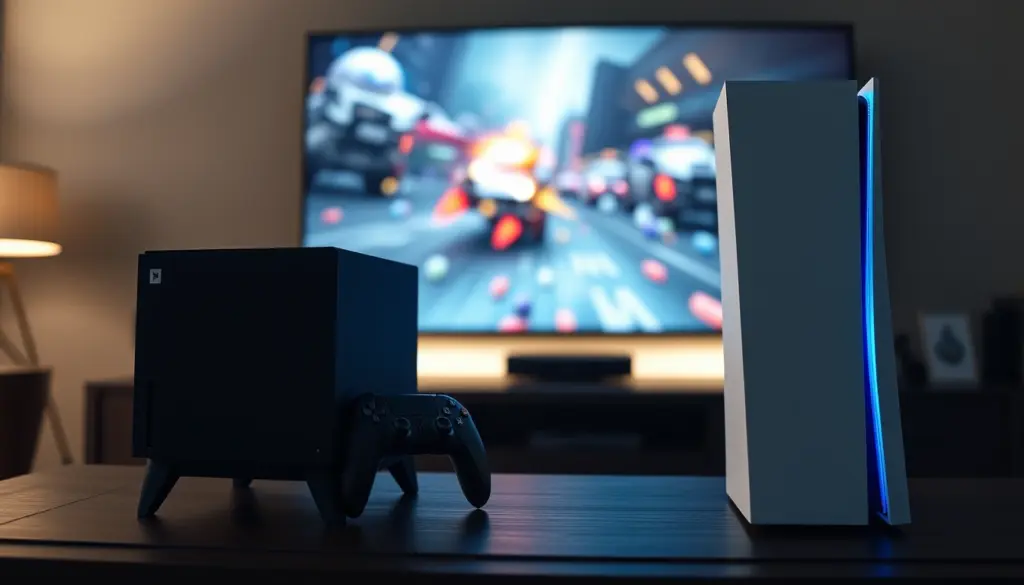
Valve’s living-room PC finally has real reviews, real benchmarks, and a real price tag attached to it, and none of the three are quite what the “6x Steam Deck” marketing promised. The Steam Machine launched on June 29, 2026 at $1,049 for the base 512GB model, a figure Valve’s own engineers now admit overshot an original internal target of roughly $750. Meanwhile the console it has to justify that price against, Sony’s PlayStation 5, has been sitting on shelves since 2020 and, even after its own price hike earlier this year, still costs hundreds of dollars less. The question “Steam Machine vs PS5” has gone from a hypothetical to a genuine buying decision almost overnight, and the early independent benchmarks from GamersNexus, Digital Foundry, and Tech4Gamers are not delivering the verdict Valve was hoping for.
This comparison pulls together the full specs, the verified pricing history on both sides, benchmark data from three independent test labs, real ownership-cost math, and a straight verdict on who should actually buy which box in the second half of 2026. Every figure below is sourced to an official spec sheet, a named reviewer, or a corroborated report – not marketing copy.
Steam Machine vs PS5: Full Specs at a Glance
Valve has never published a TFLOPS figure for the Steam Machine’s GPU, which is itself notable given how central that number is to console marketing. The table below uses only Valve’s and Sony’s own published specifications, cross-checked against Wikipedia’s Steam Machine (2026) entry and the PlayStation 5 entry.
| Spec | Steam Machine | PS5 (base, Slim) |
|---|---|---|
| Launch price | $1,049 (512GB) / $1,349 (2TB) | $599.99 (Digital) / $649.99 (disc) |
| Controller included | No (sold separately) | Yes (DualSense) |
| CPU | Semi-custom AMD Zen 4, 6-core/12-thread, up to 4.8GHz | AMD Zen 2, 8-core/16-thread, up to 3.5GHz |
| GPU | Semi-custom AMD RDNA 3, 28 CU @ 2.45GHz (no official TFLOPS figure) | AMD RDNA 2, 36 CU, 10.28 TFLOPS |
| System memory | 16GB DDR5 (system) + 8GB GDDR6 (video, split pool) | 16GB GDDR6, 256-bit bus, 448GB/s |
| Storage | 512GB or 2TB NVMe SSD (M.2 2230) | 1TB NVMe SSD (Slim model) |
| Storage expansion | M.2 2280 slot + microSD | Official-spec M.2 NVMe slot |
| Operating system | SteamOS 3 (Arch-based Linux) | Proprietary PS5 system software |
| Resolution target | “Up to 4K gaming with FSR 4.1” (revised claim) | Native 4K, up to 120fps supported titles |
| Disc drive | None (digital only) | Optional (disc edition or add-on drive) |
| Gaming power draw | ~170-180W (GamersNexus measured) | ~200-220W (measured, various outlets) |
| Dimensions / weight | 152 x 162.4 x 156mm, 2.6kg | Slim: ~358 x 216 x 80mm, ~3.2kg |
| Connectivity | Wi-Fi 6E, Bluetooth 5.3, Gigabit Ethernet | Wi-Fi 6, Bluetooth, Gigabit Ethernet |
| Release date | June 29, 2026 | November 2020 (Slim: late 2023) |
Two things jump out immediately. First, Valve’s marketing leans entirely on the comparative “6x Steam Deck” framing rather than a hard TFLOPS number, which independent reviewers have since had to reverse-engineer themselves. Second, the memory layout is genuinely different in kind: the PS5 uses a single unified 16GB GDDR6 pool shared between CPU and GPU, while the Steam Machine splits 16GB of slower system DDR5 from a separate 8GB GDDR6 video pool – a very PC-style architecture that trades some peak bandwidth for flexibility and cost.
Design and Ergonomics: PC Cube vs Console Slab
The Steam Machine is a roughly 6-inch cube, 152 x 162.4 x 156mm and 2.6kg, designed to sit under or beside a TV like a small PC rather than lie flat like a traditional console. The PS5 Slim, by contrast, is a wider, flatter unit built around Sony’s now-familiar two-tone design language, with a footprint suited to horizontal or vertical placement on an entertainment stand. Neither is a small object, but the Steam Machine’s boxier shape means it needs a slightly different spot in most living-room setups than the console it’s replacing.
Port selection favors the Steam Machine on raw flexibility: USB-C 3.2 Gen 2, four USB-A ports, DisplayPort output alongside HDMI, and Wi-Fi 6E. The PS5 sticks to a more console-typical port set built around HDMI 2.1 and USB-A/USB-C, with fewer total connections but a UX tuned specifically around game installs and controller charging. GamersNexus’s full teardown review found the Steam Machine ran cooler than expected given its closed-off front plate, with gaming power draw in the 170-180W range and full-load “torture test” draw in the low 200s – noticeably lower than the PS5’s rated ceiling, though Sony’s real-world gaming draw of roughly 200-220W isn’t dramatically higher in practice.
Notably, the Steam Machine ships without a controller at all. Valve sells its relaunched Steam Controller separately at $99, or the machine works with any Bluetooth or USB gamepad, including a PS5 DualSense. The PS5 includes one DualSense controller in the box regardless of which edition you buy – a meaningful hidden cost difference that the headline prices alone don’t capture.
Noise is another practical, if less headline-grabbing, difference. GamersNexus’s acoustic testing found the Steam Machine’s fan profile stayed relatively quiet under typical gaming loads, only becoming noticeable under sustained, CPU-and-GPU-bound stress testing. The PS5 has developed a reputation over its six-year lifespan for occasional fan ramp-up during long, demanding sessions, though Sony has refined cooling across the Slim revision. Neither console is loud by older-generation standards, but buyers sensitive to fan noise in a quiet living room should weigh this alongside raw performance rather than treat it as a solved problem on either side.
Pricing: How a $750 Target Became $1,049
The most consequential story in this whole comparison isn’t a spec, it’s a supply chain. Valve engineers Pierre-Loup Griffais and Yazan Aldehayyat have now gone on record twice about why the Steam Machine costs what it does. Speaking to IGN around launch, they said the device “faced a price increase similar to what happened with the Steam Deck” – the Deck’s 512GB model jumped 43.7% from $549 to $789 in May 2026. Applying a comparable increase to the Steam Machine implies an original internal target of roughly $750, a figure independently estimated by Notebookcheck and AltChar, since Valve has never confirmed an exact number.
Three weeks later, in a Bloomberg newsletter interview published July 17, 2026, the same two engineers were blunter about where things are headed:
“We knew there was going to be an issue with sourcing. But the extent was beyond anything we actually expected.”
Yazan Aldehayyat, Valve engineer, via Bloomberg
“Honestly, it’s still getting worse. What people are seeing on retail shelves right now, from our observations, is lagging what we’re seeing from a bulk supply by at least three to six months.”
Yazan Aldehayyat, Valve engineer, via Bloomberg
Griffais, meanwhile, described Valve’s actual leverage with memory suppliers in blunt terms: “There’s no contracts. There’s nothing. Like, those guys… they give us a price every month or something and they say ‘You can buy that many’ and it’s yes or no. And if we say no, then they never talk to us again.” Both quotes are corroborated verbatim across Kotaku, PC Gamer, and GamesRadar+. Neither engineer confirmed whether a further price hike is coming, only that they don’t expect prices to fall.
Sony’s PS5 pricing has moved too, just less dramatically. The most recent US increase took effect April 2, 2026: Digital Edition rose from $499.99 to $599.99 and the disc edition from $549.99 to $649.99, both +$100 (roughly +18-20%). That’s a smaller percentage jump than either the Steam Deck or Steam Machine absorbed, though PS5 sales have still cratered in the months since.
| Device | Pre-hike price | Current price | Change | Effective |
|---|---|---|---|---|
| Steam Machine 512GB | ~$750 (estimated internal target) | $1,049 | ~+40% | Jun 29, 2026 (launch) |
| Steam Machine 2TB | n/a (no prior price) | $1,349 | – | Jun 29, 2026 (launch) |
| PS5 Digital Edition | $499.99 | $599.99 | +20% | Apr 2, 2026 |
| PS5 (disc) | $549.99 | $649.99 | +18.2% | Apr 2, 2026 |
| PS5 Pro | $799.99 | $899.99 | +12.5% | Apr 2, 2026 |
Even after its own increase, a PS5 disc console costs $399 less than the entry Steam Machine, and a PS5 Digital Edition costs $449 less – with a DualSense controller already included in both cases. That gap is the single most important number in this entire comparison, because as the next section shows, it isn’t buying Steam Machine owners a faster machine.
Performance Benchmarks: What Three Independent Labs Measured
Valve’s own marketing originally promised 4K gaming at 60fps with FSR upscaling. That claim quietly disappeared from the Steam Machine’s official product page on June 25, 2026 – four days before launch and roughly 24 hours after early review units reached GamersNexus, Digital Foundry, and Linus Tech Tips – replaced with the hedged “up to 4K gaming with FSR 4.1,” a phrasing that includes no frame-rate commitment at all. That retraction (covered in full in our earlier report) set the tone for how the actual review benchmarks landed.
| Test | PS5 (base) | Steam Machine | Source |
|---|---|---|---|
| GPU performance tier | RDNA 2, 36 CU, 10.28 TFLOPS (official) | Roughly RX 6600/RTX 3060-to-RX 7600/RTX 4060 class | GamersNexus, Digital Foundry |
| God of War Ragnarok – 4K | 75-78 FPS (native) | 60-63 FPS (Medium settings, FSR Quality) | Tech4Gamers |
| God of War Ragnarok – 1440p | Not tested in this comparison | ~70 FPS | Tech4Gamers |
| Cyberpunk 2077 – 1440p High, no RT | Not tested in this comparison | Steady 60 FPS | Digital Foundry |
| Cyberpunk 2077 – 1440p High, RT on | Not tested in this comparison | ~30 FPS | Digital Foundry |
| Gaming power draw | ~200-220W (measured) | 170-180W (measured) | GamersNexus, multiple outlets |
Tech4Gamers’s direct head-to-head in God of War Ragnarok at 4K is the most damaging single data point for Valve: the base PS5, running the game natively, held 75-78fps, while the Steam Machine needed Medium settings and FSR upscaling set to Quality just to reach 60-63fps in the same scene – a console costing $400 less that’s still comfortably ahead on frame rate. Tech4Gamers itself was careful to caveat that this reflects one scenario and that console-specific optimization can make direct PC-to-console comparisons an imperfect science, but the gap is large enough that it isn’t explained by test noise alone.
GamersNexus’s full benchmark suite, published June 24, 2026, placed the Steam Machine’s GPU closest to an RX 6600, Intel Arc B570, or RTX 3060 – all mid-range parts by 2026 standards. Digital Foundry’s separate testing pegged it slightly higher, closer to an RX 7600 or RTX 4060, and found Cyberpunk 2077 held a steady 60fps at 1440p High settings without ray tracing, but dropped to roughly 30fps once ray tracing was switched on. GamersNexus’s own written verdict was measured rather than damning: reviewers noted “you could put together a box that would perform better… for the same amount of money or less,” while also conceding the Steam Machine is “not massively overpriced for what it is” once you account for the case, cooling, and SteamOS integration work Valve put into it.
Ray Tracing: Where the Gap Widens
Ray tracing is where the Steam Machine’s mid-range GPU shows its limits most clearly. Digital Foundry’s roughly 50% frame-rate drop in Cyberpunk 2077 (60fps to ~30fps) when enabling ray tracing at the same 1440p High preset is a steeper hit than the PS5 Pro takes in equivalent scenes, and the base PS5 generally leans on simpler, less demanding ray-traced effects specifically because its RDNA 2 GPU lacks dedicated hardware ray-tracing acceleration to the same degree as more recent architectures. Neither machine is a ray-tracing powerhouse, but reviewers consistently found the Steam Machine’s advertised “6x Steam Deck” framing did the most damage to expectations here – a Steam Deck has no meaningful ray-tracing headroom at all, so a 6x multiplier still lands well short of what either PS5 model or a modern midrange gaming PC delivers with RT enabled.
Operating System and Interface: SteamOS vs the PS5 Dashboard
The PS5’s interface is a closed, purpose-built dashboard: install a game from the PlayStation Store, launch it, and Sony’s certification process guarantees a baseline of controller support, save-file handling, and trophy integration across virtually the entire library. SteamOS 3, the Arch Linux-based system running the Steam Machine, instead runs Steam in a console-style “Big Picture”-descended mode layered over a full Linux desktop that’s one settings toggle away for anyone who wants it.
That openness is both the Steam Machine’s biggest selling point and its biggest support liability. Because most Windows games run through Valve’s Proton compatibility layer rather than natively, per-game performance and stability can vary in ways a PS5 owner never has to think about – a title that runs perfectly may sit next to one with a kernel-level anti-cheat that refuses to launch under Linux at all. Valve’s own Steam Machine hub page maintains compatibility ratings similar to the existing Steam Deck “Verified” system, with a stated minimum bar of 1080p at 30fps for a “Verified” badge – a notably modest floor for a $1,049 device launching in 2026.
The PS5’s dashboard also still requires a PlayStation Plus subscription for online multiplayer in the vast majority of games, a recurring cost that doesn’t appear on the console’s sticker price at all. SteamOS carries no equivalent platform-wide multiplayer paywall – many PC-native multiplayer games only require the base Steam account, though some titles layer their own separate online-service requirements on top regardless of platform.
System updates follow different philosophies too. Sony pushes PS5 firmware updates on its own schedule, bundling UI changes, new accessibility features, and security patches into infrequent but mandatory system-wide releases. SteamOS updates more like a rolling Linux distribution, with Valve shipping Proton compatibility improvements, driver updates, and interface tweaks on a faster, more incremental cadence – useful for keeping pace with new game releases, but it also means the Steam Machine’s day-one experience with any given title can meaningfully improve or occasionally regress after a patch, something the PS5’s more tightly controlled certification process is specifically designed to avoid.
Game Library and Exclusives
This is where the two platforms stop being comparable on specs alone and start being a genuine lifestyle decision. The PS5’s library includes Sony’s first-party exclusives – God of War Ragnarok, the Spider-Man series, Horizon, and Gran Turismo among them – games built and optimized specifically for PS5 hardware by studios with direct access to Sony’s engineering teams. None of those exclusives run on a Steam Machine, full stop; Sony has not brought its tentpole first-party catalog to SteamOS, and nothing in Valve’s June 2026 launch messaging suggests that’s changing.
The Steam Machine’s answer is scale rather than curation: it runs the existing Steam library, meaning any PC game a buyer already owns that’s compatible with Proton is immediately playable without a repurchase. For someone who has spent a decade building a Steam library, that’s an enormous, already-paid-for advantage the PS5 simply cannot offer, since PSN purchases and Steam purchases don’t share any wallet, license, or save-data infrastructure.
That scale is easy to underrate. Steam posted a record $11.1 billion in first-half 2026 revenue, and back-catalog titles – not new releases – drove 79% of that spending, a sign of just how much of the platform’s value sits in games players already bought years ago rather than anything Valve is shipping new this year. A Steam Machine buyer isn’t just getting one console’s worth of exclusives; they’re getting a storefront where the overwhelming majority of active spending already goes toward a library most owners have been accumulating since long before the hardware existed.
Backward Compatibility, Mods, and Emulation
The PS5 plays the overwhelming majority of PS4 titles natively, but nothing further back without a specific remaster or Sony’s separate classics catalog – there’s no built-in PS3, PS2, or PS1 emulation layer for owned discs. The Steam Machine, as a full Linux PC underneath its console shell, can run the same emulation and modding tools this site has already covered on Steam Deck and other handhelds, from RetroArch to full mod managers for supported PC titles. That’s a meaningfully different value proposition for anyone whose gaming habit leans toward preservation, retro libraries, or heavy modding – territory the PS5’s closed platform doesn’t compete in at all.
The 2026 Console Market Context
Neither console is launching, or re-pricing, in a vacuum. The entire console market is in the middle of a demand collapse driven by the same DRAM shortage that inflated the Steam Machine’s own price: memory costs are up roughly 89% industry-wide in 2026 as AI data centers absorb an outsized share of global chip supply. Against that backdrop, US PS5 sales fell 58% year-over-year in May 2026 – the worst May for the platform since 2000 – while spend dropped 43% even with a higher average selling price. Xbox Series X|S isn’t faring any better, with S&P Global’s Kagan research group forecasting a 2026 unit decline toward roughly 2.5 million units, down about 22% year-over-year, and shipments trending toward near-irrelevance by 2027 without a major course correction.
The PS5 itself has shipped roughly 95 million units lifetime as of June 30, 2026 per Sony’s Q1 fiscal results – up from 93.7 million at the close of its prior fiscal year on March 31, 2026 – still comfortably the best-selling current-generation console overall, even as its 2026 unit forecast (13.2 million, per S&P Global/Kagan) shows a real slowdown. The Steam Machine, still fulfilling its reservation-and-lottery launch queue as of the Bloomberg interview in mid-July, hasn’t reported unit sales figures at all – Valve doesn’t typically disclose hardware numbers, and it’s simply too early in the device’s life to know whether it can carve out a meaningful share of a shrinking, price-fatigued living-room market. What is clear is that this Steam Machine vs PS5 decision is playing out in the least forgiving pricing environment console gaming has seen in years, with essentially every major hardware maker raising prices in 2026 rather than the traditional pattern of costs falling as a generation matures.
Five-Year Cost of Ownership
Sticker price is only the opening bid. A PS5 owner playing mostly online multiplayer titles needs a PlayStation Plus subscription, currently priced from roughly $79.99/year at the Essential tier up to considerably more for Premium, layered on top of game purchases. A Steam Machine owner avoids that specific recurring fee for most PC-native multiplayer games, but needs to budget for a controller Valve doesn’t include in the box, and may eventually want the extra storage headroom the 2TB model or an aftermarket M.2 2280 drive provides.
The simplified math below illustrates the shape of the comparison rather than a precise forecast, since actual game spending varies enormously by household. It assumes a PS5 disc console plus one PS Plus Essential renewal per year, versus a Steam Machine 512GB plus a $99 Steam Controller, with both households buying a comparable number of games annually at each storefront’s typical sale-driven price:
// Illustrative 5-year cost model – adjust the inputs for your own habits
const ps5 = {
  console: 649.99,
  controller: 0, // included
  subscriptionPerYear: 79.99, // PS Plus Essential, approx
  years: 5
};
const steamMachine = {
  console: 1049,
  controller: 99, // Steam Controller, sold separately
  subscriptionPerYear: 0, // no platform-wide online fee
  years: 5
};

function totalCost(device) {
  return device.console + device.controller + (device.subscriptionPerYear * device.years);
}

console.log("PS5 5-year hardware+subscription floor:", totalCost(ps5));
console.log("Steam Machine 5-year hardware+subscription floor:", totalCost(steamMachine));
// PS5: 1149.94  |  Steam Machine: 1148.00 – nearly identical BEFORE game purchases,
// because the Machine's higher upfront cost roughly offsets 5 years of PS Plus.
The practical takeaway is that a Steam Machine’s much higher entry price largely cancels out over five years against PS Plus renewals, assuming a buyer sticks to primarily online-multiplayer-free or offline PC gaming. That math flips hard, though, for anyone who wants PS5-exclusive titles at all, since those games simply have no Steam Machine equivalent regardless of subscription math – you can’t discount your way into content that doesn’t exist on the platform.
Real-World Use Cases: Who Should Actually Buy Which
Specs and benchmarks aside, most buyers make this decision based on what they already own and how they actually play. These six scenarios cover the large majority of real households weighing a Steam Machine vs PS5 purchase in 2026:
- The Steam library veteran with 100+ games already owned: the Steam Machine turns an existing, already-paid-for library into instant living-room content with zero repurchases – the single strongest case for choosing it.
- The household chasing PS5-exclusive franchises: if God of War, Spider-Man, or Horizon are must-plays, the PS5 is not optional – none of Sony’s first-party catalog runs on SteamOS.
- The budget-conscious buyer in 2026’s price-hike market: a PS5 disc console at $649.99 with a controller included beats a controller-less $1,049 Steam Machine on pure value, especially since the benchmarks above show it isn’t buying extra performance.
- The modder, tinkerer, or emulation enthusiast: SteamOS’s full Linux underpinnings, mod support, and tools like RetroArch give the Steam Machine a breadth of hobbyist use the PS5’s closed platform can’t match.
- The multi-device Valve ecosystem buyer: anyone already invested in a Steam Frame headset or Steam Deck gets tighter cross-device continuity – shared library, shared Steam Input controller profiles – by adding a Steam Machine rather than a PS5.
- The plug-and-play family living room: a PS5’s certified, single-storefront experience and included controller remain the lower-friction choice for households that just want games to work without troubleshooting a Proton compatibility flag.
Migration Guide: Switching Between PS5 and Steam Machine
For anyone actually moving their primary living-room setup from one platform to the other rather than simply adding a second box, a few practical steps make the transition smoother:
- Audit library overlap first. Check which of your most-played titles exist on both PSN and Steam before assuming you’ll need to repurchase everything – many major multiplatform releases do.
- Don’t expect save-file portability. PS5 save data and Steam Cloud saves live in entirely separate systems; only games with their own cross-platform cloud-save support (increasingly common, but not universal) will carry progress over.
- Plan your controller situation. A PS5 DualSense pairs with a Steam Machine over USB-C or Bluetooth and works well through Steam Input, so you don’t necessarily need to buy a new controller immediately – the reverse isn’t true, since the PS5 doesn’t officially support third-party or PC controllers for most titles.
- Re-evaluate your PlayStation Plus subscription. If you’re not keeping the PS5 around for its exclusives, cancelling PS Plus is where most of the long-term savings from switching actually shows up.
- Factor in physical media separately. The Steam Machine has no disc drive of any kind, so a PS5 disc collection has no migration path at all – decide whether you’re keeping a PS5 around specifically for that library, reselling the discs, or accepting the loss.
- Budget for expansion differently. The PS5 needs an official-spec NVMe drive for internal expansion; the Steam Machine accepts both a standard M.2 2280 drive and microSD, generally the cheaper and more flexible of the two paths.
Steam Machine: Pros and Cons
Pros: instant access to an existing Steam library with zero repurchases; no platform-wide online multiplayer subscription fee; open Linux-based OS that supports mods, emulation, and general PC tinkering; flexible, cheaper storage expansion via standard M.2 2280 and microSD; runs cooler and pulls less power in GamersNexus’s testing than its “6x Steam Deck” marketing implied was needed; ecosystem continuity with Steam Deck and Steam Frame.
Cons: launch price overshot Valve’s own internal target by roughly 40%, and engineers admit they don’t expect relief soon; the once-advertised 4K/60fps claim was quietly retracted four days before launch; independent benchmarks from GamersNexus, Digital Foundry, and Tech4Gamers all place its real-world performance at or below a base PS5 despite costing hundreds more; no controller included; per-game compatibility and performance can vary since most titles run through Proton rather than natively; no disc drive at all; still effectively sold out and gated behind a reservation lottery as of this writing.
PS5: Pros and Cons
Pros: $399-449 cheaper than the equivalent Steam Machine tier with a DualSense controller already included; access to Sony’s full first-party exclusive catalog, built and certified specifically for the hardware; mature, consistent dashboard UX with no per-game compatibility guesswork; widely available at retail without a reservation process; strong backward compatibility with the PS4 library; higher measured frame rates than the Steam Machine in at least one direct benchmark (God of War Ragnarok at 4K).
Cons: requires a PlayStation Plus subscription for online multiplayer in the large majority of titles, an ongoing cost the sticker price doesn’t reflect; closed platform with no official modding or emulation support; has also raised prices twice since 2020, most recently +18-20% in April 2026; no cross-buy with any PC storefront, so a Steam library provides zero value on this platform; GPU architecture (RDNA 2, no dedicated high-end ray-tracing hardware) is now five going on six years old.
Where Xbox Series X Fits Into This Comparison
Microsoft’s console is the third option most Steam Machine vs PS5 shoppers end up cross-referencing, and its own 2026 price hikes complicate the picture further. Xbox Series X’s 12.15 TFLOPS RDNA 2 GPU and 16GB of unified GDDR6 memory sit ahead of the base PS5 on paper, but Microsoft raised prices again effective August 1, 2026: the disc edition moved from $649.99 to $799.99 (+23.1%) and the digital edition from $599.99 to $749.99 (+25%), landing Xbox Series X roughly $150 above the equivalent PS5 tier and, for the first time this generation, more expensive than either Steam Machine configuration relative to what each console actually delivers in exclusives.
Xbox’s exclusive lineup has also shifted meaningfully in 2026, with Microsoft walking back its earlier all-platforms strategy to bring select titles back to Xbox-first release windows. That makes Series X a stronger contender than it was a year ago for buyers who specifically want Microsoft’s catalog, but it doesn’t change the core Steam Machine vs PS5 math: Series X still requires Xbox Game Pass or Xbox Live Gold for online multiplayer, just like PS5 needs PlayStation Plus, so the Steam Machine’s lack of a platform-wide subscription fee remains a genuine differentiator against both consoles, not just Sony’s. Anyone cross-shopping all three should treat Xbox Series X as a closer price match to the Steam Machine than the PS5 is, but with the same closed-platform trade-offs as PlayStation rather than SteamOS’s openness.
The Verdict: Which Should You Buy in 2026
On the numbers, this Steam Machine vs PS5 comparison isn’t close for most buyers. A PS5 disc console costs $399 less, includes a controller the Steam Machine doesn’t, runs Sony’s exclusive catalog the Steam Machine never will, and – per Tech4Gamers’s direct God of War Ragnarok benchmark – is still faster in at least one meaningful real-world test despite the price gap. GamersNexus’s own measured take, that “you could put together a box that would perform better… for the same amount of money or less,” is hard to argue with on pure price-to-performance grounds.
The Steam Machine still makes sense, just for a narrower buyer than Valve’s launch messaging suggested. If you’re sitting on a large existing Steam library, want an open platform for modding and emulation, or are already building out a Steam Deck and Steam Frame ecosystem, the calculus changes: you’re not paying for raw performance, you’re paying for continuity and openness the PS5 structurally cannot offer at any price. For everyone else – especially anyone whose main draw is PlayStation’s exclusive lineup or who simply wants the better-specced, better-priced box today – the base PS5 remains the more rational purchase in mid-2026, price hike included.
Frequently Asked Questions
Is the Steam Machine more powerful than the PS5?
Not according to independent testing. GamersNexus and Digital Foundry both place its GPU in the RX 6600-to-RX 7600 / RTX 3060-to-RTX 4060 performance class, and Tech4Gamers’s direct God of War Ragnarok benchmark showed the base PS5 running faster (75-78fps vs. 60-63fps at 4K) despite the Steam Machine using reduced settings and upscaling to get there.
Why does the Steam Machine cost more than Valve originally planned?
Valve engineers told Bloomberg the global DRAM and memory shortage hit the device’s component costs harder than expected, pushing what was reportedly an internal target near $750 up to a $1,049 launch price – a roughly 40% overrun comparable to what happened with the Steam Deck OLED earlier in 2026.
Can the Steam Machine play PS5 exclusive games?
No. Sony’s first-party titles like God of War Ragnarok, Spider-Man 2, and Horizon are built for PlayStation hardware and PSN, and none of them are available through Steam or SteamOS.
Do I need a subscription to play online multiplayer on Steam Machine?
There’s no platform-wide equivalent to PlayStation Plus on SteamOS. Most PC-native multiplayer games only require a free Steam account, though some individual titles layer their own separate online-service requirements on top regardless of platform.
Does the Steam Machine actually hit 4K at 60 FPS?
Not reliably. Valve quietly changed its own marketing from “4K gaming at 60FPS with FSR” to the hedged “up to 4K gaming with FSR 4.1” four days before launch, after early reviewers found several demanding titles couldn’t hold 60fps at 4K even with upscaling enabled.
Can I use a DualSense controller with the Steam Machine?
Yes. A PS5 DualSense controller pairs with the Steam Machine over USB-C or Bluetooth and works through Valve’s Steam Input system, which is useful since the Steam Machine doesn’t include any controller in the box.
Is the PS5 still a good buy in mid-2026?
Yes, for most buyers. Even after its April 2026 price increase, a PS5 disc console at $649.99 with a controller included costs significantly less than a Steam Machine, and it still delivers Sony’s full exclusive lineup and a more consistent, certified game-compatibility experience.
Which costs less over five years, Steam Machine or PS5?
They land close to even on hardware-plus-subscription math alone – the Steam Machine’s higher entry price roughly offsets five years of PlayStation Plus renewals – but that math only favors the Steam Machine if you don’t want any PS5-exclusive games, since those aren’t available on Steam at any price.
How does Xbox Series X compare to the Steam Machine and PS5?
Xbox Series X now costs more than either PS5 tier after Microsoft’s August 2026 price hike ($799.99 disc, $749.99 digital), putting it closer to Steam Machine pricing while still requiring its own Game Pass or Xbox Live Gold subscription for online play – so it doesn’t solve the subscription-cost question the Steam Machine avoids, and it costs more than a base PS5 without a clear performance edge over it.
Related Coverage
- Valve Admits Steam Machine Price Ran $300 Over Plan
- Valve Erases Steam Machine’s 4K/60 Claim in 24 Hours
- Steam Machine Hits $1,049: 6x Steam Deck Power
- PS5 Pro vs PS5: $899 vs $649, 45% Faster
- PS5 Sales Crash 58% as Console Prices Surge
- RAM Prices Up 89%: AI Memory Crunch Hits Gaming
- Steam Frame vs Quest 3: 16GB RAM, 2x the GPU
For more hardware comparisons and gaming coverage, visit our gaming section.