
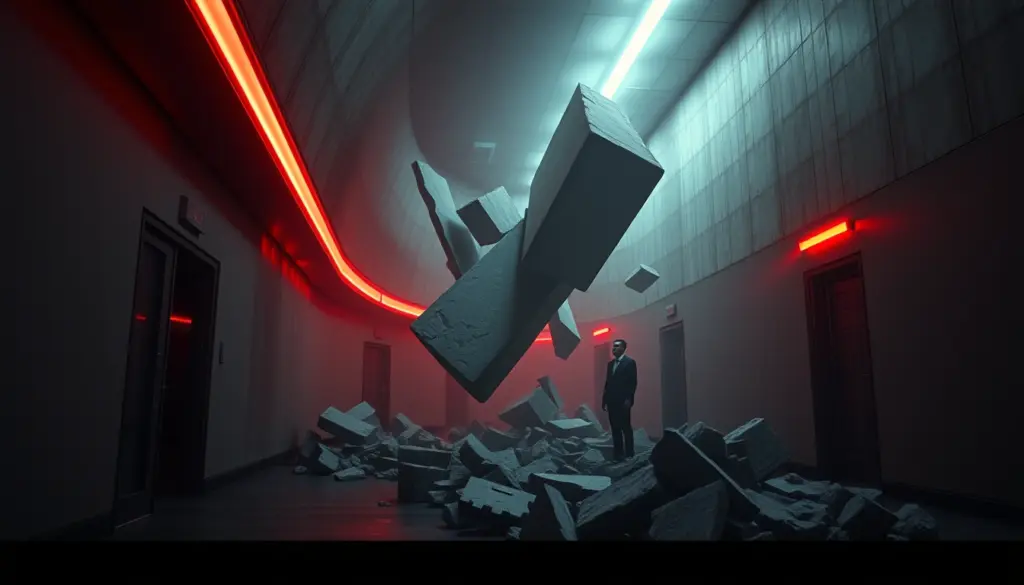
Remedy Entertainment shipped Control Resonant on September 24, 2026, for PC, PS5, and Xbox Series X|S, and more than three weeks later, it’s still sitting at the center of the gaming conversation. The Guardian listed the PC edition at £49.99, and players who burned through the story are already asking the question every studio wants after a launch weekend: what do I play next. This piece breaks down the ten games that scratch the same itch as Control Resonant, why the comparisons hold up, and what the launch itself, plus the post-launch roadmap Remedy has confirmed since, says about where the “weird corporate horror” genre Remedy built is headed.

Don't miss new tech stories on Google
Add Shattered once in the Google app and our stories show up in your news suggestions.
What Control Resonant actually is, and why the comparisons matter
Control Resonant is Remedy Entertainment’s follow-up to 2019’s Control, and according to an interview with Tom’s Guide, creative director Mikael Kasurinen described the link between the two games directly: “These two games have a relationship – like they are two sides of the same coin.” That’s a useful frame for the rest of this list, because most of what makes Control Resonant work isn’t really about telekinetic combat or bureaucratic horror in isolation. It’s about tone: a studio that treats a government building or a decommissioned mine like a character in its own right.
Kasurinen backed that up with a second point about the studio’s design philosophy, telling the outlet, “Every place is directed, thought through, considered, bespoke.” That’s the throughline connecting Control Resonant to the nine other games below. None of them are clones. They’re united by a commitment to environmental storytelling, combat that rewards aggression, or a shared DNA with the original Control’s brand of surreal, physics-driven action.
One design choice worth flagging before the list: Kasurinen also addressed why melee plays such a large role in combat, saying, “When you give [players] a melee weapon, they run in.” That aggression-first pacing is a big part of what separates Control Resonant (and the games below) from slower, cover-based shooters. If you’re building a “games like Control Resonant” list, pacing matters as much as setting.
1. Control Ultimate Edition
The obvious starting point. If you loved Control Resonant but never played the original, Control Ultimate Edition bundles the base campaign with its two major expansions, The Foundation and AWE. It’s still the clearest example of what Remedy does with a single, self-contained location (the Federal Bureau of Control’s Oldest House), and it’s the game every other entry on this list is measured against. The Ultimate Edition is available on Steam, and it remains the cheapest, most complete way to understand where Control Resonant’s mythology started.
2. A Plague Tale: Requiem
A Plague Tale: Requiem doesn’t share Control Resonant’s telekinetic combat, but it shares the same obsession with atmosphere over spectacle. Asobo Studio built a game where environment and sound design do as much narrative work as the dialogue, which is exactly the kind of “bespoke” world-building Kasurinen described. If what pulled you into Control Resonant was the sense of walking through a space that feels considered down to the last prop, Requiem delivers a similar density, just wrapped in a medieval plague narrative instead of a supernatural bureau.
3. FBC: Firebreak
This one’s the closest thing to a direct sibling. FBC: Firebreak is Remedy’s own cooperative shooter set inside the Control universe, and it leans into the same bureaucratic-horror aesthetic, just reworked for three-player squads clearing out paranatural incidents. If Control Resonant’s melee-heavy, run-in-and-fight pacing appealed to you, Firebreak is the multiplayer answer, built by the same studio, in the same building, with the same institutional dread baked into every mission briefing.
4. SIGNALIS
SIGNALIS trades big-budget production for a retro-styled survival horror aesthetic, but the emotional register lines up with Control Resonant more than the visuals suggest. Both games use a sense of dislocation, of not fully trusting your own memory or surroundings, as their central hook. If the psychological unease of Control Resonant’s shifting architecture stuck with you, SIGNALIS scratches that same itch in a tighter, more compact package.
5. Crimson Desert
Crimson Desert is a much bigger, more traditional action-RPG, but it’s on this list for a specific reason: combat weight. Pearl Abyss built a game where every swing, dodge, and counter has heft, and that’s the same quality reviewers keep pointing to in Control Resonant’s melee-first design. It’s a different genre entirely (open-world fantasy versus supernatural office horror), but if the physicality of combat is what hooked you, Crimson Desert is worth the detour.
6. Soulframe
Digital Extremes’ Soulframe leans into a dreamlike, nature-versus-machine aesthetic that overlaps with Control Resonant’s own blend of the mundane and the impossible. It won’t give you the concrete-and-fluorescent-lighting horror of a government building, but the sense of a world where physical laws bend around the player’s abilities is a shared thread. For players who valued the power fantasy in Control Resonant more than the horror elements, Soulframe is a strong next stop.
7. Path of Exile 2
This is the least obvious pairing on the list, and it’s here for mechanical reasons rather than tonal ones. Path of Exile 2, developed by Grinding Gear Games, rewards the same kind of build-crafting and ability-chaining that Control Resonant’s skill tree encourages. If part of what you loved was stacking supernatural powers into a personal combat style, Path of Exile 2’s skill-gem system offers a deeper, more systemic version of that same fantasy, just without the narrative wrapper.
8. Styx: Blades of Greed
Styx: Blades of Greed swaps Control Resonant’s aggression for stealth, but keeps the sense of a world that punishes carelessness and rewards reading your environment. It’s a smaller, more focused game, and it’s a useful palate cleanser if Control Resonant’s constant threat of ambush wore you down. Where Remedy’s game wants you to run in swinging, Styx wants you to think three moves ahead before you’re spotted.
9. Calmed by the Dαrk
A smaller, indie-scale entry that leans hard into ambient horror and quiet dread rather than combat. Calmed by the Dαrk is the pick for players who found the fights in Control Resonant were the least interesting part, and who came away wanting more of the slow-burn atmosphere the game builds between encounters. It’s a niche recommendation, but it’s the closest thing on this list to Control Resonant with the action stripped almost entirely away.
10. Lords of the Fallen
Lords of the Fallen closes the list out as the hard-combat option: a punishing, gothic action-RPG where positioning and timing matter more than raw power. It doesn’t share Control Resonant’s setting or story at all, but the moment-to-moment tension of every encounter, and the sense that the world itself is hostile to you, is the same emotional beat Remedy’s game hits again and again. For players who wanted Control Resonant to be even harder, this is the next step.
Why “games like X” lists spike right after a big launch
There’s a predictable pattern to search behavior after any major single-player release. Interest in a new game peaks in its launch week, then within days a second wave of searches appears asking what else is out there in the same vein. That’s not a coincidence. Games like Control Resonant tend to run somewhere between 30 and 50 hours depending on completion style, based on comments from a gameplay designer identified as Mohov, who pegged the core experience at around 30 hours with full completion landing closer to 50. That’s a big enough time investment that players start planning their next purchase well before they’ve finished the current one, which is exactly why recommendation content around a launch window tends to draw so much traffic.
It also reflects something about how Remedy has built its audience over the past decade. The studio’s catalog, from the original Alan Wake through Control and now Control Resonant, has trained players to expect a specific texture: strange, slightly bureaucratic, unnervingly calm environments punctuated by violence. That’s a narrower niche than “action game” or “horror game,” and it means the pool of true one-to-one comparisons is small. Most of the games worth recommending are adjacent rather than identical, which is part of why lists like this one lean on multiple axes of comparison (tone, combat, pacing, world design) instead of a single genre tag.
Market impact: what Control Resonant’s launch means for the genre
A cross-platform launch on PC, PS5, and Xbox Series X|S at a £49.99 price point, as reported by The Guardian, positions Control Resonant below full-price AAA releases in some markets while still targeting the core single-player audience. That pricing decision matters for how publishers think about mid-scale narrative games going forward. It’s part of a broader industry conversation this year about what a single-player, story-driven release should cost to make and to buy, a debate that’s also playing out around other 2026 releases with widely different budgets, like Blood of Dawnwalker’s reported $40 million budget.
Remedy’s own history is instructive here. The studio built Control on a relatively contained budget compared to open-world competitors, and it turned that constraint into a strength by focusing all of its resources on one location instead of spreading a map thin. Control Resonant appears to be following the same playbook, and if the “games like Control Resonant” search pattern holds, it suggests players are responding to focus and craft more than raw scale. That’s a signal worth watching for other narrative-driven studios trying to compete with open-world giants on a fraction of the budget.
Historical context: how we got here
Remedy’s lineage matters for understanding why Control Resonant landed the way it did. The studio, founded in Finland and profiled in detail on Wikipedia’s Remedy Entertainment page, built its reputation on Max Payne’s bullet-time combat before pivoting toward the atmospheric, narrative-heavy style that defined Alan Wake and then Control. Each of those games expanded the studio’s confidence in blending genres: horror with shooting, procedural level design with hand-authored story beats, corporate satire with cosmic horror.
Control’s 2019 launch was itself a turning point. It didn’t outsell the biggest open-world releases of that year, but it built a cult following strong enough to justify two expansions and, eventually, a cooperative spin-off in FBC: Firebreak. That slow-build model, launch, expand, spin off, sequel, is now being repeated with Control Resonant, and it’s a template other mid-size studios have started borrowing rather than chasing single blockbuster releases.
Competitive comparison: Control Resonant against the field
The table below lines up Control Resonant against three of the closest comparisons from this list on the traits players usually search for: setting, combat style, and how the two games are actually connected.
| Game | Developer | Core setting | Combat style | Connection to Control Resonant |
|---|---|---|---|---|
| Control Resonant | Remedy Entertainment | Supernatural bureaucratic facility | Melee-forward, ability-driven | Direct sequel/companion to Control |
| Control Ultimate Edition | Remedy Entertainment | The Oldest House | Telekinetic + gunplay | Original entry in the series |
| FBC: Firebreak | Remedy Entertainment | Federal Bureau of Control | Co-op shooter | Same universe, multiplayer spin-off |
| A Plague Tale: Requiem | Asobo Studio | Medieval plague-ravaged France | Stealth + environmental tools | Shared emphasis on atmosphere and craft |
| SIGNALIS | rose-engine | Retro sci-fi survival horror | Resource-limited combat | Shared psychological dislocation |
By the numbers: launch snapshot
Here’s what’s actually confirmed about the Control Resonant launch and its early post-launch roadmap, gathered from outlet reporting rather than estimates.
| Detail | Figure | Source |
|---|---|---|
| Release date | September 24, 2026 | Publisher release reporting |
| Platforms | PC, PS5, Xbox Series X|S | Publisher release reporting |
| UK price (PC) | £49.99 | The Guardian |
| Core campaign length | ~30 hours | Gameplay designer Mohov, industry commentary |
| Full completion length | ~50 hours | Gameplay designer Mohov, industry commentary |
| New Game Plus Plus | Arrives October 2026 | Ground News |
| Photo mode | Arrives November 2026 | Ground News |
The New Game Plus Plus mode is shaping up to be more than a simple replay toggle. Remedy confirmed it’s set to arrive in October 2026, and Rock Paper Shotgun reported the mode is planned to support as many as 665 runs, a figure that signals serious long-term replayability rather than a simple afterthought. A photo mode follows in November 2026. For anyone weighing whether to start one of the ten games below right away or stick around for another lap first, that added depth is worth factoring into the decision.
What reviewers and players are actually pointing to
The reception around Control Resonant so far has focused heavily on world design over raw combat mechanics, echoing Kasurinen’s comment about every location being “directed, thought through, considered, bespoke.” That’s consistent with how Control was received back in 2019, when reviewers singled out the Oldest House itself as the game’s real protagonist. It’s also consistent with why so many of the recommendations above lean on atmosphere-first games (A Plague Tale: Requiem, SIGNALIS, Calmed by the Dαrk) rather than pure combat clones.
The studio’s insistence that Control Resonant should work as a standalone experience is also worth noting for anyone hesitant to jump in without playing the original first. Kasurinen made that intention explicit, saying, “We want every game to stand on [its] own two feet.” That’s a meaningful design decision for a sequel: it lowers the barrier for new players while still rewarding people who carried context over from Control and its expansions.
Predictions: where this genre goes from here
- Expect more “games like Control Resonant” and similar recommendation searches to climb through October 2026 as players finish the campaign and look for a follow-up, following the same pattern seen after Control’s 2019 launch.
- FBC: Firebreak will likely see a fresh wave of player interest directly tied to Control Resonant’s launch, since it’s the only game on this list built in the same universe by the same studio.
- Mid-budget, single-location narrative games will keep getting greenlit as a hedge against ballooning open-world budgets, with Control Resonant serving as a reference point the way the original Control did after 2019.
- Expect more direct-to-consumer pricing experiments around the £40-£55 range for narrative-first titles, sitting deliberately below flagship AAA pricing.
- Watch for at least one more entry in the Remedy Connected Universe announced within the next twelve months, continuing the launch-expand-spinoff cycle the studio has run since Control’s debut.
How to build your own post-Control Resonant backlog
If you’re deciding where to go next, the simplest approach is to sort by what you actually enjoyed most. If it was the mythology and world-building, start with Control Ultimate Edition and then FBC: Firebreak, since both are set in the same universe. If it was the aggressive melee combat, Crimson Desert and Lords of the Fallen will feel the most immediately familiar. If it was the slow-burn dread between fights, SIGNALIS and Calmed by the Dαrk are the better fit. And if the ability system was the hook, Path of Exile 2 and Soulframe both reward the same instinct to build a personal combat style out of stacked powers.
It’s also worth checking storefronts like Steam and GOG for bundle pricing on the older Remedy titles, since publishers frequently discount a studio’s back catalog in the weeks around a new release to catch players riding the momentum of a launch.
For players following the wider Control Resonant news cycle, our previous coverage has tracked the game’s review scores at launch, the ongoing PC requirements dispute between listed specs, the 1.3.3 hotfix that addressed an early review complaint, and reports on the game’s reception among players who pirated it before buying. Fans of the genre may also want to read our take on Silent Hill: Townfall’s review scores, another 2026 horror release drawing similar “what should I play next” searches.
Frequently asked questions
Do I need to play Control before Control Resonant?
No. Remedy’s creative director has said the studio wants each game in the series to work as a standalone experience, though playing Control Ultimate Edition first will add context to the world and its recurring characters.
How long does it take to finish Control Resonant?
Based on comments from a gameplay designer identified as Mohov, the core story runs around 30 hours, with full completion of side content landing closer to 50 hours.
Does Control Resonant have New Game Plus or a photo mode?
Yes. Remedy confirmed New Game Plus Plus is arriving in October 2026, with Rock Paper Shotgun reporting the mode will support as many as 665 runs. A photo mode is scheduled to follow in November 2026.
What platforms is Control Resonant available on?
PC, PlayStation 5, and Xbox Series X|S, all as of its September 24, 2026 release.
Is FBC: Firebreak connected to Control Resonant?
Yes. Firebreak is Remedy’s cooperative multiplayer spin-off set in the same Federal Bureau of Control universe, and it shares tonal and setting DNA with both Control and Control Resonant.
What’s the closest game to Control Resonant if I want pure combat?
Crimson Desert and Lords of the Fallen are the closest matches for players who valued Control Resonant’s aggressive, melee-forward combat over its narrative or atmosphere.
Why do “games like X” lists get so much traffic right after a launch?
Interest tends to peak during a game’s launch window, then a second search wave follows within days as players near the end of a 30-to-50-hour campaign and start planning their next purchase.
Is Control Resonant cheaper than other 2026 AAA releases?
At £49.99 for the PC edition as listed by The Guardian, it sits below several flagship AAA releases from 2026, though pricing varies by platform and region.