
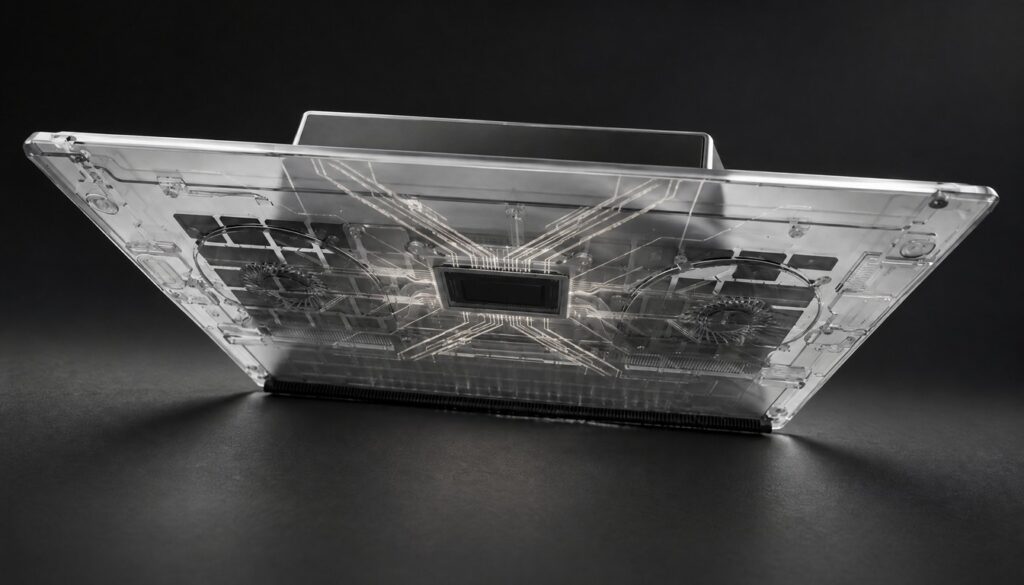
NVIDIA’s RTX Spark went on sale worldwide on October 16, 2026, landing in Windows 11 laptops from six major OEMs and setting up the clearest head-to-head test yet between NVIDIA’s new Windows AI silicon and Apple’s M5 family. The launch caps a slow build that started on June 1, 2026, when NVIDIA unveiled the chip during its GTC Taipei keynote, held alongside Computex 2026 in Taiwan. Ten weeks of preorders, benchmark leaks, and OEM pricing drama later, the actual hardware is finally shipping, and the question hanging over the PC industry is simple: can a Windows chip finally match the unified-memory trick that has made Apple Silicon the default choice for local AI work since 2020?
RTX Spark pairs an NVIDIA Grace CPU with a Blackwell RTX GPU across a single pool of memory, the same basic architectural bet Apple made six years ago with the original M1. NVIDIA is framing this as a platform shift rather than a single-chip launch, and last week’s coverage of RTX Spark’s launch window already flagged DLSS 5 as part of the pitch. Today’s retail availability turns the marketing into something buyers can actually put a credit card against.
What NVIDIA RTX Spark Actually Is
RTX Spark is not a graphics card you drop into an existing PC. It is a superchip, NVIDIA’s term for a single package that combines a CPU and GPU connected by a high-speed interconnect rather than a traditional motherboard bus. The GPU side is a Blackwell RTX design with up to 6,144 CUDA cores, paired with fifth-generation Tensor Cores that run at FP4 precision for faster, lower-precision AI math. On the CPU side sits a Grace processor with up to 20 cores, linked to the GPU through NVIDIA’s NVLink-C2C interconnect rather than a standard PCIe connection.
The headline number is memory. RTX Spark systems carry up to 128GB of unified memory that both the CPU and GPU can read from directly, instead of copying data back and forth between separate system RAM and a GPU’s dedicated VRAM pool. NVIDIA’s own product listing for RTX Spark backs the shared-pool design, and it is the single feature NVIDIA keeps returning to in its marketing, because it is the one spec that directly answers Apple’s six-year head start on unified memory. NVIDIA rates the platform at up to one petaflop of AI performance, and the chip runs Windows 11, not a custom NVIDIA operating system.
Availability is split into two waves. Laptops from OEM partners started shipping October 16, 2026, with preorders that had already been open for weeks. Compact desktop systems carrying the same chip are scheduled to follow in November 2026, giving buyers who want a stationary AI workstation a few extra weeks before they can act.
Why Jensen Huang Is Careful Not to Call This an Apple Fight
NVIDIA’s own framing of RTX Spark is more measured than the “threatens Apple Silicon” headlines circulating this week. Speaking at a Computex 2026 press session, NVIDIA founder and CEO Jensen Huang said Apple has “a world-class silicon roadmap,” and that it’s building those chips in service of the needs of its own unique device, hardware, OS, and application ecosystem, according to Tom’s Hardware. That is not the language of a company picking a direct fight with Cupertino over which chip wins a benchmark chart.
Instead, Huang described NVIDIA’s actual target as the Windows side of the market. He said Nvidia’s goal is to “reinvent the PC,” and that its focus is “100% on Windows,” per the same Tom’s Hardware report. That framing matters for how analysts should read this launch: RTX Spark is not primarily an attempt to pull MacBook Pro buyers over to a Windows machine. It is an attempt to give the roughly 1.5 billion Windows PCs in active use worldwide a credible local-AI answer that doesn’t require buying a Mac to get it.
Microsoft’s own executives leaned into that framing at the same event. Satya Nadella, Microsoft’s chairman and CEO, said the company’s goal is to deliver unmetered intelligence to every home and every desk with Windows, and he called RTX Spark a real breakthrough towards that vision, a quote reported by TechRadar. Pavan Davuluri, head of Windows at Microsoft, added that the company is building toward a future where Windows provides a unified foundation for AI, from the device in your hands to the infrastructure behind it, according to the same TechRadar piece. Jeff Fisher, NVIDIA’s senior vice president of personal computing, summed up the pitch in Microsoft’s own launch post on the Windows Experience blog: RTX Spark combines NVIDIA’s full technology stack with Microsoft Windows and is purpose-built for creators, gamers and AI developers in the personal AI era.
The Spec Sheet, Side by Side
Strip away the branding and the comparison comes down to two different approaches to the same problem: how do you let a CPU and GPU share enough memory to run a large AI model locally, without the cost and power draw of a data-center GPU. NVIDIA’s bet is Grace-Blackwell on an Arm-based design with CUDA software support. Apple’s bet, running since the M1, is a tightly integrated CPU-GPU-neural-engine package tied to macOS. Apple’s M5 Pro and M5 Max chips, which shipped roughly seven months before RTX Spark’s retail debut, reached up to 614GB/s of memory bandwidth in their fused configurations, a number that still matters because bandwidth, not just capacity, decides how fast a large model actually runs rather than just whether it fits in memory at all.
| Spec | NVIDIA RTX Spark | Apple M5 Pro / M5 Max |
|---|---|---|
| CPU design | NVIDIA Grace, up to 20 cores | Apple-designed ARM cores, fused M5 architecture |
| GPU design | Blackwell RTX, up to 6,144 CUDA cores | Apple GPU cores with hardware ray tracing |
| Unified memory (max) | 128GB | Varies by Mac configuration |
| CPU-GPU interconnect | NVLink-C2C | Apple unified memory fabric |
| Operating system | Windows 11 | macOS |
| AI compute claim | Up to 1 petaflop (FP4) | Not directly comparable; no matching NVIDIA-style petaflop figure published |
| Software ecosystem | CUDA, TensorRT, NVIDIA AI stack | Metal, Core ML, Apple AI frameworks |
| Worldwide retail availability | October 16, 2026 (laptops); November 2026 (desktops) | Shipped roughly 7 months earlier, per prior coverage |
The two platforms converge on the same architectural idea, shared memory instead of a split CPU/GPU pool, but diverge completely on software. CUDA is the deciding factor for a huge share of existing AI tooling. Years of machine learning frameworks, inference engines, and fine-tuning pipelines were built assuming an NVIDIA GPU and CUDA underneath them. Apple’s Metal and Core ML stack has grown substantially, but it still requires developers to specifically target Apple hardware rather than inheriting support automatically the way CUDA-first tools do. That software gap, more than any single spec, is what NVIDIA is really selling with RTX Spark.
CUDA vs Metal: The Software Stack That Decides the Winner
Hardware specs get the headlines, but software is what actually determines whether a developer picks RTX Spark or a Mac for daily AI work. CUDA has been NVIDIA’s core advantage for close to two decades, and it shows up everywhere in the AI tooling ecosystem: inference engines, fine-tuning libraries, and quantization tools are built and tested against NVIDIA GPUs first, with other hardware getting support later, if at all. RTX Spark inherits that entire ecosystem on day one, meaning a developer who already runs CUDA-based code on a desktop workstation can move that same code to an RTX Spark laptop with minimal changes.
Apple’s Metal and Core ML stack has closed a meaningful part of that gap over the past three years, and the Mac’s unified memory advantage pushed many developers to adopt Metal-based inference tools out of necessity rather than preference. Still, Metal support in a given open-source AI project tends to arrive after CUDA support, sometimes months later, and sometimes not at all for more niche research tools. That lag is the real reason NVIDIA keeps describing RTX Spark’s unified memory as a complement to CUDA rather than a replacement feature on its own. The memory pool gets RTX Spark into the same hardware category as a high-end Mac, but CUDA is what keeps existing AI workflows running without modification.
Pricing and the OEM Rollout
RTX Spark is not sold as a standalone chip. It reaches buyers exclusively through OEM systems, and that rollout has already generated its own pricing drama over the past two weeks. ASUS, Dell, HP, Lenovo, Microsoft, and MSI have all announced RTX Spark systems, with configurations and pricing varying by manufacturer. Microsoft’s own Surface Laptop Ultra, which launched at a $2,599 price point ahead of today’s wider rollout, became one of the earliest confirmed data points for what buyers should expect to pay. ASUS’s ProArt-branded machines, covered separately in our report on ASUS’s 128GB configuration, round out the high end of the lineup aimed squarely at creators and developers who want the full 128GB memory tier.
| Manufacturer | Status as of October 16, 2026 | Notable detail |
|---|---|---|
| Microsoft (Surface Laptop Ultra) | Launched | Entry price at $2,599 |
| ASUS (ProArt line) | Launched | 128GB configuration available |
| Dell | Announced partner | Part of the six-OEM launch slate |
| HP | Announced partner | Part of the six-OEM launch slate |
| Lenovo | Announced partner | Part of the six-OEM launch slate |
| MSI | Announced partner | Part of the six-OEM launch slate |
The desktop version of this story is a separate product line entirely. NVIDIA’s DGX Spark, a dedicated AI development box rather than a laptop chip, ships in 64GB and 128GB configurations and occupies a different price tier, a split we detailed when DGX Spark’s two-tier pricing first went public. RTX Spark and DGX Spark share the Grace-Blackwell foundation, but buyers should not confuse the consumer laptop chip launching today with the developer-focused DGX Spark desktop unit, which has already been on the market since earlier this year.
Historical Context: How Apple Got a Six-Year Head Start
To understand why RTX Spark matters, it helps to remember why Apple’s unified memory approach became the default recommendation for anyone running large AI models on a personal computer in the first place. When Apple introduced the M1 chip in 2020, it built the CPU, GPU, and neural engine onto a single package sharing one memory pool. At the time, this was pitched mainly as an efficiency and battery-life story. It took the AI boom of 2023 and 2024 for developers to realize that a MacBook with 64GB or more of unified memory could run large language models that would otherwise require a discrete GPU with dozens of gigabytes of dedicated VRAM, hardware that cost far more and drew far more power.
That accident of architecture turned Macs into the go-to machine for AI hobbyists and researchers who wanted to run open-weight models locally without renting cloud GPU time. NVIDIA, which had spent two decades building CUDA into the default software layer for AI, found itself in the strange position of watching Apple’s consumer hardware become the practical choice for local inference, even though NVIDIA’s own GPUs still dominated data center training. RTX Spark is NVIDIA’s direct answer to that gap: bring the unified-memory idea to Windows, keep CUDA underneath it, and try to close the six-year window Apple has had to build mindshare among AI developers.
Competitive Landscape Beyond NVIDIA and Apple
NVIDIA and Apple are not the only players chasing this architecture. AMD has pushed its own answer with high-memory mobile and desktop chips, and the two companies have been trading benchmark claims in the run-up to RTX Spark’s launch, something covered in detail when AMD published its own Gorgon Halo numbers aimed squarely at undercutting NVIDIA’s positioning. Qualcomm and Intel also have unified-memory or high-bandwidth designs in the Windows laptop market, though neither has NVIDIA’s CUDA ecosystem or Apple’s vertical software integration behind it.
That three-and-four-way competition is actually good news for buyers. A year ago, anyone who wanted serious local AI performance in a laptop had essentially one real option: a high-memory MacBook Pro or Mac Studio. Today, the choice set includes RTX Spark-based Windows machines, AMD’s competing designs, and Apple’s own M5 generation, each with different tradeoffs between raw memory capacity, software compatibility, and price.
What the Early Benchmarks Actually Show
Independent, standardized, side-by-side testing across RTX Spark and the full M5 lineup does not exist yet, and any article claiming otherwise this week is getting ahead of the data. What does exist are early hands-on impressions from outlets that received review units ahead of the October 16 launch. Those early tests reported RTX Spark outperforming Apple’s M5 Pro on AI workloads, while also beating AMD’s Ryzen AI Max+ and Intel’s Core Ultra X9 in the same informal testing round. That is a meaningful early signal, but it is still outlet-specific hands-on testing rather than a controlled, reproducible benchmark suite, and it notably stops short of comparing RTX Spark against the larger M5 Max or M5 Ultra configurations, which carry more memory bandwidth than the M5 Pro tested so far.
NVIDIA’s own marketing claims that 128GB RTX Spark systems can run models in the neighborhood of 200 billion parameters and fine-tune models up to roughly 70 billion parameters, depending on quantization and workload. Those are NVIDIA’s own figures, not independently verified numbers, and actual results will vary heavily based on how a given model is quantized and which inference software is doing the work. Treat them as a ceiling under ideal conditions, not a guaranteed result for every workload.
Market Impact: Why This Launch Matters to the Broader PC Industry
RTX Spark’s retail debut lands at a moment when the entire Windows PC industry is trying to justify a new upgrade cycle around AI capability rather than raw CPU speed, the metric that drove PC upgrades for decades. Microsoft has spent two years pushing the “Copilot+ PC” branding, and RTX Spark gives that campaign its first genuinely new hardware category since the initial wave of Copilot+ laptops. If RTX Spark sells well, it validates Microsoft’s bet that AI capability, not clock speed, is the next reason consumers and businesses replace their laptops. If it sells poorly, at prices starting around $2,599 for the Surface Laptop Ultra, it becomes a cautionary tale about pricing AI hardware beyond what mainstream buyers are willing to pay.
For NVIDIA specifically, RTX Spark represents a strategic diversification away from its historical GPU-only business model into full system-level silicon, competing more directly with how Apple, Qualcomm, and even Intel package CPU and GPU together. That shift carries real financial stakes: NVIDIA is betting that owning the whole chip, not just the GPU slice of it, gives it more pricing power and a stickier relationship with OEMs than selling discrete graphics cards ever did.
RTX Spark and the Copilot+ PC Push
RTX Spark’s launch is also the clearest signal yet that Microsoft’s Copilot+ PC branding, introduced to market Windows laptops with dedicated on-device AI hardware, is shifting from a marketing label into a real hardware tier with meaningful specs behind it. Earlier Copilot+ machines leaned mainly on NPUs rated in the tens of TOPS, numbers that struggled to run anything beyond lightweight on-device features like live captions or image generation filters. RTX Spark’s unified memory and petaflop-class AI compute puts it in a different category entirely, capable of running substantial open-weight language models locally rather than just small, purpose-built on-device features.
That distinction matters for how Microsoft positions Windows against macOS going forward. For the past two AI hardware cycles, Apple could credibly claim that buying a Mac was the only way to get serious local AI performance in a consumer laptop. RTX Spark is the first Windows hardware release that challenges that claim with a comparable memory ceiling and a mature software stack behind it, even if the real-world performance gap with Apple’s higher-end M5 Max and M5 Ultra chips remains unsettled until more complete testing arrives.
Predictions: Where This Goes From Here
- Expect independent, standardized benchmarks comparing RTX Spark against the full Apple M5 lineup, including M5 Max and M5 Ultra, within the next four to six weeks as review units reach more outlets.
- NVIDIA will likely expand the RTX Spark OEM roster beyond the initial six manufacturers by early 2027, following the same pattern NVIDIA used with earlier GPU generations.
- Apple will face renewed pressure to publish clearer AI-specific performance claims for its M5 family rather than relying on general CPU and GPU benchmarks, now that NVIDIA has put a concrete petaflop figure on the table.
- Pricing on RTX Spark laptops will likely compress toward the $2,599 Surface Laptop Ultra entry point as more OEMs compete for the same buyer, rather than holding at the higher end seen in some early listings.
- The CUDA software advantage, not raw memory capacity, will remain the deciding factor for developers choosing between RTX Spark and Apple Silicon, since most existing AI tooling still assumes NVIDIA hardware underneath it.
Should You Buy RTX Spark or Wait for Apple’s Next Move
For developers already committed to CUDA-based tooling, RTX Spark is the more natural fit simply because it removes the friction of porting workflows to Apple’s Metal stack. For buyers who already own Mac hardware and have built their AI workflow around Apple’s ecosystem, there is no spec on today’s RTX Spark sheet compelling enough to force a platform switch, especially with the M5 Max and M5 Ultra still untested against RTX Spark in controlled conditions. The more interesting buyer is the Windows-first developer or creator who has been eyeing a Mac purely for its memory capacity. RTX Spark is built exactly for that person, and today’s launch is the first point at which they can actually buy the alternative rather than just read about it.
It is also worth separating hype from the actual claim NVIDIA is making. Huang’s own comments at Computex 2026 stopped short of declaring victory over Apple, framing RTX Spark instead as a Windows-first platform play. The “threatens Apple Silicon” framing circulating in headlines this week is a reasonable interpretation of what RTX Spark could do to Apple’s local-AI mindshare over time, but it is a market prediction, not something NVIDIA, Apple, or Microsoft has confirmed on the record.
Frequently Asked Questions
When did NVIDIA RTX Spark become available to buy?
RTX Spark laptops went on sale worldwide on October 16, 2026, through OEM partners including ASUS, Dell, HP, Lenovo, Microsoft, and MSI. Compact desktop systems carrying the same chip are scheduled for November 2026.
What CPU and GPU does RTX Spark use?
RTX Spark pairs an NVIDIA Grace CPU, with up to 20 cores, and a Blackwell RTX GPU, with up to 6,144 CUDA cores and fifth-generation Tensor Cores, connected through NVIDIA’s NVLink-C2C interconnect.
How much memory does RTX Spark have?
RTX Spark systems support up to 128GB of unified memory shared between the CPU and GPU, which NVIDIA says lets select 128GB configurations run AI models in the range of 200 billion parameters, depending on quantization.
Is RTX Spark actually faster than Apple’s M5 chips?
Early hands-on testing from outlets with pre-launch review units reported RTX Spark outperforming the M5 Pro on AI workloads and beating AMD’s Ryzen AI Max+ and Intel’s Core Ultra X9 in the same informal rounds. No standardized, independently reproducible benchmark comparing RTX Spark to the full M5 lineup, including M5 Max and M5 Ultra, has been published yet.
Can I buy RTX Spark as a standalone chip or graphics card?
No. RTX Spark is only available inside complete OEM systems, laptops at launch and compact desktops starting in November 2026, not as a component buyers install themselves.
What is the difference between RTX Spark and DGX Spark?
RTX Spark is the consumer and creator-focused laptop chip launching today. DGX Spark is a separate, dedicated AI development desktop product that NVIDIA sells in 64GB and 128GB memory configurations at a different price tier, and it has been available since earlier in 2026.
How much do RTX Spark laptops cost?
Pricing varies by OEM. Microsoft’s Surface Laptop Ultra launched at $2,599 as one of the earliest confirmed price points, with other manufacturers’ configurations varying based on memory tier and included features.
Does NVIDIA consider RTX Spark a direct competitor to Apple Silicon?
NVIDIA’s own public comments suggest a more cautious framing. CEO Jensen Huang described Apple’s silicon roadmap as world-class and positioned RTX Spark as focused on reinventing the Windows PC rather than directly unseating Apple, according to comments reported by Tom’s Hardware.