
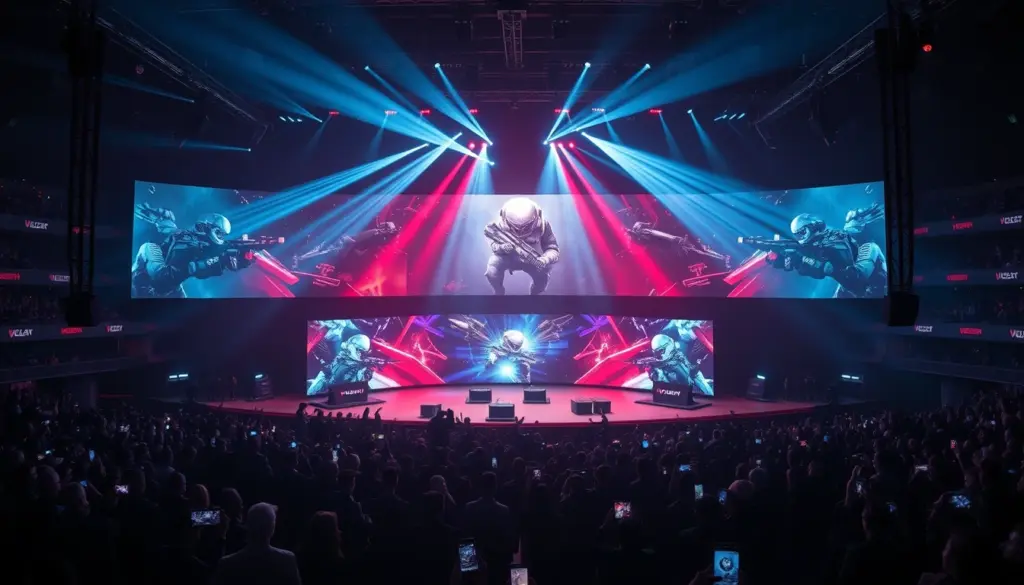
Shanghai is hosting a Valorant Champions Tour finals for the first time, and the numbers coming out of the Jing’an Sports Center are already rewriting the franchise’s viewership record book. As of September 29, 2026, Valorant Champions 2026 has peaked at 695,886 concurrent viewers on Twitch, with more than 8.3 million hours already watched and three weeks of competition still to go before the October 18 final.
The tournament carries a $2.25 million prize pool and 16 teams split across four regions. But the bigger story sitting underneath the bracket is structural: this is the last Valorant Champions that will run under Riot Games’ closed partnership system. Starting in 2027, the league Riot built in 2023 gets torn up in favor of an open-qualifier model, meaning Shanghai isn’t just a tournament, it’s a send-off for the format that turned Valorant into a franchised, city-hopping spectacle.
China Hosts Valorant’s Biggest Stage for the First Time
Valorant Champions has traveled to Reykjavik, Istanbul, Los Angeles, Seoul, and Paris since its 2021 debut, but Shanghai had never held the marquee event until this year. Group stage and playoff rounds are running at Jing’an Sports Center, while the top four matches move to the larger Mercedes-Benz Arena for the finals window closing October 18. China previously hosted a Valorant Masters stop in Shanghai in 2024, so the market wasn’t unfamiliar with the game, but Champions is a different scale of production, with Riot shipping its full broadcast crew and stage build into the city for the first time.
The choice matters beyond logistics. Riot has spent years trying to grow Valorant’s footprint in China against entrenched competition from mobile-first shooters and a domestic esports scene still catching up to the rest of the world. Putting Champions in Shanghai, rather than another Masters stop, signals Riot is willing to bet its top event on a market it’s still building rather than defaulting back to North America or Europe.
Inside the $2.25 Million Prize Pool
The total purse for Valorant Champions 2026 sits at $2.25 million, roughly in line with recent years, with the bulk weighted toward the top four finishers. The champion walks away with $1 million, a threshold Riot has kept consistent since Champions became the closing event of the VCT calendar.
| Finish | Prize |
|---|---|
| 1st place | $1,000,000 |
| 2nd place | $400,000 |
| 3rd place | $250,000 |
| 4th place | $130,000 |
| 5th-8th place (split) | Remaining pool |
That’s only part of what teams actually earn from competing. Riot layers a separate revenue-share system on top of event prize money, funded by in-game cosmetic sales tied to esports, which changes how much the Shanghai bracket really means financially. More on that below.
Four Regions, 16 Teams, Two Debutants From China
The 16-team field breaks down by region: Americas sent 100 Thieves, LOUD, NRG, and G2 Esports. EMEA sent Karmine Corp, Team Liquid, FUT Esports, and Team Vitality. Pacific sent Global Esports, which booked its Shanghai slot with a 3-2 win over the Pacific field, plus Nongshim RedForce, Paper Rex, and T1. China’s four seats went to TYLOO, JD Gaming, EDward Gaming, and XLG Esports.
TYLOO and JD Gaming are both making their first appearance at an international Valorant event. TYLOO earned the spot by beating JD Gaming 3-1 in the VCT China Stage 2 grand final, then turned around and faced that same rival again on the Champions stage. The team is led by in-game leader Pong “SiuFatBB” Ka Hei, who has prior international experience from Masters Toronto last year while playing under the Wolves banner. For a region that’s historically punched below its player base in Valorant, fielding two international newcomers on home soil is as much a test of readiness as it is a homecoming.
Opening Weekend Shatters Shanghai’s Own Ceiling
Only two matches were played on opening day, September 24, and the event still peaked at more than 605,800 concurrent viewers, topping the opening-day peak from last year’s Paris event. The day’s marquee matchup, Paper Rex against Team Liquid, produced the tournament’s most-watched single game so far at 606,589 peak viewers when it played out during the group stage. Paper Rex won that series 2-1. In the other opener, G2 Esports beat TYLOO 2-0 in the Chinese side’s international debut.
Broadcast reach widened too. Champions 2026 has drawn more than 280 unique broadcast channels carrying the event, up from roughly 230 last year, and the English-language broadcast is averaging 11.8% more viewers than its 2025 counterpart. By September 29, the tournament’s overall peak had climbed to 695,886 viewers with an average of 353,190 across roughly 24 hours of airtime logged so far, and total hours watched had already crossed 8.3 million with the playoffs and final still ahead.
How Shanghai Stacks Up Against Paris 2025
Valorant Champions 2025 in Paris remains the benchmark. Its grand final, in which NRG came back from a 1-2 deficit to beat Fnatic 3-2, peaked at 1,473,642 viewers, making it the third most-watched Champions final in franchise history behind LOUD’s 2022 win. Across its full 102 hours of airtime, Paris averaged 466,460 viewers and racked up 47.6 million total hours watched. The single highest peak in VCT history overall still belongs to the Masters Madrid 2024 grand final, which hit 1.69 million concurrent viewers.
| Event | Peak Viewers | Total Hours Watched | Avg. Viewers |
|---|---|---|---|
| Masters Madrid 2024 (final) | 1,690,000 | n/a | n/a |
| Champions 2022 (final, LOUD win) | ~1,510,000 | n/a | n/a |
| Champions 2025 Paris (final) | 1,473,642 | 47,600,000 (full event) | 466,460 (full event) |
| Champions 2026 Shanghai (so far, through Sept 29) | 695,886 | 8,329,391 | 353,190 |
Shanghai’s tournament-to-date peak trails Paris’s final-day number, but that’s an apples-to-oranges comparison this early. Finals day traditionally delivers the single largest spike of any VCT event, and Shanghai hasn’t reached that stage yet. What’s notable is the trajectory: opening day alone outpaced Paris’s opening day, and the broadcast footprint (unique channels, English-language average) is growing faster than the underlying viewer peak, suggesting the audience is both larger and more globally distributed than a year ago.
Valorant’s Place in the Esports Pecking Order
Even at its historic best, Valorant Champions isn’t close to esports’ viewership ceiling. League of Legends Worlds 2025, decided between T1 and KT Rolster, peaked at 6,752,585 viewers, the second most-watched esports event ever recorded, just behind Worlds 2024’s 6,856,769 peak. Counter-Strike’s biggest 2026 moment, the IEM Cologne Major on June 21, saw Team Falcons sweep FURIA 3-0 in a final that peaked at 2,752,353 viewers, breaking the previous CS record set at PGL Major Stockholm in 2021.
Valorant sits behind both in raw peak numbers, roughly a quarter of League’s audience and a little more than half of Counter-Strike’s Cologne final. It’s a reminder that Champions’ record-setting pace this year is a franchise milestone, not an industry one. The broader prize-pool conversation gets reshaped too by events like the Esports World Cup, which moved from Riyadh to Paris this year with a $75 million total purse across 25 tournaments, dwarfing any single-title championship. The World Cup’s club championship round alone, which crowned AG.AL, drew a reported 850 million cumulative viewers, a figure built from many games rather than one bracket.
| Event | Game | Prize Pool | Peak Viewers |
|---|---|---|---|
| LoL Worlds 2025 Final | League of Legends | Not disclosed per-event | 6,752,585 |
| IEM Cologne Major 2026 | Counter-Strike 2 | $1,250,000 (standard major pool) | 2,752,353 |
| Esports World Cup 2026 | Multi-title (25 tournaments) | $75,000,000 | N/A (cumulative viewership model) |
| Valorant Champions 2026 | Valorant | $2,250,000 | 695,886 (event still running) |
The Skins Economy Bankrolling VCT
Riot doesn’t charge Valorant’s partnered teams a franchise fee to compete, a deliberate design choice meant to avoid the buy-in costs that have strained League of Legends franchising in the past. Instead, partner teams hold their slots by meeting marketing and fan-engagement commitments, while Riot funds the league largely through esports-branded in-game cosmetics.
In 2025, that model generated $105 million distributed to teams through revenue share, with $86 million of it coming specifically from esports-related skin sales. Riot covers production costs on those items and splits the remaining revenue with teams roughly 50-50, with no cap on the upside if a skin line sells well. For 2026, Riot has committed to distributing more than $100 million to VCT teams on the same basis, according to Esports.net. Teams from the Challengers and Ascension circuits that fight through to Champions without a partner slot also qualify for a separate “Champions competitive share,” which has topped $500,000 per team in recent seasons.
That revenue-share structure is part of why the Shanghai bracket matters commercially beyond its $2.25 million pool. Teams competing this week are also playing for standing inside a nine-figure annual payout pool that dwarfs any individual tournament’s prize money.
Why This Is the Last Champions of Its Kind
Riot has already confirmed that Valorant Champions Tour is abandoning its closed, franchised tier system after this season, according to reporting from Hotspawn. Shanghai 2026 is the final Champions run under the partnership model Riot introduced in 2023, when it converted Valorant esports from an open-circuit structure into a league of guaranteed partner slots similar to League of Legends’ franchised regions.
Starting in 2027, every team in the Valorant ecosystem competes inside a single tier, with open qualifiers serving as the entry point each season rather than a guaranteed partner slot. It’s a reversal of the direction Riot pushed the league for the past three years, and it comes right as Champions is setting viewership highs, which makes the timing worth sitting with: Riot is dismantling the closed system at the moment it’s producing its best numbers yet.
What Changes Under VCT’s 2027 Open-Qualifier Model
From League Play to VCT Cups
The new structure replaces regular league play with a series of “VCT Cups,” regional LAN tournaments that determine which teams advance toward Masters and Champions, according to PCGamesN. Riot is expanding the annual circuit to more than 20 tournaments spread across 16-plus cities worldwide, up from the tighter, franchise-region schedule teams have played since 2023. The stated goal is higher-stakes matches earlier in the season, since every match in an open-qualifier bracket carries elimination risk that a guaranteed partner slot didn’t.
Partnership Without a Franchise Fee
Partnered organizations don’t disappear under the new model, but they lose the indefinite guarantee that came with the 2023 system. Partnership now runs on two-year cycles instead of an open-ended slot, meaning an org’s investment in Valorant esports has to be re-earned rather than assumed. Riot is backing the expanded circuit with more than $6 million in new annual prize pools spread across the additional tournaments, separate from the money tied to Champions itself and the skins-based revenue share.
Format and Bracket: How the Shanghai Playoffs Work
Champions 2026 runs on the format Riot has used since consolidating the calendar: a GSL-style group stage feeding into a double-elimination playoff bracket. Each group plays a mix of best-of-three matches to sort seeding, with the top finishers advancing to the upper bracket and the rest fighting through a loser’s bracket to stay alive. Group stage and quarterfinal rounds play out at Jing’an Sports Center, with the semifinals and grand final moving to the larger Mercedes-Benz Arena to close the event on October 18.
Double elimination means no team is out after a single loss, which matters for a field that includes two Chinese debutants facing international-caliber opposition for the first time. TYLOO’s early loss to G2 Esports, for instance, didn’t end its run. It pushed the team into the lower bracket instead, where a single loss becomes elimination.
Player Numbers Riot Won’t Confirm
Riot hasn’t published an official Valorant player count since October 2024, when Valorant executive producer Anna Donlon cited more than 35 million monthly players across PC and console, alongside roughly 6.5 million playing daily. That figure is now two years stale, and Riot has declined to update it through 2026 despite the game’s continued esports growth.
Third-party trackers have filled the gap with estimates ranging from 15 million to 34 million monthly active players through 2026, depending on methodology, with one tracker logging a monthly peak of 37.8 million in March 2026, per GhostCap. Peak concurrent player estimates land somewhere between 300,000 and 700,000, a range wide enough that it’s not especially useful for precise market sizing, but it does confirm Valorant’s playerbase has kept pace with, or modestly grown past, the last confirmed figure even without Riot’s official sign-off.
Market Impact for Sponsors and Broadcasters
For sponsors, Champions 2026’s record broadcast footprint, more than 280 channels and an 11.8% jump in English-language viewership, arrives at an awkward moment. The league those sponsors bought into is being restructured within months. Brands that signed multi-year partnership deals tied to specific franchised teams now have to weigh whether those orgs keep their Valorant slots past the two-year partnership cycles starting in 2027.
For broadcasters and co-streamers, the shift to an open-qualifier calendar with 20-plus tournaments across 16-plus cities means more inventory to sell, but also a more fragmented audience than the concentrated four-events-a-year rhythm of the franchise era. This mirrors a tension playing out across streaming more broadly, where platforms like Twitch are fielding faster-growing rivals even as their total hours watched keep climbing. Whether Valorant’s fragmentation helps or hurts total viewership won’t be clear until the 2027 season is underway, but it’s the single biggest variable hanging over the scene heading into next year, bigger than any individual team’s roster moves.
A Short History of Valorant’s Biggest Stage
Valorant Champions began in Berlin in 2021 as a 16-team open finals capping Riot’s first full competitive season for the game. The event has since rotated through Istanbul (2022, the LOUD title run that still holds the franchise’s peak viewership), Los Angeles (2023), Seoul (2024), and Paris (2025), before landing in Shanghai this year. Each stop has generally built on the last in production scale, even as the underlying league structure shifted from an open circuit to the closed, franchised partnership model adopted in 2023, the same model now being unwound for 2027.
That arc, open circuit, then franchise, then back to open qualifiers inside of six years, is unusual even by esports standards, where structural experimentation is common. It puts Valorant closer to the trial-and-error path Counter-Strike has followed for two decades than to League of Legends, which has kept its franchised regional leagues largely intact since adopting them in 2018.
What Comes Next for Valorant Esports
A few things look likely heading out of Shanghai and into the 2027 transition:
- Champions 2026’s grand final on October 18 should beat the tournament’s own opening-weekend numbers, following the same pattern every prior Champions has shown, though matching Paris’s 1.47 million final-day peak would require a jump larger than the event has shown so far this year.
- Expect multiple partnered organizations to sit out or scale back once the two-year cycle and open-qualifier risk kick in for 2027, particularly in regions where Valorant hasn’t delivered the return on investment League of Legends franchising has.
- China’s back-to-back international debuts from TYLOO and JD Gaming this year should translate into the region sending more qualified teams to 2027’s open events, now that two of its organizations have first-hand experience at this level.
- The skins-funded revenue-share pool, already above $100 million for 2026, is more likely to keep growing than shrink, since it’s tied to Valorant’s broader player spending rather than to the league’s competitive structure.
- Watch whether Riot uses the extra 2027 tournament slots to put Champions-caliber events into more first-time markets the way it did with Shanghai this year, rather than reverting to the same handful of cities.
Frequently Asked Questions
When does Valorant Champions 2026 end?
The tournament runs from September 24 to October 18, 2026, with the grand final and top-four matches held at Mercedes-Benz Arena in Shanghai.
How much prize money is on the line at Valorant Champions 2026?
The total pool is $2.25 million, with $1 million going to the champion, $400,000 to the runner-up, $250,000 for third, and $130,000 for fourth.
Why is Shanghai hosting Valorant Champions for the first time?
Riot has rotated the event through Berlin, Istanbul, Los Angeles, Seoul, and Paris since 2021. Shanghai is the first Champions stop in China, following a 2024 Valorant Masters event in the same city, as Riot works to grow the game’s footprint in the region.
How does Champions 2026 viewership compare to 2025?
Shanghai’s opening day peaked above 605,800 viewers, beating Paris’s opening-day number, and the event’s overall peak stood at 695,886 as of September 29 with weeks of competition remaining. Paris’s grand final alone peaked at 1,473,642 viewers last year, a mark Shanghai hasn’t reached yet since its own final hadn’t been played at the time of writing.
Which teams qualified from China for the first time?
TYLOO and JD Gaming are both making their Valorant Champions debut in 2026, joining international veterans EDward Gaming and XLG Esports as China’s four representatives.
How much does Riot Games pay Valorant esports teams?
Beyond event prize pools, Riot runs a revenue-share program funded by esports-related in-game cosmetics. It distributed $105 million to teams in 2025 and has committed to more than $100 million for 2026.
Why is VCT 2027 different from previous years?
Riot is replacing the closed, franchised partnership system it introduced in 2023 with an open-qualifier model. Every team will compete in a single tier starting in 2027, with partnered orgs moving to two-year cycles instead of indefinite guaranteed slots.
Does Valorant still trail League of Legends and Counter-Strike in viewership?
Yes. League of Legends Worlds 2025 peaked at 6.75 million viewers and the IEM Cologne Major 2026 peaked at 2.75 million, both well ahead of Valorant Champions’ current tournament-to-date peak of 695,886.