
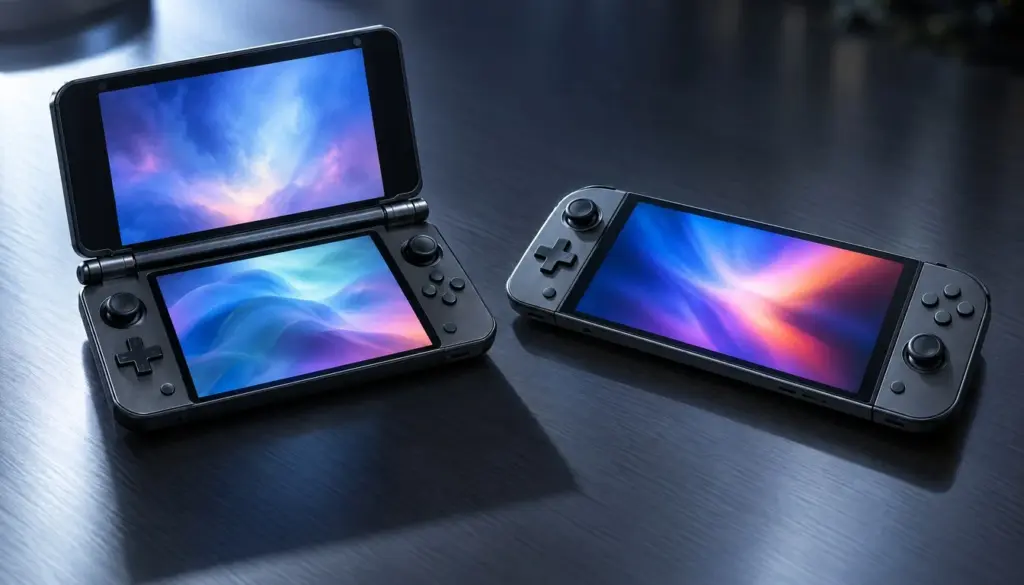
Two Android handhelds are splitting the retro and emulation gaming crowd in October 2026: the dual-screen AYN Thor and the single-panel Retroid Pocket 6. Both run on Qualcomm silicon, both target the same $250-to-$400 buyer, and both claim to be the best way to play everything from Game Boy Advance carts to Nintendo Switch ports on the go. They are not the same device wearing different plastic, though. The Thor bets its entire identity on a second screen built for Nintendo DS and 3DS emulation, while the Pocket 6 bets on price, weight, and driver maturity.
The “ayn thor” search term alone has climbed to roughly 368,000 monthly searches in the US, according to keyword data pulled in October 2026, so a lot of buyers are trying to figure out exactly this question right now.

Don't miss new tech stories on Google
Add Shattered once in the Google app and our stories show up in your news suggestions.
AYN Thor vs Retroid Pocket 6: What’s Actually at Stake
At the most basic level, this is a fight between two different product philosophies. AYN built the Thor around a clamshell dual-screen design explicitly aimed at Nintendo DS and 3DS emulation, something no single-panel Android handheld can replicate without black bars or stretched aspect ratios. Retroid built the Pocket 6 around raw value: a 120Hz AMOLED panel, a 6,000mAh battery, and a price that undercuts the Thor’s base configuration by roughly $75 to $85.
Both devices ship with Qualcomm chips in the Snapdragon 8 Gen 2 performance class on their higher-end builds, and both run Android, which means both can sideload emulators, stream from a PC, or run native Android games from the Play Store. The gap shows up in configuration count, screen count, weight, and the long tail of accessories and firmware support each company has built up. AYN sells four distinct Thor tiers. Retroid sells one Pocket 6 configuration at a fixed price, which simplifies the buying decision but limits how much RAM or storage a buyer can choose.
Buyers researching this matchup are usually choosing between two very different libraries they want to play well. If 3DS and DS emulation is the priority, the Thor’s dual-screen layout solves a problem the Pocket 6 cannot solve with software alone. If the priority is Game Boy Advance through PS2, Dreamcast, and light Switch emulation at the lowest possible price and weight, the Pocket 6 holds the edge.
There’s also a timing element worth noting. Both devices are current, actively sold products as of October 2026, not leftover stock from a previous generation. AYN’s Thor lineup has been on the market long enough to collect a full year of firmware updates and third-party reviews, giving buyers a reasonably mature picture of long-term reliability. The Pocket 6 is newer to the conversation and has climbed to roughly 40,500 monthly US searches on its own name, a sign that Retroid’s marketing and retail push have already reached a wide audience even without AYN’s multi-year head start in the dual-screen niche specifically.
What Is the AYN Thor? Dual-Screen Emulation Hardware
The AYN Thor is a clamshell Android handheld with two separate AMOLED displays stacked on top of each other, similar in concept to a Nintendo 3DS but built around Qualcomm silicon instead of a custom ARM chip. The upper display measures 6 inches at 1,920 by 1,080 resolution and runs at a 120Hz refresh rate. The lower display is smaller at 3.92 inches, 1,240 by 1,080 resolution, capped at 60Hz. That asymmetric pairing mirrors how the Nintendo DS and 3DS actually used their two screens, which is the entire point of the design.
AYN sells the Thor in four tiers. The Thor Lite uses an older Snapdragon 865 chip paired with 8GB of RAM and 128GB of storage, priced around $249 to $259. The Thor Base, Pro, and Max all step up to a Snapdragon 8 Gen 2 chip with an Adreno 740 GPU, differing mainly in RAM and storage: the Base ships 8GB/128GB around $319 to $329, the Pro ships 12GB/256GB around $399 to $409, and the Max tops out at 16GB paired with either 512GB (roughly $469 to $479) or 1TB of storage (roughly $549 to $579).
Every Thor Gen 2 model gets Wi-Fi 7, Bluetooth 5.3, Hall-effect analog sticks, gyro support, vibration feedback, and a 6,000mAh battery charging at 27 watts. The Thor also outputs video over USB-C DisplayPort up to 4K/60, which matters for anyone planning to dock the handheld to a TV. It weighs approximately 380 grams, noticeably heavier than most single-screen rivals because of the second display and the clamshell hinge mechanism. RetroHandheldHQ’s one-year retrospective on the device, published in 2026, frames the Thor as the dual-screen DS machine that has held up through a year of firmware updates, a useful data point for anyone worried about long-term software support on a device this specialized. Read that full review at RetroHandheldHQ’s AYN Thor review.
What Is the Retroid Pocket 6? Android Gaming’s Value Pick
The Retroid Pocket 6 is the newest entry in Retroid’s single-screen Pocket line, sitting above the Pocket 5 and the clamshell Pocket Flip 2 in the company’s current lineup. It ships with a single 120Hz, 1080p AMOLED display, a 6,000mAh battery (the largest in the current Retroid lineup), and a weight of roughly 320 grams, about 60 grams lighter than the Thor. Pricing sits at approximately $244.
Retroid has not published a complete public spec sheet covering the exact SoC name, RAM and storage tiers, or charging wattage for the Pocket 6, which makes it harder to pin down every number the way AYN’s tiered Thor lineup allows. What is confirmed: the device runs mature Adreno 740 GPU drivers, which matters directly for Nintendo Switch emulation, where graphics driver maturity tends to matter more than raw clock speed. It also officially supports LineageOS 23.2 as an alternative to stock Android, giving power users a debloated software option out of the box.
A ranking roundup of the 2026 Retroid Pocket lineup from StaresBack placed the Pocket 6 as the lineup’s top pick at its roughly $244 price point, citing its balance of display quality and emulation performance against the rest of the Pocket family. See the full breakdown at StaresBack’s Retroid Pocket 2026 ranking. The device’s known weak points are a 16:9 aspect ratio that leaves black bars on 4:3 retro titles, and an audible cooling fan once the device is pushed into its highest-performance mode.
Full Specs Comparison: AYN Thor vs Retroid Pocket 6
The table below lines up the Thor’s four tiers against the Pocket 6’s single configuration across every spec confirmed by both manufacturers as of October 2026.
| Spec | Thor Lite | Thor Base | Thor Pro | Thor Max | Retroid Pocket 6 |
|---|---|---|---|---|---|
| Chipset | Snapdragon 865 | Snapdragon 8 Gen 2 | Snapdragon 8 Gen 2 | Snapdragon 8 Gen 2 | Not publicly disclosed |
| GPU | Adreno 650 | Adreno 740 | Adreno 740 | Adreno 740 | Adreno 740 |
| Upper/main display | 6-inch AMOLED, 1920×1080, 120Hz | Same | Same | Same | 5.5-inch AMOLED, 1080p, 120Hz (single panel) |
| Lower display | 3.92-inch AMOLED, 1240×1080, 60Hz | Same | Same | Same | None |
| RAM / storage | 8GB / 128GB | 8GB / 128GB | 12GB / 256GB | 16GB / 512GB or 1TB | Not publicly disclosed |
| Battery | 6,000mAh | 6,000mAh | 6,000mAh | 6,000mAh | 6,000mAh |
| Charging | 27W | 27W | 27W | 27W | Not publicly disclosed |
| Wireless | Wi-Fi 6, BT 5.1 | Wi-Fi 7, BT 5.3 | Wi-Fi 7, BT 5.3 | Wi-Fi 7, BT 5.3 | Not publicly disclosed |
| Video out | USB-C DisplayPort, 4K/60 | Same | Same | Same | Not publicly disclosed |
| Controls | Hall-effect sticks, gyro, vibration | Same | Same | Same | Standard analog sticks |
| Weight | ~380g | ~380g | ~380g | ~380g | ~320g |
| OS | Android 13 | Android 13 | Android 13 | Android 13 | Android (LineageOS 23.2 supported) |
| Price | $249-$259 | $319-$329 | $399-$409 | $469-$579 | ~$244 |
Twelve rows in, the pattern is clear. The Thor wins on confirmed detail because AYN publishes a full tiered spec sheet, while Retroid has kept several Pocket 6 specs unlisted at launch. The Thor’s defining hardware advantage, the second screen, has no equivalent on the Pocket 6 at any price.
Pricing Breakdown for Every Configuration
Price is where the two devices diverge most sharply in practical terms. The table below ranks every current configuration from cheapest to most expensive, using the prices confirmed in October 2026 research.
| Device / tier | Price | What it gets you |
|---|---|---|
| Retroid Pocket 6 | ~$244 | Single 120Hz AMOLED screen, 6,000mAh battery, mature Switch emulation drivers |
| AYN Thor Lite | $249-$259 | Dual-screen layout, but on the older Snapdragon 865 |
| AYN Thor Base | $319-$329 | Dual AMOLED screens, Snapdragon 8 Gen 2, 8GB/128GB |
| AYN Thor Pro | $399-$409 | Same chip, bumped to 12GB RAM and 256GB storage |
| AYN Thor Max (512GB) | $469-$479 | 16GB RAM, 512GB storage |
| AYN Thor Max (1TB) | $549-$579 | 16GB RAM, 1TB storage, top Thor configuration |
The Pocket 6 is the cheapest Snapdragon 8 Gen 2-class device in this comparison once the Thor Lite’s older chip is accounted for. A buyer who wants Snapdragon 8 Gen 2 performance for the lowest possible price lands on the Pocket 6 at roughly $244. A buyer who wants that same chip tier plus a second screen pays a premium of roughly $75 to $85 for the Thor Base, and considerably more for the Pro or Max configurations.
Benchmark Scores: AnTuTu, Geekbench, and 3DMark
Synthetic benchmarks only tell part of the story on handhelds, since thermal throttling in a small chassis can cut sustained performance well below a single burst score. Still, they’re a useful baseline. One independent AnTuTu run on a Snapdragon 8 Gen 2 Thor configuration measured roughly 1,275,749 points, while benchmark aggregator NanoReview lists a broader Snapdragon 8 Gen 2 average closer to 1.56 million across other devices using the same chip. That gap illustrates how much firmware tuning, cooling design, and test build can swing a result even on identical silicon.
The same Thor test run recorded 81.3 FPS in 3DMark Wild Life and 22.5 FPS in the heavier Wild Life Extreme test, both consistent with other Snapdragon 8 Gen 2 handhelds in that performance class. Gadget review site GadgetsFeed has tracked Snapdragon 8 Gen 2 handhelds as among the most powerful Android gaming devices currently shipping, a category the Thor’s higher tiers and the Pocket 6 both compete directly in. See that breakdown at GadgetsFeed’s most powerful Android handheld roundup.
On the Pocket 6 side, Geekbench 6 single-core testing puts the device at approximately 1,985 points, a 69% jump over the Retroid Pocket 5’s roughly 1,176 single-core score on its older Snapdragon 865 chip. That generational jump matters more for everyday use than any one AnTuTu figure, since single-core performance tracks closely with UI responsiveness, emulator frame pacing, and load times in CPU-bound retro titles.
| Benchmark | AYN Thor (SD8G2 tier) | Retroid Pocket 6 | Retroid Pocket 5 (for reference) |
|---|---|---|---|
| AnTuTu (single test run) | ~1,275,749 | Not independently published | Lower (SD865 class) |
| NanoReview SD8G2 average | ~1.56 million | N/A (different chip) | N/A |
| Geekbench 6 single-core | Not directly published | ~1,985 | ~1,176 |
| 3DMark Wild Life | 81.3 FPS | Not independently published | Lower |
| 3DMark Wild Life Extreme | 22.5 FPS | Not independently published | Lower |
Battery Life and Thermal Behavior
Both devices pack an identical 6,000mAh cell, but they spend that capacity differently because of screen count and panel size. One Thor reviewer measured roughly 11 to 13 hours of battery life in light 2D retro gaming, dropping to 8 to 10 hours for heavier PS1, N64, or 3DS-class emulation that pushes both screens at once. A separate test running DS and 3DS titles at maximum brightness on both panels measured closer to 6 hours, improving to roughly 10 hours when brightness was dropped to 50%. That spread shows how directly the second screen taxes the battery once both displays are lit at full brightness simultaneously.
The Pocket 6, with only one panel to power, doesn’t carry the same brightness-driven battery swing, though Retroid has not published independently verified runtime figures as detailed as the Thor’s. What is documented is thermal behavior under load: the Pocket 6’s cooling fan becomes audible once the device is pushed into its highest-performance Sport mode, a tradeoff familiar to anyone who has used a fan-cooled handheld before. The Thor also uses an active fan across its Snapdragon 8 Gen 2 tiers, a necessity given it’s cooling two displays and a more power-hungry chip inside a thinner clamshell chassis than most single-screen rivals.
Display Technology: Dual AMOLED vs Single Panel
Display specs are the single biggest differentiator in this matchup. The Thor’s upper screen at 6 inches, 1920×1080, and 120Hz matches or exceeds the Pocket 6’s single 120Hz, 1080p AMOLED panel on paper. The difference is the Thor adds a second 3.92-inch, 1240×1080, 60Hz AMOLED panel underneath it, built specifically to mirror how the Nintendo DS and 3DS used a secondary touch-capable display for maps, inventory screens, and touch-based gameplay mechanics.
That second screen is the whole reason to pick the Thor over a cheaper single-panel device. Without it, DS and 3DS emulators have to either stretch both virtual screens onto one physical panel, shrink them side by side, or let a player toggle between screens with a button press, all compromises the Thor’s hardware sidesteps entirely. For anyone who doesn’t play DS or 3DS games, though, that second screen is dead weight: extra bulk, extra weight, and extra battery draw for a feature that goes unused.
Emulation Performance From PS1 to Switch
Reviewer testing found the Thor runs PS1, PS2, New 3DS, and Nintendo Switch titles without noticeable stuttering, and native Android games held a steady 60 to 120 FPS across tested titles on the Snapdragon 8 Gen 2 tiers. That puts the Thor comfortably in range for most of the retro and current-gen emulation library people run on handhelds this size, with the DS and 3DS layer being the standout advantage no competitor single-screen device can match.
The Pocket 6 leans on mature Adreno 740 GPU drivers specifically tuned for Switch emulation, a software maturity advantage that often matters more than raw silicon specs once an emulator is involved. Driver maturity affects frame pacing, shader compilation stutter, and compatibility with specific Switch titles in ways a fresh chip with unoptimized drivers can’t match on day one. Both devices land in the same practical performance tier for anything PS1 through PS2 and most of the Switch library. The real-world gap shows up mainly in DS/3DS titles, where the Thor’s second screen is simply a different category of hardware.
Build Quality, Controls, and Ergonomics
The Thor’s clamshell hinge and dual-screen stack push its weight to approximately 380 grams, making it noticeably heavier and bulkier in a bag or pocket than the Pocket 6’s roughly 320 grams. Every Thor tier ships with Hall-effect analog sticks, which resist the magnetic drift that plagues older potentiometer-based sticks over years of use, plus gyro support and vibration feedback that the Pocket 6’s standard analog sticks don’t match spec-for-spec.
The clamshell design does carry one practical ergonomics tradeoff: closing the device protects both screens automatically, something a flat single-panel handheld like the Pocket 6 can’t replicate without a separate case. On the other hand, a hinge is one more mechanical point that can eventually wear out or develop play over years of folding and unfolding, a risk flat-chassis handhelds simply don’t carry. Buyers who have broken a 3DS or laptop hinge before will recognize that tradeoff immediately.
Software, Android Version, and Compatibility
The Thor ships on Android 13 across every tier, a version that’s not the newest available on flagship phones but is common across the handheld gaming category, where manufacturers prioritize emulator and controller-mapping compatibility over chasing the latest Android release. The Pocket 6 supports official LineageOS 23.2 as an alternative firmware option, giving technically inclined buyers a path to a lighter, more customizable software layer without voiding support, something AYN hasn’t offered on the Thor as of October 2026.
Both devices run the standard Android app ecosystem, meaning Play Store access, RetroArch, standalone emulators, and streaming apps like Moonlight for PC game streaming all work on either device. The practical software difference comes down to update cadence and community tooling maturity rather than raw compatibility, and AYN’s clamshell form factor means some emulator UIs built for a single widescreen panel need manual configuration to use the Thor’s second screen properly.
Where AYANEO Pocket DS, Anbernic RG DS, and Retroid Pocket Flip 2 Fit
The Thor isn’t the only dual-screen Android handheld on the market, and the Pocket 6 isn’t the only budget option. AYANEO’s Pocket DS, released in 2025, uses a Qualcomm Snapdragon G3x Gen 2 chip paired with a larger 7-inch, 1920×1080 OLED main display running up to 165Hz, plus a secondary 5-inch, 1024×768 LCD panel at 60Hz. It carries an 8,000mAh battery, well above the Thor’s 6,000mAh cell, in 8GB or 16GB RAM configurations with 128GB to 1TB of storage. Launch pricing was $399 for the 8GB/128GB model and $599 for the 16GB/1TB model. Current 2026 pricing has reportedly risen to roughly $519 and $719 respectively, putting the Pocket DS well above the Thor’s entire lineup.
A direct comparison from UnixGaming found the Thor’s dual-screen design holds up competitively against the pricier AYANEO Pocket DS, with the Thor’s lower-capacity battery being roughly 33% smaller than the Pocket DS’s 8,000mAh cell. Read the full breakdown at UnixGaming’s AYN Thor vs AYANEO Pocket DS comparison. A separate three-way comparison from FutureTweets widened the field to include the Anbernic RG DS, a budget dual-screen device running a Rockchip RK3568 chip, dual 4-inch, 640×480 IPS panels, 3GB of RAM, 32GB of storage, and a sale price around $94.99, confirming it as the entry-level option in the dual-screen category rather than a true Thor or Pocket DS competitor. See that comparison at FutureTweets’ three-way dual-screen handheld comparison.
On the single-screen budget side, Retroid’s own Pocket Flip 2 undercuts the Pocket 6 significantly at roughly $189, using an older Snapdragon 865 chip in a 5.5-inch AMOLED clamshell body with Hall-effect sticks, confirmed by Retroid’s own October 13, 2026 pricing. The older Pocket 5 sits even lower at roughly $179. Neither matches the Pocket 6 or Thor’s Snapdragon 8 Gen 2-class performance, but both show Retroid covering more price tiers than AYN currently does outside the Thor Lite.
| Device | Chipset | Screens | Price (2026) |
|---|---|---|---|
| Anbernic RG DS | Rockchip RK3568 | Dual 4-inch, 640×480 | ~$94.99 |
| Retroid Pocket 5 | Snapdragon 865 | Single, 1080p AMOLED | ~$179 |
| Retroid Pocket Flip 2 | Snapdragon 865 | Single, 5.5-inch AMOLED | ~$189 |
| Retroid Pocket 6 | Not disclosed | Single, 6-inch 120Hz AMOLED | ~$244 |
| AYN Thor Base | Snapdragon 8 Gen 2 | Dual AMOLED, 6-inch + 3.92-inch | $319-$329 |
| AYANEO Pocket DS (8/128) | Snapdragon G3x Gen 2 | Dual, 7-inch OLED + 5-inch LCD | ~$519 (2026) |
Accessories, Cases, and the Modding Ecosystem
A handheld’s accessory ecosystem rarely shows up in spec sheets, but it shapes how long a device stays comfortable to use. AYN’s clamshell design means the Thor needs purpose-built cases that account for the hinge and the closed-screen protection it already provides, which narrows the field of third-party case makers willing to tool molds for a lower-volume device. Because the Thor shares its general silhouette across all four tiers (Lite, Base, Pro, and Max), a single case design typically fits every configuration, which simplifies things for buyers who might upgrade tiers later without replacing accessories.
The Retroid Pocket 6, as a flat single-panel slab, fits into the broader ecosystem of generic handheld cases, screen protectors, and grip attachments that already exist for the Pocket 5 and similar form factors, since Retroid has kept its general chassis shape fairly consistent across recent Pocket generations. That consistency gives Pocket 6 buyers a wider and cheaper third-party accessory market on day one, while Thor buyers are more dependent on AYN’s own first-party accessories or a smaller pool of dedicated case makers. Neither device currently ships with a bundled case in its base configuration, so this is a real added cost either way, typically running $15 to $30 for a quality hard case regardless of which device is purchased.
On the modding side, both devices benefit from active enthusiast communities that document firmware tweaks, custom emulator configurations, and in some cases unofficial OS installs. The Pocket 6’s official LineageOS 23.2 support gives it a cleaner, sanctioned modding path, while the Thor’s community largely relies on unofficial guides and forum-shared configuration files, since AYN has not published an equivalent alternative-firmware option as of October 2026. Buyers who want to tinker with their device out of the box, rather than relying on community trial and error, should weight that difference accordingly.
Total Cost of Ownership Over Two Years
The sticker price is only part of what either handheld actually costs over a realistic two-year ownership window. A Thor Base buyer starts at $319 to $329, then typically adds a case ($15-$30), a microSD card for expanded storage if the 128GB base tier fills up with ROM files ($15-$25 for a 256GB card), and possibly a spare battery pack or portable charger given the device’s heavier power draw during long sessions ($20-$40). That puts realistic all-in Thor Base ownership somewhere around $370 to $425 across two years, before factoring in any repairs to the hinge mechanism, which remains the single largest long-term risk specific to a clamshell design.
The Pocket 6 buyer starts lower at roughly $244, adds a similar case and microSD card, and skips the hinge-repair risk entirely since there’s no moving mechanical joint on the device. Realistic all-in Pocket 6 ownership lands closer to $275 to $300 across the same two-year window. The gap between the two devices’ total cost of ownership tracks closely with their upfront price difference, meaning the Thor’s premium doesn’t meaningfully compound over time, but it also doesn’t shrink. Buyers budgeting for either device should plan for an extra $30 to $70 beyond the sticker price regardless of which one they choose.
5 Real-World Use Cases: Who Should Buy Which Handheld
- The DS and 3DS completionist: Someone working through a backlog of Pokemon, Mario Kart DS, or Ocarina of Time 3D needs the Thor’s dual-screen layout. No single-panel device, including the Pocket 6, replicates the two-screen touch interface these libraries were built around.
- The budget-conscious PS1-to-PS2 player: A buyer mainly running PS1, PS2, Dreamcast, and GBA titles gets everything needed from the Pocket 6 at roughly $244, saving $75 to $85 versus the Thor Base for a feature set (the second screen) they won’t use.
- The Switch emulation enthusiast: With mature Adreno 740 drivers specifically tuned for Switch titles, the Pocket 6 is a reasonable pick, though the Thor’s identical Adreno 740 GPU on its Snapdragon 8 Gen 2 tiers performs comparably once drivers catch up.
- The TV-docking streamer: Anyone planning to dock their handheld to a television via USB-C DisplayPort for 4K/60 output should check the Thor’s confirmed spec here, since Retroid hasn’t published equivalent Pocket 6 video-out specs as of October 2026.
- The weight-conscious commuter: Someone carrying a handheld daily in a bag or jacket pocket will feel the roughly 60-gram difference between the Pocket 6’s 320 grams and the Thor’s 380 grams, especially over a long commute.
Migration Guide: Moving From a Single-Screen Handheld
Switching from a single-panel device like a Pocket 5, Pocket Flip 2, or similar handheld to the Thor’s dual-screen layout takes a bit of setup work, since most emulator frontends default to a single-display assumption. Here’s the practical path:
- Back up save files and emulator configs from the old device first. Most RetroArch and standalone emulator saves transfer directly via microSD or cloud sync.
- Install RetroArch or a dedicated DS/3DS emulator and check for an explicit dual-screen display mode in its settings, since default configs on most emulators assume one panel.
- Map the Thor’s Hall-effect sticks and buttons through the emulator’s input settings. Button layouts carried over from a single-screen device sometimes need remapping for the added screen-swap controls.
- Test touch input on the lower screen specifically, since DS and 3DS titles rely heavily on stylus-equivalent touch for menus, maps, and minigames.
- Calibrate screen brightness independently on both panels. Running both displays at maximum brightness is what drops battery life to the roughly 6-hour range reviewers measured in heavy DS/3DS sessions.
- Reconfigure any cloud-save or Retroid-specific sync tools, since AYN and Retroid don’t share a common save-sync ecosystem.
- If docking to a TV, test the USB-C DisplayPort output at 4K/60 before relying on it for a living-room setup, confirming cable and dock compatibility ahead of time.
Going the other direction, from a Thor to a Pocket 6 or similar single-panel device, is simpler: disable any dual-screen display mode in the emulator, remap the second-screen toggle to a button press, and expect DS/3DS titles to run in a stretched, shrunk, or toggle-based layout instead of the native two-panel experience.
Pros and Cons
AYN Thor pros:
- Only device in this comparison with a true dual-AMOLED DS/3DS-native display layout
- Four configuration tiers let buyers choose a price-to-spec balance, from $249 Lite up to $579 Max
- Hall-effect sticks, gyro, and vibration standard across Snapdragon 8 Gen 2 tiers
- Confirmed USB-C DisplayPort 4K/60 output for TV docking
- Wi-Fi 7 and Bluetooth 5.3 on Base, Pro, and Max tiers
AYN Thor cons:
- Roughly 60 grams heavier than the Pocket 6 due to the clamshell hinge and second screen
- Battery life drops to around 6 hours in heavy DS/3DS sessions at max brightness on both panels
- Entry-level Thor Lite still runs the older Snapdragon 865 chip
- Premium over the Pocket 6 ranges from roughly $75 on the Base tier to over $300 on the Max 1TB tier
Retroid Pocket 6 pros:
- Cheapest Snapdragon 8 Gen 2-class performance tier in this comparison at roughly $244
- Lighter at approximately 320 grams
- Mature Adreno 740 drivers specifically tuned for Switch emulation
- Official LineageOS 23.2 support for buyers who want an alternative firmware path
- Largest battery in the current Retroid Pocket lineup at 6,000mAh
Retroid Pocket 6 cons:
- No second screen, meaning no native DS/3DS dual-panel support
- Several key specs (exact chipset name, RAM/storage tiers, charging wattage) remain undisclosed as of October 2026
- 16:9 aspect ratio leaves black bars on 4:3 retro titles
- Audible cooling fan once pushed into Sport performance mode
- Only one configuration available, with no RAM/storage upgrade path
The Verdict: Which Handheld Wins in October 2026
There isn’t a single winner here, because the two devices are solving different problems. If the measure is best dual-screen DS and 3DS emulation hardware under $400, the AYN Thor Base wins decisively at $319 to $329, since it’s the only device at that price with two true AMOLED panels, Hall-effect sticks, and confirmed 4K/60 TV output. If the measure is cheapest Snapdragon 8 Gen 2-class Android handheld with the lightest body, the Retroid Pocket 6 wins at roughly $244, undercutting the Thor Base by $75 to $85 while weighing about 60 grams less.
The data points that should drive the actual purchase decision: the Thor’s second screen is real, confirmed hardware that costs real battery life, roughly 60 grams of weight, and a $75-plus price premium over the Pocket 6. For a buyer whose library is heavy on DS and 3DS titles, that premium buys something the Pocket 6 structurally cannot deliver. For everyone else running PS1 through Switch-era libraries, the Pocket 6’s lower price, lighter weight, and mature Adreno 740 drivers make it the more efficient buy. Buyers chasing maximum RAM and storage regardless of price land on the Thor Pro or Max, while buyers on the tightest budget who still want dual screens should look at the Anbernic RG DS at roughly $94.99, with the caveat that its Rockchip RK3568 chip and 3GB of RAM are well below either flagship’s performance tier.
Put another way, this isn’t a matchup where one device is simply better than the other across the board, the way a straightforward generational upgrade would be. It’s a matchup where the right answer depends entirely on which half of a buyer’s game library actually needs two screens. Anyone who already owns a 3DS or DS flash cart collection and has been waiting for modern hardware to emulate it properly already knows which way this verdict points. Anyone shopping purely by price-per-performance, with no particular attachment to the DS or 3DS library, should walk away from this comparison with the Pocket 6 on their shortlist instead, saving the $75-to-$85 premium for a game budget or a larger microSD card.
Frequently Asked Questions
Is the AYN Thor worth the extra money over the Retroid Pocket 6?
Only if Nintendo DS or 3DS emulation is a priority. The Thor’s second screen is the entire reason for its roughly $75-to-$85 premium over the Pocket 6’s Base-tier equivalent. Without that use case, the price difference buys extra weight and reduced battery life rather than meaningfully better performance.
Which has better battery life, the Thor or the Pocket 6?
Both use an identical 6,000mAh cell, but the Thor’s battery life swings more widely depending on brightness and screen usage, measured anywhere from roughly 6 hours in heavy dual-screen use at max brightness to 11-13 hours in light single-screen 2D gaming. The Pocket 6’s single-panel design avoids that dual-screen brightness penalty.
Does the Retroid Pocket 6 support Nintendo Switch emulation?
Yes. The Pocket 6 uses mature Adreno 740 GPU drivers specifically noted for Switch emulation performance, putting it on par with the Thor’s Snapdragon 8 Gen 2 tiers for that use case, since both devices share the same Adreno 740 GPU.
What chipset does the Retroid Pocket 6 use?
Retroid has not publicly confirmed the exact chipset name as of October 2026. What’s confirmed is that it performs materially above the older Snapdragon 865-based Pocket 5, based on a 69% jump in Geekbench 6 single-core scores.
Is the AYN Thor Lite worth buying over the Base model?
Only for budget reasons. The Thor Lite costs $249-$259 versus the Base’s $319-$329, but it runs the older Snapdragon 865 chip instead of the Snapdragon 8 Gen 2 found in every other current Thor tier, which means noticeably weaker emulation headroom for anything beyond light retro titles.
How does the AYANEO Pocket DS compare on price?
The Pocket DS launched at $399 for its base 8GB/128GB configuration and $599 for the 16GB/1TB model. 2026 pricing has reportedly risen to roughly $519 and $719. That places it well above every Thor tier and the Pocket 6, making it a premium alternative rather than a direct price competitor.
Can either device dock to a TV?
The Thor has a confirmed USB-C DisplayPort output supporting up to 4K/60. Retroid has not published an equivalent confirmed spec for the Pocket 6’s video-out capability as of October 2026, so buyers planning a TV setup should verify compatibility with their specific dock before relying on it.
Which handheld is lighter to carry daily?
The Retroid Pocket 6 at approximately 320 grams is roughly 60 grams lighter than the AYN Thor’s approximately 380 grams, a difference that’s noticeable over a full day of carrying the device in a bag or pocket.