
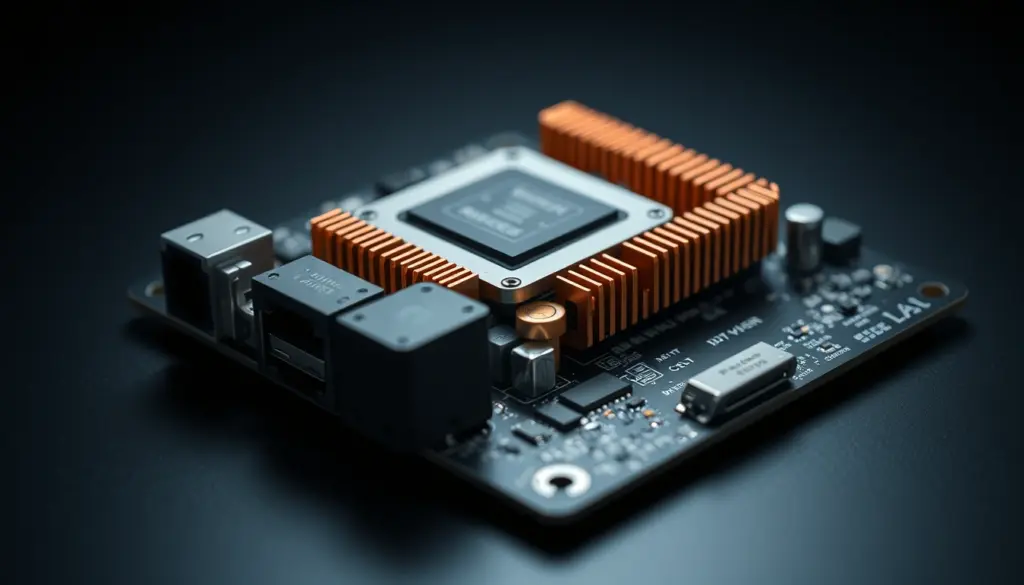
A small Chinese motherboard maker just did something Intel never officially offered on the desktop. ERYING has started selling two motherboards built around Intel’s embedded Raptor Lake processors, the Core i7-13798HRE and the Core i5-13598HRE, chips designed for industrial and embedded systems rather than gaming rigs. The boards, spotted and reported on September 26, 2026, start at roughly $180 and pair a soldered-down CPU with plain DDR4 memory, a PCIe 5.0 slot, and a form factor small enough to fit into a mini-ITX-style case. It is an odd product on paper. It is also a pretty direct answer to two years of rising DDR5 prices and a widening gap between what Intel sells to system builders and what it quietly sells to industrial customers.

Don't miss new tech stories on Google
Add Shattered once in the Google app and our stories show up in your news suggestions.
What ERYING Actually Announced
ERYING’s new lineup covers two “MoDT” boards, short for mobile-on-desktop, a category the company has used before to bring mobile or embedded-class Intel silicon into standard desktop form factors. The Core i7-13798HRE-D4 and Core i5-13598HRE-D4 pair a fixed Raptor Lake processor with a 175 x 215 mm board, two DDR4 UDIMM slots, and a mix of modern and legacy I/O. Pricing lands at 1,399 yuan for the Core i7 board and 1,199 yuan for the Core i5 board, which convert to roughly $197 and $169 respectively at current exchange rates, though at least one outlet pegged the pair closer to $210 and $180. Either way, this is a full motherboard-and-CPU assembly for less than the price of a single mainstream boxed desktop chip.
The catch, and it is a real one, is that the processor cannot be removed or swapped. These are not LGA1700 sockets, they are embedded CPUs soldered directly to the board, the same approach used in thin-and-light laptops and industrial PCs. Buyers get a fixed configuration, not a platform they can upgrade down the road.
ERYING isn’t a household name in the West, but it has built a small following among budget PC builders and system integrators for exactly this kind of product: taking Intel silicon that never reached mainstream desktop retail and giving it a socket-free home on an affordable board. This latest pair leans on the HRE suffix in Intel’s naming scheme, which typically marks embedded parts built for long product-lifecycle deployments like point-of-sale terminals, digital signage, and industrial controllers rather than gaming desktops.
Meet the Chips: Core i7-13798HRE and Core i5-13598HRE
Both processors come from Intel’s embedded Raptor Lake family, a line most desktop buyers have never had a reason to shop. The Core i7-13798HRE packs 14 cores and 20 threads, split between six Performance cores and eight Efficient cores, with a maximum boost clock of 5.0 GHz and 24 MB of L3 cache. The Core i5-13598HRE steps down to 12 cores and 16 threads across four Performance cores and eight Efficient cores, topping out at 4.8 GHz with 18 MB of L3 cache. Both chips carry a 55 W base power rating, well under the 65 W to 125 W range typical of retail K-series and non-K Raptor Lake desktop parts.
Neither chip includes integrated graphics. That is standard for Intel’s HRE embedded line, which is built for servers, kiosks, and industrial control systems that either don’t need a display or already plan on a discrete card. For a desktop buyer, though, it means the ERYING boards are unusable without a separate GPU, something worth flagging loudly before anyone orders one expecting a plug-and-play budget PC.
| Spec | Core i7-13798HRE-D4 | Core i5-13598HRE-D4 |
|---|---|---|
| Cores / Threads | 14 / 20 | 12 / 16 |
| P-cores / E-cores | 6P + 8E | 4P + 8E |
| Max boost clock | 5.0 GHz | 4.8 GHz |
| L3 cache | 24 MB | 18 MB |
| Base power | 55 W | 55 W |
| Integrated graphics | None | None |
| Price (yuan) | 1,399 | 1,199 |
| Approx. price (USD) | $197-$210 | $169-$180 |
Inside the Boards: DDR4, PCIe 5.0, and a Tight Footprint
What makes the ERYING boards more than a curiosity is the platform wrapped around the embedded chips. Each board measures 175 x 215 mm, a compact footprint aimed at small-form-factor and mini-ITX-adjacent builds. Memory runs on two DDR4 UDIMM slots, not the DDR5 that dominates new Intel platforms today, and that choice is almost certainly deliberate given where memory prices have gone this year.
Expansion is more generous than the price suggests. Buyers get one PCIe 5.0 x8 slot for a graphics card, plus a secondary PCIe 3.0 x4 slot for add-in cards. Storage covers one PCIe 4.0 x4 M.2 slot, a second PCIe 3.0 x4 M.2 slot, and two SATA ports, enough for a fast boot drive and a couple of spinning or SATA SSD drives for bulk storage. Rear I/O, according to reports, includes two 10-Gbps USB-A ports, six USB 2.0 ports, and Gigabit Ethernet, with a separate M.2 slot reserved for a Wi-Fi card rather than built-in wireless. It is not a flashy port layout, but it covers the basics a budget build actually needs.
The Raptor Lake architecture underneath both chips dates back to Intel’s 13th-generation desktop and mobile launch, meaning ERYING is repackaging a mature, well-understood design rather than shipping something brand new. That maturity cuts both ways: the platform is proven and stable after several years in the field, but it also means buyers are getting a two-generation-old core architecture rather than Intel’s newest silicon.
Why $180 Doesn’t Mean What It Used To
Context matters here. Across 2026, DRAM and NAND prices climbed sharply enough that memory alone now eats into a huge share of budget device pricing, and even flagship laptops have leaned back on older DDR4 modules to dodge the worst of it, as Lenovo did with its Xiaoxin 14 SE. Against that backdrop, a 1,199 yuan board that skips DDR5 entirely and reuses cheaper, more available memory isn’t just a novelty. It’s a pricing strategy that sidesteps the exact component category driving costs up everywhere else in the PC market.
It’s also worth remembering these are bundled CPU-and-motherboard combos, not bare boards. A buyer isn’t shopping for a chip and a board separately and hoping the math works out. They’re paying roughly $169 to $210 for a working platform with a 12- or 14-core Raptor Lake processor already attached, memory slots ready to populate, and a PCIe 5.0 slot waiting for a graphics card.
DDR4 pricing has held up noticeably better than DDR5 through 2026, since most new PC platforms have already moved to the newer standard, easing demand pressure on the older modules. Memory makers such as Crucial still list DDR4 UDIMM kits at a meaningful discount to comparable DDR5 capacities, and that gap is a big part of why a board built around older memory can hit a lower total price even with a capable 12- or 14-core processor attached.
The Soldered-CPU Tradeoff
The obvious downside is permanence. Once a buyer picks the Core i7 or Core i5 variant, that decision is final, there’s no socket to drop in a faster chip later, no upgrade path if a workload outgrows the hardware. That’s a real departure from how enthusiasts and small system builders normally think about desktop PCs, where the motherboard and CPU are treated as separate, swappable purchases.
It mirrors the tradeoff laptop buyers already accept, and it’s the same tension that has shaped the debate around soldered memory in budget laptops. Buyers get a lower price and, often, better power efficiency, in exchange for giving up flexibility down the line. ERYING’s boards just move that same bargain from the laptop chassis onto a desktop motherboard.
What “MoDT” Actually Means
MoDT, or mobile-on-desktop, describes motherboards that repurpose mobile or embedded processors for desktop use rather than relying on Intel’s standard socketed desktop lineup. Smaller Chinese board makers have used the approach for years to offer buyers processors that never officially reached retail desktop channels, often at prices well under equivalent boxed CPUs. ERYING’s new pair extends that pattern to Raptor Lake’s embedded HRE series, a family Intel built for point-of-sale terminals, industrial controllers, and thin clients rather than gaming PCs or workstations.
The appeal for a budget-conscious builder is straightforward: real multi-core performance on paper, a modern PCIe 5.0 slot, and a price that undercuts most boxed Intel Core desktop chips before a motherboard is even added to the cart. The tradeoff is equally straightforward: no integrated graphics, no upgrade path, and a supply chain that, so far, runs almost entirely through Chinese retailers rather than mainstream Western channels.
Market Impact: Budget Builders Get a New Option
Set against the rest of 2026’s budget PC landscape, ERYING’s pricing looks aggressive. Systems integrators and hobbyists chasing a cheap build have spent the year watching component costs climb almost everywhere. AMD’s Ryzen 5 5500F, a genuinely budget desktop CPU, launched at $99, but still needs a separate AM4 motherboard, cooler, and DDR4 memory purchased on top. ERYING’s Core i5-13598HRE-D4 bundles a 12-core, 16-thread processor with the board itself for around $169 to $180, memory slots included.
| Product | Category | Approx. Price |
|---|---|---|
| AMD Ryzen 5 5500F (CPU only) | Budget desktop CPU | $99 |
| ERYING Core i5-13598HRE-D4 | CPU + motherboard bundle | $169-$180 |
| ERYING Core i7-13798HRE-D4 | CPU + motherboard bundle | $197-$210 |
| Lenovo Xiaoxin 14 SE | Budget laptop, socketed DDR4 | $834 |
That comparison isn’t perfect since the AMD chip still needs a discrete GPU too, same as ERYING’s boards, and the Lenovo laptop is a full finished system rather than a barebones build. Still, the table shows how far a MoDT bundle can stretch a budget-build dollar once memory and board costs are folded into the CPU price rather than layered on separately.
Coverage from outlets including PCWorld and enthusiast hardware forums has focused mainly on the novelty of the HRE chips reaching desktop boards at all, rather than on head-to-head benchmark testing, since neither ERYING nor Intel has published independent performance figures for this specific pairing. That leaves the value proposition resting almost entirely on the spec sheet and the price tag for now, at least until independent reviewers get hardware in hand to test.
How These Chips Stack Up Against Mainstream Raptor Lake
Intel’s mainstream Raptor Lake desktop lineup, the Core i7-13700 and Core i5-13500 families sold through retail and system integrators, occupies a similar core-and-thread range to ERYING’s embedded chips, though Intel has never published a direct HRE-to-retail comparison and neither has ERYING. What is confirmed is that the HRE parts run at a lower 55 W base power than most retail K-series and non-K desktop Raptor Lake chips, and that they ship without integrated graphics, a configuration Intel doesn’t offer on its standard desktop retail SKUs. Buyers weighing the two paths are really choosing between a socketed, upgradeable retail platform on one side, and a cheaper, fixed-configuration embedded board on the other.
Historical Context: Embedded Chips Finding a Desktop Home
This is not the first time embedded or mobile Intel silicon has ended up on a desktop board sold to enthusiasts rather than industrial customers. Chinese board makers have run this playbook through multiple Intel generations, repackaging processors meant for NUCs, laptops, or embedded systems onto ATX or mini-ITX boards at prices well below Intel’s official desktop pricing. The practice tends to accelerate whenever mainstream component prices spike, and 2026 has been exactly that kind of year. Memory shortages pushed costs up across the broader PC market, and laptop makers themselves have leaned back on older DDR4 platforms to keep prices in check, a trend ERYING’s boards fit neatly into.
Who Should Actually Consider One of These Boards
The honest answer is a narrow slice of buyers: hobbyists building a compact home server, a NAS box, a light workstation, or a secondary PC where raw core count matters more than upgrade flexibility or integrated graphics. Anyone planning a gaming build needs to budget for a discrete GPU on top of the board price, which changes the math considerably once a card is added. Anyone who wants to upgrade the CPU in two or three years should look elsewhere, since the soldered design rules that out entirely.
For small system integrators serving markets where price sensitivity outweighs brand preference, though, a sub-$200 board with 12 or 14 real CPU cores and a PCIe 5.0 slot is a genuinely useful building block, particularly for compact workstation or file-server builds that don’t need a screen attached at all.
What Comes Next: Five Predictions
- Expect more Chinese board makers to follow ERYING’s lead, since Intel’s embedded catalog gives them a cheap, largely untapped channel for building budget desktop platforms outside official retail pricing.
- DDR4 support will keep showing up in new boards and laptops through 2027 as DDR5 pricing stays elevated, extending the memory-generation split already visible in products like the Xiaoxin 14 SE.
- Discrete GPU attach rates on these boards will run near 100%, since none of the embedded chips ERYING is using include integrated graphics, making a graphics card mandatory rather than optional.
- Western retail availability will likely stay limited to import resellers rather than official distribution, keeping these boards a niche option despite the tech press attention.
- If China’s broader memory shortage deepens, expect ERYING and similar makers to face upward pricing pressure even on DDR4 modules, narrowing the cost advantage these boards currently hold.
The Bottom Line
ERYING’s Raptor Lake boards aren’t a mainstream product, and they were never going to be. What they represent is a pressure valve, a way for budget builders to buy real Intel core count without paying DDR5-era prices, in exchange for giving up graphics and upgradeability. Whether that trade appeals to a given builder depends entirely on what they’re building and how long they expect to keep it running. Either way, the fact that a company felt this was worth shipping in September 2026 says a lot about how squeezed the budget PC market has become.
FAQ: ERYING’s Raptor Lake Embedded Motherboards
What is ERYING’s new Raptor Lake motherboard?
It’s a pair of desktop motherboards, the Core i7-13798HRE-D4 and Core i5-13598HRE-D4, each built around an embedded Intel Raptor Lake CPU soldered directly to the board rather than installed in a socket.
How much do the ERYING boards cost?
The Core i7-13798HRE-D4 lists at 1,399 yuan, roughly $197 to $210, and the Core i5-13598HRE-D4 lists at 1,199 yuan, roughly $169 to $180, depending on the currency conversion used.
Do these boards include integrated graphics?
No. Both embedded Raptor Lake chips lack integrated graphics, so a discrete graphics card is required to get any video output at all.
What memory do the ERYING boards support?
Each board has two DDR4 UDIMM slots, not DDR5, which keeps memory costs down given how sharply DDR5 pricing has climbed through 2026.
What’s the difference between the Core i7-13798HRE and Core i5-13598HRE?
The Core i7 has 14 cores and 20 threads (6 Performance, 8 Efficient), a 5.0 GHz boost clock, and 24 MB of L3 cache. The Core i5 has 12 cores and 16 threads (4 Performance, 8 Efficient), a 4.8 GHz boost clock, and 18 MB of L3 cache. Both run at a 55 W base power.
Can I upgrade or replace the CPU later?
No. The processor is soldered directly to the motherboard, so the CPU choice made at purchase is permanent.
Are ERYING’s boards available outside China?
Reports so far cover pricing and availability in China. There’s no confirmation yet of official Western retail distribution, so buyers elsewhere would likely need to go through import resellers.
What is a MoDT board?
MoDT stands for mobile-on-desktop, a category of motherboards that repurpose mobile or embedded-class processors for desktop use instead of Intel’s standard socketed desktop chips, typically at a lower price and without an upgrade path.