
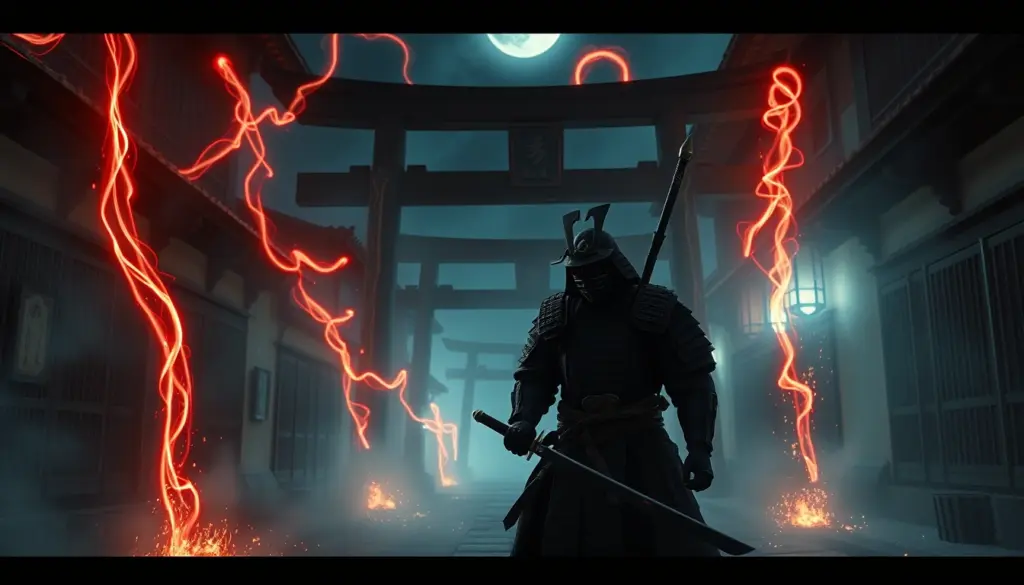
Capcom pushed out the launch trailer for Onimusha: Way of the Sword this week, and the timing carries its own story: the game shipped on September 4, 2026, three weeks ahead of the September 25 date Capcom had been advertising since spring. The studio’s investor relations notice confirmed the schedule change without much fanfare, but for a franchise that spent most of the last two decades dormant, showing up early is itself a signal. Combined with a wave of PC benchmark data from GameGPU and confirmed system requirements from Capcom, the picture that emerges is of a mid-tier revival that Capcom is treating with more confidence than its sales history alone would suggest.
The game is out now on PlayStation 5, Xbox Series X|S, Nintendo Switch 2, and PC, according to Capcom’s official platform listings. What follows is a look at what actually shipped: the trailer’s content, the confirmed hardware requirements, the independent benchmark numbers from GameGPU’s test lab, and what the launch means for Capcom’s broader RE Engine strategy heading into 2027.

Don't miss new tech stories on Google
Add Shattered once in the Google app and our stories show up in your news suggestions.
Capcom Moves Up the Onimusha: Way of the Sword Release Date
Release dates in this industry move constantly, but they almost always move backward. Capcom’s decision to bring Onimusha: Way of the Sword forward from September 25 to September 4, 2026, disclosed through the company’s investor relations channel, runs against that pattern. A three-week acceleration is not a large window in absolute terms, but it is a meaningful tell about how confident the internal build review process was going into certification.
The launch trailer itself dropped to coincide with the new date, and it arrived after a run of earlier marketing beats: an official “The Challenges That Await” trailer shown at gamescom 2026, plus overview segments folded into a Capcom Spotlight broadcast and a Sony State of Play presentation. A playable demo, titled “Onimusha: Way of the Sword DEMO,” had already been available on PC since June 3, 2026, giving players and hardware reviewers a head start on testing performance months before release.
Inside the Launch Trailer: Musashi, Malice, and the Oni Gauntlet
The story casts Miyamoto Musashi as the playable lead, dropping the legendary swordsman into a version of early Kyoto that Capcom describes as distorted by a corrupting force called Malice. According to details Capcom shared and reported by DSOGaming, Musashi carries a weapon called the Oni Gauntlet, which grants him supernatural abilities used to fight underworld creatures known as Genma. The framing keeps the series’ long-running formula intact: real historical figures and settings, layered with a demon-hunting plot built around a single cursed artifact.
Capcom is billing the project as a “swordplay action” or “dark fantasy swordplay action” game rather than reusing the “survival horror” language that defined the PlayStation 2-era entries, a framing choice that lines up with faster, more acrobatic combat shown across the trailers. The exact phrase “samurai slasher” that has circulated in some coverage does not appear in Capcom’s own marketing copy, so it should be read as shorthand rather than an official tagline.
On the subject of violence, a preview report tied to Capcom’s showcase events quoted director Satoru Nihei reiterating that the shipping build keeps full gore and dismemberment effects intact, after an earlier public demo build had shown those settings switched off for the stage presentation. That distinction matters for a series that has always leaned into blood-heavy sword combat as part of its identity.
Platforms and Storefronts: PS5, Xbox Series X|S, Switch 2, and PC
Capcom’s official listings put Onimusha: Way of the Sword on PlayStation 5 (with PS5 Pro enhancements referenced in pre-launch coverage), Xbox Series X|S, Nintendo Switch 2, and PC. The PC version is distributed through Steam, Epic Games Store, and the Microsoft Store, and it is listed on Steam as a standard premium release rather than a subscription or cloud-only title.
DSOGaming also confirmed that the PC build ships with Denuvo anti-tamper protection, a detail that tends to matter more to enthusiast PC audiences than the headline spec sheet does, since Denuvo has historically been linked to performance overhead complaints in a handful of past releases (though modern implementations have narrowed that gap considerably). Nintendo Switch 2 listings additionally reference Joy-Con 2 motion controls tailored to the sword-swinging mechanics, though Capcom has not published a resolution or frame-rate target specific to that platform.
The Official PC System Requirements
Capcom’s published PC specification sheet, cross-referenced against GameGPU’s test lab and System Requirements Lab’s own database, targets a fairly modest floor for a 2026 release. The minimum tier is built around 1080p at 30 FPS on low settings, using either NVIDIA DLSS or AMD FSR 3.1 upscaling to hit that target rather than native rendering.
Minimum vs. recommended specs
The recommended tier roughly doubles the ask on the GPU side while leaving CPU and memory requirements almost untouched, which is typical of RE Engine titles that lean on the graphics card for upscaling and ray-traced lighting rather than heavy CPU-bound simulation.
| Requirement | Minimum (1080p, 30 FPS, Low, upscaled) | Recommended (1080p, 60 FPS, Medium, upscaled) |
|---|---|---|
| OS | Windows 11 (64-bit) | Windows 11 (64-bit) |
| CPU | Intel Core i5-8400 / AMD Ryzen 3 3100 | Intel Core i5-10400 / AMD Ryzen 5 3600 |
| RAM | 16 GB | 16 GB |
| GPU | NVIDIA GeForce GTX 1660 (6 GB) / AMD Radeon RX 5500 XT (8 GB) | NVIDIA GeForce RTX 2060 Super (8 GB) / AMD Radeon RX 6600 (8 GB) |
| DirectX | Version 12 | Version 12 |
| Storage | 50 GB (SSD required) | 50 GB (SSD required) |
| Upscaling support | AMD FSR 3.1 (per DSOGaming), NVIDIA DLSS | AMD FSR 3.1, NVIDIA DLSS |
Both tiers ask for 50 GB of SSD-backed storage, and Capcom’s notes specify shader model 6.0 as a baseline, according to System Requirements Lab’s breakdown of the published spec sheet. Notably, the storage requirement did not change between minimum and recommended configurations, meaning the extra headroom is going almost entirely into higher-resolution textures and ray-traced lighting rather than a separate asset tier.
GameGPU’s Benchmarks Add the Numbers Capcom Didn’t Publish
Capcom’s spec sheet tells players what they need to launch the game; it does not tell them what a mid-range or high-end card actually delivers once ray tracing and higher resolutions enter the picture. That’s where GameGPU’s independent testing, published August 31, 2026 by reviewer Maxim Boldson, fills the gap. The lab ran GPUs spanning the RTX 3060 up to the RTX 5090, and Radeon cards from the RX 6750 XT up to the RX 9070 XT, pairing them with a range of AMD and Intel CPUs.
The resulting tier breakdown gives a much clearer picture of what “comfortable” performance costs at each resolution than the official minimum and recommended specs do on their own.
| Resolution | ~60 FPS comfortable tier | VRAM usage observed |
|---|---|---|
| 1920×1080 | Radeon RX 6700 XT / GeForce RTX 4060 Ti | 7-8 GB |
| 2560×1440 | Radeon RX 9060 XT / GeForce RTX 5060 Ti | 8-9 GB |
| 3840×2160 (4K) | Radeon RX 9070 XT / GeForce RTX 5070 Ti | 9-11 GB |
Two things stand out in GameGPU’s full benchmark writeup. First, VRAM consumption stays remarkably flat across GPU memory tiers at a given resolution, topping out around 11 GB even at 4K with the heaviest settings, which means most cards released in the last three to four years have enough video memory even if their compute falls short. Second, the jump from a 1440p-comfortable card to a 4K-comfortable card is a full tier on both the NVIDIA and AMD side, which tracks with how demanding the RE Engine’s ray-traced lighting model is at native 4K without frame generation smoothing things over.
The RTX 5090 Number Everyone Is Quoting
The figure that has traveled furthest out of GameGPU’s test results is a 367.53 FPS average at 4K on an RTX 5090 paired with a Ryzen 7 9800X3D. That number is real, but it comes with a large asterisk: it was recorded with NVIDIA’s DLSS 4x frame generation mode enabled, not native rendering. In that same run, the 1% low landed at 300.32 FPS, cinematic sequences averaged 380.54 FPS, and combat sequences averaged 354.33 FPS with a rare-event low of 294.40 FPS, giving the RTX 5090 an overall benchmark score of 31,801 points, which GameGPU classified as “Excellent.”
What happens without frame generation
A separate GameGPU test isolated native 4K performance with maximum ray tracing and no upscaling or frame generation at all. Under those conditions, the same RTX 5090 delivered 105 FPS average and 96 FPS minimum, still enough for a locked 4K/60 experience with headroom to spare. Below it, the numbers drop off card by card: the RTX 4090 managed 77 FPS, the RTX 5080 hit 70 FPS, the RX 9070 XT and RTX 5070 Ti both cleared the 60 FPS mark at 61 and 60 FPS respectively, the RTX 5070 and RX 9070 held between 47 and 53 FPS, and older mid-range cards like the RTX 4060 Ti and RTX 3060 fell to 27 FPS and 19 FPS.
GameGPU’s own framing of that native result is worth repeating directly: the site described the 105 FPS native 4K result as showing “excellent optimization of the RE Engine” when set against how much harder some Unreal Engine 5 titles have to work to hit comparable frame rates at the same settings. That comparison, coming from a lab that benchmarks dozens of releases a month, is a meaningful data point about where the RE Engine sits in 2026’s engine landscape.
Console Performance: PS5, PS5 Pro, Xbox Series X|S, and Switch 2
Capcom has not published a console-specific performance breakdown the way it did for PC, so the picture here is necessarily less precise. Pre-launch coverage references a PS5 Pro enhancement pass, and it is reasonable to expect the standard RE Engine pattern Capcom has used on recent releases: a performance mode prioritizing a stable frame rate through dynamic resolution scaling, and a quality mode that trades frame rate for higher-fidelity ray tracing. Given the PC benchmark data showing an RX 9070 XT-class GPU is needed for 60 FPS at native 4K with max ray tracing, base PS5 and Xbox Series X hardware (which sits well below that tier) will almost certainly rely on dynamic resolution and trimmed ray-tracing settings to hit 60 FPS in performance mode.
Switch 2 is the biggest unknown. Capcom’s platform listings mention Joy-Con 2 motion controls but no confirmed resolution or frame-rate target. Given the hardware gap between Switch 2 and the other three platforms, a docked/handheld split with a lower resolution ceiling and simplified lighting is the most likely outcome, consistent with how other cross-platform RE Engine and third-party titles have handled the console since its launch.
How Onimusha Stacks Up Against Capcom’s Other RE Engine Releases
Capcom’s RE Engine has carried the company’s biggest franchises since Resident Evil 7 introduced it in 2017, and the company’s own FY2026 first-quarter materials list Resident Evil Village and the upcoming Resident Evil Requiem among the engine’s flagship showcases, alongside catalog sales credit still flowing from Devil May Cry 5. Against that backdrop, Onimusha: Way of the Sword is a smaller bet: a revival of a franchise that has not had a new mainline entry since 2006, built on the same technology stack that now powers Capcom’s flagship horror and action lines.
A lighter footprint than Capcom’s headline releases
The 50 GB install size and GTX 1660-class minimum spec put Onimusha well below the storage and hardware floor typically associated with Capcom’s biggest RE Engine productions, suggesting a smaller production budget and a shorter development cycle relative to Resident Evil or Monster Hunter mainline entries. That is consistent with Capcom treating Onimusha as a mid-tier revival rather than a tentpole release, which lines up with the franchise’s current standing as Capcom’s tenth best-selling series.
The GameGPU benchmark tiers also point to an engine implementation optimized for reach rather than pushing visual limits: a game that scales cleanly from a GTX 1660 up to an RTX 5090 without huge cliffs in the middle is built to sell across the widest possible PC install base, not to serve as a technical showcase the way some flagship releases are positioned.
From a 2001 PS2 Launch Title to a 2026 Multi-Platform Relaunch
Onimusha’s history stretches back to Onimusha: Warlords, which launched on PlayStation 2 in 2001, followed by Onimusha 2: Samurai’s Destiny in 2002, Onimusha 3: Demon Siege in 2004, and Onimusha: Dawn of Dreams in 2006. After Dawn of Dreams, the mainline series went dormant for over a decade. Capcom kept the IP alive with an HD remaster of the original Warlords in 2019 and a Netflix anime adaptation in 2023, both of which functioned as low-cost ways to test audience interest before committing to a full new entry.
According to Capcom’s own investor materials, the Onimusha franchise had sold approximately 9.2 million units cumulatively as of its most recent disclosed figures, placing it as Capcom’s tenth best-selling franchise, behind Resident Evil, Monster Hunter, Street Fighter, Mega Man, Devil May Cry, Dead Rising, Dragon’s Dogma, Ace Attorney, and Marvel vs. Capcom. That context matters for reading this launch correctly: Way of the Sword is not being positioned to challenge Capcom’s top franchises, but to reactivate a dormant one at a moment when the company has the balance sheet to absorb the risk.
Market Impact: Why Capcom Can Afford This Bet
Capcom’s financial position going into this launch is about as strong as it has been in years. For the fiscal year that ended March 31, 2025, the company reported net sales of ¥195.365 billion, up 15.2% year-over-year, and operating profit of ¥75.295 billion, up 14.5%. Momentum carried into the following year: for the quarter ended June 30, 2026, net sales climbed to ¥70.41 billion, up 54.7% year-over-year, with operating profit rising 66.9% to ¥41.054 billion. Capcom’s own earnings commentary describes this as its thirteenth straight year of operating profit growth, alongside a reported all-time high of 59.07 million consumer video game units sold across its full catalog.
That scale of profitability gives Capcom room to fund revivals of mid-tier franchises like Onimusha without the launch needing to be a blockbuster to be worthwhile. A game built on an already-amortized engine, targeting modest hardware, and releasing across four platforms simultaneously is a low-risk way to test whether there is still commercial appetite for the series, without diverting resources away from Resident Evil or Monster Hunter development. If Way of the Sword performs well against its own modest cost base, it strengthens the case internally for further Onimusha entries; if it underperforms, the downside is limited by how little Capcom appears to have spent building it relative to its flagship lines. Early returns suggest the bet is already paying off: Capcom announced on September 7, 2026 that Way of the Sword sold more than 1 million units worldwide on its first day, a figure that pushed the Onimusha series past 10 million lifetime units and reinforced the decision to accelerate the release.
Combat, Gore, and the Series’ Violent Reputation
Onimusha has always traded on visceral, blood-heavy sword combat, going back to the original Warlords, and Way of the Sword does not appear to be softening that identity. Trailer footage and preview coverage consistently show close-quarters sword strikes and Oni-powered finishing moves rendered with graphic combat effects against both human enemies and Genma creatures. As noted above, the director’s confirmation that gore and dismemberment remain intact in the shipping build, after a demo presentation had briefly toggled those settings off, suggests Capcom is not trying to broaden the rating for a wider audience the way some legacy horror and action franchises have done in recent console generations.
Specific in-game gore sliders or dismemberment toggles have not been documented in detail in public materials, so players sensitive to violence content should treat “there are options” as a reasonable expectation rather than a confirmed feature list until Capcom or reviewers publish a full accessibility and settings breakdown.
Five Predictions for Onimusha’s Launch Window
- Modest but positive sales. Given the franchise’s roughly 9.2 million lifetime units and Capcom’s apparent low-budget approach, expect Way of the Sword to nudge that cumulative total up without threatening to become a top-five Capcom franchise this cycle.
- A visible Steam charts spike, then a fast fade. Games with confirmed Denuvo and a modest minimum spec tend to see a strong opening-week showing on storefront charts followed by a steep drop-off once the initial wave of series fans and curious buyers clears the backlog.
- A day-one or week-one patch touching DLSS/FSR presets. The gap between GameGPU’s native 4K numbers and the frame-generation-assisted 367 FPS figure is wide enough that Capcom will likely tune default upscaling presets shortly after launch based on player feedback.
- Continued RE Engine reuse for Capcom’s mid-tier revivals. The clean scaling from a GTX 1660 up to an RTX 5090 shown in GameGPU’s testing makes it likely Capcom leans on the same engine for any further catalog revivals it greenlights before its next major Resident Evil or Monster Hunter release.
- More Onimusha media if sales hold up. Given the pattern of the 2019 remaster and 2023 Netflix anime preceding this relaunch, a strong reception here raises the odds of a second season of the anime or another entry, rather than the franchise going quiet again.
Frequently Asked Questions
When did Onimusha: Way of the Sword release?
Capcom released the game worldwide on September 4, 2026, three weeks earlier than the previously announced September 25, 2026 date, according to the company’s investor relations notice.
What platforms is Onimusha: Way of the Sword available on?
It is available on PlayStation 5, Xbox Series X|S, Nintendo Switch 2, and PC via Steam, Epic Games Store, and the Microsoft Store.
What are the minimum PC system requirements?
Windows 11 64-bit, an Intel Core i5-8400 or AMD Ryzen 3 3100, 16 GB of RAM, an NVIDIA GeForce GTX 1660 (6 GB) or AMD Radeon RX 5500 XT (8 GB), DirectX 12, and 50 GB of SSD storage, targeting 1080p at 30 FPS on low settings with upscaling enabled.
What GPU do I need for 60 FPS at 4K?
GameGPU’s testing found a Radeon RX 9070 XT or GeForce RTX 5070 Ti is needed to comfortably clear 60 FPS at native 3840×2160 with maximum ray tracing and no upscaling.
How does the RTX 5090 perform in Onimusha: Way of the Sword?
With DLSS 4x frame generation enabled at 4K, GameGPU recorded a 367.53 FPS average. Without any upscaling or frame generation, native 4K with maximum ray tracing dropped that to a 105 FPS average, still well above 60 FPS.
Does the PC version have Denuvo?
Yes. Capcom confirmed the PC release uses Denuvo anti-tamper protection, as reported by DSOGaming.
Who is the main character in Onimusha: Way of the Sword?
The protagonist is Miyamoto Musashi, who wields a weapon called the Oni Gauntlet to fight demonic Genma creatures in a version of Kyoto corrupted by a force Capcom calls Malice.
How much has the Onimusha franchise sold overall?
According to Capcom’s investor materials, the franchise had sold approximately 9.2 million units cumulatively as of its most recent disclosed figures, making it Capcom’s tenth best-selling series.