
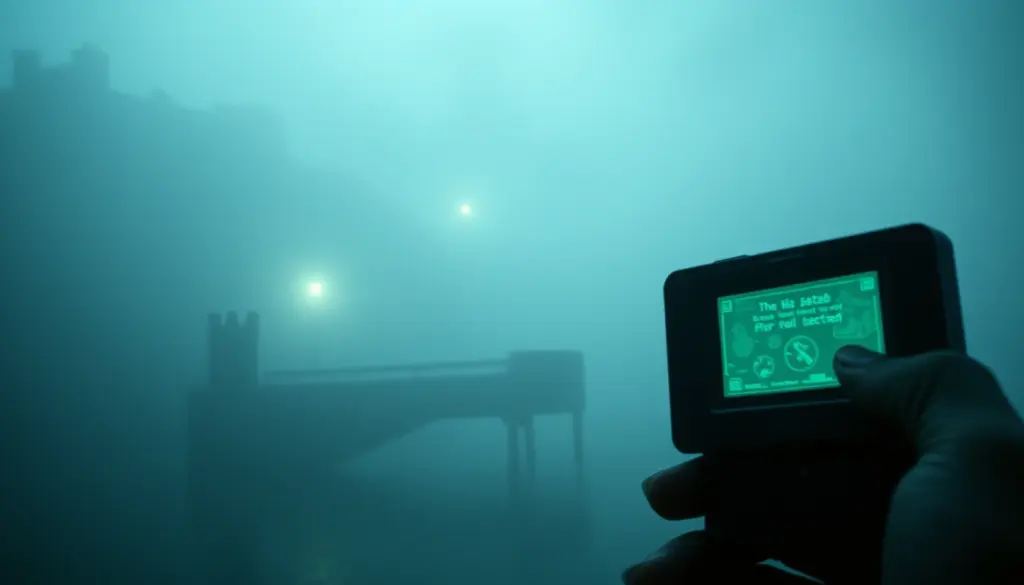
Konami’s biggest horror bet in years hits shelves this week, and the early review verdicts are in. SILENT HILL: Townfall launches globally on September 24, 2026, and critics who received early code are already comparing it to the series’ best-regarded entries. For a franchise that spent most of the 2010s producing spin-offs, cancellations, and one infamous playable teaser pulled from digital shelves, that reception matters far beyond a single Metacritic page.
This piece looks at what’s actually confirmed about Townfall, how the first wave of reviews reads, what it means for Konami’s turnaround strategy, and how the game stacks up against the rest of a crowded 2026 horror lineup.
What Silent Hill: Townfall actually is
Konami Digital Entertainment, B.V. and Konami Digital Entertainment, Inc. confirmed the release window in separate regional announcements, both landing on the same global date: September 24, 2026. The North American announcement describes Townfall as “an immersive first-person horror” title, a description echoed almost word for word in the European announcement. That framing is a deliberate break from the over-the-shoulder camera the series used for decades, and reviewers who got hands-on time before launch have leaned on the same “first-person survival-horror” label in their write-ups.
The game ships on PlayStation 5, Steam, and the Epic Games Store, a three-platform spread Konami confirmed in both announcements. Metacritic lists PlayStation 5 and PC as the tracked platforms, and Steam’s own store listing shows a slightly earlier regional date of September 23, a one-day discrepancy that’s common when a publisher’s midnight rollout crosses time zones. The global release date Konami has repeated across every official channel is September 24, 2026.
Reports across multiple outlets, corroborated independently of Konami’s own materials, credit Scottish studio Screen Burn (also referred to as Screen Burn Interactive in some coverage) as the developer, with Annapurna Interactive named alongside Konami on the publishing side in at least one review and in broader reporting. Konami’s own press materials list only Konami as publisher of record, so treat the Annapurna co-publishing credit as reported rather than officially confirmed by Konami itself.
The setting: a Scottish town instead of an American one
Every prior mainline Silent Hill game, going back to the 1999 original, kept players in and around the fictional American town the series is named for. Townfall breaks that pattern. Reviews describe the setting as St. Amelia, Scotland, in 1996, and a PlayStation Blog preview names the protagonist as a man called Simon, who finds himself trapped in a foggy Scottish town rather than the familiar Maine-adjacent fog banks.
That’s a bigger swing than it sounds. Silent Hill as a brand is built on a specific American gothic-rust-belt aesthetic, all abandoned amusement parks and peeling motel wallpaper. Moving the psychological horror formula to a UK fishing town changes the visual vocabulary entirely, trading Rust Belt decay for damp stone and sea fog. Early reviews frame this as a strength rather than a gimmick, treating St. Amelia as its own dread-soaked location rather than a reskinned Silent Hill.
The CRTV: Townfall’s new puzzle-and-stealth tool
Where past Silent Hill games leaned on a static-heavy radio to warn of nearby monsters, Townfall introduces a handheld device coverage refers to as the CRTV. Multiple reviews describe it as doing triple duty: revealing hidden clues, detecting enemies at range, and surfacing cryptic messages tied to the town’s backstory. It’s positioned as the game’s signature new mechanic, the thing meant to differentiate Townfall from a straight nostalgia lap through Silent Hill 2’s greatest hits.
A review from PC Gamer put it plainly: “it has classic psychological horror and grotesque monsters with the added benefit of the CRTV as a new puzzle solving and stealth tool” (PC Gamer). That’s a useful summary of the pitch Konami and Screen Burn are making here: keep everything that made the genre work, then bolt on one new toy that touches exploration, combat avoidance, and narrative delivery at once.
What the first reviews are actually saying
PC Gamer’s review leads with a tidy summary of the tone: “Silent Hill: Townfall is just the right mix of old and new” (PC Gamer). That’s a notable line for a franchise entry, since the last decade of Silent Hill has swung between faithful remakes (2024’s Silent Hill 2) and side projects that struggled to find an audience.
IGN’s review goes further on atmosphere, describing the game as “riddled with tremendously satisfying puzzles to solve, and peppered with the most disturbing scenes to come out of mid-nineties Scotland since that baby crawled along the ceiling in the original Trainspotting” (IGN). It’s a colorful line, but it signals something concrete: reviewers are willing to compare Townfall’s imagery to non-horror-game cultural touchstones, which usually means the art direction landed.
Not every outlet frames the reception the same way, and full Metacritic aggregates were still filling in as of this writing, so treat any single score as a snapshot rather than the final word. Metro’s review, one of the few to publish a specific regional price, lists Townfall at £44.99 in the UK and applies a 16 age rating, though the specific ratings board issuing that classification wasn’t named in the review itself.
Konami’s producer set high expectations before launch
Ahead of release, Konami producer Motoi Okamoto made the studio’s confidence explicit in comments circulated on YouTube. Discussing how Townfall might land compared to the well-received 2024 remake, Okamoto said: “Both Silent Hill 2 and apt received very high praise and their Metacritic scores were great. I have confidence that Townfall will achieve similarly high acclaim” (source).
He went further in the same discussion, adding: “I have enough confidence to feel that it might end up being the masterpiece of the revival” (source). That’s an unusually direct claim from a producer days before launch, and it sets a bar the first wave of reviews will either validate or puncture over the coming week as more outlets publish scores.
Editions, pricing, and how to actually buy it
Konami’s North American announcement confirms pre-orders are live now for both a Standard Edition and a Deluxe Edition, available across PlayStation 5, Steam, and Epic Games. The European announcement uses near-identical language, confirming the same three storefronts for pre-purchase. On Steam specifically, the store page shows “Pre-purchase SILENT HILL: Townfall” with no user reviews posted yet as of this writing, which tracks with a title that hadn’t fully unlocked for the general public at time of research.
Pricing outside the UK figure reported by Metro (£44.99) wasn’t confirmed across enough sources to state as a global number, so treat any US dollar price you see elsewhere as regionally reported rather than officially locked by Konami in the material reviewed here.
Table: Silent Hill: Townfall at a glance
| Detail | Confirmed information |
|---|---|
| Global release date | September 24, 2026 (Konami announcements) |
| Platforms | PlayStation 5, Steam, Epic Games Store |
| Genre | First-person survival-horror |
| Setting | St. Amelia, Scotland, 1996 |
| Protagonist | Simon (per PlayStation Blog) |
| Publisher | Konami Digital Entertainment (Annapurna Interactive reported as co-publisher, not Konami-confirmed) |
| Developer | Screen Burn (reported) |
| Signature mechanic | CRTV handheld device (clues, enemy detection, stealth) |
| UK price (Metro review) | £44.99 |
| Age rating (Metro review) | 16 (issuing board not specified) |
| Editions | Standard and Deluxe, both pre-order live |
How Townfall fits into Konami’s decade-long horror rebuild
To understand why Townfall’s reception is being watched so closely, it helps to remember how far Silent Hill fell before this stretch of releases. The franchise’s low point is well documented: a playable teaser called P.T., built with Hideo Kojima and Guillermo del Toro attached to a full Silent Hills project, was pulled from the PlayStation Store in 2015 after the project was cancelled outright. For years afterward, Konami didn’t announce a single new mainline entry, and the brand mostly survived through fan preservation of that pulled demo.
The turnaround effectively began in 2022, when Konami revealed several Silent Hill projects at once, including the Silent Hill 2 remake that eventually shipped in 2024 to strong critical notice. Townfall is the next major swing after that remake, and it’s the first mainline-adjacent Silent Hill built as a wholly new story rather than a revisit of an existing one. That’s a materially different kind of risk: remakes have a built-in audience and a known-good story, while an original entry has to earn its reputation from a blank page.
Why the first-person shift is the bigger gamble
Horror games have trended toward first-person perspective for over a decade, from Amnesia to Resident Evil 7, because tighter field of view amplifies tension and limits a player’s ability to spot threats early. Silent Hill built its identity on third-person camera work that let players see their character’s vulnerability from the outside, all fumbling movement and limited visibility through fog rather than a restricted viewport. Switching Townfall to first person aligns it with where the genre has moved commercially, but it also risks feeling like it’s chasing a trend rather than defining one, the exact criticism third-person loyalists have leveled at the format shift since it was first confirmed.
Table: Townfall versus recent horror and Konami revival releases
| Title | Camera perspective | Setting | Publisher | 2026 status |
|---|---|---|---|---|
| Silent Hill: Townfall | First-person | Scotland, 1996 | Konami | Launches Sept. 24, 2026 |
| Silent Hill 2 (remake) | Third-person, over-the-shoulder | Silent Hill, USA | Konami | Released 2024, still cited as reception benchmark |
| Onimusha: Way of the Sword | Third-person action | Feudal Japan | Capcom | Passed 1M sales in a day per reports |
| Resident Evil 2/3/4 Remakes (Switch 2 ports) | Mixed (over-the-shoulder) | Raccoon City / rural Europe | Capcom | Landing on Switch 2 in October 2026 |
| Marvel’s Wolverine | Third-person action | Contemporary Marvel universe | Sony / Insomniac | Scored 77 on Metacritic per reports |
That table isn’t a perfect apples-to-apples comparison since genres differ, but it’s a useful snapshot of how legacy Japanese and Konami-adjacent franchises are performing through the back half of 2026. A revival built entirely around an original story, in a new perspective, in a new country, is a different bet than a remake of a beloved entry or a long-running action franchise returning to familiar ground.
What strong reviews would mean for Konami’s stock story
Konami’s gaming business has increasingly leaned on legacy IP reactivation rather than new original franchises, a strategy that also shows up in its Metal Gear and Castlevania remake and remaster efforts. If Townfall lands well critically and commercially, it validates spending further on original, non-remake Silent Hill content rather than treating the brand purely as remake fuel. If it underperforms, expect Konami’s public messaging to pivot back toward “safe” remakes and remasters, similar to how the pulled Silent Hills project pushed the company toward outsourcing horror revival work to outside studios in the first place.
There’s also a wider industry signal here. 2026 has been a rough year for game studio headcount, with layoffs across the industry running well into the thousands. A well-reviewed, commercially healthy Townfall gives Konami and its outsourced development partners a rare good-news story in a year that’s mostly produced bad ones, and publishers pay close attention to which genres and formats still convert critical acclaim into sales.
Still living in P.T.’s shadow
Konami can’t fully escape the P.T. comparison, and reviewers keep bringing it up anyway. The cancelled 2015 project remains the reference point fans use to judge every subsequent horror release from the company, fairly or not. Townfall doesn’t attempt to recreate P.T.’s haunted-hallway loop, but the CRTV device and the fog-choked Scottish coastline both read as answers to the same question P.T. left hanging: can Konami still build dread out of a small, contained space without leaning on jump scares. Early reviews suggest the studio thinks the answer is yes, though a decade of false starts means plenty of longtime fans will wait for player consensus before believing it.
The Annapurna Interactive question
One detail worth flagging for anyone tracking Townfall’s credits closely: at least one review lists Annapurna Interactive alongside Konami on the publishing side, and broader reporting has echoed a co-publishing arrangement between the two companies. Konami’s own regional announcements, by contrast, list only Konami as the publisher of record. Until Konami’s own materials name Annapurna directly, the safest framing is that a co-publishing relationship has been reported by multiple outlets but hasn’t been stated outright in Konami’s press releases reviewed for this piece.
The same caution applies to the developer credit. Screen Burn is the name showing up across reporting and at least one review as the studio behind Townfall, described elsewhere as a Scotland-based team, which would explain the Scottish setting far more directly than a US or Japanese studio choosing that location cold. That detail lines up neatly enough that it’s likely accurate, but it’s still worth treating as reported rather than as a Konami-confirmed credit line until an official credits page is published.
How Townfall compares on price and access
At £44.99 in the UK per Metro’s review, Townfall lands below full new-release AAA pricing in that market, which typically sits closer to £60-£70 for major first-party titles. That’s consistent with how Konami has priced recent Silent Hill output. Whether that translates to a sub-$60 launch price in the US wasn’t confirmed in the material reviewed here, so treat any specific US dollar figure you see elsewhere as a regional report rather than a globally confirmed number.
Physical retail availability appears more limited than digital: reporting indicates physical pre-orders are tied specifically to PlayStation 5, with Steam and Epic Games Store purchases running digital-only. That’s a fairly standard split for a mid-size horror release in 2026, where physical print runs for anything outside the biggest blockbusters have shrunk considerably.
What to watch after launch day
A handful of things will determine whether Townfall’s early buzz holds up. First, the Metacritic aggregate score once enough outlets publish, since Okamoto’s own benchmark was explicitly the acclaim level Silent Hill 2’s remake received. Second, whether the CRTV mechanic holds up over a full 10-15 hour playthrough or starts to feel repetitive by the midpoint, a common failure point for single-gimmick horror tools. Third, Steam user review sentiment once the pre-purchase-only listing converts to a live storefront with actual playtime behind it, since critic and player sentiment on horror titles frequently diverge.
Five things likely to happen next
- Expect Konami to publish a sales-milestone press release within the first one to two weeks if Townfall performs well, following the pattern set by other 2026 Japanese-published revivals.
- Expect the Annapurna Interactive publishing credit to either be formally confirmed or quietly dropped from Konami’s own materials within the first month post-launch.
- Expect Metacritic’s aggregate to land in a range comparable to, but likely slightly below, the 2024 Silent Hill 2 remake, given that original stories carry more critical risk than faithful remakes of an already-loved game.
- Expect at least one major outlet to publish a comparison piece measuring Townfall’s first-person pacing against Resident Evil 7 and Amnesia: The Bunker, given how directly reviewers are already drawing that lineage.
- Expect Konami to lean on Townfall’s reception, positive or mixed, when discussing its next Silent Hill project, since producer comments already frame this release as a confidence test for the wider revival strategy.
The bigger picture for horror game revivals
Townfall arrives in a year where legacy horror and action franchises have generally outperformed new IP at the top of sales charts, a trend also visible in Capcom’s Onimusha revival and in the string of Resident Evil remasters heading to Switch 2 in October. Publishers have clearly concluded that reviving dormant, recognizable horror brands carries less financial risk than greenlighting something wholly new, even when, as with Townfall, the actual game underneath the familiar name is a significant departure in perspective and setting.
That makes Townfall something of a hybrid test case. It carries the Silent Hill name, which buys instant recognition and a built-in audience of series veterans. But its actual content, an original story, a new country, a first-person camera, and a brand-new signature mechanic, is closer to a new IP than a comfort-food sequel. If it works, publishers get a data point that legacy branding can carry genuine creative risk-taking. If it stumbles, the lesson many studios will take is the opposite: stick closer to what already worked.
Frequently asked questions
When does Silent Hill: Townfall release?
Konami’s official announcements confirm a global release date of September 24, 2026, for PlayStation 5, Steam, and the Epic Games Store. Steam’s own store listing shows a September 23 date for some regions, a one-day difference typical of midnight rollout timing across time zones.
What platforms is Townfall available on?
PlayStation 5, Steam, and the Epic Games Store, per Konami’s regional announcements. Metacritic tracks it under PlayStation 5 and PC.
Who developed Silent Hill: Townfall?
Reporting and at least one published review credit Scottish studio Screen Burn as the developer, working with Konami. This credit is reported rather than confirmed in Konami’s own press materials reviewed for this piece.
Is Annapurna Interactive really co-publishing the game?
At least one review credits both Konami and Annapurna Interactive as publishers, and broader reporting has repeated that arrangement. Konami’s own regional announcements list only Konami as publisher, so this detail should be treated as reported, not officially confirmed by Konami.
How much does Silent Hill: Townfall cost?
Metro’s review lists a UK price of £44.99. A confirmed global US dollar price wasn’t available in the sources reviewed for this piece, so treat other regional figures as reported rather than officially locked.
What is the CRTV in Townfall?
It’s a handheld in-game device reviewers describe as serving three functions: revealing hidden clues, detecting nearby enemies, and delivering cryptic story-related messages. It’s the game’s headline new mechanic, replacing the static-radio warning system used in earlier Silent Hill titles.
Is Townfall a sequel, prequel, or standalone story?
It’s described across coverage as a new, original story set in St. Amelia, Scotland, in 1996, separate from the Silent Hill, USA setting used in every prior mainline entry. It isn’t a remake or direct sequel to any existing Silent Hill game.
Can I pre-order Townfall now?
Yes. Konami’s announcements confirm Standard and Deluxe Edition pre-orders are live across PlayStation 5, Steam, and Epic Games Store ahead of the September 24, 2026 launch.