
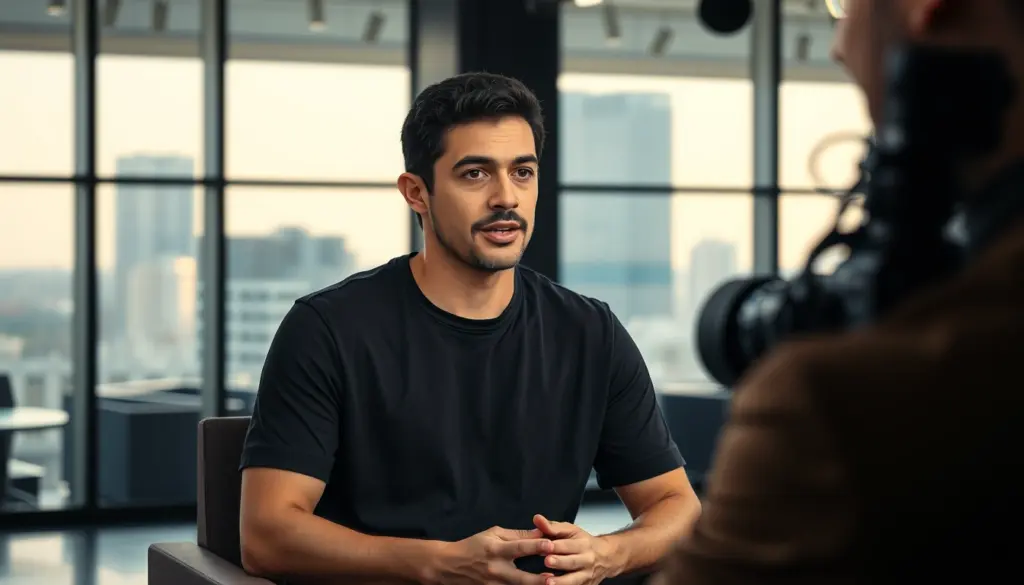
Mark Zuckerberg told NBC News on September 24, 2026 that he does not think the AI industry needs a coordinated slowdown, breaking publicly with a growing chorus of rivals who have spent the past two weeks arguing the opposite. The Meta founder and CEO said in an interview with NBC’s Joanna Stern that “I don’t think that we need some kind of industrywide coordination,” putting Meta’s official position on record just twelve days after Anthropic CEO Dario Amodei published an essay urging frontier labs to deliberately slow capability gains.
The comments land in the middle of the most public disagreement AI industry leaders have had in 2026. Amodei’s essay, published September 12, drew quick public backing from OpenAI’s Sam Altman and xAI’s Elon Musk, who each endorsed elements of a slower, more coordinated approach to frontier model development. Zuckerberg’s interview, along with a public post reported by outlets including the Insurance Journal via AP wire, makes clear that Meta will not be joining them. The split matters for engineers, enterprise buyers and policymakers alike, because it signals that the biggest labs are not converging on a shared safety framework heading into 2027.
What Zuckerberg Told NBC News
In the NBC News interview, Zuckerberg was asked directly whether AI companies should agree to slow down together while safety research catches up with capability gains. His answer was blunt: no. He argued that responsibility for pacing model development belongs to individual companies, not a shared industry pact. “I think that each lab needs to take the time, and when it sees that there are issues, you just take the time that you need internally to basically make sure that you’re proceeding safely,” he told Stern.
That framing puts Meta in direct opposition to the argument Amodei has been making since mid-September: that competitive pressure between labs makes unilateral restraint unreliable, and that some form of external coordination, whether through embedded evaluators or shared checkpoints, is needed to keep capability growth from outrunning alignment work. Zuckerberg’s answer treats that premise as unnecessary. He is betting that market discipline, not industry-wide rules, will keep labs in line.
In His Own Words: The Quotes Driving the Story
Four statements from Zuckerberg, made across the NBC interview and a separate public post, capture the shape of Meta’s position. Three days after Amodei’s essay published, Zuckerberg wrote that “Every lab has the responsibility and incentive to move at the pace required to train its models safely, and the ability to take its own actions to ensure that happens,” according to wire reporting carried by Insurance Journal. That statement is the clearest articulation yet of Meta’s philosophy: safety is a per-company obligation, enforced by liability and competition rather than a shared agreement.
Separately, at a Nvidia-adjacent event covered by CNBC Africa, Zuckerberg addressed the underlying tension directly: “There is a lot of debate about slowing progress on capabilities until alignment catches up.” He did not dispute that the tradeoff exists. He disputed that the fix requires labs to act in concert rather than alone. Taken together, the four quotes show a CEO who accepts the premise of the safety debate but rejects the proposed remedy of joint restraint.
Timeline: Twelve Days From Amodei’s Essay to Zuckerberg’s Rebuttal
The speed of this exchange is itself notable. Most industry disagreements over AI safety policy have unfolded over months, through white papers, congressional testimony or slow-moving standards bodies. This one moved in less than two weeks, largely through essays, social posts and a single television interview.
Sept 12, 2026 — Dario Amodei (Anthropic) publishes "Pace the Frontier" essay
Sept 15, 2026 — Sam Altman (OpenAI) and Elon Musk (xAI) publicly back elements of the call
Sept 15, 2026 — Jensen Huang (Nvidia) sides with a market-driven, non-coordinated approach
Sept 15-16, 2026 — Zuckerberg posts publicly, says each lab has its own responsibility to move safely
Sept 24, 2026 — Zuckerberg reiterates and expands his position in NBC News interview
That compressed timeline is part of what makes this a live story rather than a settled one. Zuckerberg’s NBC appearance was not a one-off remark; it was a deliberate restatement of a position Meta had already staked out in writing, delivered to a mainstream television audience nearly two weeks after the debate started. Coverage from Yahoo Tech framed the interview as Zuckerberg’s most direct on-camera statement yet, distinct from the shorter written post he had published in mid-September. That repetition suggests Meta expects this disagreement to keep shaping how the company is covered heading into next year, and wanted its position stated plainly on the record.
The Case for Slowing Down: Amodei, Altman and Musk
Amodei’s “Pace the Frontier” Argument
Amodei’s essay argues that frontier capabilities are advancing faster than labs can reliably test, understand or control them. His proposed fix involves embedded outside evaluators, coordination among allied democracies, and a willingness to slow capability gains when internal or external testing raises red flags. It’s the most detailed public case any major lab CEO has made this year for treating AI safety as a shared industry problem rather than a per-company one, and it directly informed Anthropic’s own three-step slowdown plan.
Why Altman and Musk Signed On
What turned Amodei’s essay into an industry event was the speed at which OpenAI’s Sam Altman and xAI’s Elon Musk backed parts of it. Neither runs a company known for moving cautiously, which made their endorsement carry more weight than it might have coming from a smaller lab. Coverage of the moment, including reporting on the two CEOs’ alignment with Amodei, framed it as a rare show of unity among competitors who typically avoid publicly agreeing with one another on anything. Zuckerberg’s NBC comments are, in effect, a reply to that unity, not just to Amodei alone.
Jensen Huang Sides With Zuckerberg’s Market-Based View
Zuckerberg is not making this argument alone. Nvidia CEO Jensen Huang staked out a similar position around the same time, arguing that competition and legal exposure already give labs enough reason to build responsibly without a formal pact. Huang has separately floated the idea that labs that ship unsafe systems face real liability exposure, a framing that overlaps closely with Zuckerberg’s own argument that “every lab has the responsibility and incentive” to self-police. The two executives appearing at the same event and landing on the same conclusion gave Zuckerberg’s position more industry weight than a solo statement would have carried, and it set up a visible three-way split covered in detail after the two men clashed with Amodei and Altman at Dreamforce 2026.
That alignment between Meta and Nvidia is worth watching closely. Nvidia sells the chips every major lab depends on, and Huang has an obvious commercial interest in an industry that keeps training larger models at full speed. Whether his safety framing is independent analysis or convenient overlap with his own business incentives is a fair question, and one that Amodei’s camp has raised implicitly in their own public statements.
Where the Major AI Labs Stand on the Slowdown Debate
The table below lays out where each major figure has publicly landed as of September 26, 2026, based on statements and reporting cited throughout this article.
| Leader / Company | Position on Coordinated Slowdown | Key Date | Stated Rationale |
|---|---|---|---|
| Mark Zuckerberg / Meta | Opposes industrywide coordination | Sept 15-16 post; Sept 24 NBC interview | Market incentive and legal liability already push labs toward safety |
| Dario Amodei / Anthropic | Calls for coordinated pacing | Sept 12 essay | Capabilities are outrunning alignment and evaluation capacity |
| Sam Altman / OpenAI | Publicly backs elements of Amodei’s call | Sept 15 | Shared concern that unchecked capability races raise systemic risk |
| Elon Musk / xAI | Publicly backs elements of Amodei’s call | Sept 15 | Same general concern voiced alongside Altman |
| Jensen Huang / Nvidia | Aligns with Zuckerberg’s self-regulation view | Sept 15 | Competition and liability provide sufficient safety pressure |
Reading the table left to right, the split is not even. Two of the industry’s most prominent leaders (Amodei and, by extension, Anthropic) are pushing for coordination, and they picked up support from Altman and Musk within days. But Meta and Nvidia, two companies with enormous influence over how fast the rest of the industry can move, are pushing back just as publicly. Neither side has anywhere near unanimous backing.
Muse and the “We Already Did It” Argument
Zuckerberg’s strongest evidence for his own position is Meta’s handling of Muse, the company’s AI agent product. According to reporting cited by Insurance Journal, Zuckerberg pointed to Meta delaying the release of Muse earlier this year to strengthen its security as proof that labs will slow themselves down when it matters, without needing anyone else to tell them to. It’s a concrete example rather than an abstract promise, and Meta has continued to build out Muse since then, most recently adding video avatars, email access and Mac control features.
Critics of that argument point out that Muse still shipped, eventually, and that a single delayed launch is a thin data point to build an entire industry philosophy around. It’s also worth noting that Muse has already drawn scrutiny elsewhere: Amazon blocked the Muse agent from operating on its platforms over concerns unrelated to Zuckerberg’s safety framing, which complicates the idea that self-regulation alone is enough to satisfy every other company Meta has to work with.
Market and Investor Reaction
There is no confirmed stock-price move directly tied to the NBC interview itself as of publication. What is notable is the broader context investors are weighing: Meta has spent 2026 aggressively pushing AI products, from Muse to its wearable lineup, while facing periodic questions about whether that pace is outrunning internal safety review. A public CEO stance that explicitly rejects slowing down removes ambiguity for investors betting on Meta’s AI roadmap staying aggressive through 2027, even as it raises the stakes if something goes wrong with a product shipped at that pace.
For enterprise customers evaluating Meta’s AI tools against Anthropic’s, the split also functions as a kind of positioning statement. Anthropic has built part of its brand around being the safety-first lab; Meta’s comments this week make explicit that it does not intend to compete on that same axis, betting instead that speed and liability-driven caution will be enough.
Self-Regulation vs. Coordinated Pacing: A Competitive Analysis
Stripped of personalities, this is a disagreement between two philosophies of risk management, and the table below breaks down how they differ across the dimensions that matter most to anyone building on top of these companies’ models.
| Dimension | Coordinated Pacing (Amodei camp) | Self-Regulation (Zuckerberg/Huang camp) |
|---|---|---|
| Who decides when to slow down | Shared checkpoints across labs, possibly with outside evaluators | Each company, based on its own internal review |
| Primary enforcement mechanism | Cross-lab agreements and external scrutiny | Market competition and legal liability |
| Main proponents | Dario Amodei; publicly echoed by Sam Altman and Elon Musk | Mark Zuckerberg; publicly echoed by Jensen Huang |
| Key risk if the approach fails | Coordination slows the slowest-moving labs without binding every competitor | Competitive pressure pushes a lab to ship before it is ready |
| Public evidence cited | Amodei’s Sept 12 essay warning capabilities outpace alignment work | Meta’s delayed Muse launch, framed as proof self-policing works |
Neither philosophy has been tested at scale yet. Coordinated pacing has never been tried industrywide in AI, so there’s no track record to point to beyond intent. Self-regulation has a longer history in other fast-moving tech sectors, with a mixed record: it has occasionally worked, and it has occasionally failed spectacularly once competitive pressure got intense enough.
Historical Context: AI Safety Coordination Before Pace the Frontier
This is not the first time AI leaders have tried, and failed, to agree on shared rules. Voluntary commitments and open letters calling for pauses or shared safety standards have circulated across the industry for several years, and each time, at least one major lab has declined to sign on or has continued shipping at its previous pace regardless of the letter’s language. The pattern has repeated often enough that Amodei’s essay was, in part, an attempt to propose something more binding than a signature on a letter: real checkpoints and outside evaluation, not just a promise. Industry newsletter The Rundown AI noted that Zuckerberg’s rebuttal was one of the fastest and most direct pushbacks any major lab CEO has given to a rival’s safety proposal this year.
Zuckerberg’s rejection fits a broader pattern too. Meta has generally preferred moving fast on consumer AI products and dealing with fallout after the fact rather than submitting to external review before launch. That approach has defined much of Meta’s product history well beyond AI, and this week’s comments suggest the company sees no reason to change that instinct now that the stakes involve frontier model capability rather than a social feed algorithm.
The Regulatory Backdrop
The disagreement is unfolding while regulators in Washington are actively debating how much authority the government should have over frontier AI labs. Political reaction to the broader AI safety debate has been mixed, and not everyone in government treats the risk as urgent. That divide in Washington gives industry leaders more room to disagree openly among themselves, since there is no single regulatory body currently forcing either side toward a common standard. Whichever philosophy proves more persuasive to lawmakers over the next year could end up shaping binding rules rather than voluntary ones.
What This Means for Developers and Enterprises
For software teams and enterprises choosing which model providers to build on, this split has practical implications beyond the philosophical debate. A lab that commits to a slower, more externally scrutinized release cadence may ship fewer surprises but also fewer new capabilities per quarter. A lab betting on self-regulation and market speed, like Meta, may ship faster but ask customers to accept more uncertainty about what internal review looked like before a given feature reached production.
Teams building agentic products, in particular, should pay attention to how each lab talks about testing agents like Muse before wide release versus after. Muse’s own rollout, delayed once for security reasons and then restricted by at least one major platform after launch, is a useful real-world case study in what self-regulation looks like in practice, including its limits.
Five Predictions for the Next Six Months
Based on the pattern of statements and counter-statements over the past two weeks, here is how this fight is likely to develop through early 2027.
- The disagreement stays public, not private. Expect more interviews, essays and conference remarks rather than a quiet resolution behind closed doors, given how deliberately both camps have restated their positions in public forums.
- No formal industrywide agreement emerges in 2026. With Meta and Nvidia publicly opposed, any coordinated pacing framework Amodei wants would need to work without two of the industry’s most influential players, which makes a binding, universal pact unlikely this year.
- Regulators will cite both sides. Lawmakers skeptical of new AI rules will point to Zuckerberg’s market-incentive argument, while those pushing for oversight will cite Amodei’s essay as evidence the industry cannot be trusted to self-police.
- Meta will keep pointing to Muse as proof of concept. Expect Zuckerberg and other Meta executives to keep referencing the delayed Muse launch as their go-to example whenever the self-regulation argument is challenged.
- More lab leaders will be forced to pick a side. As coverage of the Zuckerberg-Amodei split continues, expect other AI company executives, particularly at Google DeepMind and smaller frontier labs, to face direct questions about which camp they belong to.
Frequently Asked Questions
What exactly did Mark Zuckerberg say about an AI slowdown?
In a September 24, 2026 interview with NBC News, Zuckerberg said he does not believe the AI industry needs coordinated, industrywide action to slow development, arguing instead that individual labs should manage their own pace and safety review.
Who is Zuckerberg disagreeing with?
His comments push back most directly on Anthropic CEO Dario Amodei, who published an essay on September 12, 2026 calling for frontier labs to deliberately slow capability gains. OpenAI’s Sam Altman and xAI’s Elon Musk have publicly backed elements of Amodei’s proposal.
Does anyone agree with Zuckerberg’s position?
Nvidia CEO Jensen Huang has staked out a similar market-driven view, arguing that competition and legal liability already give labs enough incentive to build safely without a formal industry pact.
What is Muse and why does it keep coming up in this debate?
Muse is Meta’s AI agent product. Zuckerberg has cited Meta’s decision to delay Muse’s release earlier this year to strengthen security as evidence that labs will slow themselves down without needing an industrywide agreement to do so.
Has any AI company actually agreed to slow down its model releases?
No company has publicly committed to a specific, binding slowdown as of this reporting. Amodei’s essay is a proposal, not an agreement, and Altman and Musk’s public support has not translated into a formal joint policy.
Could regulators force a slowdown even without industry agreement?
It’s possible, but as of September 2026 there is no single regulatory framework compelling US-based frontier labs to coordinate release pacing, which is part of why this debate is currently playing out through public statements rather than legislation.
Is this the first time AI leaders have publicly disagreed on safety pacing?
No. Voluntary pledges and open letters on AI safety have circulated for years, and disagreement among signatories and non-signatories is a recurring pattern rather than a new development.
What should enterprise AI buyers take away from this?
The split is a useful signal of how each major lab weighs speed against caution. Buyers evaluating agentic AI tools in particular should factor in how transparent each vendor is about pre-release safety testing, given the diverging philosophies now on public record.